
Best National Parks for RV Camping: A Real Rig by Rig Guide
Let me save you the heartbreak that gets first timers every single season. The "best national parks for RV camping" lists you find everywhere love to show you a glossy photo of a 40 foot motorhome parked under a granite cliff, and then quietly skip the part where that exact spot has no hookups, a 24 foot length limit, and books out six months ahead. The scenery is the easy part. The logistics are what make or break the trip.
So this guide does it the honest way. We picked twelve of the best national parks for RV camping in the country and ranked and grouped them by the things that actually decide whether your rig fits and your trip works: do they have hookups, how long a rig can you actually get in, when the season really runs, and where you can go off grid nearby. Every park below links out to its own deep guide, because there is a lot more detail per park than any single page can hold.
One truth runs through all of it, and it is the most important thing on this page. Most national parks have almost no hookups inside the gate. You are dry camping under the stars whether you planned for it or not. That single fact should shape your whole rig strategy, and it is why a self contained, power generating travel trailer changes the math on so many of these parks.
Quick Answer
The best national parks for RV camping balance jaw dropping scenery with sites your rig can actually use. For easy big rig access and at least some power nearby, look at Yellowstone (it has the rare in park full hookup option), Big Bend, and the parks with strong gateway towns like Zion, Arches, and Rocky Mountain.
For off grid boondockers who come self contained, Yellowstone, Glacier, Yosemite, Sequoia, and Big Bend reward you with free national forest and public land camping nearby. For small and mid size rigs, almost everything opens up, including tight gems like Acadia, Redwood, Shenandoah, and Olympic.
The one big caveat to memorize: most national parks have no hookups inside the park, so plan to be self contained or stay in a gateway town and drive in.
Key Terms, Defined
If you are newer to this, get these straight first. They decide which park and which campground actually fit your rig.
Full hookups: a site with electric, water, and sewer all connected at your pad. This is what private gateway parks offer and what almost no in park campground does.
Partial hookups: usually electric and water, but no sewer at the site. You use a shared dump station.
Dry camping: a site with no hookups at all. You run on your own fresh water tank, holding tanks, and battery or generator. Most in park national park sites are dry camping.
Boondocking: camping off grid on public land, away from any services, usually free. You are fully self contained.
Dispersed camping: the official land agency term for camping outside a developed campground on public land such as a national forest or BLM, following that agency's rules. It is boondocking with rules attached.
First come first served (FCFS): no reservation. You claim an open site in person when you arrive.
Reservation: a specific site you book ahead, usually on recreation.gov or a state or concessioner system.
Self contained: a rig that carries its own fresh water, power, and waste storage, so it can camp comfortably where there are no hookups.
A Note for the Off Grid Crowd
Here is the thread that ties this whole list together. Because most of these parks have no hookups inside the gate, the rigs that thrive are the ones that make their own power and water last. If you want to sleep in the prettiest no hookup loops and the free forest spots without babysitting a noisy generator all night, this is exactly where a self powered travel trailer earns its keep.
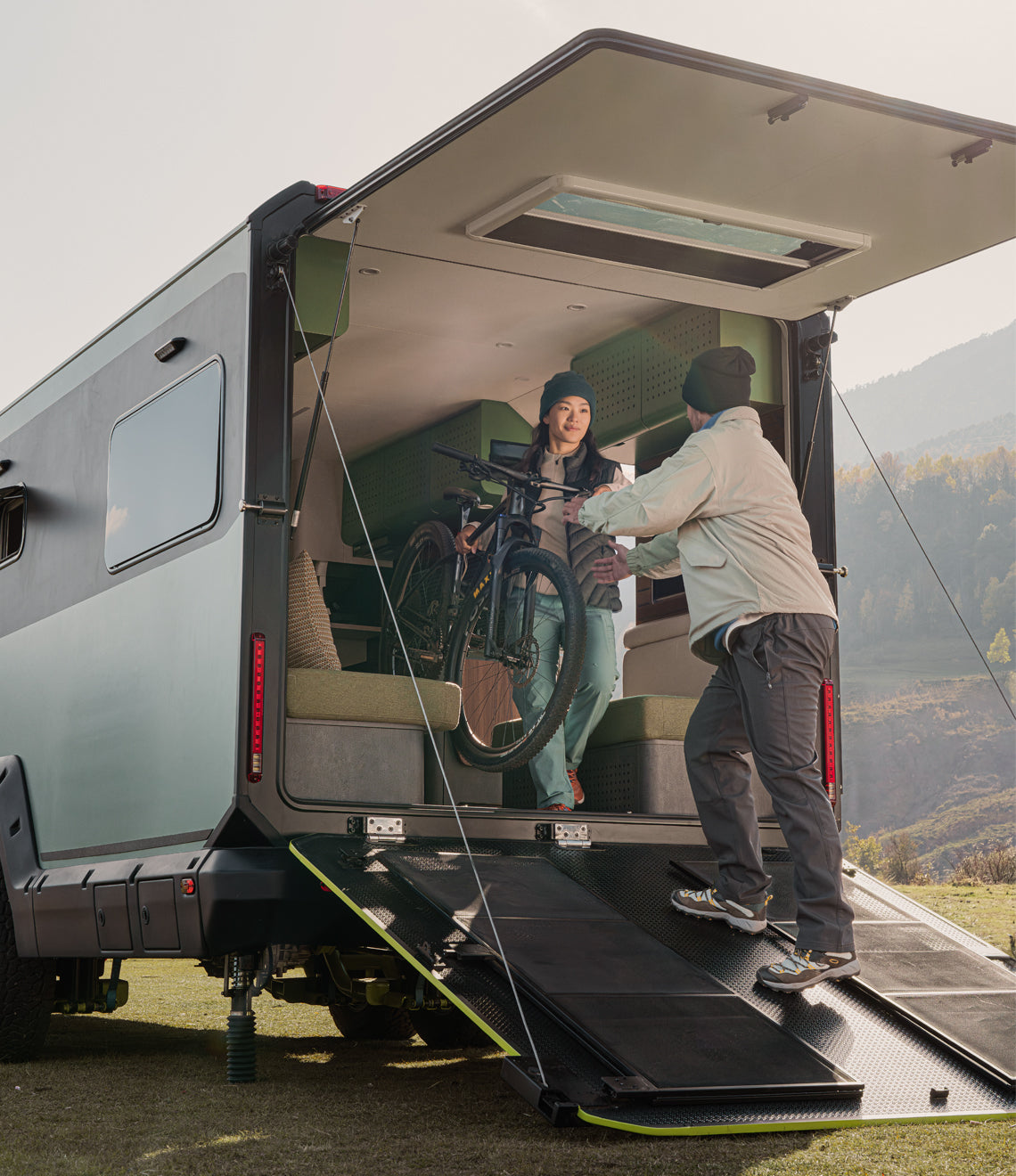
The Evotrex-PG5 is one to watch here. It is a travel trailer built around making and storing its own power through a large lithium battery bank, solar, and an onboard gasoline generator, which is precisely the setup that lets you settle into a dry national park loop or an off grid forest pad for days at a time.
It is not something you can buy off a lot yet; the PG5 is now available to preorder, so think of it as a rig like the one to consider before a trip built around the no hookup parks below. You can take a look at the Evotrex-PG5 if a self contained, off grid focused build fits how you want to camp.
The 12 Best National Parks for RV Camping at a Glance
Cells are kept qualitative where exact numbers vary by site and season. Always confirm the limit for your specific site before you book.
| Park | In park hookups | Max RV length situation | Best season | Standout for RVers |
|---|---|---|---|---|
| Yellowstone | Limited (one full hookup campground) | Generous at the right campground, tight at the small ones | Roughly June to September | The rare in park full hookup option plus huge dry camping variety |
| Yosemite | None | Tight, especially in the Valley | Roughly May to September by elevation | Granite walls out your door if you come self contained |
| Zion | Limited (electric only at one campground) | Tight, plus a strict tunnel size rule | Spring and fall | Walk to the canyon, with a hard size limit on the Mount Carmel Highway |
| Glacier | None | Tight, hard 21 foot limit on the scenic road | Mid July to mid September | Lakeside dry camping, but big rigs cannot drive the middle road |
| Acadia | Limited (electric at the mainland campground) | Tight, length and height capped | Late May to mid October | Coastal camping with a fare free shuttle |
| Sequoia | None | Tight, the road wins over the listing | Roughly June to September up high | Sleeping under the biggest trees on earth |
| Arches | None | Tight (around 30 feet practical) | Spring and fall | One in park campground, Moab full hookups minutes away |
| Big Bend | Limited (one full hookup campground) | Generous at the river, tight in the mountains | November to April | Remote, uncrowded, with the rare in park full hookup spot |
| Rocky Mountain | None | Generous to tight by campground | Late May to September | High meadows and elk, strong gateway towns |
| Redwood | None | Tight (roughly 24 to 28 feet) | Late spring to early fall | Old growth giants, booked through the state system |
| Shenandoah | None | Generous to tight along one road | Spring through October | Easy planning along Skyline Drive, epic fall foliage |
| Olympic | None | Tight, many first come sites | Roughly May to September | Three worlds in one park, rainforest to coast |
Best for Full Hookups and Easy Access
These are the parks where you can actually plug in inside the gate, or where a strong gateway town puts full service camping minutes from the entrance.
Yellowstone National Park
Yellowstone is the closest thing to a full service national park for RVers, but only just. It is the rare park with one in park full hookup campground, while every other in park campground is dry camping with a dump station somewhere nearby. The season is short and the good spots book months out, and length limits swing from generous at the big campgrounds to tight at the small backcountry style loops. Gateway towns like West Yellowstone and Gardiner round it out with full hookups and easy big rig access. Read the full breakdown in our guide to RV camping in Yellowstone National Park.
Big Bend National Park
Far west Texas, genuinely remote, and weirdly uncrowded for a park this spectacular. Big Bend is another of the rare parks with a single in park full hookup option, while the larger river campgrounds offer big rig friendly dry sites and the mountain basin stays small rig only. Come in winter or spring, because summer down by the river is dangerously hot, and fuel up and fill your water before you enter since services inside are thin. Note that a multiyear construction project affects the Chisos Basin, so confirm current access. Full details live in our guide to RV camping in Big Bend National Park.
Zion National Park
Zion gives you the one thing most parks do not: in park electric at a single campground, plus a walk to the canyon if you base in Springdale and ride the shuttle. The huge caveat is rig size. A large vehicle rule on the Zion Mount Carmel Highway now keeps oversized rigs off the scenic east stretch entirely, so know your dimensions and your bypass before you commit to a route. Spring and fall are far kinder than the baking summer canyon floor. See the size rules and gateway options in our guide to RV camping in Zion National Park.
Arches National Park
Arches is really a Moab story. There is exactly one campground inside the gate, it is dry, and it books out fast, but a wall of Moab full hookup resorts sits five to ten minutes from the entrance. Spring and fall are the season by a mile, and dispersed camping close to town has been reined in to designated sites in recent years. The full rundown, including the BLM rules, is in our guide to RV camping near Arches National Park.
Rocky Mountain National Park
Rocky pairs high meadows full of elk with two of the best gateway towns going, Estes Park and Grand Lake, where full hookups are easy to find. Inside the park it is all dry camping at high elevation, with length limits that run generous at the big east side campgrounds and tight at the smaller ones. A timed entry permit applies in peak season, but it is included free when you hold an in park campground reservation. Get the permit timing and campground specifics in our guide to RV camping near Rocky Mountain National Park.
Best for Off Grid Boondockers
These parks have little or no in park power, but they sit next to outstanding free or low cost public land camping if you come self contained. This is where a power generating rig shines.
Yosemite National Park
There are no hookups anywhere inside Yosemite, full stop, and the reservations are brutally competitive the morning they drop. The payoff for the self contained crowd is enormous: granite walls, the Merced River, and the high country at Tuolumne Meadows once Tioga Road clears. Length limits run tight, especially in the Valley, and the surrounding national forests offer real dispersed camping if you want it free. Plan it around being fully off grid in our guide to RV camping in Yosemite National Park.
Glacier National Park
Glacier has zero hookups inside the park and a hard truth about its showpiece: the famous Going to the Sun Road has a 21 foot vehicle size limit on its middle stretch, so a big rig literally cannot drive the best part. The move is to base at a lakeside dry campground or a full hookup gateway park, then shuttle the scenic road. The surrounding Flathead National Forest offers free dispersed camping for self contained rigs. See the road rules and tiered options in our guide to RV camping near Glacier National Park.
Sequoia National Park
Sequoia is not a roll your 40 footer up to the big trees kind of park. The Generals Highway is narrow and steep, and the park does not advise rigs over 22 feet on the climb into Giant Forest, so longer rigs base in Three Rivers and day trip up. There are no hookups inside the park at all, and free dispersed camping waits in the neighboring national forest. Match your rig to the road in our guide to RV camping in Sequoia National Park.
Best for Small to Mid Size Rigs
Every park on this list favors a smaller rig, but these four genuinely reward it. Tight loops, length and height limits, and limited or no power mean a self contained mid size rig or van has the run of the place.
Acadia National Park
Acadia is one of the best coastal parks in the country to bring an RV, and one of the trickiest. The two famous in park campgrounds have no hookups and cap rigs by both length and height, while the mainland Schoodic Woods campground is the exception with electric sites. The fare free Island Explorer shuttle is genuinely excellent, so you can park the rig and let the bus do the driving. Get the length and height limits and the season in our guide to RV camping at Acadia National Park.
Redwood National Park
Here is the curveball: there is basically no campground inside the national park itself. Redwood is jointly managed with three California state parks, so you book the developed campgrounds through the state system, not recreation.gov. The loops were carved out of old growth groves before the 1940s, so length limits are tight and strictly enforced, and there are no hookups. Cool, foggy, and gorgeous if you come self contained. The booking quirks are all in our guide to RV camping near Redwood National Park.
Shenandoah National Park
Shenandoah is the easiest park here to plan, because almost everything strings along one road, Skyline Drive. The four in park campgrounds are all dry camping on a mountaintop, with length that runs generous at the bigger ones and tight at the small ones. The October foliage is worth the hype, which is exactly why those weekends book out. Power and sewer live in the gateway towns. See the milepost by milepost layout in our guide to RV camping near Shenandoah National Park.
Olympic National Park
Olympic is really three worlds stitched together by one highway: rainforest, wild coast, and alpine ridge, hours apart by road. There are no hookups inside the park, many campgrounds are first come only, and length limits are tight, so a smaller self contained rig has by far the easiest time. Pick a base or two and accept some long drives. Plan it region by region with our guide to RV camping near Olympic National Park.
How We Picked, and What Makes a Park RV Friendly
We did not rank these on scenery alone, because scenery is the easy part. We weighed the things that actually decide whether an RV trip works. Here is what we looked at, and what you should look at too.
Hookups. Whether you can plug in inside the park, or whether you need a gateway town for power and sewer. Most parks land on the no hookup side, which is the single biggest planning fact.
Length and height limits. Not just the campground ceiling, which is often a best case number, but the real per site limits and any scenic road size rules that can keep a big rig off the best drives.
Reservation difficulty. How far ahead sites release, whether there are first come options, and how fast the good spots vanish.
Dump stations and water. Where you can actually empty and fill, since these are limited inside most parks and you need to plan tank management around them.
Season. When the road and campgrounds are truly open, which is snow dependent in the mountains and heat dependent in the desert.
Nearby boondocking. Whether the surrounding national forest or public land offers free dispersed camping for self contained rigs, which expands your options and your budget.
Put simply, the most RV friendly parks either give you some power inside the gate or sit next to a strong gateway town and good public land. The least forgiving ones combine no hookups, tight roads, and short seasons, which is not a reason to skip them, just a reason to plan and to match your rig honestly.
Frequently Asked Questions
Which national park is easiest for a big RV? Yellowstone is among the friendliest for a larger rig because it has the rare in park full hookup campground and several big rig friendly campgrounds, plus full service gateway towns. Big Bend handles big rigs well at its river campgrounds, and parks with strong gateway towns like Rocky Mountain, Zion, and Arches let you base in full hookup parks and day trip in. Always confirm the per site length limit, and watch for scenic road size rules like Glacier's 21 foot limit and Zion's tunnel rule.
Do national parks have RV hookups? Usually not. Most national parks have no hookups at any in park campground, so you are dry camping on your own power and water. A small number of parks have a single exception, such as Yellowstone's one full hookup campground or the one full hookup option at Big Bend, and a few offer electric only at one campground. For reliable full hookups, plan to stay in a private park in a gateway town.
Can you boondock near national parks? Often yes, on the surrounding public land rather than inside the park. Many parks sit next to national forest or BLM land that allows free dispersed camping for self contained rigs, with stay limits and rules that vary by area. Always check the agency's motor vehicle use map for legal spots, confirm current fire restrictions, and call the local ranger or field office if you are unsure. Inside the parks themselves, you generally cannot park anywhere you like overnight.
What size RV fits in national park campgrounds? It depends entirely on the park and the specific site. Some campgrounds have a handful of sites that fit 40 feet or more, while many top out around 30 feet, and the tightest, like several at Glacier, Redwood, and Olympic, cap at roughly 21 to 26 feet. Scenic roads add their own limits. The campground maximum is a best case ceiling, not a guarantee, so always read the exact site length before you book.
When should you book national park RV sites? As early as the booking window allows, which is commonly five to six months ahead for the most popular campgrounds. Summer weekends and fall foliage dates can vanish within minutes of release. Some parks hold a portion of sites for a shorter window, often around two weeks ahead, and a few campgrounds are first come first served, which rewards arriving early in the day. Set an alarm for your window and be logged in and ready.
Are timed entry or vehicle reservations required at these parks? It varies by park and by year, and the rules change often. Some parks use timed entry or vehicle reservation systems in peak season, sometimes with the permit included when you hold a campground reservation, while others have dropped those systems for the current year. Because these policies shift season to season, confirm the current entry and reservation status for your park and your dates on the official park site before you plan around it.
Plan Before You Go
Before you point the rig at any of these parks, do a final check on the things that move year to year, because dates, fees, and rules genuinely change every season. Confirm your campground reservations and the exact release window. Confirm the real per site length and height limit for your specific rig, not just the campground ceiling, and check any scenic road size rules. Confirm the seasonal road and campground opening dates, since mountain parks are snow dependent and desert parks are heat dependent. Confirm whether timed entry or a vehicle reservation is required for your park and your dates. And confirm dump station and water availability for your campground, since those are limited inside most parks. Do that homework and these become the trips everyone remembers.