
RV Camping Near Glacier National Park: Where to Stay and What to Know in 2026
Glacier is one of the best places in the country to wake up in your rig, and one of the easiest to get wrong if you roll in without a plan. The thing that trips up almost every new RVer is the road itself. The famous Going to the Sun Road has a hard vehicle size limit, so a big rig literally cannot drive the best middle stretch of the park. Add in zero hookups inside the park, a short snow dependent season, tight twisty campground loops, and very real bears, and you can see why a little homework pays off.
The good news is that once the logistics are sorted, RVing here is unforgettable. You can sleep at a lake inside the park, shuttle up to Logan Pass for the day, and keep a full hookup resort or a free forest spot as a backup. The trick is matching your rig to the right tier of camping. A 21 footer and a 40 foot rig plan completely differently.
This guide gives you all three tiers: the in park NPS campgrounds that actually take RVs with their real length limits, the nearby private parks with full hookups, and the free national forest dispersed spots if you want to go off grid. Everything time sensitive here was checked against the National Park Service, recreation.gov, and the Forest Service for the 2026 season.

Quick Answer
You have three ways to RV camp near Glacier. First, in park NPS campgrounds, which have no hookups anywhere, are reserved through recreation.gov or are first come first served, and carry tight length limits from 21 ft up to 40 ft. Second, private full hookup parks in the gateway towns of West Glacier, Columbia Falls, Coram, Hungry Horse, and St Mary, which give you power, water, and sewer within about 5 to 45 minutes of an entrance.
Third, free dispersed camping on the surrounding Flathead National Forest, with no services and a motor vehicle use map required. Best season is roughly mid July through mid September, when Going to the Sun Road is fully open. The big catch: rigs over 21 ft cannot drive the middle of Going to the Sun Road, so plan to use the park shuttle for that stretch.
Key Terms, Defined
Before the campground list, here are the words you will see over and over. Knowing them makes every reservation page and review easier to read.
Full hookups. A site that connects your rig to city water, sewer, and electric power, usually 30 amp or 50 amp. This is what private gateway parks offer and what no in park Glacier campground offers.
Dry camping. Camping with no hookups, running entirely on your own fresh water, holding tanks, and batteries. Every in park Glacier campground is dry camping.
Boondocking. Casual term for camping off grid with no hookups and no services, often on public land. Functionally the same as dry camping, usually used for free or remote spots.
Dispersed camping. Free camping on national forest or other public land outside of a developed campground, allowed only where the agency permits it. No water, no toilets, no trash service. Pack it in, pack it out.
Motor vehicle use map, or MVUM. The official Forest Service map that shows which roads you are legally allowed to drive and where dispersed camping is permitted. If a road is not on the MVUM as open, you cannot drive or camp there.
Dump station. A facility where you empty your gray and black holding tanks. Inside Glacier these are limited, so plan around them.
ules and What to Know First in 2026
A few hard facts before you book anything. These are the ones people miss.
Going to the Sun Road has a 21 ft vehicle size limit. Vehicles and combinations longer than 21 ft, wider than 8 ft including mirrors, or taller than 10 ft are prohibited between Avalanche Creek and Rising Sun. Bigger rigs can drive both ends but must use the park shuttle for the middle. The 10 ft height also matters going west from Logan Pass to the Loop because of rock overhangs.
No hookups inside the park, anywhere. The Park Service is blunt about it. Connection to water, sewer, or electrical outlets is prohibited at every in park campground. You run on your own batteries and tanks.
No vehicle reservations or timed entry in 2026. The Park Service confirmed that vehicle reservations will not be required anywhere in the park in 2026, and you do not need a timed entry ticket for Going to the Sun Road. You still need a valid park entry pass. Instead of reservations, rangers will manage crowds with temporary closures when lots fill up.
New Logan Pass rules for 2026. Beginning around July 1, weather permitting, parking at Logan Pass is limited to three hours, and the park is piloting a ticketed shuttle to Logan Pass for longer alpine hikes.
RV length limits vary a lot by campground. Some loops only fit 21 footers, a handful fit up to 40 ft. Match your rig to the site before you reserve.
Bear food storage is mandatory. All food, garbage, and scented items go in the provided bear boxes or hung from food poles. Campgrounds in winter status require your own IGBC certified container.
Short, snow dependent season. The full length of Going to the Sun Road typically opens between mid June and early July, with a target around July 1 for 2026, but it shifts every year with snowpack. A milder than average winter can mean an earlier opening, but if driving the whole road is your priority, the safest window is mid July onward. Lower campgrounds open earlier, high country later.
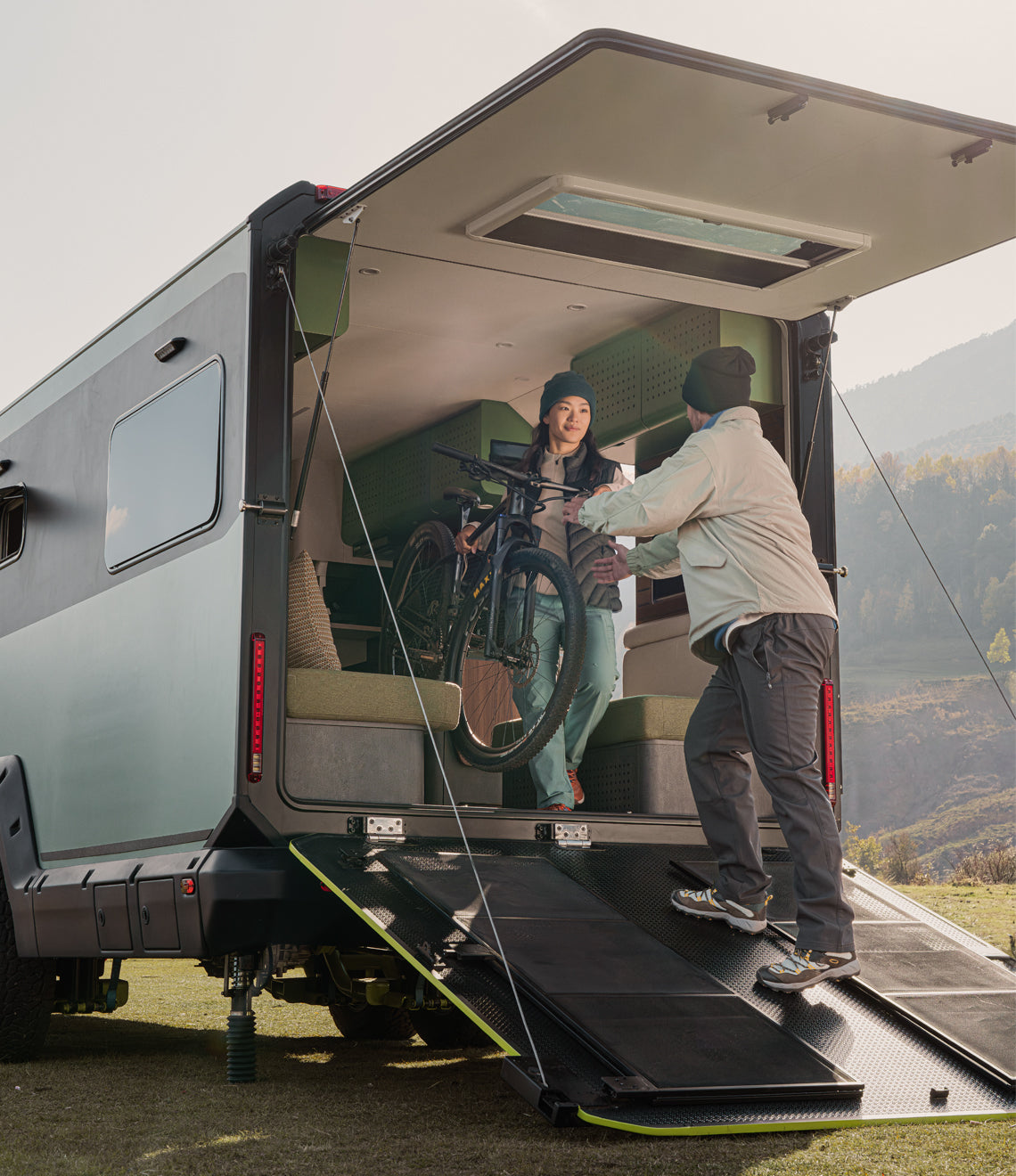
A quick aside before the campgrounds. If you want to lean into the no hookup loops or the free forest spots without babysitting a noisy generator all night, this is exactly where a self powered travel trailer like the Evotrex-PG5 earns its keep. It's an RV that makes its own power through a large lithium battery bank, solar, and an onboard gasoline generator, so you can sit on a hookup free in park loop or an off grid forest pad longer without sweating your batteries. We are keeping numbers off this page, so check the brand site for the real specs.
The Campgrounds
Tier 1: In Park NPS Campgrounds
These are reserved through recreation.gov on a rolling window, with a few that stay first come first served. No hookups at any of them. Most reservation sites run about 30 dollars a night for 2026, with Sprague Creek and Rising Sun lower, but confirm current fees when you book.
Apgar Campground Nearest landmark: Lake McDonald, near the West Entrance. What it is: NPS, the biggest and most popular in park campground, open year round with primitive service in winter. Why it is worth it: easy West Entrance access, the quieter end of Lake McDonald, and the only loop that realistically takes a 40 footer. Rig fit: The largest 25 sites have a max parking space of 40 ft. No hookups. Dump station and potable water on site, and fee showers for registered campers. Cell signal is usually decent near Apgar village. Remember the Going to the Sun Road limit of 21 ft long, 8 ft wide, 10 ft tall between Avalanche Creek and Rising Sun if you plan to drive east from here. Insider tip: First timers book a long site, then realize they still cannot drive Going to the Sun Road in the rig. Set up at Apgar, leave the trailer, and take the shuttle.
Fish Creek Campground Nearest landmark: west side of Lake McDonald, near West Glacier. What it is: NPS, reservation only, quieter and more wooded than Apgar. Why it is worth it: lake access without the Apgar crowds. Rig fit: The largest 18 sites fit 35 ft, with 62 more sites up to 27 ft. No hookups. Potable water and fee showers on site. Cell signal is spotty. Same 21 ft Going to the Sun Road limit applies if heading east. Insider tip: The bigger sites here go fast the moment the booking window opens. If you have a 35 footer, set an alarm for the booking time.
St Mary Campground Nearest landmark: St Mary, the East Entrance. What it is: NPS, reservation only, a big open campground on the drier east side. Why it is worth it: the Park Service points bigger rig folks here, and it is the eastern gateway to Going to the Sun Road. Rig fit: The largest 3 sites fit up to 40 ft, plus 22 more up to 35 ft. No hookups. Potable water, dump station, flush toilets, and fee showers. Some restroom loops have had construction closures, so confirm live. Cell signal is better here than the deep west side. Insider tip: East side winds are no joke. Park nose into the wind and skip the awning on gusty afternoons.
Many Glacier Campground Nearest landmark: Many Glacier, northeast corner. What it is: NPS, reservation only, in arguably the most jaw dropping valley in the park. Why it is worth it: trailheads to Grinnell and Iceberg Lake right out the door. Rig fit: The largest 13 sites have a max parking space of 35 ft, but most sites and driveways are tight and will not fit anything over 21 ft. No hookups. Very limited cell signal. The Many Glacier road is its own narrow drive, so smaller is happier here. Insider tip: This valley books out almost instantly. If you miss it, the St Mary or East Glacier private parks are your fallback and still a short drive.
Two Medicine Campground Nearest landmark: Two Medicine, southeast corner near East Glacier. What it is: NPS, reservation only, quieter and gorgeous. Why it is worth it: fewer crowds, classic Glacier scenery, great boat tour and hikes. Rig fit: The largest 10 sites have a max parking space of 35 ft. No hookups. Cell signal is essentially nonexistent, so download maps first. Insider tip: Plan to be self contained for groceries and fuel. The nearest real services are back in East Glacier, not at the campground.
Avalanche Campground Nearest landmark: Avalanche Creek, on Going to the Sun Road. What it is: NPS, reservation only, in the cedar forest along the road. Why it is worth it: Trail of the Cedars and Avalanche Lake right there, and you are already inside the corridor. Rig fit: The largest 50 spaces have a max parking space of 26 ft. No hookups. Spotty to no cell signal. This sits right at the start of the 21 ft restricted section, so anything bigger cannot continue east from here. Insider tip: Avalanche typically opens later in the season than the lower campgrounds because of snow. Confirm the opening date before you count on it.
Rising Sun Campground Nearest landmark: east shore area on Going to the Sun Road near St Mary. What it is: NPS, first come first served. Why it is worth it: a foothold inside the east corridor with a camp store, fee showers, and boat tours nearby. Rig fit: The largest 10 sites fit vehicle combinations of 21 ft. Anything over 21 ft is not allowed. No hookups. Potable water on site. Limited cell signal. Insider tip: Being first come first served, roll in early in the day, ideally mid morning when overnight folks pull out.
Sprague Creek Campground Nearest landmark: Lake McDonald shore, on Going to the Sun Road. What it is: NPS, reservation only, small and right on the water. Why it is worth it: some of the best lakefront sites in the park. Rig fit: Vehicle combinations longer than 21 ft are not allowed, so this is small rig only. No hookups. Towed units are not permitted on some sites, so read the site notes carefully. Insider tip: This is a true small rig and van gem. If you are under 21 ft, grab it for sunset over Lake McDonald.
Tier 2: Nearby Private RV Parks and Gateway Towns
When you want full hookups, a dump, laundry, and a real shower, these are your spots. All are full hookup operations near the entrances. Names and details come from search results, so confirm current operation and season before you book.
West Glacier RV and Cabin Resort and West Glacier KOA Resort Nearest town: West Glacier, about a mile from the West Entrance. What it is: private full hookup resorts. Why it is worth it: the closest full service base to the busy west side, with 50, 30, and 20 amp pull through options. Rig fit: Full hookups with water, sewer, and electric. Paved or level pull throughs that fit big rigs. Dump and water on site. Cell signal generally fine. You still cannot take a big rig up Going to the Sun Road, so use this as a base and shuttle in. Insider tip: Book these 6 to 12 months out for July and August. The big pull throughs are the first to go.
Columbia Falls RV Park Nearest town: Columbia Falls, roughly 15 to 20 minutes from the West Entrance. What it is: private, year round, full hookup. Why it is worth it: less frantic than West Glacier, close to groceries, fuel, and Whitefish. Rig fit: Full hookups with 30 and 50 amp. Dump and water on site. Good cell signal. Easy big rig access on paved roads. Insider tip: Staying here means you can stock up fully before the drive in, since the in park stores are small and pricey.
Mountain Meadow RV Park and Beargrass Lodging and RV Resort Nearest town: Hungry Horse and Coram, between Columbia Falls and West Glacier. What it is: private full hookup parks. Why it is worth it: a middle ground, close to the entrance but a touch calmer than West Glacier proper. Rig fit: Full hookups with 20, 30, and 50 amp. Dump and water on site. Decent cell signal. Open roughly May through October. Insider tip: These fill the gap if West Glacier is booked solid, and you are still a quick run to the entrance.
St Mary and East Glacier KOA and Johnson's of St Mary Nearest town: St Mary, about a mile from the East Entrance. What it is: private full hookup parks on the east side. Why it is worth it: full hookups right at the eastern gateway with big views, perfect if you are doing the east side first. Rig fit: Full hookups with 30 and 50 amp. Dump and water on site. Open roughly late May through September. Cell signal is okay but can dip. Insider tip: Basing on the east side often means thinner crowds at sunrise on Going to the Sun Road. Drive the road east to west early.
Tier 3: Free Dispersed Camping on the National Forest
No services, no reservations, pack it in and pack it out. This is the cheapest way to camp near Glacier if your rig is self contained. The surrounding land is mostly Flathead National Forest.
Hungry Horse Reservoir Area, Flathead National Forest Nearest landmark: Hungry Horse Reservoir, near Hungry Horse. What it is: forest dispersed camping along reservoir roads. Why it is worth it: free, scenic, and within reasonable reach of the West Entrance. Rig fit: No hookups, no dump, no water, so bring everything. Road access ranges from decent gravel to rough, so smaller and higher clearance is safer. Cell signal is mostly a dead zone. Standard 14 day stay limit in a 30 day period. Insider tip: This is another spot where a self powered setup pays off. A travel trailer that runs off solar, a big battery, and an onboard generator lets you stay out here longer without a hookup in sight.
Hungry Horse Glacier View Ranger District Corridors, Flathead National Forest Nearest landmark: forest roads west and south of the park boundary. What it is: dispersed camping along designated MVUM roads. Why it is worth it: free camping close to the park without the reservation scramble. Rig fit: No services at all. Access only on roads shown as open on the Motor Vehicle Use Map. Many spurs are tight or low clearance, so scout before committing a big rig. Cell signal unreliable. Insider tip: Dispersed camping is only legal where the MVUM says you can drive. Download the Flathead National Forest MVUM for this district in the Avenza Maps app before you leave pavement, and call the ranger district if a road or area is unclear.
At a Glance Comparison
| Campground | Tier and type | Hookups | Max RV length | Reservation | Season |
|---|---|---|---|---|---|
| Apgar | Tier 1 NPS | None | 40 ft (top 25 sites) | recreation.gov | Year round (primitive winter) |
| Fish Creek | Tier 1 NPS | None | 35 ft (top 18), 27 ft most | recreation.gov | Summer |
| St Mary | Tier 1 NPS | None | 40 ft (3 sites), 35 ft (22) | recreation.gov | Summer |
| Many Glacier | Tier 1 NPS | None | 35 ft (top 13), most under 21 ft | recreation.gov | Summer |
| Two Medicine | Tier 1 NPS | None | 35 ft (top 10) | recreation.gov | Summer |
| Avalanche | Tier 1 NPS | None | 26 ft (top 50) | recreation.gov | Summer (opens later) |
| Rising Sun | Tier 1 NPS | None | 21 ft | First come first served | Summer |
| Sprague Creek | Tier 1 NPS | None | 21 ft | recreation.gov | Summer |
| West Glacier KOA and RV Resort | Tier 2 private | Full | Big rig pull throughs | Direct or KOA | Seasonal |
| Columbia Falls RV Park | Tier 2 private | Full | Big rig | Direct | Year round |
| St Mary and East Glacier KOA | Tier 2 private | Full | Big rig | Direct or KOA | Late May to Sept |
| Hungry Horse Reservoir dispersed | Tier 3 forest | None | Varies, scout first | None |
Snow free months |
Check Before You Roll
Dates, closures, and length limits do shift year to year, so verify these specifics live for your trip and your rig before you commit:
The Going to the Sun Road full opening date, targeted around July 1 for 2026 but snow dependent, plus the best driving window of roughly mid July through mid September.
Vehicle reservation and timed entry status. The Park Service says vehicle reservations are not required anywhere in 2026 and no timed entry ticket is needed for Going to the Sun Road, but reconfirm closer to the season.
The new three hour parking limit at Logan Pass and the ticketed Logan Pass shuttle pilot beginning around July 1.
The Going to the Sun Road 21 ft vehicle size limit and exactly where it applies, currently between Avalanche Creek and Rising Sun.
Per campground RV length limits and site counts, for example Apgar up to 40 ft on the top 25 sites, Fish Creek 35 ft on the top 18 and 27 ft for many more, St Mary 40 ft on 3 sites and 35 ft on 22, Many Glacier 35 ft on the top 13 with most under 21 ft, Two Medicine 35 ft on the top 10, Avalanche 26 ft on the top 50, and Rising Sun and Sprague Creek 21 ft.
Hookup details, which are none anywhere inside the park, along with dump station, potable water, and shower availability, which is mostly limited to Apgar, Fish Creek, St Mary, and Rising Sun.
Reservation windows and current fees for the recreation.gov sites, since the bigger spots go fast the moment the window opens.
Current road, closure, and construction status, including the St Mary restroom and loop closures and any campground that opens later than the lower ones.
Forest dispersed camping legality and current rules, meaning only where the MVUM shows a road open, plus the standard 14 day stay limit in a 30 day period.
All current fees and park entry pass requirements.
Authoritative sources to check:
- Glacier camping overview
- Campground details and length limits
- Going to the Sun Road info and the 21 ft limit
- 2026 vehicle reservation status
- Reservations gateway
- Flathead National Forest
For forest dispersed camping, get the MVUM for your ranger district in the Avenza Maps app, and call the ranger district directly if any road or area is unclear.
FAQ
Can you RV camp in Glacier National Park? Yes. Several in park NPS campgrounds take RVs, including Apgar, Fish Creek, St Mary, Many Glacier, Two Medicine, Avalanche, Rising Sun, and Sprague Creek. Most are reserved through recreation.gov, with length limits ranging from 21 ft up to 40 ft depending on the campground.
Does Glacier have RV hookups? No. There are no hookups at any in park campground. Connection to water, sewer, or electrical is prohibited inside the park. For full hookups, stay at a private park in the gateway towns.
Can you drive an RV on Going to the Sun Road? Only if your rig or combination is 21 ft or shorter, 8 ft or narrower, and 10 ft or shorter. Larger vehicles are prohibited between Avalanche Creek and Rising Sun and must use the park shuttle for that middle stretch.
What is the RV length limit in Glacier? It depends on the campground. Apgar and St Mary have a few sites up to 40 ft, Fish Creek, Many Glacier, and Two Medicine top out around 35 ft, Avalanche caps at 26 ft, and Rising Sun and Sprague Creek are limited to 21 ft. Going to the Sun Road itself is a hard 21 ft limit in the middle section.
Are vehicle reservations required at Glacier in 2026? No. The Park Service confirmed that vehicle reservations are not required anywhere in the park in 2026, and no timed entry ticket is needed for Going to the Sun Road. You still need a valid park entry pass, and a three hour parking limit applies at Logan Pass beginning around July 1.
Is there free camping near Glacier? Yes. Free dispersed camping is allowed on the surrounding Flathead National Forest along roads designated on the Motor Vehicle Use Map, including areas near Hungry Horse Reservoir. There are no services, and a typical 14 day stay limit applies.
When is the best time for RV camping at Glacier? Roughly mid July through mid September, when Going to the Sun Road is fully open. The 2026 full opening is targeted around July 1 but depends entirely on snowpack. Earlier and later visits can mean closed roads, closed high campgrounds, and snow.
Things to Watch Out For
A few last things that bite RVers here.
Water fill and dump locations are limited inside the park. Apgar and St Mary have dump stations and potable water, so plan your tank management around those rather than expecting a dump at every campground. Top off water before you head into the no service east side or up to Many Glacier.
For finding and vetting spots, the apps that actually help are Campendium, iOverlander, and The Dyrt for campground reviews and site photos, plus Avenza Maps for the Forest Service MVUM when you go off grid.
Hazards to keep front of mind:
Going to the Sun Road 21 ft size limit. Big rigs cannot drive the middle. Plan to shuttle.
Short, snow dependent season. The road and high campgrounds open late and can close early.
Bears and food storage. Use the bear boxes and food poles. Improper food storage is one of the most common citations in the park.
No hookups in the park. Manage your batteries, water, and tanks accordingly.
Logan Pass parking limit. New for 2026, a three hour parking cap at Logan Pass.
Cell dead zones. Many Glacier, Two Medicine, and the forest roads have little to no signal. Download maps offline.
Fire restrictions. Late summer often brings campfire bans. Check current restrictions before you light anything.