
RV Camping Near Arches National Park: Where to Stay Around Moab
So you want to bring the rig to Arches. Good call. It is one of the most jaw dropping places you can wake up to. But here is the thing nobody tells you up front: RV camping near Arches National Park is really a Moab story, not an Arches story. The park is small, it sits right next to town, and there is exactly one campground inside the gate. One. It is dry, it books out months ahead, and that is the whole picture for in park camping.
The good news is that Moab is a camping town through and through. You have a wall of private RV resorts with full hookups a few minutes from the Arches entrance, plus some of the most famous public land camping in the country spread along the rivers and the mesa roads. The catch is that a lot of the free dispersed camping has been reined in over the last few years, so the romantic idea of rolling up and parking anywhere on red dirt is mostly gone close to town.

Quick Answer
For RV camping near Arches National Park you have three real options. One: Devils Garden Campground inside the park, with 51 sites, no hookups, reserved on recreation.gov.
Two: private RV resorts in Moab with full hookups about five to ten minutes from the park entrance.
Three: BLM camping on the surrounding public land, ranging from free designated dispersed sites farther out to fee campgrounds along the Colorado River and the mesa near Canyonlands. There are no hookups anywhere inside the park, and dispersed camping within roughly 20 miles of Moab is now limited to developed campgrounds. Spring and fall are the best seasons by a mile.
Camping Terms, Quickly Defined
Before the options, a fast glossary so the rest of this makes sense.
Full hookups. A site that connects your RV to electric power, fresh water, and a sewer line at the pad. This is what private resorts in Moab offer.
Dry camping. Camping with no hookups at all. You run on your onboard battery, fresh water tank, and holding tanks. Devils Garden is dry camping.
Boondocking. Camping off grid on public land away from any services, usually for free. You are fully self contained.
Dispersed camping. Camping outside a developed campground on public land, often along a back road. Near Moab this is now mostly limited to marked, designated sites rather than park anywhere freedom.
What to Know First
Devils Garden Campground is the only campground inside Arches, and it books out fast. Sites are reservable on recreation.gov for nights between March 1 and October 31, and from November through February they are first come, first served (NPS).
There are no hookups inside the park. No electric, no water, and no sewer at any site, and there is no dump station inside Arches. In park RV camping is fully dry (NPS).
No timed entry reservation is required in 2026. Arches announced on February 18, 2026 that it dropped advance timed entry tickets for the year. You still need a valid entrance pass, and Devils Garden Campground and Fiery Furnace permits still require their own reservations (NPS).
The heat is no joke. Summer is extreme and there is almost no shade in the park. Plan for spring or fall if you can, and treat a July dry camp as a serious power and water situation.
Dispersed camping near Moab is now mostly designated or fee. Within about 20 miles of town, camping is allowed only in developed campgrounds, and the BLM requires campers to pack out solid human waste using a portable toilet, an RV tank, or approved waste bags (BLM Moab area camping restrictions, blm.gov).
Water is scarce. Most BLM campgrounds around Moab have no drinking water, so fill up in town and ration.
The Campgrounds
Tier 1: Inside Arches National Park
Devils Garden Campground
Where: near the end of the main park road, about 18 miles inside Arches. What it is: the only NPS campground in the park, and the bucket list spot. There are 51 sites, including one accessible site and two group sites, tucked into slickrock fins and pinyon juniper at around 5,200 feet. Waking up here is genuinely special. It is dry camping, so come self contained and ready to manage your own power and water.
Rig fit: paved roads and parking spurs. The practical cap is around 30 feet, though a few sites can fit closer to 40 feet depending on the spur, so read each site listing carefully when you book. No hookups, no dump station, drinking water and flush toilets available, no showers, and little to no cell signal.
Fee and booking: standard sites are listed around 25 dollars per night, with group sites higher, reservable on recreation.gov. Confirm the current rate when you book.
Insider tip: set a recreation.gov alarm for the moment your target date opens and be logged in the second the window goes live. Popular spring and fall nights vanish fast. Also buy firewood in Moab before you drive up, because there is nowhere to grab it once you are out there.
Tier 2: Private RV Resorts in Moab
Most RVers who want power, a pool, and a dump station stay in Moab and drive into the park. The entrance is only a few minutes north of town, so this is the easy button. Rates below come from aggregator listings and should be confirmed directly with each resort.
Sun Outdoors Arches Gateway
Where: north end of Moab, one of the closest big resorts to the Arches entrance. What it is: a full service private RV resort with full hookup sites, 30 amp and 50 amp power, pool, laundry, and WiFi. Worth it for the location, since you are minutes from the gate.
Rig fit: big rig friendly with full hookups including sewer at the site. On site dump and water. Cell signal is generally solid this close to town.
Insider tip: this is the pick if you want to be first to the gate in the morning without driving through town.
Sun Outdoors North Moab
Where: Moab, a few miles south of the Arches entrance. What it is: a large private campground with a general store and over a hundred RV sites. Worth it for amenities and a central base near Arches, Canyonlands, and Dead Horse Point.
Rig fit: full hookups, 30 amp and 50 amp, on site dump and water, general store on property. Good cell signal.
Insider tip: sitting a touch farther south puts you closer to the Canyonlands and Dead Horse Point turnoffs, a smart middle ground if you are splitting time between parks.
Portal RV Resort
Where: Moab, a short drive from the Arches entrance and downtown. What it is: a clean private RV resort. Worth it for spacing and facilities, with sites that have decent room and well reviewed restrooms, showers, and pool area.
Rig fit: full hookups, pull through and back in sites, on site dump and water. Cell signal generally good in town.
Insider tip: it tends to feel calmer than the big resort scene, so look here if you want full hookups without a packed party vibe.
Moab KOA Holiday
Where: south of Moab off Highway 191. What it is: a full service KOA with full hookups, pool, camp store, showers, and family amenities. Worth it if you want predictable, well kept facilities and a store stocked with supplies and firewood.
Rig fit: full hookups with 30 amp and 50 amp service, on site dump and water. Solid cell signal.
Insider tip: the camp store and family amenities make this an easy pick when you are traveling with kids or want one stop convenience.
Tier 3: BLM and Public Land Camping
This is what makes Moab legendary, but the rules tightened up. Within roughly 20 miles of town you have to be in a developed campground, so the true free roadside camping is farther out and a lot of it is designated only.
BLM Highway 128 River Campgrounds (Goose Island, Big Bend, Hittle Bottom, and more)
Where: along Highway 128, the River Road, just northeast of Moab following the Colorado River. What it is: developed BLM fee campgrounds with numbered sites and fire rings. Worth it for the scenery, since you camp right along the river under red rock walls while staying close to Arches.
Rig fit: several sites fit larger rigs, but spots vary, so check each campground listing. No hookups, no drinking water at most sites, vault toilets. Bring water from town. Sites generally run in the 15 to 20 dollar per night range in peak season (BLM Moab area camping restrictions, blm.gov). Cell signal is spotty in the canyon.
Insider tip: these fill early in spring and fall because they are gorgeous and cheap, often by Thursday for the weekend, so roll in midweek and mid morning if you want a riverside spot.
Horsethief Campground
Where: off Highway 313 toward Canyonlands and Dead Horse Point, about 12 miles in from Highway 191. What it is: a large developed BLM campground. Worth it as a base for Canyonlands and Dead Horse Point that still keeps Arches within reach.
Rig fit: multiple loops with RV friendly sites. No hookups, no drinking water, toilets available. Fees in the roughly 20 dollar range for individual sites, with group sites reservable on recreation.gov. Cell signal is patchy up on the mesa.
Insider tip: confirm which loops are RV friendly and which are tent only with no generators before you commit a long rig to the drive.
Utahraptor State Park (formerly Willow Springs Road dispersed area)
Where: Willow Springs and Dalton Wells roads, about 14 miles north of downtown Moab off Highway 191. What it is: a Utah state park that absorbed what used to be free BLM dispersed camping. The old free for all ended in 2022, and as of late 2025 the primitive sites are reservable. Worth it for a quieter base north of town with red rock surroundings.
Rig fit: primitive sites with vault toilets and portable toilets in the area. No hookups, no services, so plan to be self contained. Fees have been listed around 15 dollars per night per vehicle, but confirm the current rate and reservation system with Utah State Parks.
Insider tip: do not assume this is still free dispersed land. Camp only in designated sites with existing fire pits, and book ahead now that sites are reservable.
Designated Dispersed Areas Farther Out (Cotter Mine Road, Dubinky Well Road)
Where: north and northwest of Moab off Highway 191 and SR 313. What it is: free BLM designated dispersed camping clusters beyond the 20 mile developed only zone. Worth it if you want to stay off hookups for free and you do not mind some distance from the action.
Rig fit: dirt and gravel access roads that can be washboard, so a higher clearance tow vehicle helps and you should scout before committing a long rig. No hookups, no water, no services. Bring everything and pack out everything, including solid human waste.
Insider tip: camp only on marked or posted spots, and carry a portable toilet or waste bags. Rangers do check, and the soil crust here takes decades to recover from a single set of tires off the marked pad.
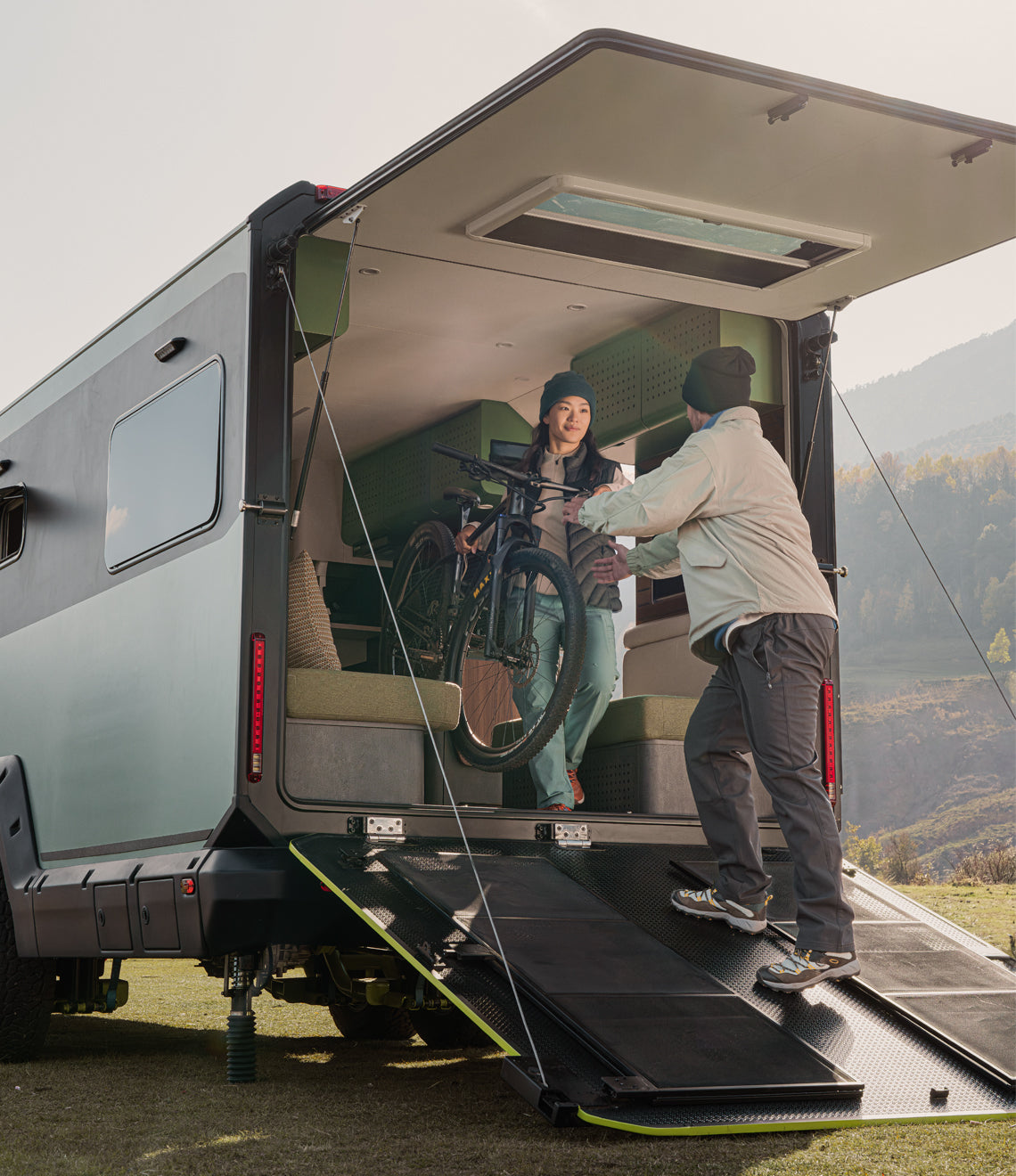
A quick aside that fits right here. If you are eyeing the free dispersed and fee BLM sites where there is zero shade, no hookups, and relentless sun, that is exactly the situation a power dense rig is built for. Something like the Evotrex-PG5 travel trailer makes its own power through a large lithium battery bank, rooftop solar, and an onboard gasoline generator, the kind of setup that lets you sit out at Dubinky Well or along the river longer without chasing a hookup. Out here in the heat with no shade, solar and a serious battery earn their keep.
Campground Comparison
| Campground | Tier and Type | Hookups | Max RV Length | Reservation | Approx Nightly Fee |
|---|---|---|---|---|---|
| Devils Garden | In park NPS | None | About 30 ft, a few near 40 ft | recreation.gov, Mar 1 to Oct 31 | About 25 dollars |
| Sun Outdoors Arches Gateway | Private | Full | Big rig friendly | Direct booking | Confirm with resort |
| Sun Outdoors North Moab | Private | Full | Big rig friendly | Direct booking | Confirm with resort |
| Portal RV Resort | Private | Full | Big rig friendly | Direct booking | Confirm with resort |
| Moab KOA Holiday | Private | Full | Big rig friendly | Direct booking | Confirm with resort |
| Hwy 128 River (Goose Island, Big Bend, Hittle Bottom) | BLM fee | None | Varies by site | First come, first served | About 15 to 20 dollars |
| Horsethief | BLM fee | None | RV loops, check listing | First come, group sites reservable | About 20 dollars |
| Utahraptor State Park (Willow Springs) | State park | None | Primitive sites, check listing | Reservable | About 15 dollars |
Check Before You Roll
Fees, seasons, and dispersed rules change out here, so confirm these specifics for your exact dates before you commit.
The Devils Garden RV length limit for your specific site, the current nightly fee, and the booking window on recreation.gov.
Whether Arches is requiring a timed entry reservation for the year you are visiting, since that status changes year to year.
The roughly 20 mile rule that camping near Moab must be in a developed campground.
Current BLM fees and whether the river and mesa sites actually fit your rig length.
Whether the dispersed and BLM camping you are eyeing is still legal, plus the current designated site and waste carryout rules.
The status and reservation system for Utahraptor State Park, which is now a fee state park rather than free BLM dispersed.
The season, since spring and fall are best and summer heat is no joke.
Helpful sources to bookmark:
- Arches camping page
- Arches 2026 entry update
- Devils Garden reservations
- BLM Moab area camping and restrictions (PDF)
- Utahraptor State Park fees
- BLM Moab Field Office 82 E Dogwood Ave, Moab UT, phone 435 259 2100
When in doubt about a dispersed area or a fee, call the BLM Moab Field Office directly. They will tell you what is open, what is designated, and what now requires a toilet or a fee.
FAQ
Can you RV camp inside Arches National Park?
Yes, at one campground only. Devils Garden Campground is the single campground inside Arches, with 51 sites. It is dry camping with no hookups, and you reserve on recreation.gov for nights between March 1 and October 31.
Does Arches have RV hookups?
No. There are no electric, water, or sewer hookups anywhere inside Arches, and there is no dump station in the park. If you want full hookups, you stay at a private RV resort in Moab a few minutes from the entrance.
What is the RV length limit at Devils Garden?
Practically around 30 feet for most sites, with a few that can fit closer to 40 feet depending on the paved spur. Read each individual site listing on recreation.gov before booking, since maneuvering can be tight and no two spurs are the same.
Is there free camping near Arches and Moab?
Yes, but less than there used to be. Within about 20 miles of Moab you have to camp in a developed campground. Free camping now means BLM designated dispersed areas farther out, like Cotter Mine Road and Dubinky Well Road, where you camp only on marked sites and carry out solid human waste.
Do you need a timed entry reservation for Arches in 2026?
No. On February 18, 2026 Arches announced it is not requiring advance timed entry reservations this year. You still need a valid entrance pass, and Devils Garden Campground and Fiery Furnace permits still need their own reservations.
When is the best time to RV camp near Arches?
Spring and fall. Summer brings extreme heat with no shade in the park, and winter is cold but quiet with first come, first served camping at Devils Garden. Spring and fall give you the best weather, which is also why those Devils Garden dates vanish fastest.
Things to Watch Out For
Extreme heat and no shade. Summer is harsh and the park offers almost no cover. A dry site in July leans hard on your battery, your water, and your patience.
Water scarcity. Most BLM campgrounds around Moab have no drinking water. Fill your tanks in town and ration, and use the public dump and water points in Moab before you head out.
Dispersed restrictions. Within roughly 20 miles of Moab you must use a developed campground, and many dispersed areas are now designated sites that require a portable toilet or waste bags. Camp only on marked spots.
Washboard roads and clearance. Dispersed access roads can be rough and rutted. Scout on foot or in the tow vehicle before you drag a long trailer down a sandy track.
Flash floods. This is desert canyon country. Never camp in a wash, and watch the forecast, since storms upstream can send water through dry channels fast.
No hookups in the park. Plan Devils Garden as a fully self contained dry stay, with your power and water sorted before you arrive.
Use recent reviews. Apps like Campendium, iOverlander, and The Dyrt carry current road condition notes, whether a spot is still open, and what it costs.