
RV Camping in Sequoia National Park: Sites, Hookups, and What First Timers Need to Know
If you have never towed up to Sequoia before, here is the thing nobody says loud enough: this is not a "pull your 40 footer right up to the big trees" kind of park. The road that climbs from the Foothills into Giant Forest, the Generals Highway, is narrow, twisty, and steep, and the Park Service does not advise vehicles longer than 22 feet on the stretch between Potwisha Campground and the Giant Forest Museum (single vehicles over 40 feet are flat out prohibited there). So before you fall in love with a campground photo, you have to be honest about your length.
The other catch is hookups, or rather the total lack of them. None of the campgrounds inside Sequoia have water, electric, or sewer at the site. You are dry camping under sequoias, full stop. The trade is real though, because waking up at 6,700 feet with steam coming off your coffee and the biggest living things on earth out your door is hard to beat. You just have to come in self contained and ready for it.
So the play is to match your rig to the right tier. Smaller and self sufficient? You can get inside the park. Big rig that needs power? Base out of Three Rivers with full hookups and day trip up. Want it free and quiet? The national forest just outside has dispersed spots. Below I break all three down with named campgrounds, the real numbers, and links to the agencies that set the rules.

Quick Answer
You can RV camp inside Sequoia at NPS campgrounds (Potwisha is open year round, Lodgepole opens for summer), but there are zero hookups anywhere in the park, and the Generals Highway does not advise rigs over 22 feet between Potwisha and the Giant Forest Museum.
Bigger rigs or anyone wanting full hookups should base in Three Rivers (Sequoia RV Ranch, Three Rivers Hideaway, and others) and day trip up. For free camping, head to dispersed sites in Sequoia National Forest off Big Meadows Road. Best season for the high country is roughly June through September (verified for 2026 below); come self contained either way.
Camping Terms First Timers Should Know
Before the campground list, here is the plain English version of the words you will see on every reservation page and forum thread.
Full hookup vs partial vs dry camping (boondocking). A full hookup site gives you water, electric, and sewer at the pad. A partial hookup usually means water and electric but no sewer. Dry camping (also called boondocking) means no connections at all, so you run on your own fresh water, batteries, and power. Every campground inside Sequoia is dry camping.
Dispersed camping. Free, undeveloped camping on public land outside of a formal campground, with no services and a Leave No Trace expectation. In this area that mostly means the national forest, not the national park.
Dump station. A spot where you empty your gray and black holding tanks legally. There are only a few near Sequoia, so plan around them.
Potable water. Drinking water you can put in your fresh tank. Forest dispersed sites have none, so you fill up in town or at a park campground that offers it.
FCFS vs reservation. FCFS means first come, first served (you show up and grab an open site). Reservation sites are booked ahead on Recreation.gov. Peak season in park sites are reservation driven and sell out fast.
Self contained. Your rig carries everything it needs (fresh water, power, waste storage) so you can camp where there are no hookups.
Rules and What to Know First
There is no RV length "rule," there is a road that wins. NPS does not advise vehicles longer than 22 feet between Potwisha and the Giant Forest Museum (single vehicles over 40 feet are prohibited on that section), and does not advise vehicles over 24 feet between the Foothills Visitor Center and Potwisha. If you are big, enter via the Big Stump entrance on Highway 180, which the park calls the preferred route for longer vehicles. Source: NPS oversized vehicle advisory.
No hookups. Anywhere. Inside the park. Every NPS site is standard nonelectric, with no water, electric, or sewer at the site. Plan your water and battery accordingly. Source: NPS campgrounds page.
Bear boxes are not optional. Sites have a metal food storage locker. All food, coolers, scented items, and trash go in it, day and night. Bears in this park are pros. Confirm exact box dimensions on the NPS campgrounds page.
Most sites need reservations. NPS notes that nearly all campgrounds require advance reservations, released on Recreation.gov ahead of season. Summer Lodgepole disappears fast, so set an alarm. Source: Recreation.gov Sequoia and Kings Canyon gateway.
Elevation is real. Foothills sites sit roughly 2,500 to 3,000 feet (hot in summer), the Lodgepole and Giant Forest area sits around 6,700 feet, and Grant Grove sits around 6,500 feet. Plan for cold nights up high even in July. Source: NPS campgrounds page.
Two of the old favorites are closed for 2026. Both Dorst Creek and Buckeye Flat will not open for the 2026 season due to storm and disaster recovery damage, so do not build a trip around them. Verify current status on Recreation.gov before you plan.
The Campgrounds
Tier 1: In Park NPS Campgrounds (No Hookups)
Potwisha Campground (Generals Highway, Foothills area, NPS). This is the year round workhorse and honestly the most practical in park base for a smaller rig. It sits low in the foothills along the Kaweah, which means it is open when the high country is buried in snow, but also toasty in midsummer. No hookups, reservations on Recreation.gov.
Rig fit: Plan around the road, not just the listing. NPS does not advise vehicles over 24 feet between the Foothills Visitor Center and Potwisha, and not over 22 feet on the climb past here. Paved access off the Generals Highway, no hookups. A free dump station and drinking water are right there. Cell signal is spotty. Low foothills elevation, so plan for heat.
Insider tip: That dump station is one of the few in the whole area, so even if you sleep elsewhere, Potwisha is your pit stop for tanks and water on the way out.
Lodgepole Campground (Giant Forest area, NPS). This is the one most people actually want, because you are up in the forest near the Lodgepole Visitor Center, the market, and the trailheads, with a free shuttle to Giant Forest. It is seasonal, reservation driven in peak summer, with first come sites in some shoulder windows.
Rig fit: Listed for longer rigs than Potwisha, but getting a big rig up the Generals Highway to roughly 6,700 feet is the hard part, so know your route and your nerves. No hookups. Dump station and potable water on site. Cell is weak to nonexistent. Cold nights at elevation. Confirm the exact 2026 open dates and max length on the Recreation.gov gateway.
Insider tip: Even for a longer rig, the smart move is to come up Highway 180 through Grant Grove rather than grinding the tight switchbacks from the Foothills. Your transmission will thank you.
Azalea Campground (Grant Grove, Kings Canyon side, NPS). Technically next door in Kings Canyon, but it is the natural year round forest option for the Generals Highway corridor and worth knowing. Open all year, with first come sites in the off season. Near Grant Grove Village (visitor center, market, food).
Rig fit: Site pads vary a lot, so only a limited number truly take rigs over 30 feet. Book a long pad early. No hookups. Elevation around 6,500 feet. Cell weak. Confirm pad lengths on Recreation.gov.
Insider tip: Because you reach Grant Grove from the Highway 180 entrance, this is the friendlier approach for a bigger rig than clawing up the Generals Highway from Three Rivers.
A quick note for the curious: Mineral King has campgrounds but no RVs or trailers allowed, on a narrow unpaved road, so do not even think about towing in there.
Tier 2: Nearby Private RV Parks and Gateway Town Options (Full Hookups)
Sequoia RV Ranch (Three Rivers, private). Riverfront on the Kaweah, open year round, about 8 miles from the Sequoia (Foothills) entrance. This is the classic full hookup base for the big rig crowd who want to day trip the park without sweating the length limits.
Rig fit: Full hookup sites (water, electric, sewer) with 50 and 30 amp service, pull throughs and back ins, plus an on site dump station. Easy paved access. Cell in town is decent. Low foothills elevation, warm in summer.
Insider tip: Park the rig here, then drive up in the tow vehicle. You skip the whole 22 foot Generals Highway headache and keep your hookups for the AC after a sweaty day among the trees.
Three Rivers Hideaway (Three Rivers, private). A shaded, quiet riverside RV park close to the park gateway, with full hookups and 30/50 amp service.
Rig fit: Full hookups, 30/50 amp, mostly back in sites, with laundry and showers on site. Easy access, decent cell. Low foothills elevation.
Insider tip: It is small and shady, which is gold in July when the foothills bake, but that also means it books up, so do not roll in on a summer Friday and expect a spot.
Lemon Cove Village RV Park (Lemon Cove, private). A bit farther out, roughly 25 miles from the entrance down toward the valley, full hookups, with a pool, playground, and wi fi. A good overflow choice when Three Rivers is full.
Rig fit: Full hookups. Easy access, good cell, lowest elevation of the three (hot).
Insider tip: Being farther down means it is often available and a little cheaper when the closer parks sell out on holiday weekends. The trade is a longer daily drive up the hill.
Tier 3: Free Dispersed and Boondocking on Adjacent Public Land
Big Meadows Road dispersed area (Sequoia National Forest / Giant Sequoia National Monument, off the Generals Highway near the Kings Canyon side). This is the go to free option near the parks, and rangers regularly point boondockers here. Big Meadows Road is a winding forest road lined with pullout dispersed sites, with a developed Big Meadow Campground in the mix too if you want a fee site. The first decent dispersed pullout is about a mile in, then more as you go.
Rig fit: The closer pullouts can handle smaller RVs and trailers; the road gets rougher the deeper you go, so big rigs should not push it. No hookups, no water, pack it all in. There are some dumpsters and pit toilets in the general area but not at the sites. Cell is mostly dead. High elevation, so it is cold and snowed in much of the year.
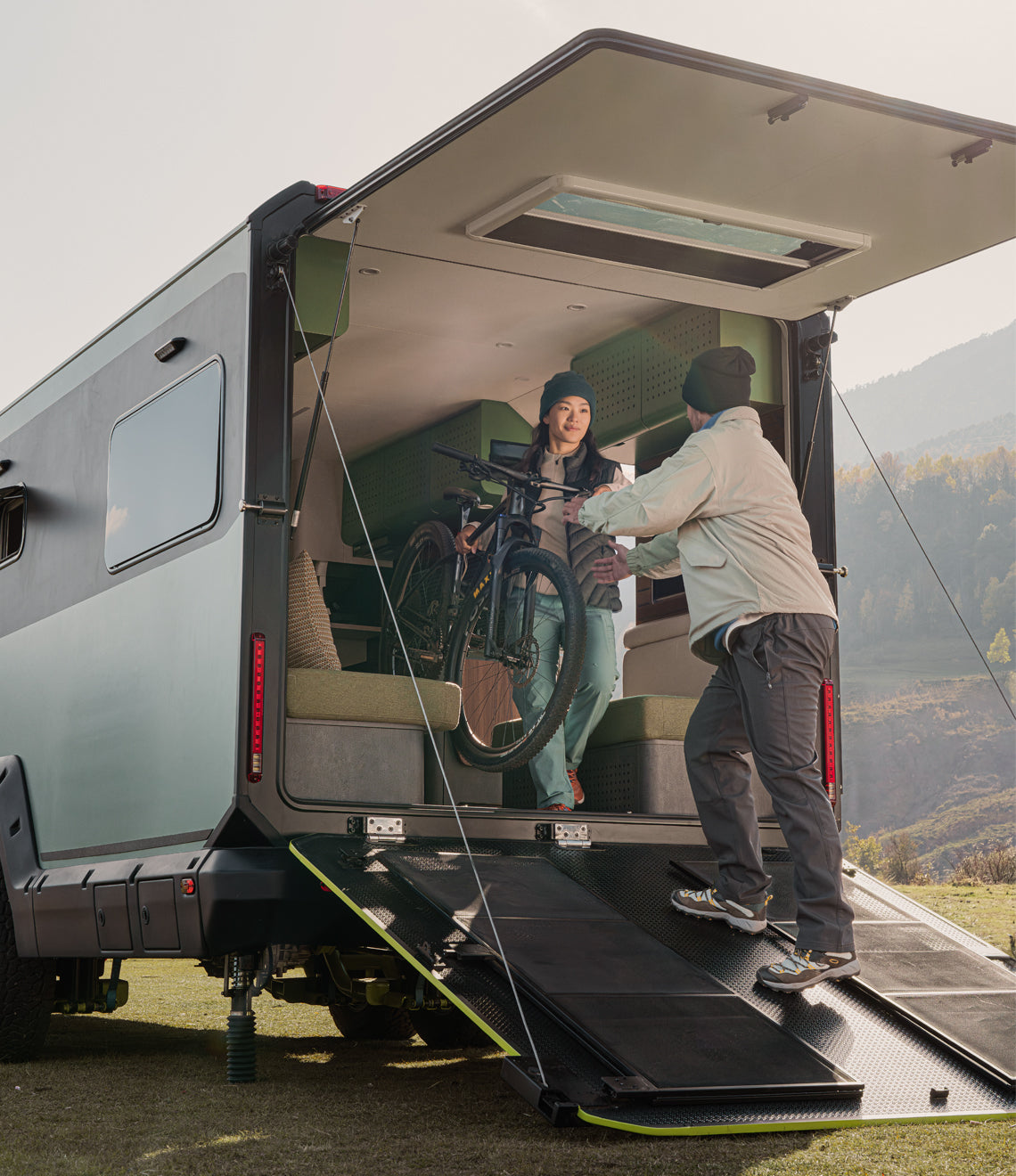
Insider tip: This is exactly the kind of spot where a self contained, self generating trailer like the Evotrex-PG5, which makes its own power, earns its keep, since you can sit out here with no hookups for a good while. Just check the Motor Vehicle Use Map (MVUM) first so you only camp where dispersed is actually allowed.
A reminder for all of Tier 3: the national forest 14 day limit applies (no camping more than 14 consecutive days in any 30 day period anywhere on national forest land), and dispersed is prohibited in posted areas, so the MVUM is not optional. Source: Sequoia National Forest camping page.
At a Glance
| Campground | Tier / type | Hookups | RV length reality | Reservation | Season |
|---|---|---|---|---|---|
| Potwisha | Tier 1 NPS | None | Road limits to about 24 ft on approach | Recreation.gov | Year round |
| Lodgepole | Tier 1 NPS | None | Longer rigs listed, route matters | Recreation.gov | Summer |
| Azalea (Grant Grove) | Tier 1 NPS | None | Varies, few pads over 30 ft | Rec.gov / FCFS off season | Year round |
| Sequoia RV Ranch | Tier 2 private | Full (30/50 amp) | Big rig friendly | Direct with park | Year round |
| Three Rivers Hideaway | Tier 2 private | Full (30/50 amp) | Mid size | Direct with park | Year round |
| Lemon Cove Village | Tier 2 private | Full | Big rig friendly | Direct with park | Year round |
| Big Meadows Road dispersed | Tier 3 forest | None | Small / mid only | None (FCFS) | Summer (snow closes it) |
Check Before You Roll
Roads, closures, and length advisories at Sequoia change with weather and storm recovery, so confirm everything before you commit a heavy rig to a mountain road. A few things worth confirming yourself before you commit to a site:
Lodgepole's 2026 season and rig fit. Its opening dates and listed max length come off the Recreation.gov page, not the road reality, so check exact dates and length on the Recreation.gov gateway before you count on it.
Azalea pad sizes. Only a few pads truly take a rig over 30 feet (elevation around 6,500 feet), so confirm a long pad on Recreation.gov before you book.
Potwisha and foothills elevation. Foothills sites sit roughly 2,500 to 3,000 feet and bake in summer, so double check the figure if heat planning matters to you.
Whether Dorst Creek and Buckeye Flat are still closed. Both are down for the 2026 season for storm and disaster recovery, so reconfirm their current status before you build any plans around them.
The Three Rivers private parks. Confirm hookup, amp, and mileage details directly with each park, and note Three Rivers Hideaway sits on the Kings River side of town while Sequoia RV Ranch is on the Kaweah.
Dispersed camping off Big Meadows Road. The road, the elevation, and where dispersed is currently allowed all change, so verify using the MVUM (load it in the Avenza Maps app) and call the local Ranger District.
Verify with the agencies directly:
- Sequoia and Kings Canyon camping pages
- Oversized vehicle and length advisories
- Reservations and live availability
- Sequoia National Forest / Giant Sequoia National Monument camping
For forest dispersed sites, use the Motor Vehicle Use Map (MVUM), load it in the Avenza Maps app, and call the local Ranger District when in doubt.
FAQ
Can you RV camp in Sequoia National Park? Yes. Potwisha is open year round to RVs and trailers, and Lodgepole opens for the summer. Just know there are no hookups in the park and the Generals Highway limits how long a rig you can bring up.
Are there RV hookups in Sequoia? No. Every NPS campground in the park is standard nonelectric, with no water, electric, or sewer at the site. For full hookups you stay in Three Rivers (Sequoia RV Ranch, Three Rivers Hideaway, Lemon Cove Village) and drive up.
What is the RV length limit for Sequoia? There is no single number, it is the road. NPS does not advise vehicles over 22 feet between Potwisha and the Giant Forest Museum (single vehicles over 40 feet are prohibited there), and not over 24 feet between the Foothills Visitor Center and Potwisha. Bigger rigs should enter via the Big Stump entrance on Highway 180.
Is there free camping near Sequoia? Yes, in the adjacent Sequoia National Forest and Giant Sequoia National Monument. The Big Meadows Road pullouts off the Generals Highway are the popular dispersed option. No services, smaller rigs only, and check the MVUM first.
Where can I dump and fill water near Sequoia? Inside the park, there is a free dump station and potable water at Potwisha, plus a dump station and water at Lodgepole in season. Forest dispersed sites have none, so top off in town. The Three Rivers private parks also have dump stations and full hookups.
When is the best time to RV camp near Sequoia? Roughly June through September for the high country (Lodgepole, forest dispersed). For shoulder season or winter, base low at Potwisha or in Three Rivers, since the upper elevations get snow and seasonal closures.
Things to Watch Out For
RV length limits and steep grades: The Generals Highway is the real boss. Match your rig to the route, do not just trust a campground's listed max length.
No hookups in park: Come self contained, full fresh water, charged batteries, empty tanks. Solar or onboard power helps a lot for longer stays, which is part of why a self generating travel trailer like the Evotrex-PG5 fits the no hookup reality here.
Where to dump and fill: Free dump station and potable water at Potwisha; dump and water at Lodgepole in season. Forest dispersed has none, so top off in town.
Bears: Use the bear box for all food and scented items, every time. This is bear country and they are bold.
Elevation and snow: High sites are cold at night even in summer and snowed in much of the year. Check seasonal opening dates.
Fire restrictions: Common in the dry foothills in summer; confirm current rules before you light anything.
Cell dead zones: Signal is weak to nonexistent across most of the park and forest. Download maps offline and use Campendium, iOverlander, and The Dyrt to scout sites and reviews before you lose service.
See you up among the big trees. Just respect the road, pack your own power, and lock up that bear box.