
RV Camping Near Big Bend National Park: An Honest Planning Guide
Big Bend is one of those places where the drive is part of the trip, and that is the first thing to wrap your head around when you start planning RV camping near Big Bend National Park.
This is far west Texas, genuinely remote, hours from a real grocery store, and once you are inside the park your phone basically becomes a camera. Almost no cell service. Fuel up, fill your water, grab your groceries, and dump your tanks before you roll in, because the conveniences you lean on everywhere else mostly do not exist out here.
The other thing that catches first timers off guard is hookups, or rather the lack of them. There is exactly one full hookup option inside the entire park.
Plan around summer too. From roughly April through September it is brutally hot, regularly over 100 degrees down by the river, so winter and spring are the real season here. That is when the good spots fill, so reserve early.
None of this is meant to scare you off. Big Bend is spectacular and weirdly uncrowded for a national park, and an RV is a great way to do it if you go in with the right rig and the right expectations. Here is how I would break it down.

Quick Answer
For RV camping near Big Bend you have three buckets.
First, developed campgrounds inside the park run by the National Park Service (Rio Grande Village, Cottonwood, and Chisos Basin), all with no hookups and reserved on recreation.gov.
Second, the single full hookup option, the Rio Grande Village RV Campground run by concessioner Aramark, with 25 sites.
Third, private full hookup parks just outside the park in Terlingua, Study Butte, Lajitas, and Marathon. Free dispersed camping is limited and remote. Winter and spring are the best season because summer is dangerously hot, and the main catches are that full hookups inside the park are scarce and the Chisos Basin area is affected by a multiyear construction project (see below).
Camping Terms, Plainly Defined
A quick glossary so the rest of this guide reads clearly.
Full hookups: A site that connects your RV to water, electric, and sewer. In Big Bend, only the Rio Grande Village RV Campground offers this inside the park.
Dry camping: Camping with no hookups at all. You run on your own fresh water, holding tanks, and battery or solar. The NPS developed campgrounds in Big Bend are dry camping.
Boondocking: Camping off grid on public land away from any developed campground, with no services. You are fully self contained.
Dispersed camping: Camping outside a developed campground, often free, on public land where it is allowed. Near Big Bend this is limited, and inside the park it means permitted backcountry roadside sites rather than pull anywhere freedom.
Rules and What to Know First
Only one campground in the park has full hookups. That is the Rio Grande Village RV Campground, run by concessioner Aramark, with 25 sites offering water, electric, and sewer. Everything else inside the park is dry camping.
Chisos Basin is affected by major construction. The park began two large construction projects in the Chisos Basin in spring 2026, expected to last about two years. This affects the Basin road, campground, and visitor services. Confirm current Basin access on the NPS site before planning a trip up there.
Chisos Basin is not for big rigs anyway. Even setting construction aside, the park does not recommend RVs over 24 feet or trailers over 20 feet because of the steep, narrow, winding road and small, unlevel sites.
Fuel, water, and supplies before you enter. Services inside the park are thin and distances are long. Top off your fuel and fresh water tank in the gateway towns.
Almost no cell service in the park. Download maps offline, tell someone your plan, and do not count on a signal for navigation or emergencies.
Summer is dangerously hot, so plan winter or spring. River elevations regularly top 100 degrees from spring into early fall. November through April is the comfortable, busy season.
Reservations are required. The NPS developed campgrounds are reservation only through recreation.gov, with no first come first served. The full hookup RV park books through the concessioner.
The Campgrounds
Tier 1: In Park Campgrounds
Rio Grande Village Campground Nearest landmark: east side of the park near the Rio Grande. What it is: developed NPS campground, dry camping. The largest campground in the park at 100 sites, shady with cottonwoods and an easy in and out for bigger rigs, plus a store and showers nearby at the village. Rig fit: Big rig friendly, with large pull through sites that can fit a 40 foot motorhome, but no hookups at the sites. Watch for low hanging branches that rule out some tall rigs, so read individual site descriptions. There is a dump and fill station at the entrance, drinking water available, and basically no cell service. Reservation: Reservation only through recreation.gov, with no first come first served. Most sites are bookable up to six months out, and some open only two weeks ahead at 9 a.m. CST. Insider tip: This is where you base a larger RV. Pick your site carefully for branch clearance, and use the dump and fill station here since it is one of the few in the park.
Cottonwood Campground Nearest landmark: west side of the park near the Rio Grande, by Santa Elena Canyon. What it is: developed NPS campground, primitive and quiet, dry camping. A peaceful, shady, birder favorite that feels off the beaten path, with around 24 sites. Rig fit: No hookups, and generators are not allowed at all, so it is genuinely quiet but you are on battery and solar the whole time. Drinking water available and no cell service. Smaller and more primitive, so it suits modest rigs better than big ones. Confirm current season dates before relying on it. Reservation: Reservation only through recreation.gov. Insider tip: Because generators are banned here, this is the spot where a self contained power setup pays off. Come in with full batteries.
Chisos Basin Campground Nearest landmark: center of the park, up in the Chisos Mountains at about 5,400 feet. What it is: developed NPS campground, dry camping. The scenic one, tucked into a mountain bowl with the coolest weather in the park and trailheads right there, which is exactly why it is so popular and so hard on big rigs. Rig fit: RVs over 24 feet and trailers over 20 feet are not recommended and will not really fit. The access road is steep, narrow, and winding, and sites are small and unlevel, so even rigs that technically fit often cannot get level. No hookups. Status note: Major construction in the Chisos Basin began in spring 2026 and is expected to last about two years, affecting the Basin road, campground, and services. Sources differ on exact timing and the current state of access, so verify the Basin status directly with the NPS before planning anything up there. Insider tip: If you do go up when it is open, and your rig is near the 24 foot line, think hard and consider leaving it down low and day tripping up instead.
Rio Grande Village RV Campground (full hookups) Nearest landmark: east side near the Rio Grande, at the village, adjacent to the store. What it is: NPS concessioner full hookup park run by Aramark. This is the only full hookup option inside the entire park, full stop. Rig fit: 25 sites with water, electric, and sewer, with a maximum RV length of about 38 feet. Open year round, and yes, still almost no cell service. Reservation: Book through the concessioner. The park notes small improvement projects at this RV park in spring and summer 2026, so confirm availability when you book. Insider tip: Book this one as early as you possibly can, because 25 sites is tiny and it fills fast in winter and spring. Reserve by phone at 855.765.1324, option 1, or through the concessioner site.
A note on backcountry: the park has primitive roadside campsites along dirt roads, but those require a backcountry permit, and many need high clearance, so they are usually not a fit for a typical RV or trailer. See Tier 3.
Tier 2: Nearby Private RV Parks and Gateway Towns
Maverick Ranch RV Park Nearest town: Lajitas, west of Study Butte, in the Painted Hills near the Lajitas resort, roughly 20 miles from the west entrance. What it is: private full hookup resort RV park. Resort amenities and a polished setup, with around 100 full hookup sites. Rig fit: Full hookups for big rigs and level sites, and because it is outside the park you actually get amenities. Cell service is better in the gateway towns than inside the park but still spotty out here. Insider tip: Good landing pad if you want a real shower and full hookups while staying close to the west side and Santa Elena Canyon.
Big Bend Resort and Adventures (Study Butte) Nearest town: Study Butte, near the west park entrance, about a five minute drive from the gate. What it is: private full hookup RV park. A large, convenient base just outside the entrance. Rig fit: Full hookup sites with 30 and 50 amp service, reportedly accommodating rigs up to around 55 feet, with easy access for big rigs. This is the closest cluster of services to the west entrance. Insider tip: Study Butte is your last real fuel, water, and grocery stop before the park, so stage here, top everything off, and day trip in.
Marathon Motel and RV Park Nearest town: Marathon, about 40 miles north of the park on US 385. What it is: private full hookup RV park in a characterful little railroad town if you are coming in from the north. Rig fit: Around 29 RV sites with full hookups, restrooms, showers, and a dump station. It is a long haul from the park interior, so it is more of a gateway stopover than a daily base. Insider tip: Marathon is a great first or last night when approaching from the north, but do not underestimate the drive time to the park interior each day.
You will also find additional full hookup and partial hookup options around Terlingua, including Around the Bend RV Park and Terlingua Ranch Lodge. Confirm current site counts, hookups, and rig limits directly with any private park, since these change often.
Tier 3: Free Dispersed and Adjacent Public Land
Let me be straight with you: truly free dispersed camping right at Big Bend is limited and remote, and I am not going to invent sites to pad this list. BLM presence in this corner of Texas is thin, so do not expect the easy boondocking you find elsewhere out West.
NPS backcountry roadside sites (permit required) Inside the park, the closest thing to dispersed camping is the system of primitive roadside sites along the dirt backcountry roads. These require a backcountry permit, and many of the roads need a high clearance or four wheel drive vehicle. Because of road conditions, most of these sites are not a realistic fit for a typical RV or trailer. Confirm road conditions, vehicle requirements, permit process, and any fee with the NPS before counting on one.
Big Bend Ranch State Park Nearest town: between Lajitas and Presidio, along the river road. What it is: a Texas state park, separate from the national park, with primitive drive in campsites. Huge, rugged, and gorgeous, with sites that get you remote and quiet for very little money. Interior and river district drive in sites run roughly $12 to $16 per night plus a daily entrance fee. Rig fit: Primitive drive in sites only, no hookups, and many roads are rough, so this suits smaller or capable rigs rather than big motorhomes. Cell service is poor to none. Insider tip: Reserve through the Texas State Parks system, and check road conditions for your specific site, since interior roads can be rough. Stop at a visitor center first.
At a Glance
| Campground | Tier and type | Hookups | Max RV length | Reservation | Season |
|---|---|---|---|---|---|
| Rio Grande Village | Tier 1, NPS | None (dry) | Up to about 40 ft | recreation.gov | Year round |
| Cottonwood | Tier 1, NPS | None (no generators) | Modest rigs | recreation.gov | Confirm season |
| Chisos Basin | Tier 1, NPS | None (dry) | 24 ft RV, 20 ft trailer (not recommended) | recreation.gov | Construction, verify access |
| Rio Grande Village RV | Tier 1, NPS concessioner | Full (water, electric, sewer) | About 38 ft | Concessioner (Aramark) | Year round |
| Maverick Ranch RV Park | Tier 2, private | Full | Big rig | Direct with park | Year round |
| Big Bend Resort and Adventures | Tier 2, private | Full (30 and 50 amp) | Big rig | Direct with park | Year round |
| Marathon Motel and RV Park | Tier 2, private | Full | RV sites | Direct with park | Year round |
| NPS backcountry roadside | Tier 3, NPS | None (primitive) | Not for typical RVs | Backcountry permit | Year round (hot summer) |
| Big Bend Ranch State Park | Tier 3, state park | None (primitive) | Smaller or capable rigs | Texas State Parks reservation | Year round (hot summer) |
Check Before You Roll
Verify the current details yourself, because remote parks change rules and seasons more than you would expect. Before you go, personally confirm these specifics so nothing catches you out:
The Chisos Basin construction status and current Basin access, since the multiyear project affects the road, campground, and services, and sources differ on exact timing.
The Chisos Basin RV and trailer length limits and whether your rig can handle the steep, narrow, winding road if it is open.
The Rio Grande Village RV Campground full hookup status and current reservation process through the concessioner, including the 2026 improvement projects there.
Per campground season dates, since Cottonwood can close seasonally and others can shift.
Dump and fresh water availability at the campgrounds you plan to use.
Backcountry roadside camping road conditions, high clearance needs, the permit process, and whether your rig is suitable.
Big Bend Ranch State Park road conditions, permits, and fees.
Current fees for the in park campgrounds, the full hookup park, and the state park.
Remoteness, fuel range, and water. Fill up and stock up in the gateway towns, because distances are long and services inside are limited.
Authoritative sources to check:
- Big Bend National Park camping overview
- Chisos Basin Campground details
- Chisos Basin construction timelines
- Rio Grande Village RV Campground (full hookups) NPS page
- Rio Grande Village Campground NPS page
- NPS reservations on recreation.gov (Rio Grande Village)
- Full hookup RV park reservations (Aramark)
- Big Bend Ranch State Park campsites (Texas Parks and Wildlife)
When in doubt, call the park directly at )432) 477-2251, and for the full hookup RV park call the concessioner at (855)-765-1324.
FAQ
Can you RV camp in Big Bend National Park? Yes. There are developed NPS campgrounds that take RVs (Rio Grande Village, Cottonwood, and Chisos Basin when open) plus the concessioner run Rio Grande Village RV Campground. Most are dry camping, and all park campgrounds require reservations.
Does Big Bend have RV hookups? Only one place inside the park does: the Rio Grande Village RV Campground, run by Aramark, with 25 full hookup sites (water, electric, sewer). For more full hookup options, look to private parks in Terlingua, Study Butte, Lajitas, and Marathon.
Can a big RV drive to Chisos Basin? No. The park does not recommend RVs over 24 feet or trailers over 20 feet, and the road is steep, narrow, and winding with small, unlevel sites. Base a bigger rig at Rio Grande Village or a private park outside. Also note the Basin construction project, so confirm access first.
Is there free camping near Big Bend? It is limited. BLM presence in this part of Texas is thin, so easy free boondocking is scarce. Inside the park, primitive backcountry roadside sites need a permit and usually high clearance. The main adjacent public land option is Big Bend Ranch State Park, which has cheap primitive sites but charges a fee.
When is the best time to RV camp at Big Bend? Winter and spring, roughly November through April. Summer is dangerously hot, regularly over 100 degrees near the river, which is why the comfortable season is also the busy one. Reserve early.
Do I need reservations? Yes for the in park campgrounds. The NPS developed campgrounds are reservation only through recreation.gov, with no first come first served. The full hookup RV park books through the concessioner.
What is the max RV length for full hookups in the park? The Rio Grande Village RV Campground lists a maximum RV length of about 38 feet across its 25 sites. Bigger rigs should plan to base at a private park outside the park.
Things to Watch Out For
A few practical notes from doing this kind of remote desert camping. For water fill and tank dumping, plan around the dump and fill station at Rio Grande Village, and top off fresh water in the gateway towns before you enter because options inside are limited. For scouting sites and reading recent reviews, the camping apps that actually help out here are Campendium, iOverlander, and The Dyrt, especially for the private parks.
Now the hazards, and take these seriously:
Extreme remoteness and fuel. Distances are long and gas stations are few. Fill up in the gateway towns and never let your tank get low inside the park.
No cell service. Plan offline maps, share your itinerary, and do not rely on your phone for navigation or emergencies.
Extreme summer heat and water. Summer temperatures regularly exceed 100 degrees near the river. Carry far more water than you think you need and treat afternoon hikes with respect.
The Chisos Basin road. Steep, narrow, and winding, with small, unlevel sites. Mind your length limits and your brakes, and confirm current construction access.
Javelinas and bears, so store your food. Keep food and scented items inside your vehicle or in an animal proof container. Javelinas will get into trash and toiletries too.
Flash floods. Desert washes and low water crossings can flood fast during storms. Do not camp in or cross flooded washes.
Fire restrictions. Wood and ground fires are not allowed anywhere in the park. Charcoal in above ground grills and liquid fuel stoves are okay, and check current restrictions.
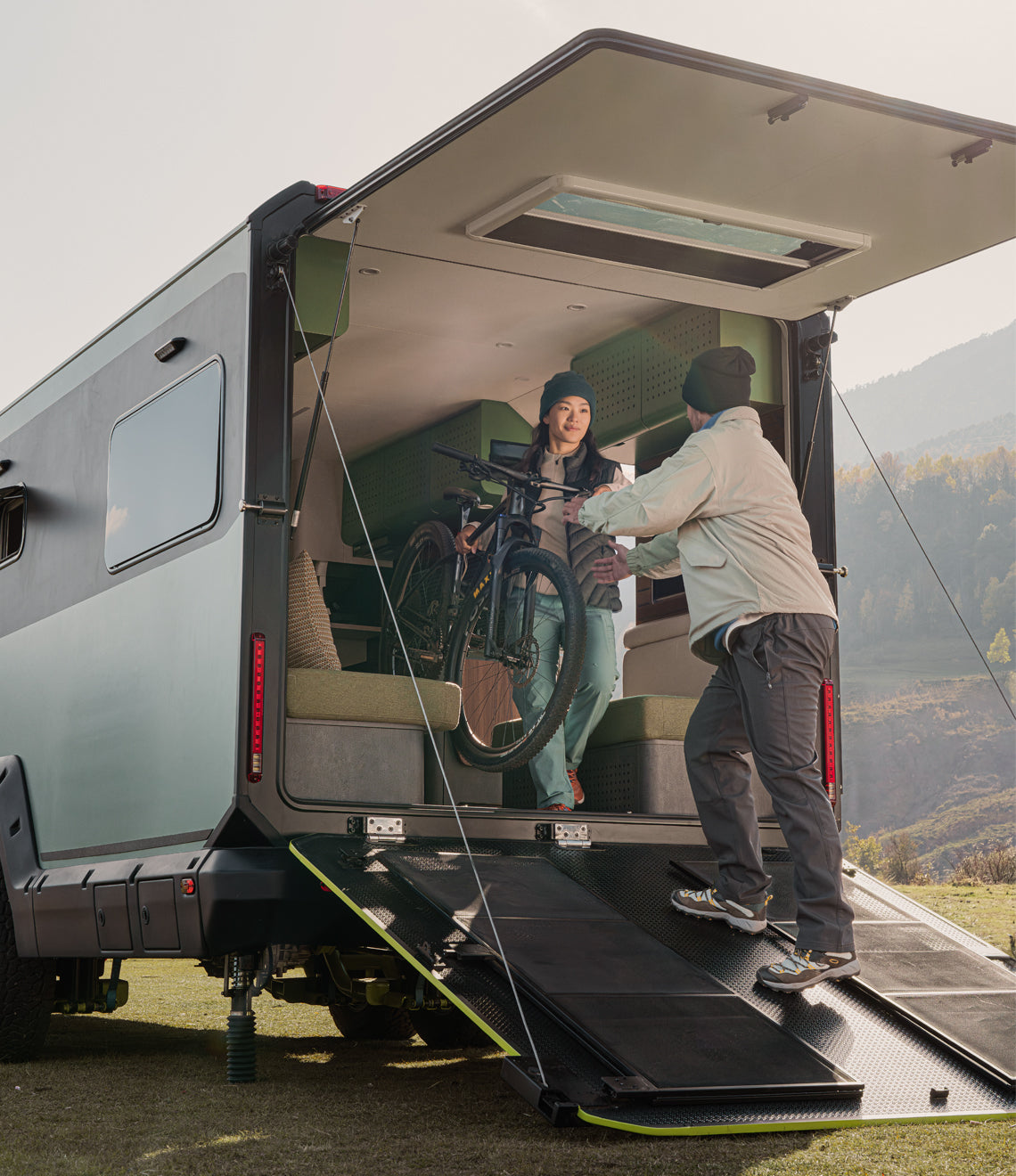
One last aside, since Big Bend is basically the definition of remote and three of the four in park campgrounds are dry camping with no hookups at all. This is exactly the kind of trip where a power generating travel trailer like the Evotrex-PG5 earns its keep, since it makes its own power from a lithium battery bank, solar, and an onboard gasoline generator. That means you can sit at a no hookup developed site like Cottonwood, where generators are banned, or a remote spot far from any plug and stay self contained longer. Out here, where the nearest full hookup is one tiny 25 site lot, that kind of energy independence changes what trips are even possible.