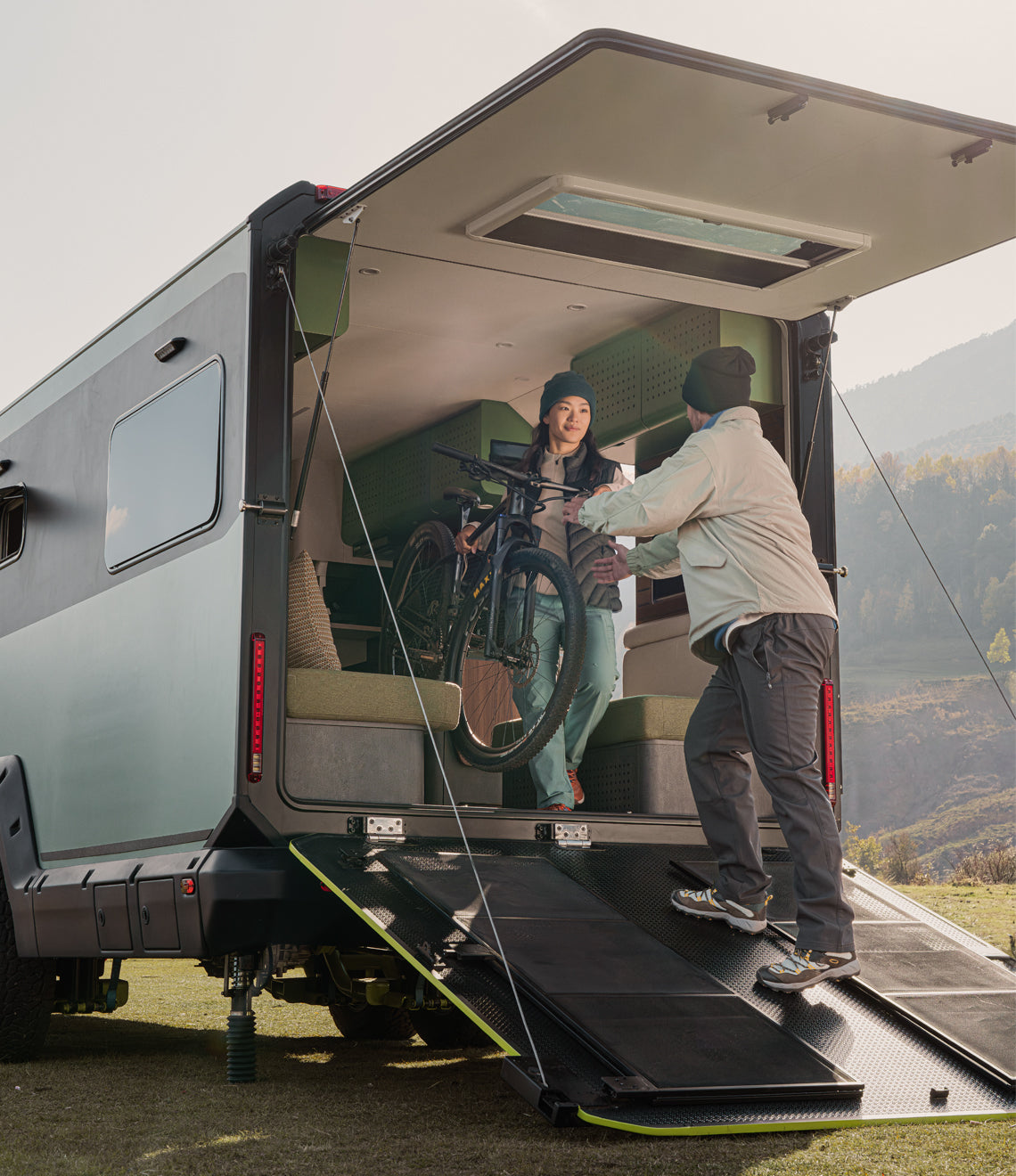

The Boondocking Guide Nobody Hands You
What free camping off-grid actually takes, from someone who has run out of water more than once
The TLDR
Boondocking is free camping with no hookups, usually on BLM or National Forest land. It's the best part of RV life and the part people most often fumble. If you only take a few things from this whole guide, take these:
-
Go close to home for the first time. Your driveway counts. You'll find out what's broken somewhere you can still bail.
-
Battery is king. Lithium changes everything, and solar is useless without somewhere to store it. Buy storage before panels.
-
Your grey tank fills before your fresh tank empties. That's what actually sends most people home, not running dry.
-
Use Campendium and iOverlander to find spots, arrive in daylight, back in so you can leave fast, and watch the weather.
-
Pack out everything and camp on already-used ground. Respecting the land is the only reason these spots stay free and open.
So you want to skip the campgrounds and park your rig out in the middle of nowhere for free. Good. Boondocking is the best thing about RV life, and also the part most people learn the hard way. There's a real gap between reading about it and actually doing it, and that gap is usually filled with a dead battery, an overflowing grey tank, or a 2am scramble to find a legal spot to sleep because you didn't plan ahead.
You'll hear a few names for this. Boondocking, dry camping, dispersed camping, free camping, they all point at the same thing: no hookups, off on your own, living off what your RV carries. This boondocking guide is the stuff I wish someone had just told me straight before my first trip. No fluff, no padded essential gear lists you'll never use. Just how it really works.
First, What is Boondocking Exactly?
Boondocking is camping with no hookups. No power pedestal, no water spigot, no sewer connection. You're running entirely off what your rig carries, which means your batteries, your fresh tank, and your waste tanks are the only things standing between you and a drive back to civilization. Most people do it on public land, BLM and National Forest mostly, where dispersed camping is free and you can usually camp overnight for up to 14 days before you have to move on.
You'll also hear "dry camping," which technically just means camping without hookups and gets used for boondocking and for sitting in a paved lot alike. People lump in "moochdocking" (a friend's driveway) and overnighting at a Cracker Barrel or Walmart under the same word too, but those aren't really the same animal. Real boondocking is you, your RV, and a patch of dirt with nobody around. That's the whole appeal.
Here's the boondocking basics mindset shift that took me too long to get: at a campground, the park's job is to keep you comfortable. Out here, that's entirely on you. Everything is a resource you're metering. Once that clicks, the rest of this gets easy.
The handful of things that actually matter your first time out
Don't go far on your first trip. Seriously. Find a free spot 30 to 45 minutes from home, or honestly just spend a night in your own driveway with the shore power unplugged. You will discover what's broken on your rig, and something is always broken, somewhere you can still bail out easily. This single tip will save you more grief than anything else in this guide.
Know your three numbers before you leave: how many amp hours of usable battery you've got, how many gallons your fresh tank holds, and how fast your grey tank fills. Those three tell you almost everything about what your RV can actually do out there. That last one sneaks up on everybody. You'll almost always fill grey before you run out of fresh, because every drop you use has to go somewhere. People obsess over fresh water and then get blindsided by a full grey tank on day three.
Arrive in daylight. Setting up a rig on an unfamiliar dirt road in the dark, hoping the spot you found on an app isn't a washed out two track, is how you end up stuck or scraping a slide-out on a tree. Give yourself a buffer.
And tell somebody where you're going. Cell service out there is a coin flip. Drop a friend a pin and a rough "back by" date. It costs you nothing and it's the cheapest insurance there is.
Leave no trace, and I mean really. Pack out everything, including your gross stuff. The reason so much of this land is still open to free camping is that enough people respected it. The reason spots get gated and closed is the people who didn't. Don't be the second kind.
Power: how to keep your RV running and not end up in the dark
This is the thing everyone overthinks and underbuilds at the same time. It's also the supply of the tools you'll need to figure out before any trip. Let me break it down by what actually keeps a rig running off-grid.
Solar is the boondocker's best friend, full stop. Panels on the roof, sun hits them, your batteries top off, and it's silent and free forever. The catch nobody mentions in the brochure: panels are only as good as your battery bank and your sky. A 400 watt array means nothing if you've only got a single beat up lead-acid battery to dump it into, or if you're parked under a canopy of pines. Solar charges the battery. The battery is what actually powers your life. Spend your money there first.
On batteries, here's the honest version. If you're running the factory lead-acid or AGM battery your rig came with, you can only safely use about half its rated capacity before you're damaging it. So that "100 amp hour" battery is really 50. Lithium (LiFePO4) flipped this whole hobby on its head because you can run it down to almost empty over and over without hurting it, so you genuinely get what's on the label, and they weigh a fraction as much. They're not cheap, but if you boondock more than a few weekends a year, it's the upgrade that changes everything. I held off for two seasons and regretted waiting.
A generator is the backup, not the plan. When you get three grey overcast days in a row and your panels are basically decoration, a generator will bail you out fast. But know this going in: a few of the prettiest BLM and forest spots have quiet hours or flat-out ban generators, and even where they're allowed, running a loud open-frame contractor generator at 7am next to other people camping overnight is how you become the person everyone hates. If you get one, get a quiet inverter model. Your neighbors and your own ears will thank you.
The setup most full-timers land on isn't one thing, it's a stack: solar for the daily free top-up, a massive LFP battery pack to ride through the nights and cloudy spells, and a quiet generator stuffed in a compartment for emergencies. You won't need all three at once most of the time, and that's the point. Redundancy is what lets you stop thinking about power and actually enjoy where you are.
It's worth knowing that a few of the newer rigs are starting to build this whole stack in from the factory instead of leaving you to cobble it together in a garage. The Evotrex-PG5 is the one that turned heads at CES this year, it pairs a 43 kWh LFP (Lithium Iron Phosphate) battery with 1.5 kW rooftop solar and a quiet automotive-grade generator and runs the whole thing as one smart integrated system, so you're not mentally adding up three separate setups and hoping they play nice. They quote north of 270 kWh of usable energy per cycle, which is frankly absurd by boondocking standards, that's days of running the AC and everything else without sweating a number. Most of us will keep DIYing our own stack for years, and that's fine, but it's a glimpse of where this is all going.
Couple of cheap habits that stretch everything: swap every bulb to LED if your RV didn't come that way, know that your furnace fan and your water pump are sneaky power hogs, and a decent battery monitor is the one piece of essential gear I'd never boondock without, so you're reading actual numbers instead of guessing off that useless four-light panel by the door. Flying blind on your battery state is how you wake up to a dead rig. If you build yourself a boondocking checklist, put that monitor near the top of it.
Water: the resource that ends most trips early
Power gets all the attention but water is what actually sends most people home. And like I said, it's usually not the fresh tank that gets you, it's grey filling up. Let's deal with both.
Making your water last, and finding more when it runs out
Start by knowing your fresh capacity and then just track what you burn for a couple trips. Most people have no idea they go through 6 gallons doing a normal sink full of dishes the old way. Once you've seen your real daily number you can plan honestly instead of guessing and getting it wrong.
The single biggest water saver is the navy shower. Wet down, water off, soap up, water on to rinse, done. You can get genuinely clean on a couple of gallons. A normal RV shower with the water just running will drain a small fresh tank scary fast. Do dishes the same way: scrape the plate, wipe it with a paper towel first, then a quick rinse instead of running the tap the whole time.
Some quick tricks the long-timers all use: a foot pump or a spray bottle for rinsing instead of the faucet, a collapsible dish tub so you can catch and reuse rinse water, and the old desert rule for the toilet, if it's yellow let it mellow. Every flush is water in and waste out, so it hits you on both ends of the equation.
For refilling on the road, the apps are your friend. Campendium and iOverlander are the two everyone actually uses, and the comments are gold, that's where someone will tell you the spigot at such-and-such trailhead got shut off last month. Beyond that: most dump stations also have potable fill, plenty of gas stations and city parks have a tap, and a lot of small RV places will let you fill for a few bucks. Carry a couple of collapsible jugs and top them off any time you pass water, even if your tank's only half down. Free water you didn't have to drive for is free water.
Do not drink out of a stream or a stock tank as your main supply, no matter how clean it looks. That's how you get a stomach bug that ends the trip way worse than a dry tank would. A filter or treatment tabs are fine for an emergency, but for your real water, stick to known potable sources. And get yourself a white drinking-water hose that you keep separate from the gross hoses. Don't be the guy filling his fresh tank with the same hose he rinses his sewer line with.
Last thing, and people forget this constantly: biodegradable soap keeps your grey tank from turning into a swamp, and going easy on the flushes keeps your black tank alive longer. When it comes to sewage, dump only at real dump stations, never on the ground, ever. That one's not a suggestion.
Staying safe out there (it's mostly not what you think)
First the reassuring part: the actual danger out boondocking is almost never some person creeping up on your rig. That fear is way overblown. The stuff that actually gets people is mundane, getting stuck on a road that turned to soup after rain, a flash flood in a wash you didn't realize you were parked in, weather you didn't see coming, or a medical thing hours from help. Safe boondocking is mostly about planning for the boring dangers, not the movie ones.
That said, basic sense still applies. Pick spots that show up in the apps with recent reviews, those are vetted by people who were just there. Back in so your nose points at the way out, so you can leave in a hurry without a twelve-point turn. If a place gives you a bad feeling when you pull up, just leave and find another. Your gut is usually right and there's always another spot. I've pulled out of a "free" spot twice in five years and never once regretted it.
Lock your doors at night even when you're alone in the desert, close up your outside compartments, and don't leave your nice stuff scattered around camp. Not because the boogeyman's coming, just because there's no reason to advertise. A cheap motion light is plenty for peace of mind.
Watch the weather like it's your job, because out here it is. A dry wash is a lovely flat campsite right up until a storm twenty miles away you can't even see fills it with water. Stay out of low spots. Park on higher ground. And don't get so unpacked and leveled and cozy that you can't move quickly if you have to. Keep the rig basically ready to roll.
Get a real way to communicate. In a lot of these spots your phone is a paperweight. A satellite messenger like a Garmin inReach is the thing serious boondockers carry, it'll send an SOS or a text from absolutely nowhere. Pair that with telling someone your plan and you've covered the actual risk.
And do the wildlife stuff right. Food sealed up inside, clean up after you cook, don't leave a greasy pan out overnight. This isn't just about bears, it's mice and ants and whatever else, and a clean camp is a calm camp.
Finding the spots: public land without the headache
Most of the free camping in this country sits on BLM land and in National Forests, and there's a genuinely staggering amount of it, especially out West. The best boondocking spots are out there in huge numbers if you know how to look, whether you're chasing red rock down in boondocking in Arizona or just starting closer to home. But "public land" doesn't automatically mean "camp anywhere," and getting that wrong, parking your RV somewhere it isn't allowed, is how you get a knock on the door at midnight.
How the rules actually work, plus the etiquette that keeps spots open
The general framework: a lot of BLM and Forest Service land allows dispersed camping for free, usually with a 14 day limit in a given area, after which you're supposed to pack up and move a decent distance (often 25 miles, but it varies) before settling again. The whole point of that rule is to keep any one rig from homesteading a pretty spot and trashing it. But, and this matters, the rules genuinely vary parcel to parcel even inside one agency. Some areas are day-use only. Some close seasonally. Some have switched to permits. Check the posted signs at the entrance and the agency's website or a quick call to the ranger district before you commit. Don't assume.
When you do find a boondocking location you like, camp on ground that's already been camped on. The bare dirt clearing with an old fire ring is exactly where you want to be. Resist the urge to make a brand new pretty spot in the untouched grass, that's how meadows get wrecked and how agencies end up closing boondocking areas for good. Use what's already there. It's better for the land and it's the unwritten rule everyone follows.
Spread out. Half the reason you came is to not be packed in next to strangers, so give the rigs already there plenty of room and they'll do the same for you. Pulling in 40 feet from the only other camper in a square mile of empty land marks you instantly as someone who's never done this.
Think about your spot in three dimensions before you park. Is it on high ground if it rains? Can the road handle your rig, or does it narrow and get sketchy past where you can see. If you're running solar, are you about to park under the one big tree that'll shade your panels all afternoon. These are the little reads that come with practice, and getting them wrong is annoying at best and a tow bill at worst.
Then just be a decent neighbor about it. There are no trash cans out here, so everything you brought leaves with you. Keep your generator and your music to yourself. Wave at people, share a tip if someone looks new, and leave the place cleaner than you found it. Every closed-off spot in this country got closed because somebody didn't, and every spot that's still open is one we get to keep by acting right. That's not preachy, it's just how the whole thing keeps working.
Upgrades worth the money (and the order I'd buy them)
You can boondock in a bone-stock rig for a weekend no problem. But if you want to stay out longer and stop babysitting your resources, a few upgrades genuinely change the experience. Here's roughly the order I'd spend the money, because not everything's worth it on day one.
Battery first, always. I don't care how much solar you bolt on, if you've got nowhere to store it, it's useless after sundown. Moving to lithium is the single biggest quality of life jump in this hobby. Suddenly you're not rationing electrons at night or panicking when the furnace fan kicks on. If you only ever do one upgrade, do this. And if you're shopping for a whole new rig rather than upgrading an old one, this is exactly where something like the Evotrex-PG5 makes its case, the massive LFP battery pack and the self-generating power are baked in, so the part most of us spend years and a few thousand dollars chasing is just there from day one. Pricey, sure (base trim starts at $119,990), but if you're buying new anyway it's worth seeing what a purpose-built off-grid trailer looks like before you settle for a stock rig you'll be upgrading for the next three seasons.
Solar second, sized to that battery. Once you've got real storage, panels keep it full for free. Match your array to your bank, there's no point in a giant solar setup feeding a tiny battery, or a huge battery you can never refill. They work as a pair.
Water capacity third. If your RV's got a small fresh tank, every extra gallon you can carry is another half day or day out. Some folks add an auxiliary tank, but honestly the cheap version is just a few rugged jugs and a transfer setup, basic essential gear that pays for itself on the first long trip. And here's the move most people miss: a bigger grey tank, or a portable waste tote you can roll to a dump while leaving the rig parked, buys you way more time than fresh water does, because grey is what fills first.
Then comfort and insulation, which matters more than it sounds. Reflectix in the windows, vent insulators, and skirting around the bottom in cold weather turn a rig that's miserable below freezing into one that's totally livable. A good roof fan (the Maxxair types) moves enough air that you can often skip running the AC entirely, which off-grid is huge because AC is a power monster. Little stuff like this is the difference between enduring a trip and actually relaxing on it.
And get all-terrain tires before you get fancy electronics. The spots worth reaching are usually down a road that'll punish road tires, and nothing ends a trip faster than a flat or getting stuck two miles in. Decent rubber, a tire repair kit, and a way to air back up after airing down for sand are worth more than half the gadgets people obsess over.
The checklist of stuff nobody tells you to pack
Everybody knows to bring water, food, and a first aid kit. So I'm skipping all that. This is the list of small, cheap, easy-to-forget stuff that, when you don't have it, turns a great trip into a miserable one. Most of these I learned about by not having them. Print it, tape it inside a cabinet, thank me later.
Power and electrical
❑ A real battery monitor. Not the four-light panel by the door. A shunt-based monitor that shows actual amp hours in and out. Guessing your battery state is how you kill a battery or kill a trip.
❑ A 12V tire inflator. Slow leaks happen on rough roads, and there's no gas station air pump out here. Also lets you air down for sand and reinflate after.
❑ Spare fuses and a test light. RV 12V gremlins are almost always a blown fuse. A $5 assortment saves a 3-hour teardown in the dark.
Water and tanks
❑ A clear sewer hose elbow. Sounds gross, but seeing when your tank actually runs clear is the difference between a clean dump and a nasty surprise. The clear adapter is the upgrade veterans swear by.
❑ Extra sewer hose gaskets. A 50-cent rubber ring is the thing standing between a clean refill and a leak that wastes water you can't replace. Bring spares, they fail at the worst time.
❑ A collapsible water jug or two. Top them off any time you pass a tap, even half full. Free water you didn't drive for is what extends a trip from four days to seven.
❑ A dedicated white drinking hose. Keep it separate from your gross hoses. Don't fill your fresh tank with the same hose that touched your sewer line. Ever.
Getting unstuck and staying put
❑ Leveling blocks AND wheel chocks. Almost no dispersed site is flat. Without blocks your fridge won't cool right and you'll sleep with the blood rushing to your head. Chocks keep you from rolling off them.
❑ Traction boards or even old carpet scraps. Wet dirt, sand, and mud are the real enemy. Something to put under a spinning tire gets you out without a tow truck that can't reach you anyway.
❑ A folding shovel. For digging out a tire, leveling a spot, or putting out a fire properly. Cheap, packs flat, endlessly useful.
Comfort and the little things
❑ Reflectix or window covers. Cut for your windows ahead of time. Keeps the rig cool in sun and warm at night, and cuts how hard your power system has to work. Biggest comfort-per-dollar item there is.
❑ A headlamp, not just a flashlight. You need both hands out here, fixing a hitch, finding a fuse, cooking after dark. Pack two and spare batteries.
❑ Way more trash bags than you think. You're packing out everything, and bags also corral dirty laundry, contain a leaky anything, and double as rain covers in a pinch.
❑ A paper map or offline maps downloaded. Your phone is a paperweight when service drops, which it will. Download the area before you lose signal and screenshot your turn-offs.
The safety stuff that's actually worth it
❑ A satellite messenger. A Garmin inReach or similar. When you're hours from help with no bars, this is the one piece of gear that can genuinely save your life. Borrow one if you can't buy one.
❑ A real fire extinguisher you can reach. Not the tiny one bolted in an inconvenient corner. Mount a good one where you can grab it in two seconds, and check the gauge before every trip.
❑ A basic tool roll matched to your rig. Screwdrivers, an adjustable wrench, pliers, duct tape, zip ties, and self-fusing silicone tape. You don't need a full shop, just enough to limp something back to working.
Last thing
None of this is as complicated as it looks written down. You learn it by going, screwing a few things up, and getting better every trip. Your first time out you'll forget something and run low on something else and have to problem-solve in the moment, and that's genuinely part of the whole appeal. When you're starting your boondocking adventures, start close to home, keep it simple, respect the land, and pretty soon you'll be the one in the comments telling a nervous first-timer that it's not a big deal and they should just go. Because it isn't, and they should.
That's really the heart of this whole lifestyle. The RVers you'll meet out on public land, whether they're in a beat-up old camper or a rig that costs more than a house, are mostly just people who figured out that the best spots are free and the only thing stopping you is the first trip. Whether you're running a twenty year old rig you've patched together yourself or eyeing one of the new power-generating trailers like the Evotrex-PG5 that handle all of this for you, the spots are the same and the stars are the same. The gear just changes how long you get to sit under them. See you out there.