
The Best Boondocking Spots in Arizona
Arizona is kind of the promised land for free camping, and once you've spent a winter out here you get why the desert fills up with rigs every November. Roughly the bottom half of the state is wide open public land, the BLM alone manages around 12.2 million surface acres here (per the Bureau of Land Management), and a lot of it is flat, sunny Sonoran desert you can just pull onto and stay on for two weeks for nothing. That combination of space, sun, and mild winters is the whole pitch.
The catch is the same thing that makes it great. It's the desert. Summer in the low country will cook you, the good winter spots near Quartzsite turn into a small city of RVs from January on, and Arizona has more overlapping agencies than most states (BLM, Forest Service, Fish and Wildlife, and the State Land Department), which trips up first timers who assume "public land" means "camp anywhere free." Some of it is free, some of it needs a cheap permit, and some of it you pay a seasonal fee for. Once you sort out which is which, it's honestly one of the easiest places in the country to live out of a trailer.
Below is how I actually think about it, grouped by who manages the land, because that's what decides the rules and the price. Real named sites, not just "there's BLM land near town."

Quick Answer
The best boondocking in Arizona is on BLM land and in the national forests, where dispersed camping is free for up to 14 days. The best season is roughly October through April when the desert is cool; summer is brutal in the low country, so you head up to the higher forests. The main catch is knowing your land type: BLM dispersed is free, the LTVAs around Quartzsite cost money but give you water and a dump, and Arizona State Trust Land needs a cheap permit before you set a wheel on it.
Know the rules before you go (this trips up first timers)
A few things that will save you a ranger conversation or a ticket:
The 14 day rule is real. On BLM and Forest Service land, dispersed camping is generally capped at 14 days in any 28 day period (BLM's own camping page). When your 14 days are up you have to actually leave, and in Arizona that means moving outside a 25 mile radius of your old spot before you reset. Don't just scoot down the road half a mile.
Free BLM dispersed and the paid LTVA are two different things. This confuses everybody around Quartzsite. The free 14 day areas (Plomosa Road, Dome Rock, and friends) cost nothing and have zero amenities. The Long Term Visitor Areas like La Posa are a separate paid program: $180 for the full season (September 15 to April 15) or $40 for any 14 consecutive days, and that fee buys you water, a dump station, trash, and toilets (Bureau of Land Management, La Posa page). Two different systems, same general neighborhood.
State Trust Land needs a permit. This one is sneaky. A lot of land near Phoenix and inside places like Ironwood Forest is Arizona State Trust Land, and you legally need a recreation permit before you camp on it. It's $15 a year for an individual or $20 for a family, bought online, and camping is capped at 14 cumulative days per calendar year (Arizona State Land Department). It is not the same as a BLM stay limit and it is not free.
No amenities means no amenities. Almost every free spot here has no water, no dump, no trash, nothing. Show up self contained with full fresh tanks and a plan to pack everything out.
Watch the season closures and fire orders. The forests around Flagstaff in particular have restrictions that change, more on that below.
Free BLM dispersed camping (the bread and butter)
This is where most Arizona boondocking happens. Free, 14 days, first come first served, and usually wide open enough for any rig.
Saddle Mountain BLM, Tonopah (west of Phoenix)
If you want one easy, no drama spot off Interstate 10, this is the one I send people to. It's BLM land in the open Sonoran desert just south of I-10, about 50 miles west of Phoenix, with classic saddle shaped mountain views and big flat pullouts. Free, 14 day limit, no facilities at all.
Named site: Saddle Mountain Dispersed, reached from I-10 Exit 94, south to Salome Highway, then over toward Courthouse Road. Plenty of established sites with fire rings already there.
Rig fit: This is one of the rare desert spots a big fifth wheel or a long Class A can get into without sweating it. The main pullouts off the paved approach are firm and level. Go too far back on the rougher spurs and you'll want clearance.
Insider tip: Cell coverage is decent but provider dependent out here (T Mobile and AT&T generally do better than Verizon based on what most folks report on Campendium). If you work on the road, test your signal before you fully deploy the trailer.
Quartzsite free 14 day areas
Quartzsite in winter is a phenomenon, tens of thousands of RVers descend on a tiny town for the rock and gem shows and the cheap desert living. Around it, the BLM runs several free 14 day dispersed areas that are completely separate from the paid LTVAs.
Named sites: Plomosa Road (north of town off Highway 95, dirt spurs running back into palo verde and ironwood), and Dome Rock (west of town near Sugarloaf Peak, a flatter section closer to town and a rockier section up by the rock itself). Both free, both 14 days, both with nothing in the way of services.
Insider tip: The closer you park to the highway and the main shows, the more you're basically dry camping in a parking lot of other rigs. Drive the extra mile or two down the spur roads on Plomosa and you trade the convenience for actual quiet and a real horizon. That tradeoff is the whole game out here.
BLM Long Term Visitor Areas (paid, but worth it for long winters)
These are not free, so I'm flagging them clearly. If you're posting up for the whole winter and want water and a dump without driving to town constantly, this is the move.
La Posa LTVA, Quartzsite
La Posa is the big one, four sections (South, North, West, and Tyson Wash) just south of Quartzsite. The permit is $180 for the full season or $40 for a 14 day stretch, and per the official BLM La Posa page it includes vault toilets, water faucets, a dump station, and trash service. For a long stay that's a steal compared to any RV park, and your one permit is good across the LTVA network for the season.
Insider tip: If you're only in town for a quick visit, the $40 short term permit often beats bouncing between free 14 day areas and constantly relocating, especially when you factor in the water and dump access. Run the math for your trip.
National forest dispersed camping (the summer escape)
When the low desert hits triple digits, you go up. Arizona's high country sits around 7,000 feet and stays comfortable when Phoenix is melting. Forest dispersed rules are the same 14 day flavor, but the named sites and fire rules matter more up here.
Coconino Rim Road (Forest Road 310), near the Grand Canyon South Rim
This is my favorite "I want the Grand Canyon without paying $50 a night" play. FR 310 runs through the Kaibab National Forest right outside the park boundary off Desert View Drive (Highway 64). Free dispersed camping, 14 days, and there are dozens of well spaced existing sites stretched out over roughly the first dozen miles, with a pit toilet near the fire tower.
Rig fit: The first quarter to half mile off the highway is rutted and rough, and the first mile is closed to camping anyway (it's within a mile of the historic Hull Cabin). Past that it smooths out and opens up. Smaller trailers and vans are fine; bigger rigs should take it slow and scout the entrance.
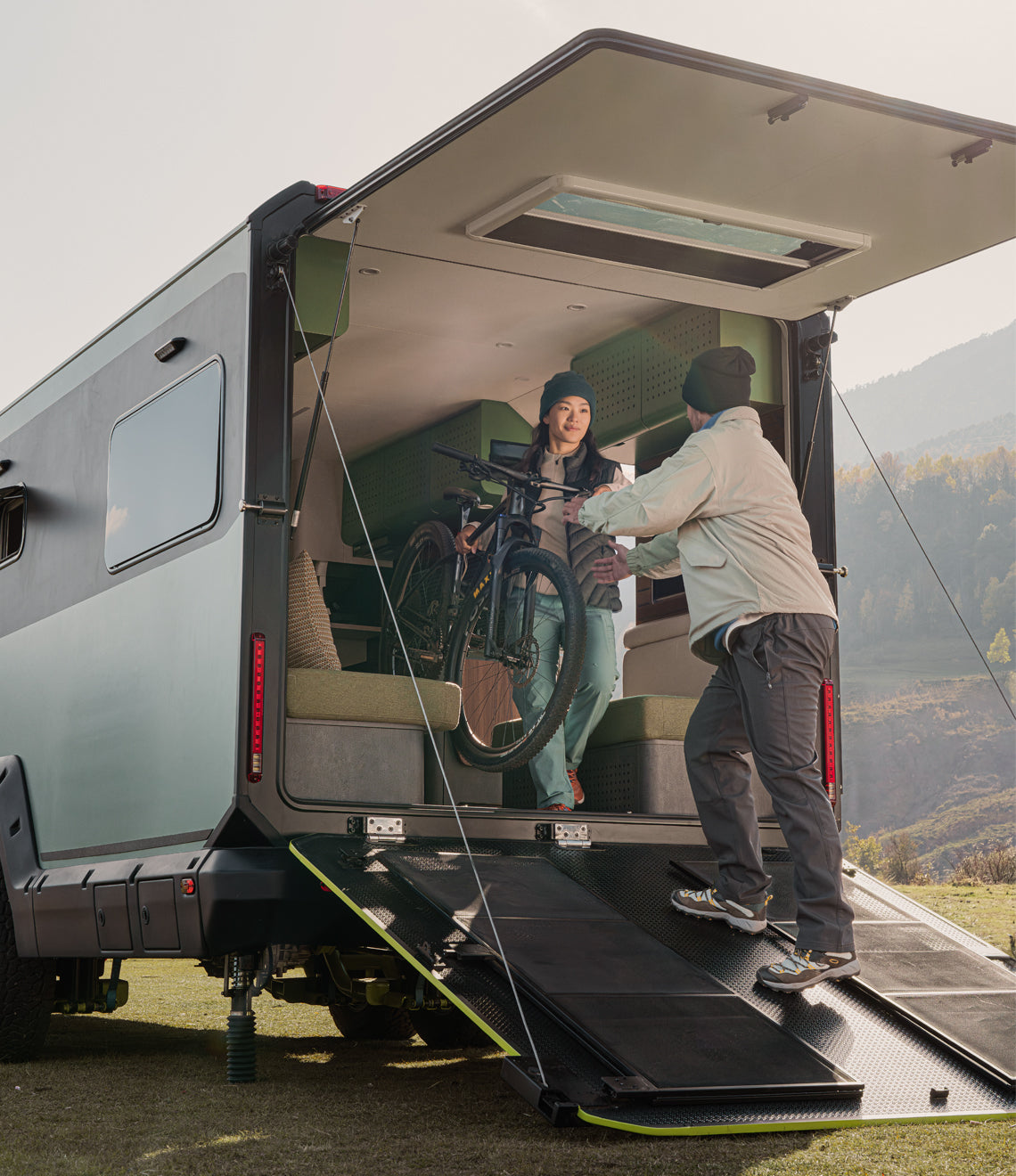
Insider tip: This is high country, so even in summer nights get cold and shoulder season can bring snow. It's also genuinely remote, no hookups, spotty signal, real distance from services. This is exactly the kind of place where a self contained trailer with serious onboard power earns its keep, and it's where something like the Evotrex-PG5 (https://www.evotrex.com/pages/product), with its massive LFP battery pack, solar, and onboard gasoline generator, makes a quiet remote stay a lot more livable.
West Sedona Designated Dispersed Camping Area (Forest Road 525)
Sedona's red rock dispersed camping got reined in, so know this going in: in west Sedona, dispersed camping is only legal inside eight designated areas, mostly along Forest Road 525, and camping outside those designated sites is prohibited (Coconino National Forest). It's still free, still first come first served, still a 14 day limit, and the views are unreal.
Insider tip: Charcoal and wood campfires are banned here at all times. Propane stoves and grills you can turn on and off are allowed, so plan your cooking around gas, not a fire ring. And get there early, those 200ish sites fill fast in the cool months.
Cinder Hills OHV Area, near Flagstaff
Northeast of Flagstaff off Forest Road 776, Cinder Hills is a large designated OHV area in the Coconino National Forest where dispersed camping is allowed (14 days). If you've got toys to ride, it's a natural base.
Important Flagstaff note: A lot of the National Forest immediately around Flagstaff is under a camping and campfire closure order running from May 2025 through April 30, 2027, so you cannot just pull off and disperse camp in the close in Flagstaff forest right now. Stick to areas like Cinder Hills that are still open, and confirm the current boundary with the Coconino National Forest Supervisor's Office before you commit.
National Wildlife Refuge (a desert exception)
Most wildlife refuges don't let you camp. Kofa is the famous Arizona exception, and it's a good one.
Kofa National Wildlife Refuge, near Quartzsite and Yuma
Kofa is over 600,000 acres of saguaro studded desert and craggy mountains managed by US Fish and Wildlife, and it actually allows dispersed camping, which is rare for a refuge. Palm Canyon Road has lots of pullouts you can reach in a regular vehicle, and it's quieter and more scenic than the Quartzsite crowds nearby. No permit, no fee.
Named site: Palm Canyon Road dispersed camping, off Highway 95 south of Quartzsite.
Rig fit / rules: The refuge has its own rules that differ from BLM. Per the official Fish and Wildlife Kofa page, you have to keep vehicles within 100 feet of the numbered roads and camp at least a quarter mile from any water source (the wildlife needs it). Stay limit here is 14 days in a 12 month period, which is stricter than the BLM 28 day cycle, so don't treat it like a place to winter over.
Insider tip: Drive up toward the Palm Canyon trailhead, this is the only spot in Arizona with native palm trees, tucked in a slot in the mountains. Most people camp and never walk up to see them.
State Trust Land (cheap permit, big payoff near cities)
If you want to be close to Phoenix or Tucson, a lot of the convenient open land is State Trust Land, which means a permit, not a free for all.
Ironwood Forest National Monument, near Marana and Tucson
Ironwood is a gorgeous Sonoran monument northwest of Tucson, all ancient ironwood trees and saguaros, about 189,600 acres. Here's the wrinkle that catches people: most of it (around 128,400 acres) is BLM where dispersed camping is free for 14 days, but the monument is a checkerboard that also contains State Trust Land and private parcels. Per the official BLM Ironwood page, you genuinely need to know which one you're parked on.
Named site: Dispersed pullouts along the main roads off Silverbell Road (reached via I-10 Exit 236 through Marana).
Insider tip: Grab the $15 individual or $20 family State Trust recreation permit online before you go, so you're covered no matter which parcel you end up on. It's cheap insurance and it's required for the Trust Land sections anyway. The Phoenix and Tucson area open land near Lake Pleasant and Apache Junction is also largely State Trust Land, so the same permit logic applies there.
At a glance
|
Spot |
Land type |
Cost |
Stay limit |
Best for |
|
Saddle Mountain, Tonopah |
BLM dispersed |
Free |
14 days / 28 |
Easy big rig winter base off I-10 |
|
Quartzsite (Plomosa, Dome Rock) |
BLM dispersed |
Free |
14 days / 28 |
The classic winter scene |
|
La Posa LTVA, Quartzsite |
BLM LTVA |
$180 season / $40 |
Up to 7 months |
Long winters with water + dump |
|
Coconino Rim Road (FR 310) |
Kaibab NF |
Free |
14 days |
Grand Canyon on the cheap |
|
West Sedona (FR 525) |
Coconino NF |
Free |
14 days |
Red rock views (designated sites only) |
|
Cinder Hills OHV |
Coconino NF |
Free |
14 days |
OHV riders near Flagstaff |
|
Kofa NWR |
Wildlife refuge |
Free |
14 days / 12 mo |
Scenic, quiet, near Quartzsite |
|
Ironwood Forest NM |
BLM + State Trust |
Free / permit |
14 days |
Close to Tucson |
Paid fallbacks worth knowing
When the free spots are jammed or you need services, these keep you out of a $60 RV park:
-
La Posa LTVA (Quartzsite): $180 season or $40 for 14 days, with water, dump, trash, and toilets. The single best value for a long winter.
-
Arizona State Trust Land permit: Not a campground, but the $15 individual / $20 family annual permit unlocks a ton of convenient land near Phoenix and Tucson for up to 14 cumulative days a year.
Don't take my word for it, check before you roll
Rules and fire orders change, so verify with the actual agency before you drive out. These are the official pages:
For any national forest spot, pull the Motor Vehicle Use Map (MVUM) for that district so you know which roads and pullouts are legal to camp on, and download offline maps in the Avenza Maps app before you lose signal. When in doubt, call the local Ranger District or BLM field office, they answer the phone and they'll tell you the current closures.
FAQ
Is boondocking legal in Arizona?
Yes. Dispersed camping is legal and free on most BLM land and in the national forests for up to 14 days, and it's allowed on State Trust Land with a cheap permit. The trick is knowing which agency manages the spot you've found, because the rules and fees differ.
Is there BLM land in Arizona?
A lot of it. The BLM manages roughly 12.2 million surface acres in Arizona, much of it open to free dispersed camping. It's the backbone of free camping in Arizona.
Where can you boondock free in Arizona?
Solid free options include Saddle Mountain BLM near Tonopah, the free 14 day areas around Quartzsite (Plomosa Road, Dome Rock), Coconino Rim Road (FR 310) near the Grand Canyon, the designated West Sedona dispersed sites, and Kofa National Wildlife Refuge.
When is the best time for boondocking in Arizona?
Roughly October through April for the low desert, when it's cool and pleasant. In summer the desert is dangerous, so you move up to the higher forests around 7,000 feet near the Mogollon Rim and the Grand Canyon.
Do you need a permit?
Not for regular BLM or national forest dispersed camping. You do need an Arizona State Land Department recreation permit ($15 individual, $20 family per year) for State Trust Land, and you need a paid LTVA permit ($180 season or $40 for 14 days) to stay in a Long Term Visitor Area like La Posa.
Things to watch out for
A few hard earned lessons from the desert:
Water and dumping: Almost no free spot has either. Around Quartzsite, the La Posa LTVA has potable water and a dump station (you'll need the permit), and the town has commercial fill and dump options. Plan to roll in with full fresh tanks and plenty of empty in the gray and black. Don't wait until you're desperate.
Use the apps locals use: Campendium, iOverlander, and The Dyrt are how everyone finds sites, reads recent reviews, and checks cell signal by carrier before driving in. Cross check the most recent reviews, because access roads and rules change fast.
Heat will hurt you. This is the big one. Low desert summers regularly run dangerously hot, and a trailer with no shade becomes an oven. In the warm months go up in elevation, and never count on cell signal to bail you out if your cooling fails.
Monsoon and flash floods. From roughly July into September, Arizona's monsoon brings sudden, violent storms. Never camp in a wash or a low drainage, water comes down fast and a dry sandy bottom can be a torrent in minutes. If rain is coming, get to higher firm ground.
Mud and washboard. Desert dirt roads turn to grease when it rains and many spots are bumpy washboard even dry. Know your clearance, and don't push a heavy rig down a soft spur you can't turn around on.