
The Best Boondocking Spots in Wisconsin
Let me save you the first headache I ran into: there is zero BLM land in Wisconsin. None. So all those western boondocking habits, just roll onto BLM and post up for two weeks, do not work here. Boondocking in Wisconsin is a different animal, and once you get the system, the northwoods is one of the most underrated free camping zones in the Midwest.
Here is what makes it tick. You have got the Chequamegon Nicolet National Forest up north, which works like national forest land anywhere, free dispersed camping along the forest roads. But the real secret, the thing 90 percent of generic listicles flat out skip, is Wisconsin's county forest system. The state has a huge network of county owned forests, and a lot of them let you disperse camp for free or for a tiny permit fee. That is the move. Most people drive right past it.
The catch? Short season and bugs. Realistically your sweet spot is late May through September, and even then the mosquitoes and ticks up north in June will test your relationship with nature. Plan around it and Wisconsin boondocking is a genuinely great, quiet, lake dotted experience.

Quick Answer
Yes, you can boondock for free in Wisconsin, just not on BLM land because there is none. The best free dispersed camping is in the Chequamegon Nicolet National Forest in the north, where camping along forest roads is free with a 21 day limit. Beyond that, Wisconsin's county forests (places like Lincoln, Price, Bayfield, Marinette, Burnett, and Douglas counties) allow dispersed camping, some free and some for a small permit, and that county forest system is the best kept secret for free camping in Wisconsin.
The Rules You Actually Need to Know
The single most important thing about dispersed camping in Wisconsin is that the rules are not one size fits all. Here is the short version.
National forest dispersed camping is free and does not need a permit. In the Chequamegon Nicolet National Forest you can camp along open forest roads. The Forest Service limit is 21 days at the same site within a 30 day period, then you move at least one mile.
County forest rules vary by county, full stop. This is the part people get burned on. Each county runs its own forest with its own rules. Some are free (Lincoln, Price), some charge a flat permit (Marinette and Douglas are 25 dollars), and almost all of them want a permit displayed even when camping is free.
County forest is not the same as national forest. On national forest land you generally just pull off a legal road and camp. On county forest land you usually need to get a permit first, even a free one, and follow that county's specific stay limits and setbacks.
State forests are mostly backpack only for remote sites. Wisconsin DNR remote camping on the big state forests means you hike in at least one mile with no vehicles or trailers allowed. Great for tents, not for a rig.
Always camp away from water and roads. National forest guidance is at least 150 feet off trails and roads and to set up 200 feet from any lake or stream. County forests have their own water setbacks too (Burnett, for example, keeps you 50 feet back from the high water mark).
Pack it in, pack it out. None of these dispersed sites have services. No water, no dump, no trash. That is the deal.
The Best Boondocking Spots in Wisconsin by Land Type
I am organizing this the way you actually need to think about it, by who owns the land, because that determines the rules.
National Forest: Chequamegon Nicolet
This is the big one. The Chequamegon Nicolet National Forest is two old forests run as one, spread across the northern third of the state. Free dispersed camping along open forest roads, the classic boondocking setup. It is split into five ranger districts: Great Divide (offices in Glidden and Hayward), Medford Park Falls, Washburn, Lakewood Laona, and Eagle River Florence. The Supervisor's Office is in Rhinelander.
Lakewood Laona Ranger District, near Lakewood and Laona. This is national forest land on the Nicolet side. Why it is special: it has actual named dispersed and walk in sites mixed in with the road camping, so you are not just guessing off a map. Named area to look at: the Jones Spring area / Fanny Lake walk in sites, a small cluster of primitive sites with a vault toilet. Worth knowing, some of the more developed dispersed spots in this district now run a small fee, so check before you assume free.
Rig fit: Forest roads here handle a midsize trailer fine if you stick to the maintained gravel; the walk in lake sites themselves are tent territory.
Insider tip: Pull the Lakewood Laona Motor Vehicle Use Map before you go. The forest road network is bigger than what shows on Google, and the MVUM is the only thing that tells you which roads are actually legal to drive and camp along.
Great Divide Ranger District, near Glidden and Hayward. National forest, Chequamegon side. Why it is special: this is the quiet, big timber, lake country part of the forest, and it borders some of the best paddling and trout water in the state. Tons of forest road frontage to disperse along. Named area: the country around Porcupine Lake Wilderness near the Bayfield County edge gives you a wilderness feel, though note wilderness areas themselves have stricter no vehicle rules, so you camp the forest roads on the approach, not inside the wilderness.
Rig fit: Stick to the main numbered forest roads with a trailer; the spur roads get soft and tight fast.
Insider tip: The Great Divide office covers two towns, Glidden and Hayward. Call whichever is closer to where you are headed and just ask them which roads are open and dry that week. They will tell you straight.
County Forests: The Move Nobody Talks About
Here is the category that makes Wisconsin special. The county forests. These are county owned working forests open to the public, and a bunch of them allow dispersed camping. The rules genuinely differ county to county, so I am only listing ones I could confirm.
Lincoln County Forest, near Merrill and Tomahawk. County forest. Why it is special: it is free. Overnight camping including tents, trailers, cars, and trucks is allowed in the county forest at no charge for up to 14 days cumulative per calendar year. That is rare and it is real. A few specific lakes are off limits to camping, so confirm your spot first.
Rig fit: Trailers are explicitly allowed here, which is not a given on county land, so this is one of the more rig friendly free options in the state.
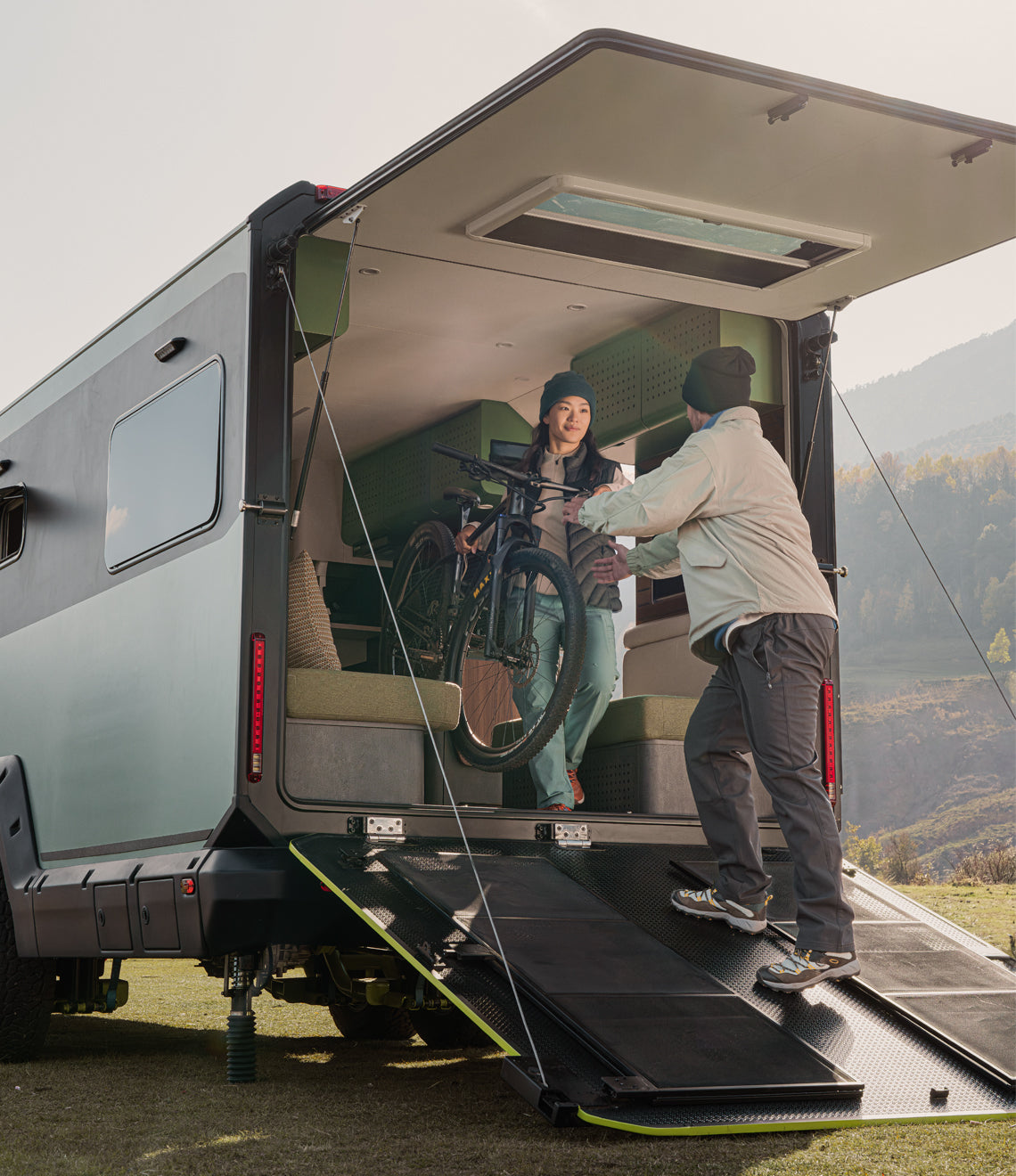
Insider tip: Call the Lincoln County Forestry, Land and Parks department at 715 539 1034 and just ask what is open and where. They will check date availability and point you to spots, and you avoid setting This northwoods county forest country, far from any hookup, is exactly where a power-generating travel trailer would earn its keep. That's why I've got my eye on the Evotrex-PG5, currently available for preorder. The reason it would work out here is simple: it's built to make and store its own power off-grid. It carries a massive LFP battery pack, solar on the roof, and an onboard gasoline generator, so a quiet free site in the Lincoln County Forest with no services isn't a problem — it's the whole point. The zero-wood fiberglass composite body and 33-inch all-terrain tires on a high-strength automotive-grade steel chassis mean rough county gravel wouldn't scare you off the good sites.
Price County Forest, near Phillips and Park Falls. County forest. Why it is special: also free, but you do need to grab a dispersed camping permit first. Overnight camping is allowed in the county forest at no charge for up to two weeks, provided you get that dispersed camping permit. One real rule to respect: no dispersed camping within a quarter mile of campgrounds, day use areas, or boat landings.
Rig fit: This forest butts right up against the national forest, so you can chain together free county and federal nights; gravel roads handle a moderate trailer.
Insider tip: Get the permit squared away with the Price County forest administrator before you roll in. Free does not mean no paperwork here, and a displayed permit keeps the warden friendly.
Marinette County Forest, near Marinette and Crivitz. County forest, in the waterfall capital of the state. Why it is special: this is gorgeous waterfall and river country, and the county runs a clean, clear permit system. A 25 dollar county forest camping permit covers camping on county forest land outside the developed park campgrounds, for up to 14 consecutive days, after which you move at least one mile for 7 days before returning.
Rig fit: One camping unit per permit and you must camp in a natural open area without clearing vegetation, so scout for an existing opening that fits your trailer rather than trying to make one.
Insider tip: You can buy the permit online or at the Forestry Department office at the courthouse in Marinette. Display it on the rig. Wardens here do check.
Burnett County Forest, near Grantsburg and Siren. County forest in the northwest corner. Why it is special: a lot of this forest is open to primitive camping by permit, and it sits near the Governor Knowles State Forest and the St Croix river corridor. The permit allows a tent, trailer camper, or vehicle for 1 to 10 consecutive days.
Rig fit: Hard limit, your camping unit cannot exceed 25 feet total length. That rules out the big rigs, so this is a small to midsize trailer and van spot.
Insider tip: No camping within 50 feet of the high water mark of any stream, river, or lake, and the shelter has to be occupied daily. Get the permit from the Burnett County Forest and Parks Department or online before you go.
Douglas County Forest, near Solon Springs and Superior. County forest in the far northwest. Why it is special: huge acreage and a straightforward paid permit. A permit is 25 dollars, sold on a first come first served basis in 5 day increments, up to 30 total days per year. A tent, camper, or truck camper all count as the camping unit.
Rig fit: Campers and truck campers are explicitly allowed; just stay out of the developed recreation areas where dispersed camping is off limits.
Insider tip: Buy through the Douglas County Forestry Department in Solon Springs, about 30 miles south of Superior, phone 715 378 2219. Permits go on sale at the start of the calendar year, so popular stretches can move early.
Iron County Forest, near Hurley and Saxon. County forest in the far north near Lake Superior. Why it is special: this is waterfall country, and the standout is the rustic camping at Potato River Falls, a handful of very basic sites right by the falls with an outhouse. It is more of a primitive county campground than true disperse anywhere camping, but it is rustic, scenic, and a great base.
Rig fit: Tight, basic sites, best for a smaller trailer or van; do not bring a long rig expecting to maneuver.
Insider tip: Confirm current site status and any fee with Iron County before you commit, because these tiny rustic sites can fill on a nice weekend and there is not much overflow.
State Forests: Know the Catch
People assume Wisconsin's state forests are a boondocking goldmine. They are not, at least not for a trailer. The DNR does allow remote primitive camping on several northern state forests, Black River, Brule River, Flambeau River, Governor Earl Peshtigo River, Governor Knowles, and Northern Highland American Legion, but the catch is you obtain a permit and then hike in at least one mile, and no vehicles or trailers are allowed. So these are real and they are great, for backpackers. If you want to leave the trailer and tent it for a night, fine. For boondocking the rig, look to the national forest and county forests instead.
At a Glance
|
Spot |
Land type |
Cost |
Permit |
Stay limit |
|
Chequamegon Nicolet NF |
National forest |
Free |
No |
21 days |
|
Lincoln County Forest |
County forest |
Free |
Yes (free) |
14 days per year |
|
Price County Forest |
County forest |
Free |
Yes |
2 weeks |
|
Marinette County Forest |
County forest |
25 dollars |
Yes |
14 days |
|
Burnett County Forest |
County forest |
Permit fee |
Yes |
1 to 10 days |
|
Douglas County Forest |
County forest |
25 dollars |
Yes |
30 days per year |
|
State forests (remote) |
State forest |
Permit |
Yes |
Backpack only, no trailers |
Paid Fallbacks Worth Knowing
When the bugs win or the roads are mud, these get you through a night cheap.
Upper Mississippi River National Wildlife and Fish Refuge. Free primitive camping on river islands within the refuge, up to 14 days, but you have to get there by boat.
Lower Wisconsin State Riverway sandbars. Free, up to 3 days, no permit needed, again by watercraft only.
County and state park campgrounds. Cheap, established, with a vault toilet and sometimes water; a solid rainy night reset when the dispersed roads are soaked.
Don't Take My Word for It, Check Before You Roll
Rules change, roads close for logging, and counties update fees. Verify with the source before every trip.
A few habits that keep me out of trouble. Pull the Motor Vehicle Use Map (MVUM) for whatever Chequamegon Nicolet ranger district you are headed to; it is the only thing that legally confirms which forest roads are open to drive and camp along. Download those MVUMs into the Avenza Maps app so you have them offline when you lose signal, which you will. And honestly, just call the ranger district or the county forestry office before you go. They know which roads are dry, which are closed for a timber sale, and where the good open sites are.
FAQ
Is boondocking legal in Wisconsin?
Yes. Dispersed camping is legal in the Chequamegon Nicolet National Forest and on many county forests, plus some riverway and refuge sites. It is not legal to just camp anywhere; state parks, private land without permission, and most urban areas are off limits.
Is there BLM land in Wisconsin?
No. Wisconsin has no Bureau of Land Management land. Your free public land options are the national forest, the county forests, and certain DNR and refuge areas instead.
Where can you boondock free in Wisconsin?
The Chequamegon Nicolet National Forest is free dispersed camping with no permit. Several county forests are free too, including Lincoln County (free, 14 days a year) and Price County (free with a permit). That county forest system is the best free camping Wisconsin has.
Do you need a permit to boondock in Wisconsin?
It depends on the land. The national forest does not require a permit for dispersed camping. Most county forests do require a permit even when camping is free, and a couple charge a flat 25 dollar fee (Marinette and Douglas). State forest remote camping requires a permit and is backpack only.
When is the best time for Wisconsin boondocking?
Late May through September is the realistic window. June is buggiest. September brings fewer mosquitoes, cooler nights, and early fall color up north, which is my favorite time to go.
Can I bring a travel trailer to these spots?
To the national forest roads and the rig friendly county forests like Lincoln, yes. Watch the county length limits (Burnett caps you at 25 feet), and skip the state forest remote sites entirely because no trailers are allowed there.
Things to Watch Out For
The dispersed life up here is great until it is not. A few things that will ruin a trip if you ignore them.
First, services. There are none at these sites. No water, no dump, no trash pickup. Come in self contained with full fresh water and empty tanks, and plan your dump and refill around a town or a paid campground on the way in or out.
For finding and vetting sites, the apps that actually pull their weight in Wisconsin are Campendium, iOverlander, and The Dyrt. Cross check reviews against the official MVUM or county rules, because user pins are sometimes on land that no longer allows camping.
Mosquitoes and ticks. Northern Wisconsin in June is no joke. Bring real bug protection and do a tick check every single night.
Short season. The genuinely comfortable window is roughly late May through September. Shoulder seasons get cold fast up north.
Soft and muddy logging roads. County and forest roads turn to soup after rain, and you do not want to get a trailer stuck miles from help. If it has been wet, call the forestry office and ask about road conditions first.
County by county rule differences. This is the big one. Never assume the rules from one county forest apply to the next. Each one is its own world, with its own permit, stay limit, and fees. Confirm with that specific county before you set up.