
The Best Boondocking Spots in Nevada
I have spent more nights parked on Nevada dirt than I can count, and I will say it flat out: no state in the country gives you more room to disappear. Over 80 percent of Nevada is federal land, the highest share of any state, and the BLM alone manages more than 48 million acres of it. That is the whole pitch right there. You can pull off a gravel road into an empty valley, not see another soul for three days, and it costs you nothing.
The flip side is that Nevada does not coddle you. The good spots are genuinely far apart. Gas stations are an hour out, water is wherever you brought it, and a summer afternoon in the low desert will cook you. This is real off grid country, not a state park with a vault toilet every quarter mile. If you come self contained and you respect the heat and the distance, it is some of the best free camping in the country.
So this is my honest rundown of boondocking in Nevada: the spots I actually trust, organized by what kind of land they sit on, with the real rules and the stuff you only learn by getting it wrong.

Quick Answer
Boondocking in Nevada is legal and free across most of the state's BLM land, with a standard limit of 14 days in any 28 day period before you have to move at least 25 miles. The best free camping in Nevada is on BLM ground near Las Vegas (Logandale Trails, Gold Butte), in the eastern basin and range near Ely (Sacramento Pass, Illipah Reservoir), and in the cooler Humboldt Toiyabe National Forest. Spring and fall are the sweet spot because summer in the low desert is dangerous and the high country holds snow into late spring.
The Rules You Actually Need to Know
The 14 day rule is real and the BLM means it. On BLM land in Nevada you can stay up to 14 days in a 28 day window. After that you have to pack up and move at least 25 miles away. This is straight off the BLM Nevada recreation page, not a rumor.
National forest has its own clock. The Humboldt Toiyabe National Forest generally allows up to 16 days in a dispersed spot before you move on, but the Spring Mountains area near Las Vegas runs a tighter 14 day limit. Always read the posted signs because the ranger district can override the general rule.
Check fire restrictions before every trip. Nevada fire rules change through the season and some areas ban campfires outright. The official source is nevadafireinfo.org. When in doubt, no open fire, use your stove.
Pack out everything and dump nothing. No dumping gray or black water on public land, ever. Most of these spots have zero trash service. What you bring in, you carry out.
Services are far apart. Plan like it. This is the one people underestimate. Top off fuel and water in the last real town, because the next one might be 70 miles of empty highway away.
BLM Areas: Where Nevada Boondocking Really Happens
This is the heart of it. Most free camping in Nevada is dispersed BLM ground, first come first served, no reservations, no fees.
Logandale Trails (near Logandale and Overton, BLM)
About 45 minutes northeast of Las Vegas, wedged between I-15 and Valley of Fire State Park, Logandale Trails is a big BLM red rock playground with over 200 miles of OHV routes. It is the closest large dispersed area to Vegas that still feels remote once you are back in the canyons.
Named site/road: Liston Road out of Logandale is the main way in, crossing the railroad tracks toward the trail system. Camp dispersed throughout, or at the OHV staging area.
Rig fit: Plenty of flat open desert near the entrance for big trailers; the deeper canyon spots get tighter and rougher, so scout on foot first.
Insider tip: Go between October and April. This is low Mojave Desert and it bakes in summer. Fuel up and grab groceries in Logandale or Overton before you turn off, because there is nothing once you are in.
Gold Butte National Monument (near Mesquite, BLM)
Gold Butte is the wild card southeast of Mesquite: sandstone, petroglyphs, true emptiness. It is a national monument managed by the BLM, and primitive dispersed camping is allowed along existing roads and at a couple of named spots. This is remote country and the roads can flood out after rain.
Named sites: Whitney Pocket is the well known primitive camping area with the dramatic red and white rock; Cabin Canyon is another, reached by a graded gravel road that washes out after storms.
Rig fit: Whitney Pocket can handle a capable trailer if you take the road slow; most interior roads want high clearance and 4 wheel drive, so do not push a big rig deep without scouting.
Insider tip: Cell service is basically gone out here. Download your maps offline and tell someone your plan. After any rain, assume the gravel is mud and wait it out.
Spencer Hot Springs (near Austin, BLM)
This is the central Nevada classic: free BLM dispersed camping right next to natural hot spring tubs off Highway 50, the loneliest road in America. You camp in the open sage flat of the Big Smoky Valley and soak under huge dark skies.
Named site/road: The Spencer Hot Springs area itself, signed off Highway 50 east of Austin. Camp on the existing pullouts, not on fresh ground.
Rig fit: Open and mostly level, fine for trailers, but the access road washboards, so air down and take it easy.
Insider tip: BLM asks you to camp at least 100 yards back from the springs, and honestly the soak is better when nobody parked their rig right on top of it. Weekends get crowded, so aim for a weeknight.
Sacramento Pass Recreation Area (near Ely, BLM)
Right at the foot of Great Basin National Park, Sacramento Pass is a free BLM site on Highway 50 about 40 miles east of Ely. It is technically a small developed area, 10 first come first served sites, but it is free and it makes a perfect base for the park.
Named site: Sacramento Pass Recreation Area campground, signed off Highway 50. There is a small stocked trout pond at the lower campground.
Rig fit: Picnic tables, grills, shade structures and a restroom; the sites handle trailers comfortably. No potable water, so arrive full.
Insider tip: This is your last easy free spot before Great Basin. Use it to fill batteries and rest, then day trip into the park for the bristlecones and Lehman Caves.
Illipah Reservoir Recreation Area (near Ely, BLM)
About 37 miles west of Ely on Highway 50, Illipah is a no fee BLM area on a little reservoir, open year round, with 15 sites built for big trailers and RVs. It is a genuinely easy, comfortable free spot in a part of the state where easy is rare.
Named site/road: Signed off Highway 50, turn south and follow the short access road about 1.4 miles to the campground.
Rig fit: Pull through sites, shade structures, pit toilets, picnic tables. Great for larger rigs. No potable water.
Insider tip: It holds trout and people ice fish it in winter. If you are crossing the state on Highway 50, this is the spot to break the drive instead of pushing into the dark.
Remote Basin and Range: True Off Grid Country
Black Rock Desert (near Gerlach, BLM)
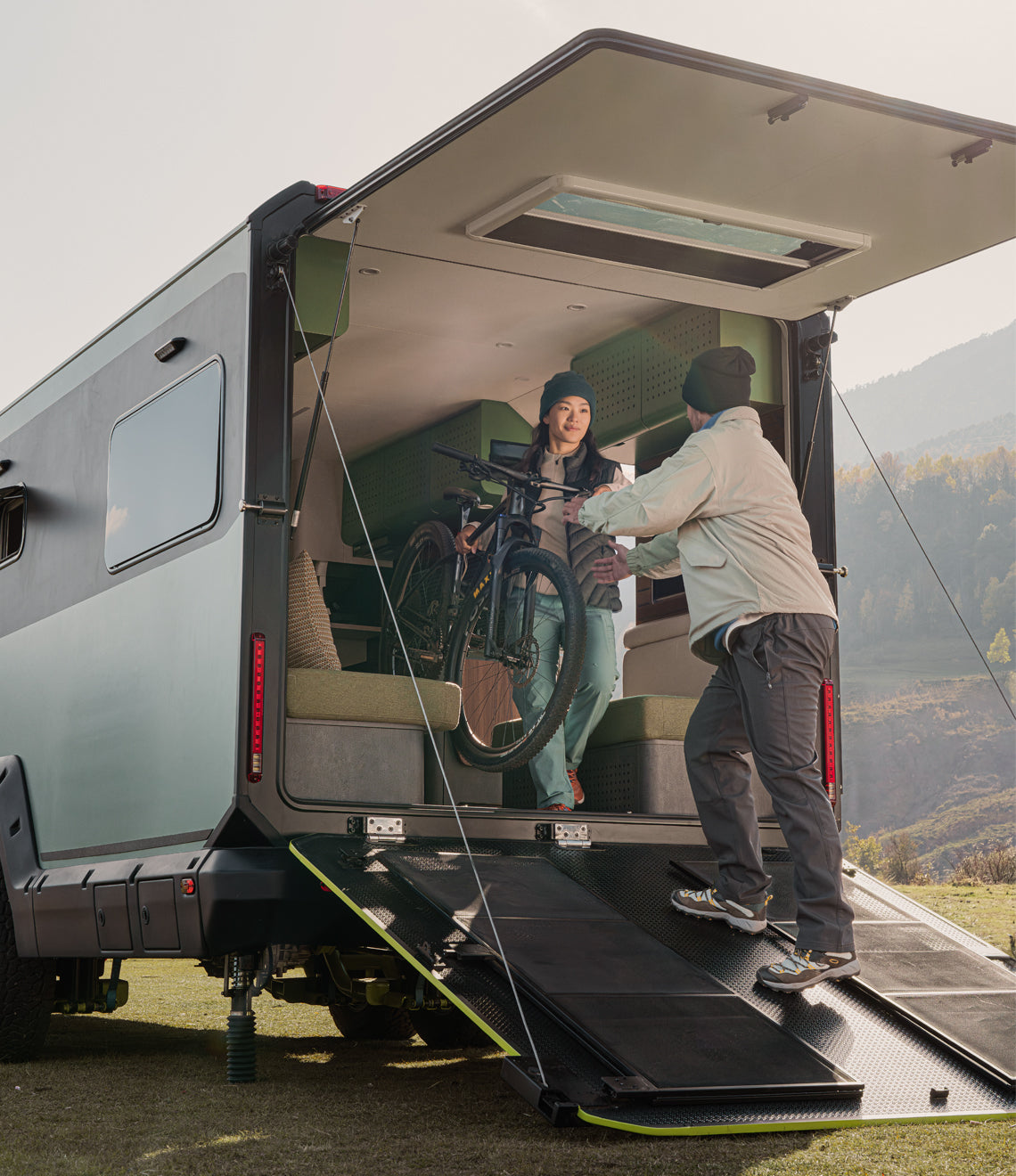
Up in the northwest, the Black Rock Desert High Rock Canyon Emigrant Trails National Conservation Area is about as remote as Nevada gets. Dispersed camping is allowed across most of it, including out on the famous 200 square mile playa. This is the spot to point an Evotrex-PG5 if you have one, because it is the farthest thing from a hookup you will find. The PG5 is a travel trailer built for exactly this, a massive LFP battery pack, integrated solar, and an onboard gasoline generator so you are not chasing shore power that does not exist out here. You can read the full setup on the Evotrex-PG5 product page. Out on the Black Rock, that kind of self contained power is the difference between a long comfortable stay and a short nervous one.
Named area: Camp dispersed off the playa edges and access roads; the Soldier Meadows and High Rock Canyon areas have designated sites. The Black Rock Field Office in Winnemucca is who to call for conditions.
Rig fit: The dry playa looks like it will hold anything, and it will, until it does not. Stay on firm ground near the edges with a trailer and do not drive out onto soft playa.
Insider tip: Fires are not allowed directly on the playa floor. And the big one: when it is wet, the playa turns to deep mud under a dry looking crust and vehicles get genuinely stuck. Call the field office for playa conditions before you commit.
National Forest: When You Want Trees and Cooler Air
When the low desert is too hot, you go up. The Humboldt Toiyabe National Forest is the cool weather answer, higher elevation, pines, actual shade.
Lovell Canyon (near Las Vegas and Pahrump, Humboldt Toiyabe National Forest)
On the back, west side of the Spring Mountains about 40 minutes from the Strip, Lovell Canyon is national forest dispersed camping that runs noticeably cooler than Vegas thanks to the elevation. The main road is paved and the side spurs are dirt.
Named site/road: Lovell Canyon Road, off Highway 160 a few miles past Mountain Springs. Informal dispersed pullouts are spread along it; the Lovell Canyon Trailhead anchors the area.
Rig fit: Some pullouts handle a mid size trailer fine; the dirt spurs get rough, so pick a spot near the paved road if you are big.
Insider tip: This is Spring Mountains NRA, so the limit is 14 days, tighter than the forest's usual 16. Nearest reliable water is back at the Mountain Springs fire station, and it can run rusty, so filter it.
Berry Creek Dispersed Campground (near Ely, Humboldt Toiyabe National Forest)
Up in the mountains roughly half an hour from Ely, Berry Creek is a free forest service dispersed area tucked into trees next to a creek, with picnic tables and fire rings. It is a different Nevada entirely, green, shaded, and cool.
Named site: Berry Creek Dispersed Campground, in the Ely Ranger District, near Cave Lake State Park and Great Basin.
Rig fit: The sites are small and tucked in the trees, and the access involves stream crossings that want high clearance, so this is a small trailer or van spot, not a big fifth wheel destination.
Insider tip: It is a seasonal high country spot, generally snow free roughly May through October. Filter the creek water and keep your distance from the stream when you set up.
At a Glance
|
Spot |
Nearest town |
Land |
Free? |
Limit |
|
Logandale Trails |
Logandale / Overton |
BLM |
Yes |
14 days |
|
Gold Butte (Whitney Pocket) |
Mesquite |
BLM |
Yes |
14 days |
|
Spencer Hot Springs |
Austin |
BLM |
Yes |
14 days |
|
Sacramento Pass |
Ely |
BLM |
Yes |
14 days |
|
Illipah Reservoir |
Ely |
BLM |
Yes |
14 days |
|
Black Rock Desert |
Gerlach |
BLM (NCA) |
Yes |
14 days |
|
Lovell Canyon |
Las Vegas / Pahrump |
National forest |
Yes |
14 days |
|
Berry Creek |
Ely |
National forest |
Yes |
16 days |
Paid Fallbacks Worth Knowing
Stewarts Point and Government Wash (Lake Mead National Recreation Area): dispersed style camping near Las Vegas, but you pay the Lake Mead entrance fee, so it is not truly free.
State parks (Cave Lake, Valley of Fire): developed campgrounds with fees when you want a dump station, water, and a real bathroom after a long off grid stretch.
Developed BLM and forest campgrounds: when the free dispersed areas are full on a holiday, the nearby fee campgrounds usually have room.
Don't Take My Word For It, Check Before You Roll
Rules and road conditions change, so verify with the agency before you go:
Two more things: pull the MVUM (Motor Vehicle Use Map) for any national forest area so you know which roads you can legally drive and camp along, and load the Avenza Maps app to use those maps offline when you lose signal. And honestly, just call the local BLM field office or Ranger District. The Ely BLM office and the Black Rock Field office in Winnemucca will tell you straight whether a road is washed out.
FAQ
Is boondocking legal in Nevada?
Yes. Dispersed camping is legal and free on most BLM land in Nevada, with a 14 day limit in any 28 day period, plus separate rules on national forest land. Always follow posted signs and current fire restrictions.
Is there BLM land in Nevada?
A huge amount. The BLM manages more than 48 million acres in Nevada, roughly 63 percent of the state, and most of it is open to free dispersed camping.
Where can you boondock free in Nevada?
Reliable free spots include Logandale Trails and Gold Butte near Las Vegas, Spencer Hot Springs near Austin, Sacramento Pass and Illipah Reservoir near Ely, the Black Rock Desert near Gerlach, and forest spots like Lovell Canyon and Berry Creek.
When is the best time for boondocking in Nevada?
Spring (roughly March to May) and fall (roughly September to November). Summer in the low desert is dangerously hot, and the high country and forest spots can hold snow into late spring.
Do you need a permit?
Not for standard dispersed camping on BLM or forest land within the stay limits. You do pay an entrance fee for areas like Lake Mead National Recreation Area, and special events or group use can require permits, so check with the managing office.
Things to Watch Out For
A few apps make Nevada much easier: Campendium, iOverlander, and The Dyrt for finding and vetting spots with recent reviews. For water and waste, plan your dump stations and water fills around towns like Ely, Winnemucca, and the Vegas area, because the dispersed sites have none.
The real Nevada hazards, in order of how often they bite people:
-
Extreme remoteness and distance to services. This is the number one risk. Help, fuel, and water can be over an hour away. Carry recovery gear and tell someone your route.
-
Heat. The low desert is genuinely dangerous in summer. Camp high or camp elsewhere from roughly June through September.
-
No water. Almost none of these spots have potable water. Bring more than you think, plan on several gallons per person per day in heat.
-
Soft playa and mud. Dry looking playa and dirt roads turn to deep mud after rain and will swallow a vehicle. When wet, stay off.
-
Fuel range. Distances between gas stations are long. Top off in the last real town, every time.
That is the whole game in Nevada. Come prepared, respect the distance and the heat, and you get more empty, beautiful free camping than just about anywhere in the country.