
The Best Boondocking Spots in Colorado
I have been chasing free camping across this state for years, and I will tell you up front: Colorado is one of the best places in the country to boondock, and also one of the trickiest. The good stuff sits high. A lot of my favorite spots live above 9,000 feet, which means they are buried in snow well into June and the access roads stay greasy and rutted right up until they dry out. Show up in May expecting the high country and you will be turning around at a snowbank.
The other thing that has changed, and changed fast, is how the popular zones are managed. The free for all dispersed camping that made places like Buena Vista, Leadville, and Crested Butte famous is getting reined in. More and more of the heavy use corridors are now designated dispersed only, meaning you camp in a numbered, marked site or you do not camp there at all. That is not a bad thing. It saved a lot of trashed meadows. But it means the old "just pull off anywhere" mindset will get you a knock on the door.
So this guide is built around that reality. I am naming actual roads and areas, telling you which ones are still truly free first come first served and which ones have gone designated, and pointing you at the official pages so you can confirm before you roll. Everything here I checked against the managing agency. If I was not sure about something, I left it out.

Quick Answer
Boondocking in Colorado is free and legal on most national forest and BLM land, with a standard 14 day stay limit before you move on. The best free camping in Colorado is in the high country national forests from roughly mid June through September, but several popular areas around Buena Vista, Leadville, and Crested Butte have shifted to designated dispersed sites or permit style management, so you camp only in marked spots there. Always check the local Ranger District for current fire bans and road closures before you go.
The Rules, Plain and Simple
Two kinds of dispersed camping now exist in Colorado. Truly free, first come first served dispersed where you pick your own spot along an open road, and the newer designated dispersed where you can only camp in numbered, marked sites with a post, fire ring, and parking spot. Know which one you are in before you set up.
National forest standard is 14 days in a 30 day period. After that you move on. Most Colorado forests want you outside a 20 mile radius before you camp again. The San Juan is the oddball: it runs a 16 day limit and asks you to move at least 5 road miles.
Camp on already impacted ground, close to the road. Most forests want you within 300 feet of the road centerline and at least 100 feet from any creek, lake, or water source. No making new spurs or new fire rings.
BLM runs its own clock. On BLM land it is 14 days in any 30 day period at one location, then you move at least 30 air miles away. Do not leave your rig or gear unattended for more than 48 hours either.
Fire bans are constant in summer and they are serious. Under Stage 1 restrictions, campfires at dispersed sites are flat out prohibited, even in a ring. Under Stage 2, no open flame at all. Bans change weekly in dry years and they vary by county and by forest, so check the county sheriff and the forest office the week you go, not the month before.
Altitude and season are the real gatekeepers. Plenty of these spots sit above 9,000 or even 11,000 feet. They are snowbound until June, the passes close in winter, and afternoon thunderstorms with lightning roll in almost daily in July and August. Come prepared to be self contained and self sufficient. There is no water, no dump, no cell signal at most of these.
Where To Go, By Land Type
I am organizing this the way the land is actually managed, because that is what determines the rules. Match the spot to your rig and your season.
National Forests, Still Mostly Free
Rabbit Ears Pass, near Steamboat Springs (Routt National Forest). This is the easy button of Colorado boondocking. Wide open meadows and pine stands right off US 40, no high clearance needed for most of it, and it is genuinely free first come first served. Look along Forest Road 302 (the Dumont Lake and Rabbit Ears Peak side) where the established spurs branch off. Routt asks you to stay within 300 feet of designated routes and only use existing spur roads, so do not go blazing new tracks.
Rig fit: Friendly for big trailers and motorhomes near the highway, tighter and rougher the further up FR 302 you push.
Insider tip: It fills by Friday afternoon all summer. Roll in Wednesday or Thursday and you will have your pick. The west side near Dumont Lake opens up sooner in spring than the higher pockets.
Lincoln Creek Road, near Aspen (White River National Forest). One of the prettiest free camping setups in the state, 22 designated car camping sites strung along the creek about 11 miles southeast of Aspen off Highway 82. First come first served, no fee. The catch is a short 5 day stay limit here, and the road needs high clearance with 4x4 recommended to reach all the sites.
Rig fit: Best for vans, truck campers, and small off road trailers. This is not a place to drag a big fifth wheel, and honestly not where I would take a long rig at all.
Insider tip: The Forest Service has flagged high levels of heavy metals in Lincoln Creek from the reservoir drainage, so do not filter and drink the creek water here. Haul your own.
Designated Dispersed Corridors, Camp In Marked Sites Only
This is where Colorado has changed the most. These zones used to be open dispersed and now they are not.
Crested Butte area (Grand Mesa, Uncompahgre and Gunnison National Forests). Under Forest Order GMUG 2022 10, seven major drainages around Crested Butte went to designated camping only. You camp in numbered sites with a post, metal fire ring, and parking spot, first come first served, 14 day max, two vehicles per site, and fires only in the established ring. The marked sites sit along named forest roads: Kebler Pass on NFSR 12, 826, and 885; Slate River on NFSR 734 and 522; Washington Gulch on NFSR 811; Gothic on NFSR 317; Brush Creek on NFSR 738; and Cement Creek on NFSR 740 and 740.2.
Rig fit: Kebler Pass Road sites handle passenger vehicles and moderate trailers well; the spur roads like NFSR 885 get rough and are better for smaller, higher clearance rigs.
Insider tip: If a site has no numbered post, you cannot camp there, full stop. On a summer weekend the whole Crested Butte system can be full by midday, so have a backup and do not count on dispersing your way out of trouble.
Buena Vista, Salida, and Leadville area (Pike and San Isabel National Forests). The Pike San Isabel is in the middle of rolling out designated vehicle based dispersed camping across the Salida and Leadville Ranger Districts, covering six counties including Chaffee, Lake, and Park. The final decision was signed in early 2026 and site work is underway through 2026, starting around the Clear Creek corridor west of Clear Creek Reservoir near Granite and the Browns Creek area west of US 285. Expect new signs, barriers, and numbered sites appearing through the season. There are no fees or reservations proposed. Until a given road is officially converted, regular dispersed camping continues there, which is exactly why you have to check the current status by road.
Rig fit: Varies wildly by road. The valley floor spots take big rigs; the pass roads do not.
Insider tip: On the Leadville Ranger District, dispersed camping is allowed everywhere except where it is signed closed and except the Turquoise Lake and Twin Lakes recreation areas, which are concessionaire campgrounds, not free dispersed. Do not roll into Turquoise expecting to boondock.
BLM Land, Lower and Opens Earlier
Midland area, near Buena Vista (BLM Royal Gorge Field Office). When the high country is still under snow, BLM down in the valley is your friend. The Midland trail system area off County Road 304 has roughly half a dozen first come first served dispersed sites with big mountain views, and there are a couple of porta johns at the parking area, which is more than you get at most dispersed spots. The sites are flat but on the smaller side.
Rig fit: Good for tents, vans, and smaller trailers. Larger RVs struggle with access and turning room, so scout on foot first.
Insider tip: This is part of the BLM Chaffee County plan that moved a big chunk of local dispersed camping into designated sites across a 38,000 acre area, so the days of free wheeling out here are numbered. Camp in the established spots and pack everything out, because the rangers are watching this one closely.
The San Juans, High and Remote
Silverton, Ouray, and Telluride area (San Juan and Uncompahgre National Forests). This is the big, wild, dramatic boondocking country, and it is where I would point the most capable rigs. The San Juan runs a 16 day limit and asks you to move 5 road miles, keep 100 feet off the water, and stay within 150 feet of the road. Near Silverton, the South Mineral area off Forest Road 585 has designated camping zones (Anvil, Bear, and Sultan areas) where you camp in the marked spots. The Alpine Loop between Silverton, Ouray, and Lake City offers more remote dispersed pull offs, but it is a serious high clearance 4x4 route, not a casual drive.
Rig fit: South Mineral / FR 585 is doable for vans, truck campers, and tough small trailers. The Alpine Loop interior is 4x4 only and no place for a trailer.
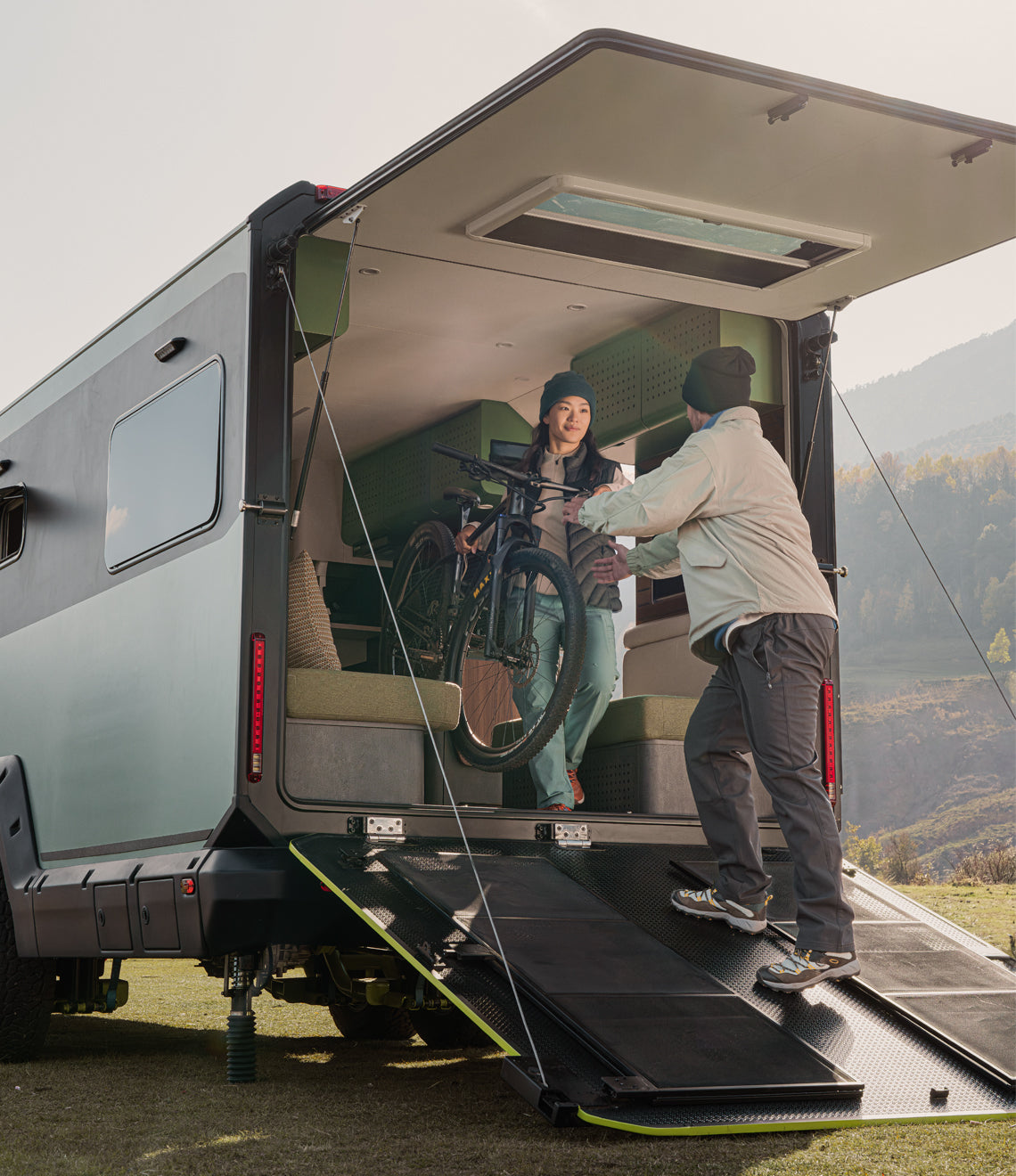
Insider tip: This is exactly the kind of spot where a rig that makes its own power earns its keep. Way up a forest road with no hookups for days, an RV like the Evotrex-PG5 , with its massive LFP battery pack, integrated solar, and onboard gasoline generator, lets you sit through a stretch of cloudy mountain afternoons without rationing power or hunting for shore power. Out here, self sufficiency is the whole game.
At A Glance
|
Area |
Land |
Free or designated |
Stay limit |
Best rig |
|
Rabbit Ears Pass (Steamboat) |
Routt NF |
Free, first come first served |
14 days |
Big rigs near hwy |
|
Lincoln Creek Rd (Aspen) |
White River NF |
Designated sites, free |
5 days |
Vans, small 4x4 |
|
Crested Butte drainages |
GMUG NF |
Designated only |
14 days |
Small to mid, FCFS |
|
Buena Vista / Leadville |
Pike San Isabel NF |
Converting to designated |
14 days |
Varies by road |
|
Midland (Buena Vista) |
BLM |
Designated, free |
14 days |
Tents, vans, small |
|
Silverton / San Juans |
San Juan NF |
Mixed, some designated |
16 days |
4x4, small rigs |
Paid Fallbacks Worth Knowing
When everything is full or snowed in, these get you off the road for cheap.
Turquoise Lake and Twin Lakes (near Leadville): developed Forest Service campgrounds, fee based, an easy fallback when the Leadville dispersed is full or closed.
Maroon Bells area campgrounds (near Aspen): developed sites near the scenic area, good when Lincoln Creek is snowed in.
Arkansas Headwaters state recreation sites (Buena Vista to Salida): paid riverside camping run by Colorado Parks and Wildlife when BLM dispersed is full.
Do Not Take My Word For It, Check Before You Roll
Rules and closures change constantly out here. Before you commit to any spot, confirm it on the managing agency's own page and call the local Ranger District.
-
Routt National Forest (Rabbit Ears Pass): Hahns Peak/Bears Ears Ranger District, (970) 870-2299.
-
BLM Colorado camping and occupancy rules. Grand Junction Field Office: (970) 244-3000.
And two tools I never roll without: the Motor Vehicle Use Map (MVUM) for each forest, which shows you which roads are actually open and where dispersed camping is allowed, and the Avenza Maps app, which lets you load those MVUMs and see your blue dot offline with no cell signal. One heads up: the Forest Service has said it will stop adding and updating maps in the Avenza store starting April 2026, so grab the MVUM straight from the individual forest's website too. When in doubt, call the Ranger District. They will tell you what is open and what is closed today.
Frequently Asked Questions
Is boondocking legal in Colorado?
Yes. Dispersed camping is legal and free on most national forest and BLM land in Colorado, as long as you follow the stay limits, camp where it is allowed, and respect any fire bans or closures.
Is there BLM land in Colorado?
Plenty of it. The BLM manages large stretches across the state, much of it lower elevation that opens earlier in spring than the high forests. The standard BLM rule is 14 days in a 30 day period, then move at least 30 air miles.
Where can you boondock free in Colorado?
Some of the most reliable free spots are Rabbit Ears Pass near Steamboat on the Routt National Forest, Lincoln Creek Road near Aspen on the White River, and BLM land in the Buena Vista valley like the Midland area. Just confirm whether the spot is open dispersed or designated sites only before you set up.
When is the best time to boondock in Colorado?
For the high country, mid June through September. Many spots sit above 9,000 feet and stay snowbound into early summer, and the passes close in winter. Lower BLM land can work in spring and fall.
Do you need a permit?
For most dispersed camping, no permit and no fee. But many popular areas around Crested Butte, Buena Vista, and Leadville have moved to designated dispersed sites where you must camp in marked spots, and some wilderness backcountry zones do require advance permits. Check the specific area.
Things To Watch Out For
A few hard truths that separate a great trip from a miserable one.
Water and dump: there is none at dispersed sites. Roll in with full fresh tanks and a plan to pack out gray and black. Hit a dump station in town before and after.
Apps are your friend, but verify: Campendium, iOverlander, and The Dyrt are great for finding spots and reading recent reviews, but they are crowdsourced and often out of date on the new designated rules. Cross check anything you find against the agency page.
Altitude: a lot of these spots are at 9,000 to 11,000 feet. Take a day to acclimate, drink way more water than feels normal, and know that engines, generators, and your own lungs all work harder up there.
Afternoon lightning: Colorado high country gets near daily thunderstorms in July and August, usually early afternoon. Get your hikes done in the morning and get off exposed ground before the clouds build.
Fire bans: they change weekly in dry summers and they are enforced. Under Stage 1 you cannot have a campfire at a dispersed site, and under Stage 2 no open flame at all. Check the county and the forest the week you go.
Snow and season: passes and high roads stay closed or snowbound into June, and early storms can hit in September. If a road has not melted out, do not try to force it.
Sudden weather: it can be 75 and sunny then hailing within an hour up high. Pack layers, secure your awning, and never assume the morning forecast holds all day.
Colorado rewards the boondocker who does the homework. Match the spot to your rig and the season, camp in the right kind of dispersed for where you are, and confirm the rules on the agency page before you roll. Do that and you will have the kind of free, quiet, high mountain nights that ruin you for paid campgrounds forever.