
The Best Boondocking Spots in California
California is honestly one of the best states in the country to camp for free, and also one of the easiest to get wrong. You have got more public land here than almost anywhere, BLM desert, high Sierra national forest, even a state park that lets you camp basically wherever you want, which almost never happens. So the spots are incredible. The catch is the rules change by the mile, the fire restrictions are no joke, and a lot of the famous places (looking at you, Alabama Hills) tightened up over the last couple years.
I have spent a lot of nights out here in a trailer, and the short version is: pick the right land type for the season, carry your own water, and get your campfire permit before you leave the driveway. Do that and you can string together weeks of free camping with views that people pay national park money to see from a paved overlook.
This is the guide I wish someone had handed me. Real spots I have actually used or scouted, organized by what kind of land they sit on, plus the rules that will save you a ticket or a tow.

Quick answer
Boondocking in California is legal and free on BLM land and in national forests (14 day limit in most places), plus a few special cases like Anza Borrego Desert State Park, where primitive camping is allowed throughout the backcountry. The sweet spot is the desert in fall through spring (roughly October to April) and the high Sierra in summer once the snow clears. The main catch: you need a free California Campfire Permit for any flame, including a propane stove, and fire restrictions can shut campfires down entirely.
The rules, fast (read this part)
-
You need a California Campfire Permit. It is free, it is required statewide for any open flame on federal and state land (campfire, charcoal, even a propane stove or a lantern with a flame), and you get it online from CAL FIRE. Carry it. Rangers do check.
-
Do not confuse it with a "burn permit." A campfire permit (readyforwildfire.org) covers your camp stove and fire. A CAL FIRE "burn permit" is a different thing for burning yard debris. You want the campfire permit.
-
14 days is the normal limit. On most BLM land it is 14 days in any 28 day window, then you move at least 25 miles. National forests are similar (often 14 days, then move). Some specific areas are stricter, so check the spot.
-
Alabama Hills now needs a free camping permit too. Separate from the campfire permit. As of October 2024 you grab a free Alabama Hills camping permit online or in Lone Pine, and it does not guarantee you a site.
-
Stay 200 feet from water, camp on bare durable ground, and pack out everything including waste where there are no toilets.
-
Fire restrictions trump everything. In a bad fire year campfires get banned outright, sometimes stoves too. Check the agency page for the area before you light anything.
-
Dumping tanks on public land is illegal. Gray and black both. Use a dump station.
BLM land (the bread and butter)
BLM manages roughly 15 million acres in California, about 15 percent of the state, and most of it is open to dispersed camping at no cost. This is where you will spend most of your free nights.
Alabama Hills, near Lone Pine (BLM National Scenic Area)
This is the famous one, golden boulders piled up under Mount Whitney and the Sierra crest, and it has been in about a thousand movies. It is now a designated BLM National Scenic Area, which is why the rules tightened. You camp at marked designated sites, not just anywhere off the road like the old days.
Named sites: The dispersed sites off Movie Road are the classic spots, first come first served. If those are full or you want a table and a vault toilet, Tuttle Creek Campground (BLM, about 3 miles south) is cheap and open year round.
Rig fit: Plenty of the Movie Road sites are tight or sloped and the better big rig pullouts go fast. A self contained trailer is fine if you scout in daylight, but do not commit to a spur road you cannot turn around on.
Insider tip: You need the free Alabama Hills camping permit (since October 2024) on top of your campfire permit, and there are only a handful of porta potties out there now. Bring wag bags. Arrive on a weekday if you possibly can, weekends in spring and fall are a zoo.
Joshua Tree South BLM, near Cottonwood / Chiriaco Summit
Right off Interstate 10 near the south entrance to Joshua Tree National Park, this is one of the most popular winter boondocking spots in SoCal for a reason: easy access, big open desert, good sun for solar, and usually decent cell signal. Standard 14 day limit, no facilities at all.
Named sites: The open BLM flats along Cottonwood Springs Road on both sides. The west side packs in tighter, the east side spreads out if you want elbow room.
Insider tip: You can drive a few miles into the park to Cottonwood Campground to fill fresh water and dump, and gas plus supplies are right up the road at Chiriaco Summit. It gets crowded mid February into early March for the wildflower bloom, so come earlier in winter if you want quiet.
National forests (the green, cooler, higher option)
When the desert cooks in summer, you go up. California national forests allow dispersed camping along most forest roads, usually free, usually a 14 day limit. The big rule here: stay on roads that are actually open, which you confirm on the Motor Vehicle Use Map (MVUM).
Inyo National Forest, Eastern Sierra (near Bishop and Lone Pine)
The east side of the Sierra is a dream in summer, alpine air, creeks, granite. Dispersed camping is allowed on a lot of forest roads, but Inyo carves out a long list of developed recreation areas (think the canyons like Bishop Creek, Rock Creek, June Lake Loop, Whitney Portal) where you must use a campground instead. So you have to know where the line is.
Named sites: Look for legal pullouts on forest roads outside those developed canyons. The lower elevation forest roads off the Highway 395 corridor away from the closed canyons are your friend. Always confirm against the MVUM first.
Rig fit: Many Eastern Sierra spurs are narrow, rocky, and at altitude. A capable trailer with good clearance and all terrain tires handles them, but trim your expectations on a low slung rig.
Insider tip: This is bear country, so store food locked up, and after 14 days at one spot you have to move on. Download the Avenza Maps app with the MVUM loaded before you lose signal so you can see exactly which roads are legal without cell service.
Sequoia National Forest, Kern River and Lake Isabella
If you want big trees and water in the southern Sierra, Sequoia National Forest has some of the more big rig friendly dispersed camping in the state. Dispersed camping is broadly allowed unless a sign says otherwise, and the limit is 14 days in any 30 day window.
Named sites: Hanning Flat Dispersed Camping Area on the east side of Lake Isabella is a large flat area that actually fits trailers and bigger RVs, which is rare. There are also easy access pullouts along the Kern River on both the north and south sides.
Insider tip: A lot of California forest dispersed areas only fit vans and small trailers, so Hanning Flat is a genuine find if you are towing something with size. Confirm current fire rules, the southern Sierra gets hot and dry and campfires get banned fast.
The desert state park exception (this almost never happens)
Anza Borrego Desert State Park, near Borrego Springs and Julian
This is the rare California state park where you can camp for free pretty much anywhere in the backcountry. The park literally defines its entire backcountry as a camping facility, so you can pull off a dirt road and camp, no reservation, no fee. For a state park, that is wild. It is huge, quiet, and the spring wildflowers are famous.
Named sites: Blair Valley is the crowd favorite, a wide open primitive area off Highway S2 that fits everything from a car to a big rig, with hiking and pictographs nearby. Culp Valley is another primitive option up higher with cooler air and views.
Rig fit: Blair Valley is one of the few primitive spots out here that genuinely handles large trailers. Park no more than one vehicle length off the designated dirt road and do not crush vegetation.
Insider tip: Open campfires are prohibited at Blair Valley, Culp Valley, and the backcountry, only contained propane or gas stoves for cooking, and bring an above ground metal fire pan rather than scarring the desert. The 30 day per year limit here is per calendar year, not per visit. No water at the primitive sites, haul your own.
The Mojave (big, empty, and free)
Mojave National Preserve, near Baker and Kelso
This one trips people up because it is a National Park Service unit, not BLM, but it does allow free roadside dispersed camping, which is unusual for the Park Service. You camp at sites that already show clear previous use, 14 days per visit and 30 total days per year. It is enormous and genuinely empty, which is the whole appeal.
Named sites: Roadside camping along the dirt roads off the main routes, using existing cleared sites. Steer clear of the restricted zones, no camping within a quarter mile of paved roads or Zzyzx Road, within a half mile of Kelso Depot or Fort Piute, or in the protected band around Kelso Dunes.
Rig fit: A lot of the access roads are rough and sandy and reward clearance. If you are towing, scout the road surface before you commit, sand will swallow a trailer that has no business being there.
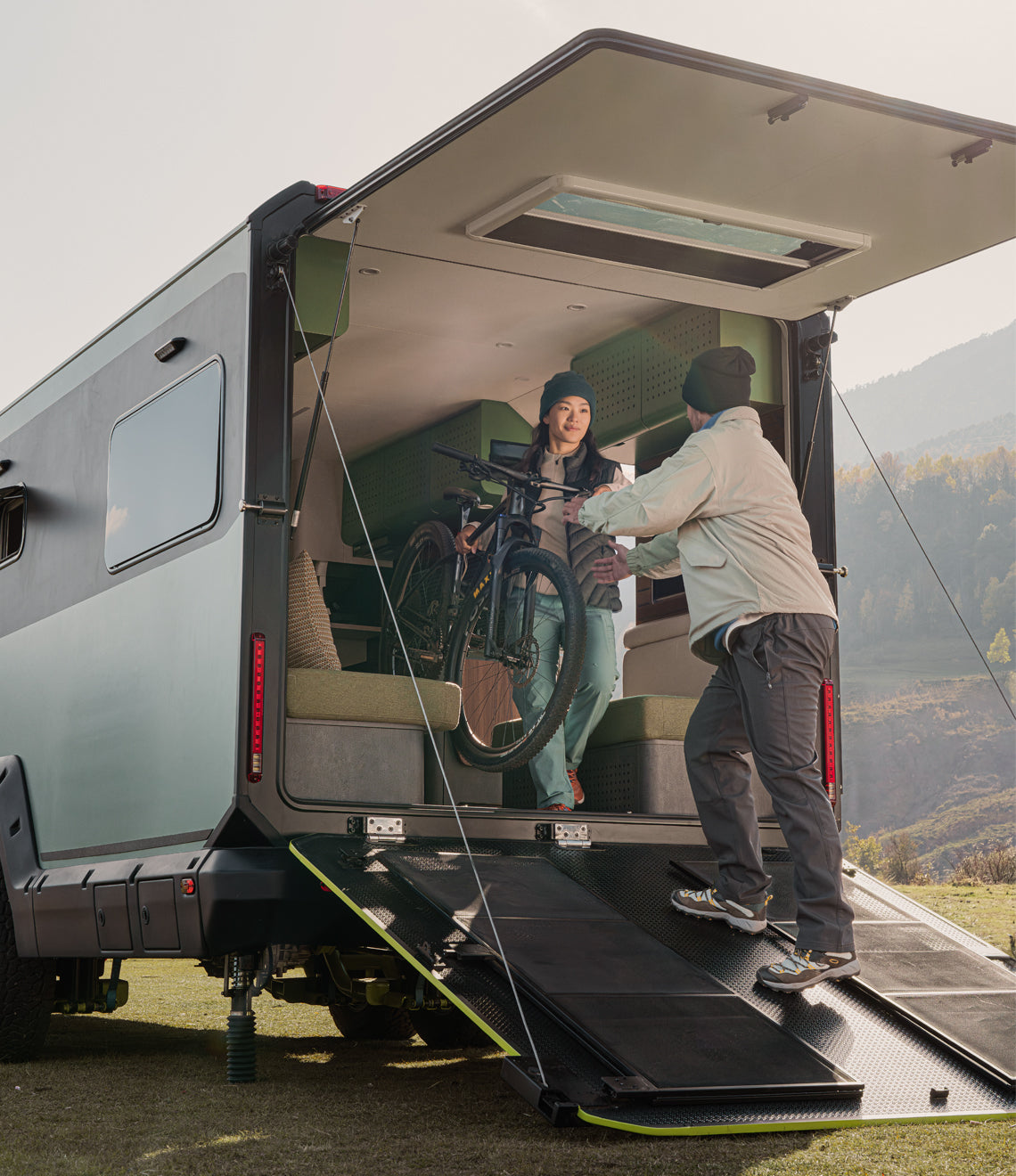
Insider tip: This is about as off grid as California public land gets, no services, no water, often no signal. It is exactly the kind of place where a self contained setup matters, which is why I've been keeping an eye on the Evotrex-PG5, a power-generating travel trailer currently available for preorder. Massive LFP battery pack, solar on the roof, and an onboard gasoline generator — so once it ships, you're not chained to hookups or babysitting your battery for a week in the middle of nowhere. Whatever you camp in, come full and self-sufficient, because there's nothing out there to bail you out.
At a glance
|
Area |
Land type |
Nearest town |
Best season |
Notes |
|
Alabama Hills |
BLM Scenic Area |
Lone Pine |
Spring, fall |
Free camping permit required since Oct 2024 |
|
Joshua Tree South |
BLM |
Chiriaco Summit |
Fall to spring |
Easy access, good solar, no facilities |
|
Inyo NF Eastern Sierra |
National forest |
Bishop, Lone Pine |
Summer |
MVUM only, bear country, developed canyons off limits |
|
Sequoia NF Kern / Isabella |
National forest |
Lake Isabella |
Spring, fall |
Hanning Flat fits big rigs |
|
Anza Borrego |
State park backcountry |
Borrego Springs |
Fall to spring |
Free open dispersed, no open fires |
|
Mojave Preserve |
National Park Service |
Baker, Kelso |
Fall to spring |
Roadside camping, rough sandy roads |
Paid fallbacks worth knowing
-
Tuttle Creek Campground (BLM), Lone Pine: cheap, year round, vault toilets, a few pull throughs, right by Alabama Hills.
-
Cottonwood Campground (Joshua Tree NP): water and a dump station a short drive from the Joshua Tree South BLM flats.
-
Developed Inyo and Sequoia forest campgrounds: first come or reservable, the legal option inside those off limits Eastern Sierra canyons.
-
County and state park campgrounds near Anza Borrego (Borrego Palm Canyon): flush toilets and hookups when you need a reset day.
Don't take my word for it, check before you roll
Rules and fire restrictions change constantly out here. Verify the current status of any spot with the actual agency before you go.
For national forest spots specifically: pull the Motor Vehicle Use Map (MVUM) for that forest, load it into the Avenza Maps app so it works with no signal, and call the local Ranger District to confirm road and fire status. If a road is not on the MVUM, you cannot legally drive or camp on it.
FAQ
Is boondocking legal in California?
Yes. Dispersed camping is legal and free on most BLM land and in national forests, with stay limits (usually 14 days), plus special cases like Anza Borrego Desert State Park. It is generally not legal inside cities or in most other state parks, and you need a campfire permit for any flame.
Is there BLM land in California?
Plenty. BLM manages about 15 million acres in California, roughly 15 percent of the state, and most of it allows dispersed camping at no charge.
Where can you boondock free in California?
The reliable categories are BLM land (Alabama Hills, Joshua Tree South), national forests (Inyo, Sequoia), the Mojave National Preserve roadside sites, and the Anza Borrego backcountry. Those cover desert in the cool months and high country in summer.
When is the best time to boondock in California?
Desert and low elevation: fall through spring, roughly October to April, because summer is dangerously hot. High Sierra national forest: summer into early fall, once the snow melts out and the roads open.
Do you need a permit or a campfire permit?
You need a free California Campfire Permit for any open flame statewide, including propane stoves, get it from CAL FIRE online. Some areas need an extra permit too, like the free Alabama Hills camping permit required since October 2024.
Things to watch out for
-
Fire restrictions can shut you down. In a bad fire year campfires (and sometimes stoves) are banned outright. Always check the agency page for current restrictions before you light anything, and carry your campfire permit.
-
The heat is genuinely dangerous. Desert spots like Joshua Tree South, Anza Borrego, and the Mojave are fall to spring camping. Summer daytime temps out there can kill you, do not gamble on it.
-
Elevation and snow. The Eastern Sierra spots sit high. Roads can hold snow into early summer and close early in fall, and nights get cold even in July. Check before you climb.
-
The campfire permit. Worth repeating because people forget: it is required for a propane stove, not just a real fire. Free, online, carry it.
-
Water and dumping. Haul your own fresh water (none at primitive sites), and never dump gray or black on public land. Fill and dump at places like Cottonwood Campground near Joshua Tree, Tuttle Creek near Lone Pine, or pay stations and dump stations in nearby towns.
-
Apps the locals actually use: Campendium, iOverlander, and The Dyrt for finding and vetting sites (read the recent reviews for road conditions and rule changes), plus Avenza Maps with the MVUM loaded for legal forest roads with no signal.