
The Best Boondocking Spots in Texas
Let me get the hard part out of the way first, because every honest guide should. Texas is not the wide open free for all that the Marfa Instagram posts make it look like. Roughly 95 percent of this state is privately owned. That is not a typo. Out west you can roll into a national forest or a BLM parcel the size of a county and pick a spot. Here, the public land is scattered, tucked into the corners, and you have to actually know where it is. That is the whole game.
The good news is the spots that do exist are genuinely great, and they get way less traffic than the famous western circuit because everyone assumes Texas has nothing. They are wrong. You just have to think in terms of land categories instead of one big map: the national forests and grasslands in East Texas and up by the Red River, the lone BLM tract north of Amarillo, the federal seashore down on the Gulf, and the desert parks out toward Big Bend. Each one has its own agency and its own rulebook, and that is exactly where first timers get tripped up.
I have spent enough nights out here, getting it right and occasionally getting it wrong, to save you some of that. Here is the real map.

Quick answer for the skimmers
Free and cheap boondocking in Texas lives mostly on federal land: the five national forests and two national grasslands in the eastern half and Red River country, the single BLM tract (Cross Bar) north of Amarillo, and free beach camping at Padre Island National Seashore. True dispersed camping caps at 14 days, the high season runs roughly October through April when the heat and humidity back off, and the main catch is that Texas is overwhelmingly private land so you cannot just pull off any back road like you can out West. Always check the Motor Vehicle Use Map before you camp in a national forest.
Read this before you roll (the rules nobody mentions until it is too late)
A few things that will save you a ranger conversation or a ticket:
-
The 14 day limit is everywhere. National forests, grasslands, the seashore, state parks. You can stay up to 14 days, then you have to move on (usually for several days, sometimes longer, before you can return). Plan around it.
-
In a national forest, the MVUM is the law, not a suggestion. You can only camp along roads and spurs shown as open on the Motor Vehicle Use Map for that district. "Dispersed camping allowed" does not mean anywhere. It means along the open roads. More on the app for that below.
-
Set up at least 150 feet off the road and off any water. That is the Forest Service standard in Texas. Off the seashore, you camp near the dunes, not in them.
-
Quiet hours on generators are real. On the grasslands and at Padre Island, no gas generators between 10pm and 6am. If you are running a quiet onboard system instead of a screaming portable, this is where you make friends.
-
Two confusingly similar names, do not mix them up. Texas has both national forests run by the U.S. Forest Service AND state Wildlife Management Areas (WMAs) that overlap some of the same ground (the Sam Houston WMA sits inside the Sam Houston National Forest, for example). The Forest Service handles your dispersed camping. The WMA layer is run by Texas Parks and Wildlife and is mostly about hunting seasons and access permits. During hunting season, parts can close or require a card you do not need for ordinary camping. Confusing, yes. Call the local ranger district if your dates land in fall.
-
Fire bans are common and county driven. West Texas and the Panhandle spend a lot of the year under burn bans. Assume no campfire and cook on a stove unless you have confirmed otherwise that day.
The free and dispersed spots, organized by what kind of land they are
National forests (your best bet for true dispersed camping)
This is the heart of free boondocking in Texas. The national forests and grasslands in Texas cover over 675,000 acres, almost all of it in the Piney Woods of East Texas. Dispersed camping is allowed, free, no reservation, 14 day limit, along open MVUM roads.
Davy Crockett National Forest (near Ratcliff and Kennard). This is my sentimental favorite for a first timer. The standout is Neches Bluff Overlook, a free dispersed area on a bluff over the Neches River bottomlands at the north end of the forest. There is a vault toilet and not much else, which is the point. The 20 mile Four C National Recreation Trail runs from here down to Ratcliff Lake, so you can post up and hike for days.
Rig fit: People take real RVs into Neches Bluff, but it is still primitive ground with no defined sites, so scout your turnaround before you commit a big trailer to the loop.
Insider tip: If Neches Bluff is full or the road is soft after rain, drop down to the Ratcliff Lake Recreation Area a short drive south. It is a paid developed campground, not free, but it is your dry weather backup with actual amenities.
Angelina National Forest (around Sam Rayburn Reservoir, near Zavalla). Big water, big pines. Dispersed camping happens at Sexton Pond along the forest roads, and there are cheap developed options if you want a defined site: Caney Creek on the reservoir and Boykin Springs are first come first served for a small per night fee (Caney Creek runs about 6 dollars, Boykin Springs about 10, as of the 2026 fee info I checked, so carry small cash).
Insider tip: Sam Rayburn is one of the best bass lakes in the country. If you fish, this is the forest to base out of.
Sam Houston National Forest (near New Waverly and Cleveland). The closest real dispersed camping to Houston, roughly an hour north of the city. Dispersed sites sit along the forest roads, no permit needed, 150 feet off the road and water, 14 day limit. Just know the Sam Houston WMA overlaps it, so check for hunting closures in fall and pull the MVUM.
Rig fit: Some of these spur roads are tight and sandy under the pine canopy. A nimbler trailer is happier here than a 40 foot fifth wheel would be (and you will not find me towing one of those anyway).
Sabine National Forest (along the Toledo Bend Reservoir, near Hemphill). The easternmost forest, right on the Louisiana line, hugging the Toledo Bend Reservoir. Quieter than the others. Same dispersed rules apply. Worth knowing the area took tornado damage in spring 2025, so check the alerts page for any lingering road or area closures before you count on a specific spot.
National grasslands (open country up near the Red River)
Different feel entirely. Where the forests are dense and shady, the grasslands are rolling open prairie and oak mott.
Lyndon B. Johnson (LBJ) National Grassland (near Decatur and Alvord). About an hour northwest of Fort Worth, which makes it the go to for the DFW crowd. Free dispersed camping across most of it, first come first served, 14 day limit. A well known dispersed spot sits along Forest Road 904, and TADRA Point is the developed trailhead camping hub feeding the 75 mile LBJ multiuse trail system (big with the horse folks). No camping within 300 feet of a boat ramp or parking lot, and remember the 10pm to 6am generator quiet hours here.
Insider tip: There is no reliable potable water out here. Roll in with full fresh tanks. This is open prairie, so it bakes in summer and there is little shade, which is another reason the cool months win.
Caddo National Grassland (near Honey Grove, northeast of the LBJ unit). The sister unit, paired administratively with LBJ. Similar primitive camping, more remote, fewer people. Same agency, same rulebook.
The one and only BLM land in Texas
Out West, BLM land is the boondocking promised land. In Texas there is exactly one tract, and it is a wild one.
Cross Bar Management Area (about 20 minutes north of Amarillo). This 11,883 acre Special Recreation Management Area is, per the BLM's own page, the only BLM administered surface land in the entire state. Dispersed primitive camping is allowed throughout. Zero amenities. Pack in everything, pack out everything, bring a shovel.
Rig fit: This is the catch, and it is a big one. Cross Bar is landlocked. The only current public access requires crossing private land and then traversing the Canadian River, along a sandy uneven route that the BLM says needs a 4WD high clearance vehicle or a willingness to walk several miles. This is not a place you tow a trailer into casually. Treat it as a high clearance tow vehicle or a leave the trailer behind kind of adventure, and call the field office first.
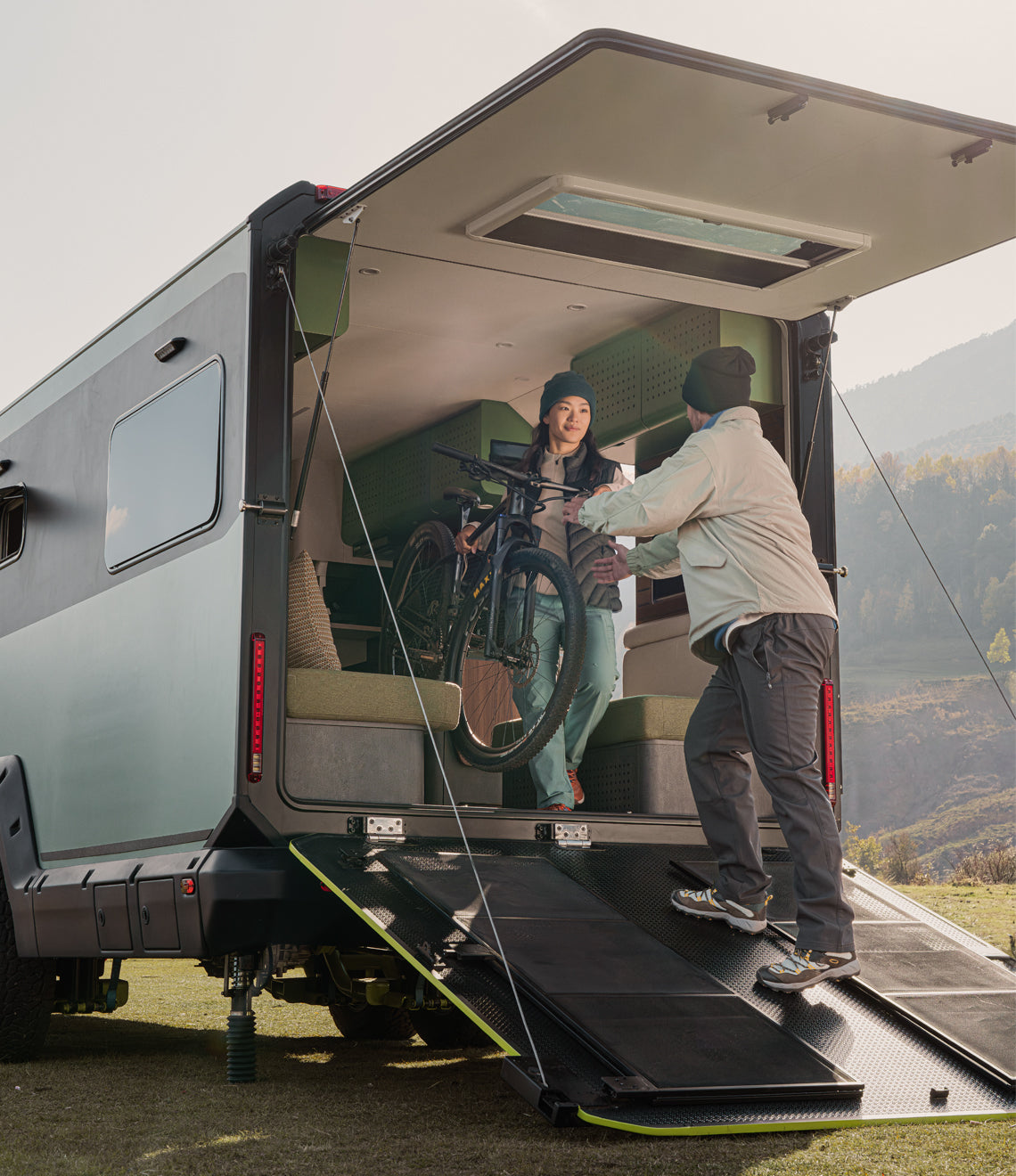
Insider tip: Campfires are usually prohibited (it follows Potter County burn guidance, and the Panhandle is dry), and motorized off road vehicles like dirt bikes and four wheelers are banned on the property. Call BLM at the number on their Cross Bar page before you go, both to confirm access conditions and because they ask you to. This is the most remote, no services spot on this whole list, and it is exactly the kind of place where carrying your own self contained power matters. Something like the Evotrex-PG5 (a travel trailer with a massive LFP battery pack, rooftop solar, and an onboard gasoline generator) is built for this sort of nowhere, where there is no hookup for miles and the nearest outlet is in Amarillo.
Federal seashore (free camping on the actual beach)
Padre Island National Seashore (south of Corpus Christi). This is the one that surprises people. You can camp free, right on the sand, for up to 14 days. There is no camping fee, but it is not technically "free free": you pay the park entrance fee to get in, and you self register at the kiosk where the pavement ends (they want your name, vehicle, plate, and return date, mainly to track the 14 day limit). Down past the developed areas, South Beach is the long stretch of open beach driving and dispersed camping.
Rig fit: The first few miles of South Beach are usually firm enough for most rigs, then it turns to soft sand that swallows anything without high clearance and aired down tires. Know your limits, watch the tide, and do not drive into the dunes or mudflats (that is both illegal and a great way to get stuck). Generators off 10pm to 6am.
Insider tip: Stop at the visitor center and ask for the current beach driving conditions report before you commit. Sand firmness changes with weather and tide, and the rangers will tell you honestly how far down a normal vehicle can get that day.
State parks with primitive camping (not free, but close, and they get you near the good stuff)
Texas State Parks are not boondocking in the dispersed sense, but several offer genuinely primitive backcountry camping for a few dollars, and they unlock terrain you cannot otherwise reach. Statewide the stay rule is up to 14 days within any 30 day period. You will pay a daily entrance fee plus a campsite fee, and you reserve through Texas Parks and Wildlife.
Big Bend Ranch State Park (along FM 170, the River Road, west of Lajitas). The other Big Bend, and an underrated one. Drive in primitive roadside sites along the River Road like Grassy Banks, Madera Canyon, and Arenosa start around 5 dollars a night, which is about as cheap as legal camping gets in Texas. You must have a permit and you pack out all waste, human included (they sell portable toilets at the permit stations).
Colorado Bend State Park (near Bend, in the Hill Country). Walk in and backcountry hike in primitive sites along the river and out toward the windmill area. You haul your own gear in, which keeps the crowds thin. Beautiful spring fed country and the Gorman Falls hike.
At a glance
|
Spot |
Land type |
Free? |
Stay limit |
Catch |
|
Neches Bluff Overlook (Davy Crockett NF) |
National forest |
Yes |
14 days |
Primitive, vault toilet only |
|
Sexton Pond (Angelina NF) |
National forest |
Yes |
14 days |
Dispersed along forest roads |
|
Sam Houston NF dispersed |
National forest |
Yes |
14 days |
Check WMA hunting closures, MVUM |
|
LBJ National Grassland (FR 904) |
National grassland |
Yes |
14 days |
No water, little shade |
|
Cross Bar (north of Amarillo) |
BLM |
Yes |
(primitive) |
Landlocked, 4WD, river crossing |
|
Padre Island South Beach |
National seashore |
Free camp, paid entry |
14 days |
Soft sand past first miles |
|
Big Bend Ranch SP River Road |
State park |
No (about $5/night) |
14 in 30 days |
Permit, pack out all waste |
Paid fallbacks worth knowing
Not everything has to be free, and on a long Texas trip these save the day:
-
Ratcliff Lake Recreation Area (Davy Crockett NF): developed Forest Service campground, your dry weather backup near Neches Bluff.
-
Caney Creek and Boykin Springs (Angelina NF): cheap first come first served sites (roughly 6 and 10 dollars) when you want a defined spot on Sam Rayburn.
-
Big Bend National Park primitive roadside sites (Grapevine Hills, Paint Gap, and others): about 10 dollars a night with a backcountry permit reserved through recreation.gov, high clearance recommended. Worth it for the night sky alone.
-
LCRA parks along the Colorado River (Hill Country to the coast): low cost developed and primitive camping run by the river authority, a solid alternative when the state parks are booked solid. Fees apply.
Don't take my word for it, check before you roll
Rules and closures change. Verify on the official source for your dates:
For any national forest spot: pull that forest's Motor Vehicle Use Map (MVUM), load the area into the Avenza Maps app so you can see open roads offline with no signal, and call the local Ranger District office to confirm conditions and any closures. The forests and grasslands in Texas are administered out of the supervisor's office in Lufkin, and each district has its own number.
FAQ
Is boondocking legal in Texas?
Yes, on public land where it is allowed: the national forests and grasslands (dispersed, along open MVUM roads, 14 day limit), the Cross Bar BLM tract, and Padre Island National Seashore. What is not legal is camping on the roughly 95 percent of Texas that is private land without the owner's permission, which is why it can feel harder here than out West.
Is there BLM land in Texas?
Barely. There is exactly one BLM administered surface tract: the 11,883 acre Cross Bar Management Area north of Amarillo. Dispersed primitive camping is allowed, but it is landlocked and the access requires a 4WD high clearance vehicle and crossing the Canadian River, so it is not a casual trailer destination.
Where can you boondock free in Texas?
Best free options: dispersed sites in the Davy Crockett, Angelina, Sam Houston, and Sabine national forests; the LBJ and Caddo national grasslands; Cross Bar (with the access caveat); and free beach camping at Padre Island National Seashore (you still pay park entry). State park primitive sites are cheap but not free.
When is the best time to boondock in Texas?
Roughly October through April. Texas summers are brutally hot and humid across most of the state, and the Panhandle and West Texas can also get cold snaps, so the shoulder and winter months are the sweet spot. Bonus: winter is the dry, clear season for desert spots out by Big Bend.
Do you need a permit or license to boondock in Texas?
For dispersed national forest camping, no permit, just follow the MVUM and the 14 day limit. Padre Island requires a free self registration permit at the kiosk. Big Bend National Park and Big Bend Ranch State Park both require a paid permit. Cross Bar asks you to contact the BLM field office before visiting. No special license needed for ordinary camping, but check for hunting season closures if your spot overlaps a WMA.
Why is dispersed camping so hard to find in Texas compared to other states?
History. When Texas joined the Union in 1845 it kept its public lands instead of ceding them to the federal government, then sold most of it off to settlers over the following decades. The result today is a state that is overwhelmingly private, with public land confined to those scattered forests, grasslands, the one BLM tract, the seashore, and the state parks.
Things to watch out for
The stuff that actually goes wrong out here:
-
Water and dump stations. Many of these spots have zero potable water (the grasslands and Cross Bar especially), so roll in with full fresh tanks. For dumping and refilling, the developed Forest Service campgrounds (like Ratcliff Lake) and some Lake Meredith and state park facilities have dump stations. Plan your fill and dump around them, do not assume.
-
Use the apps the locals use. Campendium, iOverlander, and The Dyrt are how everyone finds current conditions and reads recent reviews. Reviews from the last few weeks will tell you if a forest road washed out or a site is closed before you drive two hours to find out. For legal forest roads specifically, the Avenza Maps app with the MVUM loaded is the move.
-
Heat and humidity. This is the number one Texas hazard for most of the year. Off grid in August with no shade is genuinely dangerous. Carry far more water than you think you need.
-
Fire bans. Large stretches of West Texas and the Panhandle sit under county burn bans much of the year. Confirm the current status that day and cook on a stove if in doubt.
-
Soft sand and mud. On Padre Island and at Cross Bar, getting stuck is the real risk. Air down, know the tide and the route, carry traction boards, and do not push a low clearance rig past where the sand stays firm.
-
Snakes, scorpions, and javelina out west; ticks and chiggers in the East Texas piney woods. Shake out your shoes, watch where you step, and check yourself after hiking through the brush.
Texas rewards the boondocker who does the homework. The free spots are out there, they are quieter than the famous western ones, and once you learn to read the land by category instead of expecting