
Boondocking in South Dakota: The Best Free Camping Spots
I have rolled into South Dakota more times than I can count, and it still surprises me. You get two completely different worlds for free camping here, and most folks only ever find one of them. There is the cool, pine covered Black Hills in the west, where you can tuck a trailer down a forest road and not see a soul. And then there is the wide open prairie, where the Buffalo Gap National Grassland drops you on a ridge looking straight into the Badlands. That grassland view is the kind of campsite people drive across the country for, and it does not cost a dime.
What makes boondocking in South Dakota good is that the public land is real and it is huge. What makes it tricky is that the rules are not the same from one chunk of land to the next, the weather will absolutely test you, and there are two windows every year when the whole western half of the state fills up. If you show up unprepared, South Dakota boondocking will humble you. If you do a little homework, it is some of the best free camping in the country.
This is the stuff I wish someone had told me the first time. Named sites, real rules I have actually run into, and the honest warnings.

Quick Answer
Yes, boondocking in South Dakota is legal and easy if you know where to go. The two best free options are dispersed camping in the Black Hills National Forest near Custer and dispersed camping on the Buffalo Gap National Grassland just outside Badlands National Park near Wall. Both are free, no reservations, with a 14 day stay limit, and you must be fully self contained because there is no water, no toilets, and no trash service.
The Rules You Actually Need to Know
The rules change depending on whose land you are on, so read this part before you pick a spot.
National forest vs national grassland are different. The Black Hills National Forest sits in the western hills. The Buffalo Gap, Fort Pierre, and Grand River National Grasslands are open prairie. Both allow free dispersed camping, but they are managed by different ranger districts with their own rules and fire orders.
Black Hills dispersed camping limits. You can camp a maximum of 14 days in any 60 day period. Stay 100 feet away from any creek or stream, and at least one half mile from developed campgrounds and picnic areas. Vehicles can go up to 300 feet off a road, but only on roads shown on the Motor Vehicle Use Map.
Grassland dispersed camping limits. Buffalo Gap also runs a 14 day stay limit. On the grasslands you camp away from developed and occupied areas like boat ramps and trailheads, drive only on designated roads, and stay close to established roads to set up.
Fires are the big one. There are no open campfires allowed in the South Dakota portions of the Black Hills National Forest, period. On the grasslands, open fire bans get put in place often during dry stretches. In late March 2026 an open fire prohibition was issued for the Buffalo Gap and Oglala Grasslands. Assume you cannot have a wood fire and plan to cook on a contained gas stove.
The Sturgis window. The 86th Sturgis Motorcycle Rally runs August 7 to 16, 2026, and it pulls something like half a million people into the Black Hills. Free dispersed sites near Custer, Rapid City, and the grasslands get slammed. If you want quiet camping, do not roll in during that window unless you are coming for the rally.
Be self contained. None of these spots have hookups, water, dumps, or trash. Pack in your water, pack out everything, use your own holding tanks.
The Best Boondocking Spots in South Dakota
I grouped these by what kind of land they sit on, because that is what determines the rules and the vibe.
National Forest: The Black Hills
This is your cool weather, pine and granite, tuck into the trees kind of camping. Higher elevation, so it is more comfortable in summer than the plains.
North Pole Road (Forest Road 287), near Custer. This is the classic Black Hills dispersed area and the one I send first timers to. It is on the Black Hills National Forest, only about 8 miles out of downtown Custer, so you are close to Custer State Park, Crazy Horse, Wind Cave, and Mount Rushmore but still off grid. The road is firm packed dirt and gravel, and there are big pull ins along the corridor where people have camped for years.
Rig fit: Good for big rigs. People regularly take 40 foot trailers in on the access road, just go slow and do not push it if it has been raining.
Insider tip: The sites fill from the front, so the ones closest to the highway go first. Keep driving deeper down 287 and you will find bigger, quieter pull ins with better separation from neighbors.
Bear Mountain area roads, near Custer. Another stretch of the Black Hills with dispersed pull ins reachable off the forest road network west of Custer. It is a little more remote feeling than North Pole Road. The key here, and on any Black Hills road, is to only use the roads marked on the Motor Vehicle Use Map and only camp where vehicles are actually allowed off the road.
Rig fit: Mixed. Some pull ins handle larger trailers, others are tight and unlevel. Scout on foot before you commit a big rig.
Insider tip: Pull up the Black Hills MVUM before you have no signal. The legal dispersed corridors are marked, and rangers do check. Knowing which spurs are open keeps you out of trouble and off private land, which is mixed in throughout the hills.
National Grasslands: The Badlands Edge and the Open Prairie
This is the wide open, huge sky, see for miles kind of camping. Hot, windy, and unforgettable.
Pinnacles Dispersed Camping Area, near Wall (Buffalo Gap National Grassland). This is the famous one, the spot a lot of people call Nomad View or the Badlands Overlook. It sits on the Buffalo Gap National Grassland about 6 miles south of Wall off Highway 240, right next to the Pinnacles Entrance of Badlands National Park. You camp on a ridge looking out over the formations, and at sunset it is genuinely one of the best free views in the country. Access is off Forest System Roads 7158 and 7170, and there are roughly 70 designated sites marked with wooden posts. Free, first come first served, 14 day limit, and no facilities at all.
Rig fit: Doable for most rigs, but the dirt roads are rough and not always level. Scout ahead before you commit a long trailer, and do not even think about it if the ground is wet.
Insider tip: The wind out here is no joke, especially overnight. Park nose into the wind, drop your stabilizers, and bring everything loose inside. Camp next to the marked posts as the rules ask, and skip the rim edge spots, which have had restrictions due to restoration work.
Buffalo Gap dispersed, broader grassland near Wall and Interior. Beyond the Pinnacles area, big stretches of the Buffalo Gap National Grassland are open to dispersed camping. The visitor center in Wall is the place to get current site recommendations and closure info before you wander off down a two track.
Rig fit: Varies wildly. The maintained gravel near the Pinnacles area is fine, but unmarked prairie two tracks can turn into a mess fast. Stick to firm, designated roads with a bigger rig.
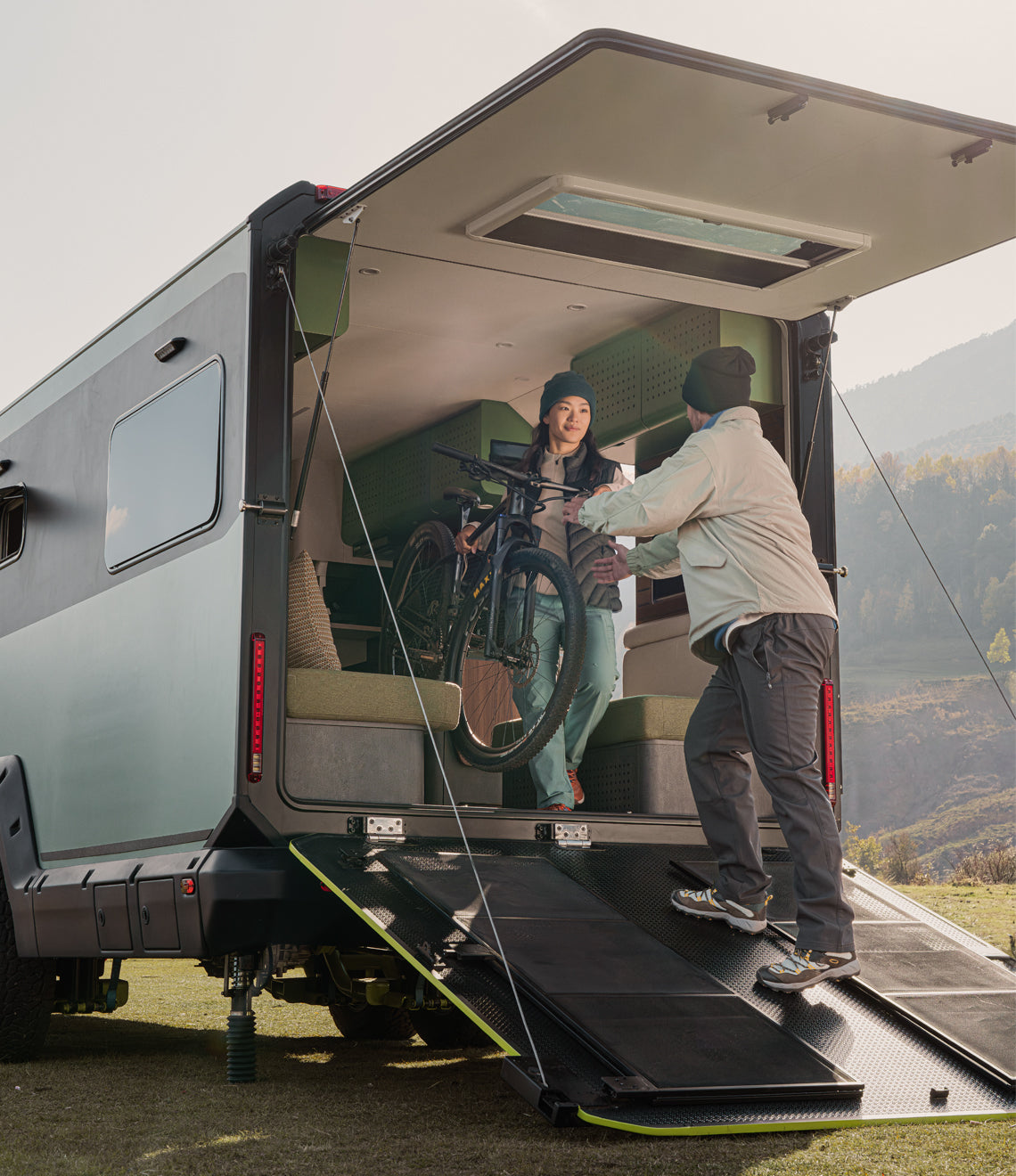
Insider tip: This is exactly the kind of remote spot a power generating travel trailer earns its keep. There is no hookup for 30 miles, so a rig built to run itself matters. The Evotrex-PG5 is a travel trailer with a massive LFP battery pack, onboard solar, and a gasoline powered onboard generator, so you can park on the open grassland and keep your power topped off without ever chasing a campground pedestal. That is the whole point of being out here.
Fort Pierre National Grassland, near Fort Pierre. Center of the state, close to the Missouri River, and a world away from the Black Hills crowds. This is part of the Dakota Prairie Grasslands and allows free dispersed camping with no permits or fees. It is quiet, rolling, and great if you want true solitude between the hills and Sioux Falls.
Rig fit: Open enough for larger rigs in the right spots, but it is primitive and roads soften when wet. Pick firm ground.
Insider tip: Open fires get banned here regularly during dry seasons, and Fort Pierre has issued its own grassland fire bans in the past. Call the Fort Pierre Ranger District at (605) 224-5517 before you go to confirm current conditions.
Grand River National Grassland, near Lemmon. Way up in the northwest corner, this is for people who really want to disappear. Also part of the Dakota Prairie Grasslands, it has no developed campground but allows free dispersed camping. It is remote enough that you should arrive fully stocked.
Rig fit: Primitive prairie roads, so favor smaller and capable rigs and avoid soft ground.
Insider tip: Service and town amenities are thin out here. Top off fuel, water, and groceries in Lemmon before you head out, and tell someone your plan.
At a Glance
|
Spot |
Land |
Nearest town |
Free |
Rig fit |
|
North Pole Road (FR 287) |
Black Hills National Forest |
Custer |
Yes |
Big rig friendly |
|
Bear Mountain area roads |
Black Hills National Forest |
Custer |
Yes |
Mixed, scout first |
|
Pinnacles Dispersed Area |
Buffalo Gap National Grassland |
Wall |
Yes |
Doable, rough roads |
|
Buffalo Gap broader grassland |
Buffalo Gap National Grassland |
Wall / Interior |
Yes |
Varies, stay on firm roads |
|
Fort Pierre National Grassland |
Dakota Prairie Grasslands |
Fort Pierre |
Yes |
Primitive, firm ground |
|
Grand River National Grassland |
Dakota Prairie Grasslands |
Lemmon |
Yes |
Smaller, capable rigs |
Paid Fallbacks Worth Knowing
-
Custer State Park has developed campgrounds in the southern Black Hills if dispersed sites are full or fire bans push you out.
-
Badlands National Park has the developed Cedar Pass Campground if you want to be inside the park.
-
Black Hills National Forest campgrounds, around 30 of them, can be reserved through Recreation.gov at 1-877-444-6777 when you want a real toilet and water.
-
City parks in small South Dakota towns often allow cheap dry camping, usually a small nightly fee, when you just need a flat spot for the night.
Don't Take My Word for It, Check Before You Roll
Conditions and fire orders change, so verify with the agency before you go.
A few habits that keep me out of trouble:
-
Pull the MVUM. The Motor Vehicle Use Map shows exactly which roads are open and where you can legally drive off to camp. It is the difference between a legal site and a ticket.
-
Use the Avenza Maps app. Load the free MVUM into Avenza so you can see your dot on the map even with no signal.
-
Call the local Ranger District. For Buffalo Gap call the Wall Ranger District at (605) 279-2126 or Fall River Ranger District at (605) 745-4107. For Fort Pierre call (605) 224-5517. They will tell you the current fire status straight.
Frequently Asked Questions
Is boondocking legal in South Dakota?
Yes. Free dispersed camping is legal on the Black Hills National Forest and on the Buffalo Gap, Fort Pierre, and Grand River National Grasslands, as long as you follow the stay limits, stay on designated roads, and respect fire orders.
Is there BLM land in South Dakota?
There is some, but not much, and it is not the main boondocking option here. The BLM manages a relatively small amount of surface land in South Dakota, mostly in the western counties, and it is scattered and hard to identify on the ground. For free camping you are far better off on the national forest and national grasslands.
Where can you boondock free in South Dakota?
The two go to areas are the Black Hills National Forest near Custer, including North Pole Road, and the Buffalo Gap National Grassland near Wall, including the Pinnacles Dispersed Camping Area on the edge of the Badlands. Fort Pierre and Grand River National Grasslands are great for solitude.
When is the best time to boondock in South Dakota?
Late spring through early fall is the window. June and September are my favorites because the weather is good and the crowds are lighter. Avoid the Sturgis Motorcycle Rally, August 7 to 16, 2026, unless that is what you came for, because the whole area fills up.
Do you need a permit to boondock in South Dakota?
No. Dispersed camping on the Black Hills National Forest and the national grasslands does not require a permit or reservation. It is first come first served and free.
Can you have a campfire while boondocking in South Dakota?
Often no. Open campfires are not allowed in the South Dakota portions of the Black Hills National Forest at all, and the grasslands frequently have open fire bans during dry conditions. Plan to cook on a contained gas stove and always confirm the current fire order.
Things to Watch Out For
Water and dump. None of these spots have water or a dump station. Fill your fresh tank and find a dump in town before and after. Wall, Custer, and Rapid City are your resupply hubs in the west.
Use the apps. Campendium, iOverlander, and The Dyrt have current reviews, photos, and road condition notes for almost every spot in here. Read the most recent reviews before you trust an access road with a big rig.
Heat and storms on the plains. The grasslands get brutally hot in midsummer and the wind on those Badlands ridges howls, especially at night. Sudden storms, hail, and lightning roll across the prairie fast, so watch the sky.
Fire bans. Take them seriously. Wood fires are off the table in the SD Black Hills, and grassland bans come and go. A loose ember on dry prairie is a disaster.
Gumbo mud. This is the one that gets people. When the grassland or forest dirt gets wet it turns to a sticky clay locals call gumbo, and it will bog down or strand a rig fast. If rain is coming or the ground is soft, do not drive off the gravel.
Sturgis week crowds. August 7 to 16, 2026 packs the western half of the state. Plan around it for quiet camping.
Bison near Custer and Wind Cave. Custer State Park and Wind Cave have free roaming bison and they are massive and faster than they look. Give them a wide berth, never get between a calf and a cow, and do not let curiosity put you within range.
South Dakota rewards the campers who do a little planning. Pull the maps, call the ranger, watch the weather, and you will end up parked on a Badlands ridge or tucked into the Black Hills pines for free, which is about as good as boondocking gets.