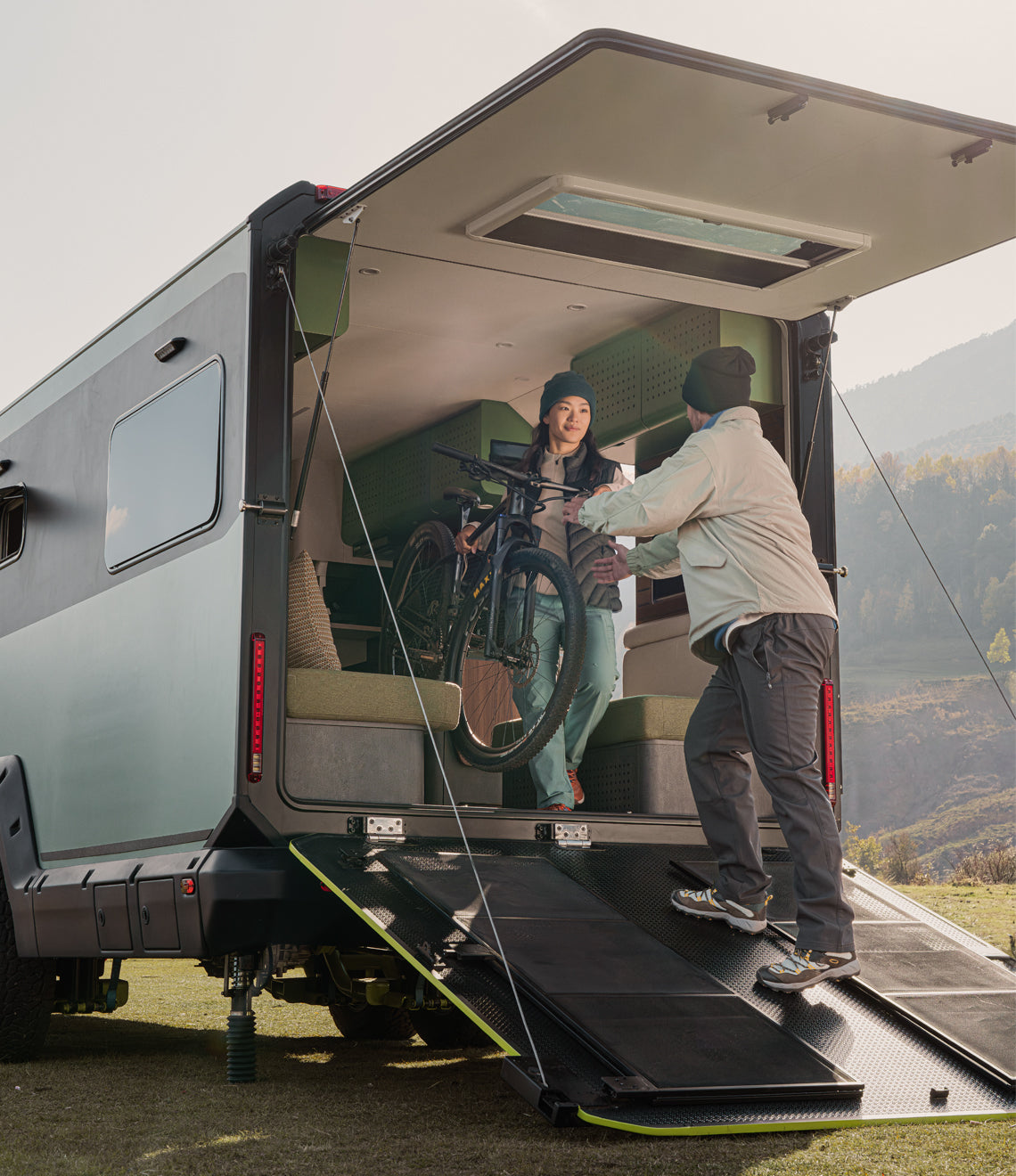

RV Towing Capacity: What Your Tow Vehicle Can Safely Pull
Towing an RV safely comes down to one question. Can your vehicle pull and carry the trailer you want, fully loaded, on a real trip? The tow number on a brochure only tells part of the story. Behind it sits a small family of weight ratings that set the true limit, and exceeding any one of them makes a rig unstable long before you reach the headline figure.
This guide explains what towing capacity really means, breaks down the ratings that matter, shows you where to find your numbers, and covers the safety margin experienced owners build in. It also clears up a common mistake. A lighter trailer is not automatically the easier or safer tow, and the weight on a spec sheet usually reflects what the trailer does for you once you arrive.

What towing capacity actually means
Towing capacity is the maximum weight your vehicle is engineered to pull. It reflects the engine, transmission, cooling system, frame, brakes, and driveline working together. When a manufacturer rates a truck to tow 9,000 pounds, that figure assumes a specific configuration and, often, little more than a driver in the cab.
Pulling weight and carrying weight are two different jobs, governed by different ratings. The trailer presses down on the hitch, passengers and gear fill the cabin, and all of it counts against separate limits. In many real-world setups one of those other limits is reached first, so the true ceiling is lower than the tow rating alone suggests.
One clarification up front. Towing capacity belongs to whatever is doing the pulling. For most RV setups that is a truck or SUV pulling a travel trailer, and that is the focus of this guide. Motorhomes are a different case. A Class A or Class C motorhome can tow a small car or trailer behind it, often called a toad, and carries its own separate towing rating that you match the same way. Either way, the rating you care about is the tow vehicle's, not the trailer's.
The key weight ratings explained
Towing has its own vocabulary, most of it stamped on a sticker as acronyms. Here is what each one means in plain terms.
| Term | What it means |
|---|---|
| GVWR | Gross Vehicle Weight Rating. The most a single vehicle can safely weigh fully loaded, including passengers, cargo, fluids, and the trailer's tongue weight. |
| GCWR | Gross Combined Weight Rating. The most the tow vehicle and loaded trailer are allowed to weigh together. |
| GAWR | Gross Axle Weight Rating. The most weight a single axle can carry. Vehicles usually list a separate front and rear figure. |
| Payload | The total weight a vehicle can carry, covering people, pets, cargo, and the hitch or tongue load. |
| Tongue weight | The downward force the loaded trailer places on the hitch, ideally 10 to 15 percent of the loaded trailer weight. |
| Dry weight | The trailer's weight from the factory with empty tanks and no gear. |
| Loaded weight | What the trailer actually weighs once you add water, propane, food, and personal cargo. |
The gap between dry weight and loaded weight trips up a lot of buyers. A trailer advertised at a light dry weight can gain a thousand pounds or more once you fill the fresh water tank and pack for a trip. Plan around the trailer's own GVWR, the most it is allowed to weigh loaded, not the showroom sticker.
Manufacturers that publish that number up front make your math easy. The Evotrex-PG5, for example, lists a GVWR of 9,500 pounds against a dry weight of 8,350 pounds for its standard trim, so you know what to expect before you ever hitch up. Towing hardware makers such as Curt Manufacturing publish clear breakdowns of how these ratings relate, and they are worth reviewing before you shop.
How to find your tow vehicle's rating
Your numbers are closer than you think. There are three reliable places to look, and the goal is to match your exact vehicle configuration rather than a generic model figure.
Start with the driver side door jamb. Open the door and read the certification label on the frame. It lists the GVWR and the front and rear GAWR, and it often shows the payload for your specific vehicle. Because payload frequently limits towing before anything else, this small sticker carries a lot of weight in every sense.
Next, open the owner manual. Manufacturers publish tow ratings by engine, axle ratio, and option package, so two trucks that look identical can carry very different numbers. Many brands also post downloadable tow guides by model year on their websites. Consumer resources like the Kelley Blue Book towing capacity guide walk through how to read those charts for your trim.
Finally, when in doubt, weigh the vehicle. A public scale gives you the real curb weight so you can subtract it from the GCWR and see how much trailer you truly have left. Numbers on paper are a starting point. A scale reading is the truth.
The safety margin rule
Here is the habit that separates confident owners from stressed ones. Do not tow right up to the maximum. A widely shared guideline is the 80 percent rule, which says your loaded trailer should weigh no more than about 80 percent of your vehicle's maximum tow rating. On a truck rated to pull 10,000 pounds, that means keeping the loaded trailer under roughly 8,000 pounds.
That cushion is not wasted. It absorbs the real-world factors a brochure figure ignores. Passengers, a bed full of gear, a stiff headwind, a long grade, and the harder braking that mountain roads demand. Towing near the ceiling leaves no room for any of it, and the ride shows it through sluggish acceleration, longer stops, and more sway.
The 80 percent rule is a recommendation rather than a law, but it reflects how experienced drivers build in safety. Guidance from the National Highway Traffic Safety Administration reinforces the point that moderate loads and moderate speeds keep a trailer stable. Staying under the maximum also reduces long-term strain on your engine, transmission, and brakes.
Why a heavier trailer is not the disadvantage it looks like
Shoppers often sort trailers by dry weight and assume lighter means easier. On the road it rarely works that way. Weight is where the stability and the build usually live. A dual-axle trailer on a high-strength automotive chassis tracks straighter and resists sway better than a light single-axle box, and adjustable air suspension lets you lower the trailer for highway efficiency.
Weight also tells you what you will not be carrying in the truck. A trailer that makes and stores its own power, like the Evotrex-PG5 with 270+ kWh of usable energy from a 43 kWh LFP battery, 1.5 kW of integrated solar, and a gasoline-powered 75 kW onboard generator, means no portable generator, fuel cans, spare battery bank, or loose solar panels riding in the bed. That is payload you keep for people and gear, and payload is the limit most tow vehicles hit first.
The Evotrex-PG5 also does part of the towing work itself. TowSync™ adaptive tow assist uses an onboard electric motor and a high-precision hitch force sensor to provide torque support while towing, adapting to road conditions and syncing with gas, diesel, and electric tow vehicles alike. Add stability control, triple-redundant braking, and a generator that keeps replenishing the battery while you drive, and the number on the spec sheet reads less like a burden and more like equipment.
None of this changes the rules above. Your tow vehicle still has to clear every rating with the trailer at its GVWR. It just means that when you compare trailers, weigh what each pound is buying you, not the number alone.
Matching a trailer to your tow vehicle
Once you know your ratings, matching a trailer is a straightforward exercise in staying under every limit at the same time. Start from the trailer's GVWR rather than its dry weight, and confirm that figure sits comfortably under 80 percent of your tow rating.
Then check the other ceilings. Add up passengers, cargo, and the trailer's tongue weight, and make sure the total stays within your payload and GVWR. Verify that the combined weight of vehicle and trailer stays under the GCWR. A weight distribution hitch spreads the tongue load across both axles for a steadier ride, though it never raises a rating or excuses an overloaded rig. Towing education resources like the Blue Ox towing guide walk through this matching process step by step.
Do this before you fall for a floor plan. The right layout paired with the wrong weight helps no one. The Evotrex-PG5 is available to preorder, and because its GVWR is published, you can run the numbers against your own vehicle's manual in a few minutes and know exactly where you stand.
The short version
Towing capacity is the most your vehicle can pull, but it is only one of several limits. GVWR, GCWR, GAWR, and payload each set their own ceiling, and the lowest one wins. Find your numbers on the door jamb and in the owner manual, plan around the trailer's GVWR rather than its dry weight, and keep it at no more than about 80 percent of the tow rating. Judge a trailer by what its weight gives you, not by the number alone, and you will tow with confidence instead of crossed fingers.
Frequently asked questions
What is the difference between towing capacity and payload?
Towing capacity is how much weight your vehicle can pull, set by the engine and driveline. Payload is how much it can carry inside and in the bed, including passengers and the trailer's tongue weight. Both must be respected.
Where do I find my vehicle's towing capacity?
Check the owner manual for figures by engine and axle ratio, and read the certification label on the driver side door jamb for GVWR, GAWR, and payload. Weigh the vehicle for the most accurate real-world numbers.
What is the 80 percent towing rule?
It is a safety guideline that says your loaded trailer should weigh no more than about 80 percent of your maximum tow rating, leaving margin for cargo, wind, grades, and hard braking.
Should I use dry weight or loaded weight when choosing a trailer?
Always use loaded weight, and the trailer's GVWR is the safest number to plan from. Dry weight ignores water, propane, and gear, which can add a thousand pounds or more.
Can exceeding one rating be a problem even if I am under the tow rating?
Yes. Payload or axle limits often max out before the tow rating does, so the lowest applicable limit is the one that governs.
How much does the Evotrex-PG5 weigh?
The Evotrex-PG5 has a GVWR of 9,500 pounds and a dry weight of 8,350 pounds. The Evotrex-PG5 Premium is rated at 9,900 pounds GVWR and 8,900 pounds dry. Plan around the GVWR and check it against your vehicle's owner manual, as listed on the Evotrex FAQ.
Do I need an electric truck to tow the Evotrex-PG5?
No. The Evotrex-PG5 works with any gas, diesel, or electric tow vehicle that meets its towing capacity requirements. Evotrex recommends confirming your vehicle's rating with its manufacturer or dealer.