
RV generator guide to types, sizing, fuel, and noise
Electricity is the quiet limit on most RV trips. Your batteries can run lights and the water pump for a while, but air conditioning, induction cooking, and long stays away from hookups demand more energy than most battery banks carry. That is the job an RV generator does. This guide explains how portable and onboard generators differ, how to size one for your rig, what each fuel type trades away, and how to handle the noise and upkeep that come with generator ownership.

What an RV generator actually does
An RV generator is a compact engine that turns fuel into electricity. It does two jobs at once. It powers heavy loads like the air conditioner and microwave directly, and it recharges your house batteries so the lights, fans, and water pump keep running after it shuts down. Modern inverter models produce clean, stable power that is safe for laptops and other sensitive electronics, which is why they have largely replaced older open-frame designs at campsites.
If you camp only at parks with electric pedestals, you may rarely start a generator. The moment you camp without hookups, it becomes one of the three classic power sources, alongside solar panels and battery capacity. Trailer builders like Evotrex are now designing rigs that generate their own power automatically, but for most RVs on the road today, a generator you manage yourself is still the workhorse.
Portable vs onboard RV generators
Motorhomes usually ship with an onboard generator wired into the coach. A travel trailer generator is usually a portable unit the owner buys separately, because most trailers leave the factory with no generator at all. Each approach has real strengths, so it helps to see them side by side.
| Portable generator | Onboard generator | |
|---|---|---|
| Where it lives | Outside on the ground, stored in the truck or a compartment | Permanently installed in a dedicated bay |
| Setup at camp | Carried out, placed, cabled, and grounded every time | None |
| Fuel | Separate cans you fill, carry, and store | Draws from a built-in tank |
| Starting | Pull cord, or remote start on some models | Push-button start from inside the rig |
| Noise | Varies widely with model and placement | Typically enclosed and muffled |
| Best fit | Occasional use and tighter budgets | Frequent off-grid trips and heavy loads |
A portable unit is flexible and can serve your house during an outage. An RV onboard generator wins on convenience, weather protection, and theft resistance, and it is the only option that can be deeply integrated with the rig's battery and electrical system.
How to size an RV generator
Start with your rig's electrical service. A 30 amp RV can draw a maximum of about 3,600 watts, while a 50 amp rig can pull much more.
From there, add up your real loads. The air conditioner is almost always the biggest one. A typical 13,500 BTU roof unit needs roughly 1,300 to 2,000 running watts and noticeably more for the starting surge. A microwave, an electric water heater element, or an induction burner each add 1,000 watts or more while running.
When you browse RV generators for sale, the big number on the box is usually peak watts. Check the continuous rating instead, because that is what the unit can hold all afternoon.
Choosing a fuel type
A gas RV generator is the most common choice. Gasoline delivers strong output per gallon and is easy to find in any town, which matters when you are far from home.
A propane RV generator burns cleaner and its fuel stores indefinitely without going stale. The tradeoffs are lower output per pound of fuel and a runtime tied to your propane supply, which also feeds the furnace, water heater, and fridge on many rigs.
Diesel units mostly make sense on diesel motorhomes, where the generator can share the chassis fuel tank. Dual-fuel portables that run on gasoline or propane split the difference and add flexibility for long trips.
Noise rules and campground etiquette
Generators are machines with exhaust and engine noise, and every place you camp has expectations about both. Most developed campgrounds enforce quiet hours, and national parks typically limit generator use to posted hours in specific loops. Check the individual park's rules on nps.gov before you arrive. On dispersed land managed by the Bureau of Land Management, posted rules are rarer, so courtesy does the work. You can read more about that land at blm.gov.
A few habits keep the peace. Point the exhaust away from neighbors, run the unit during the middle of the day, and never let it drone on overnight. Quieter inverter models and enclosed onboard installations make all of this easier.
Maintenance that keeps a generator healthy
Generators fail from sitting far more often than from working. Run yours under a real load for a while every month, because exercise keeps the fuel system clean and the internals lubricated. Change the oil on the schedule in your manual, which for many small units comes up every 50 to 100 hours of runtime. Keep the air filter clean, add stabilizer to gasoline that will sit, and have the spark arrestor serviced as the manufacturer directs. An onboard unit usually tracks hours for you, which makes the schedule easy to follow.
What a built-in generator looks like when it is designed in
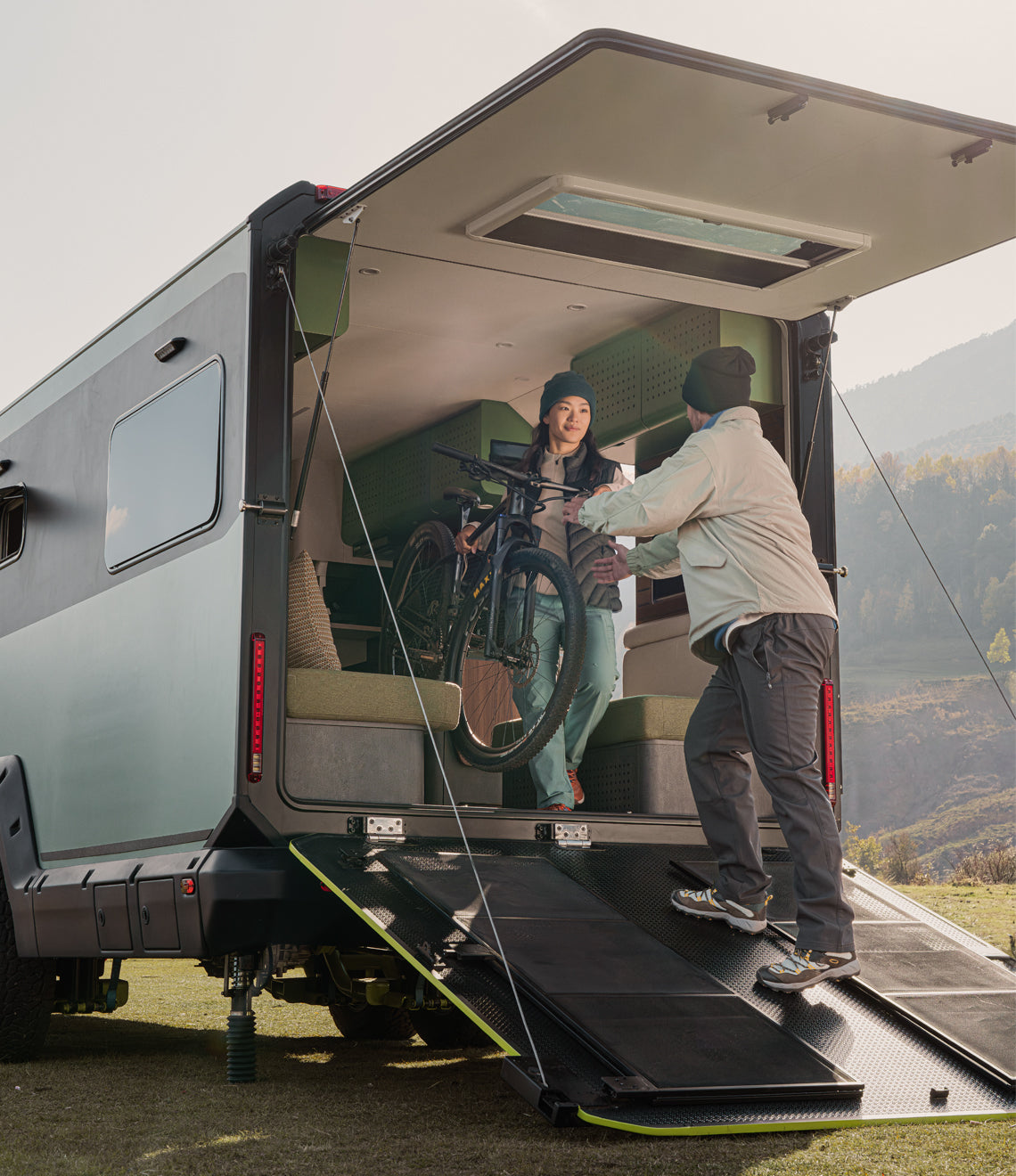
The Evotrex-PG5 shows what an onboard generator becomes when it is designed into the trailer from the start instead of added later. Its integrated 75 kW automotive-grade generator is powered by gasoline, widely available anywhere, starts with one button, and replenishes the battery automatically as part of a system that pairs a massive LFP battery pack with 1.5 kW of rooftop solar to deliver 270+ kWh of usable energy per cycle. On a full 20 gal tank, the generator delivers up to 225 kWh, which works out to about 11.25 kWh per gallon, up to 50% more usable energy per gallon than typical RV generators. The PG5 is available to preorder now.
The short version
An RV generator turns fuel into electricity for your heaviest loads and recharges your batteries in the process. Portables are flexible and affordable, while onboard units win on convenience and integration. Size the generator to your electrical service and your air conditioner, pick a fuel you can actually find on your routes, and follow campground noise rules closely. A generator also works best as part of a team, with solar handling quiet daytime charging and a healthy battery bank storing the results. A trailer that integrates all three into one system, like the PG5, takes the juggling out of it.
Frequently asked questions
What size generator do I need for a 30 amp RV?
A 30 amp RV tops out around 3,600 watts, so a generator with about 3,000 to 3,600 running watts covers nearly everything on board, including a single air conditioner. Smaller units work if you manage loads carefully.
Can I run my RV air conditioner on a generator?
Yes, as long as the generator's running wattage covers the unit and its starting surge. A typical 13,500 BTU roof air conditioner runs on roughly 1,300 to 2,000 watts but needs a healthy margin to start.
Are propane generators better than gasoline for an RV?
Propane stores indefinitely and burns cleaner, while gasoline delivers more output per gallon and is easier to find on the road. Many travelers choose dual-fuel portables so they can use whichever fuel is available.
How often should an RV generator be serviced?
Follow your manual, but most small generators want an oil change every 50 to 100 hours of runtime along with regular air filter checks. Monthly exercise under load prevents most sitting-related problems.
Do travel trailers come with built-in generators?
Most travel trailers ship without a generator, which is why portable units are so common among trailer owners. A small number of newer trailers now integrate an onboard generator with the battery system at the factory.
By the Evotrex Travel Team. RV travelers and off-grid testers. Specs, prices, and rules change over time, so check official sources before you rely on them.