
RV for EVs and how to choose a travel trailer you can tow
Electric trucks and SUVs can tow, and many of them tow very well. The real question for anyone shopping for an RV for EVs is what happens to driving range with a trailer on the hitch, and which trailer choices make that math work. This guide covers what an EV can realistically pull, why towing cuts range, what makes a trailer for an EV genuinely different, and how to plan trips so the charging stops stay reasonable.

Can an EV tow a travel trailer?
Yes. Several electric pickups carry tow ratings of 10,000 lbs or more, and a number of electric SUVs are rated for mid-size trailers. Electric motors actually make strong tow vehicles, because they deliver full torque from a standstill and hold speed on grades without downshifting.
The rating is the place to start. Check your vehicle's published towing capacity, then compare it to the loaded weight of any trailer you are considering, with a sensible margin. Trailer builders are paying attention to this audience too, and Evotrex designs specifically with electric tow vehicles in mind.
What towing does to EV range
Towing reduces range for every vehicle, but an EV makes the loss visible on a dashboard. Owner reports and instrumented tests commonly show drops of 30 to 50 percent at highway speeds with a full-size travel trailer behind an electric truck. The cause is mostly physics, and no truck design escapes it.
| Factor | Effect on range | What helps |
|---|---|---|
| Aerodynamic drag | The dominant loss at highway speed | A lower, smoother trailer profile and a modest cruising speed |
| Speed | Drag grows sharply as speed rises | Driving 60 mph instead of 70 mph recovers real range |
| Trailer weight | Matters most on grades and in stop-and-go driving | Regenerative braking recovers some of it on descents |
| Terrain and wind | Headwinds and climbs stack on top of drag | Route planning and flexible daily distances |
| Weather | Cold reduces battery performance | Preconditioning the battery before you drive |
Notice that drag leads the table. At highway speed, the shape of the trailer and how cleanly air moves around it matter more than the number on the scale, and weight partially pays you back through regeneration on the way down every hill.
What makes a trailer EV friendly
An EV compatible RV is a trailer designed with the tow vehicle's energy budget in mind. Four things separate a genuine trailer for EV owners from an ordinary towable.
- Drag management comes first, because aerodynamics set the highway energy bill.
- Tow assist technology helps next, since a trailer that actively supports the tow instead of simply following it reduces the work the truck does.
- Onboard energy changes the trip itself, because a trailer that carries and generates its own power frees the truck's battery for driving.
- Charging compatibility closes the loop, meaning the trailer can give energy back to the tow vehicle rather than only consuming it.
That last point deserves a moment. A trailer with substantial onboard energy earns back the weight it carries, because every kilowatt hour stored in the trailer is one the truck does not have to find at a public charger.
Charging on the road with a trailer in tow
Public fast chargers were mostly laid out for cars, so pull-through stalls remain rare and many stops require unhitching before you can reach the plug. That adds time and friction to travel days, and it is the part of EV towing that surprises people most.
Planning around it is manageable. Choose routes with charging options at reasonable intervals, favor stations with drive-through or end-cap stalls, and treat each leg as shorter than the dashboard suggests. Campgrounds help more than many owners expect, because a 50 amp pedestal can recharge an EV overnight while you sleep.
The trailer engineered for electric tow vehicles
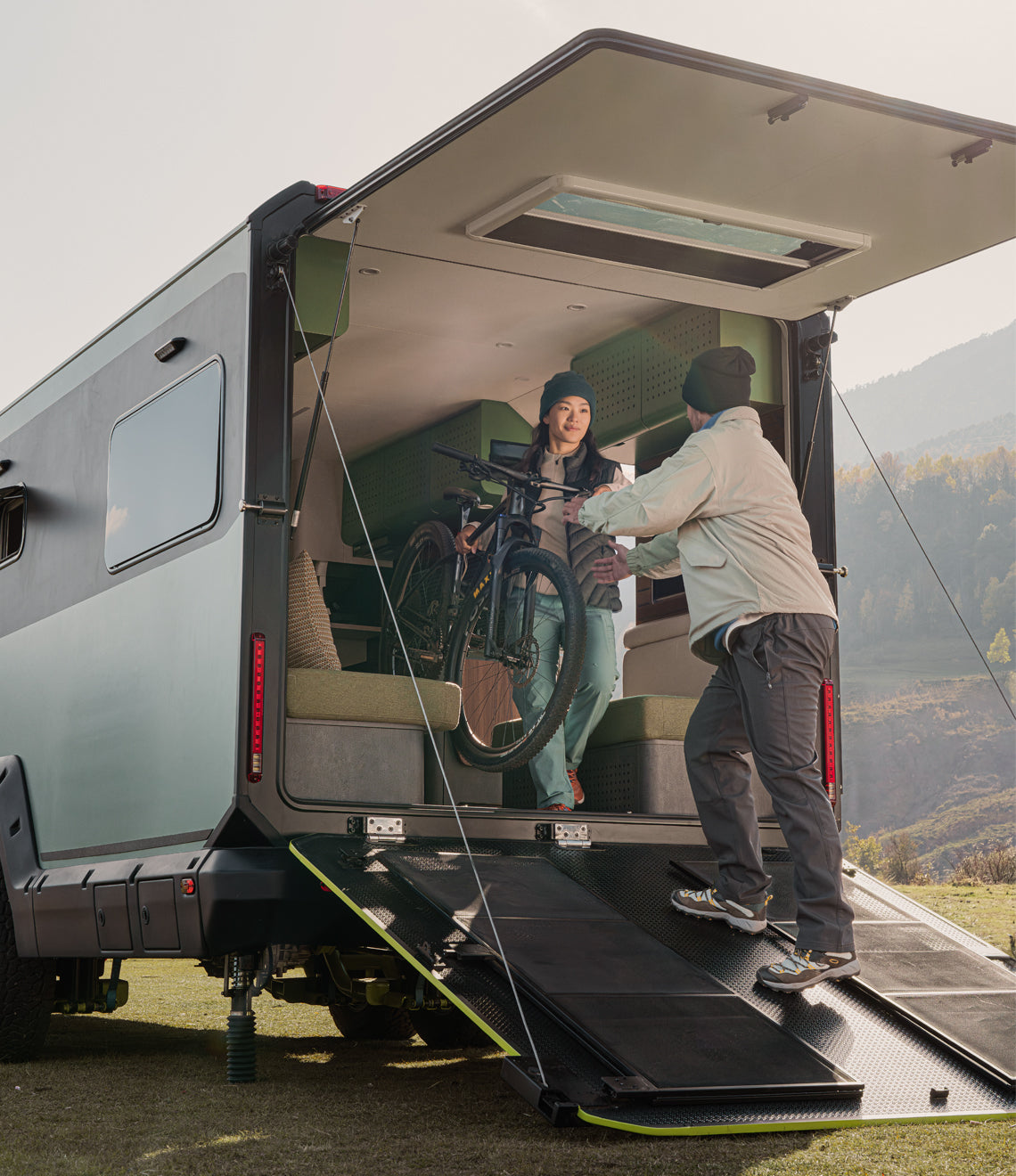
The Evotrex-PG5 is a hybrid RV built with exactly this problem in mind. Its TowSync™ adaptive tow assist pairs an onboard electric motor with a high-precision force sensor, is designed for electric, gas, and diesel trucks alike, minimizes drag, and maximizes range and efficiency. Because the PG5 generates and stores its own energy, it can also charge an electric tow vehicle, with RangeBoost™ V2V charging delivering DC fast charging at up to 60 kW, about 1 kWh per minute, through a NACS port at the front of the trailer with no need to unhitch. For an EV owner, that turns the trailer from a range penalty into a rolling energy reserve.
Planning your first EV towing trip
Start modest. Pick a destination within one comfortable leg of home, note the charging stops along the way, and check each station's layout for trailer access before you commit. Arrive at every charger with margin, because headwinds and grades eat estimates. Book campsites with 50 amp service where you can, so the truck recharges overnight without a detour.
Then pay attention to your numbers. After one or two trips you will know your real consumption while towing, and planning gets dramatically easier. Most owners find a rhythm of shorter driving days and longer stays, which happens to be a pleasant way to travel anyway.
The short version
EVs tow well, and the range hit is real but manageable. Drag is the main cost at highway speed, so trailer shape, tow assist, and moderate speeds matter more than chasing the lightest rig on the lot, and a well-built trailer that carries its own energy returns more than its weight costs. Onboard batteries, rooftop solar, and generated power let the trailer support the truck instead of draining it. The PG5 was engineered around that idea, from TowSync™ to V2V charging, and it is the reference point for what a travel trailer for EV owners can be.
Frequently asked questions
How much range does an EV lose when towing a travel trailer?
Reported losses commonly land between 30 and 50 percent at highway speeds, depending on the trailer's size and shape, your speed, terrain, and weather. Slowing down and choosing an aerodynamic trailer both recover meaningful range.
Can any EV tow a travel trailer?
Only vehicles with a published tow rating should tow, and the trailer's loaded weight must stay under that rating with margin. Several electric pickups are rated for 10,000 lbs or more, while many electric SUVs handle smaller trailers.
Can I charge my EV at a campground?
Often yes. A 50 amp pedestal can add substantial charge overnight through the right adapter or mobile connector. Confirm the campground allows EV charging at the site, since policies vary.
Is the PG5 an electric vehicle?
No. The Evotrex-PG5 is a hybrid RV, a towed travel trailer that generates and stores its own power. It is designed to work with electric, gas, and diesel tow vehicles, and it can share power with an EV rather than being one.
Do I need a special hitch to tow with an EV?
You need the same properly rated hitch and wiring as any tow vehicle, set up to the manufacturer's specification. Check your owner's manual for requirements, and verify trailer brake rules with your state's DMV.
By the Evotrex Travel Team. RV travelers and off-grid testers. Specs, prices, and rules change over time, so check official sources before you rely on them.