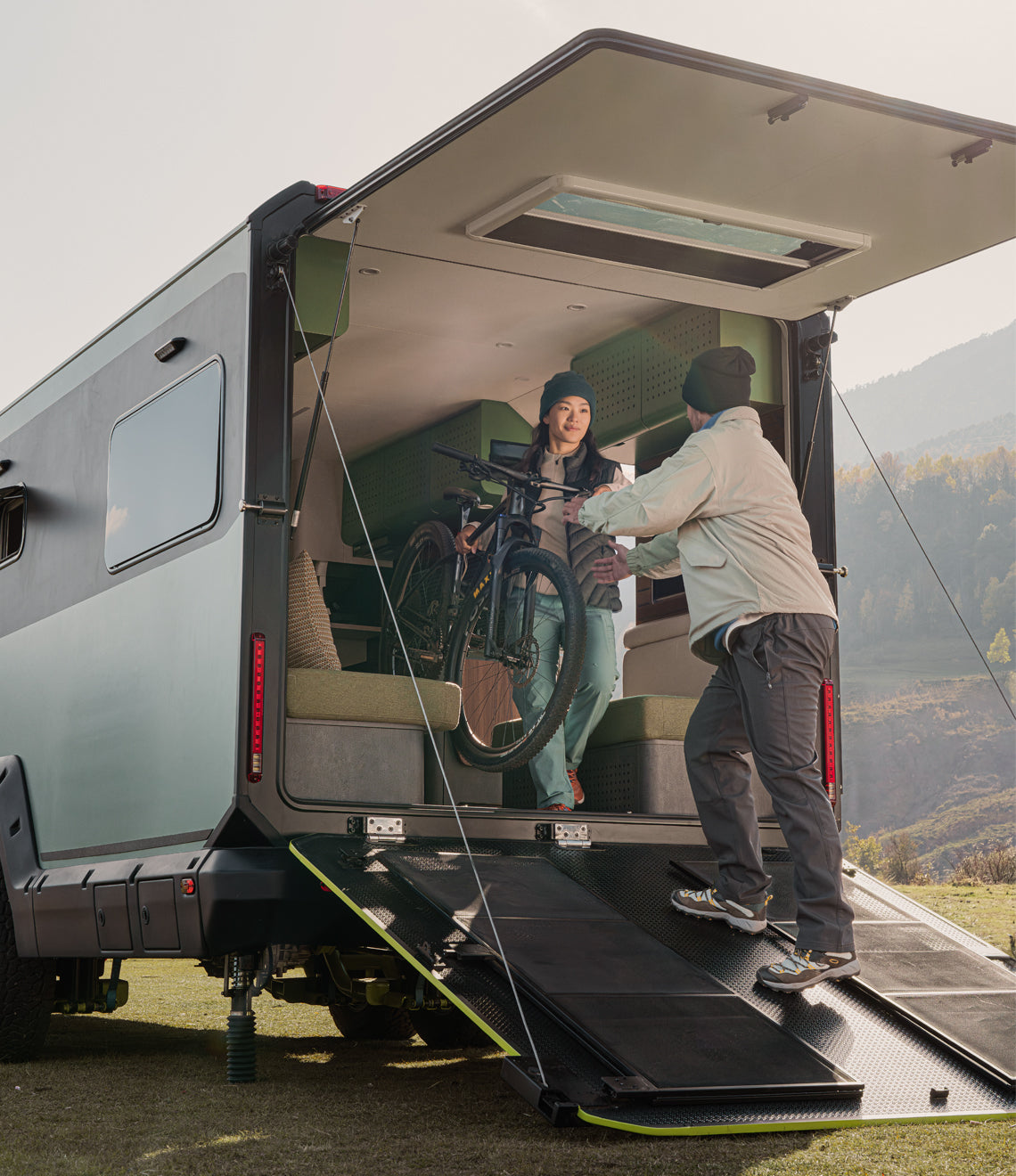

RV camping checklist for pre-trip, setup, and departure
An RV camping checklist exists because memory fails at exactly the wrong moments. The classic mistakes are all checklist failures. An awning left out in the wind, a step left down at departure, a fresh tank that turns out to be empty forty miles from the nearest spigot. Every experienced RVer either uses a written list or has a story about why they started. This guide gives you the working lists for each phase of a trip, from packing at home to pulling out of the site, so the routine parts stay routine and your attention goes to the fun parts.

Pre-trip checklist before you leave home
Run this list the day before you leave, when there is still time to fix what you find. A well-prepared travel trailer makes every later step easier.
- Check tire pressure and tread on the trailer and the tow vehicle, including spares.
- Test all running lights, brake lights, and turn signals with the trailer connected.
- Charge the house batteries fully and confirm the fridge is cooling.
- Fill the fresh water tank, or plan exactly where you will fill on the way.
- Confirm the propane, fuel, or power supplies your rig depends on are topped off.
- Stow and latch everything loose inside, including cabinet doors and the fridge.
- Close and latch all windows, roof vents, and the skylight.
- Confirm your reservation and route, checking for low clearances and rig restrictions.
- Pack the documents folder with registration, insurance, and roadside assistance details.
- Check the weather for your route and destination, and adjust the plan if it looks ugly.
Hitching and towing checklist
Hitching rewards a fixed order and punishes improvisation. Run the same sequence every time.
- Verify the coupler is fully seated on the ball and the latch is locked and pinned.
- Cross the safety chains under the tongue and clip them to the tow vehicle.
- Connect the 7-pin plug and test lights and trailer brakes again.
- Attach the breakaway cable to the tow vehicle, never to the hitch itself.
- Confirm your loading puts proper weight on the hitch.
- Raise the tongue jack, stabilizers, and entry steps completely.
- Walk a full circle around the rig looking for anything open, loose, or forgotten.
- Set your mirrors and brake controller before you roll.
Campsite setup checklist
Arrival goes fastest when one person directs and one drives, but the order matters either way.
- Scout the site on foot before pulling in, noting trees, utilities, and soft ground.
- Position the rig, then chock the wheels before unhitching anything.
- Level the trailer side to side and front to back.
- Lower the stabilizers once level, remembering they steady the rig rather than lift it.
- On a hookup site, inspect the pedestal, connect through a surge protector, and match your service to the pedestal's rating.
- Connect city water through a pressure regulator, or switch to your fresh tank and pump.
- Attach the sewer hose if you have a connection, keeping the valves closed until you dump.
- Deploy slides, awning, and steps, then set up your outdoor space.
Habits during your stay
A few small habits prevent most mid-trip problems.
- Watch tank levels and battery state daily instead of waiting for a surprise.
- Retract the awning any time wind picks up or you leave for the day.
- Keep food sealed and the site clean so wildlife has no reason to visit.
- Dump the black tank only when it is at least two thirds full so it flushes well.
- Re-check exterior lights and tires before any mid-trip drive.
Departure checklist
Departure is where the expensive mistakes happen, so slow down and work the list.
- Dump and rinse the black tank first, then the grey, and stow the hose.
- Disconnect water and power, and stow cords and hoses dry where you can.
- Retract the awning and slides, and secure everything loose inside.
- Latch the fridge, cabinets, windows, vents, and skylight.
- Raise the stabilizers and run the full hitching checklist again.
- Test the lights and brakes one more time with the trailer connected.
- Walk the site twice, once for your gear and once for trash, and leave it clean.
- If this is the last trip of the season, plan your winterizing routine before the rig goes into storage.
How hookups change the list
The same trip generates two different checklists depending on whether your site has utilities. Here is how the work shifts.
| Task | Full hookup site | No-hookup site |
|---|---|---|
| Power | Inspect pedestal, connect surge protector, match amperage | Monitor battery, deploy solar, plan generator time |
| Water | Connect hose with pressure regulator | Arrive full and budget every gallon |
| Sewer | Connect hose, manage valves | Hold tanks until a dump station |
| Departure | Disconnect and stow three utility lines | Little to disconnect, more to monitor |
Onboard power removes a whole block of these items. The Evotrex-PG5 pairs a 43 kWh LFP battery with 1.5 kW of rooftop solar and a quiet automotive-grade gasoline generator, run as one integrated system that delivers 270+ kWh of usable energy per cycle. Pedestal inspections, adapters, surge protectors, and generator setup simply drop off the list, and power becomes something you glance at on the central control interface instead of something you rig up at every site.
The short version
A good RV camping checklist splits the trip into phases. Prepare and load at home, hitch in a fixed order, set up in the sequence of chock, level, stabilize, and connect, then reverse it all carefully at departure. The no-hookup version of the list trades utility connections for resource monitoring, and a trailer with its own battery, solar, and generating capability, like the PG5, shortens that version considerably. Print your list, laminate it if you are that kind of camper, and let the routine carry the load.
Frequently asked questions
What should I check before every RV trip?
Tires, lights, brakes, battery charge, fluid and fuel levels, and the security of everything that can move. Add a route check for clearances and weather, and confirm your first night's plan before you pull out.
What do RVers forget most often?
The classics are the entry step, the roof antenna or vent, the chocks, and the awning. Departure items get forgotten far more than arrival items, which is exactly why the departure list deserves the most discipline.
How long does campsite setup take?
It varies with the rig and the site, and speed matters less than order. Chock before you unhitch, level before you stabilize, and connect utilities last. A consistent sequence makes setup faster every trip without rushing any step.
Should my checklist change for off-grid trips?
Yes. Drop the utility connection items and add resource planning in their place. Arrive with full fresh water, empty waste tanks, charged batteries, and a clear plan for how you will recharge during the stay.
By the Evotrex Travel Team. RV travelers and off-grid testers. Specs, prices, and rules change over time, so check official sources before you rely on them.