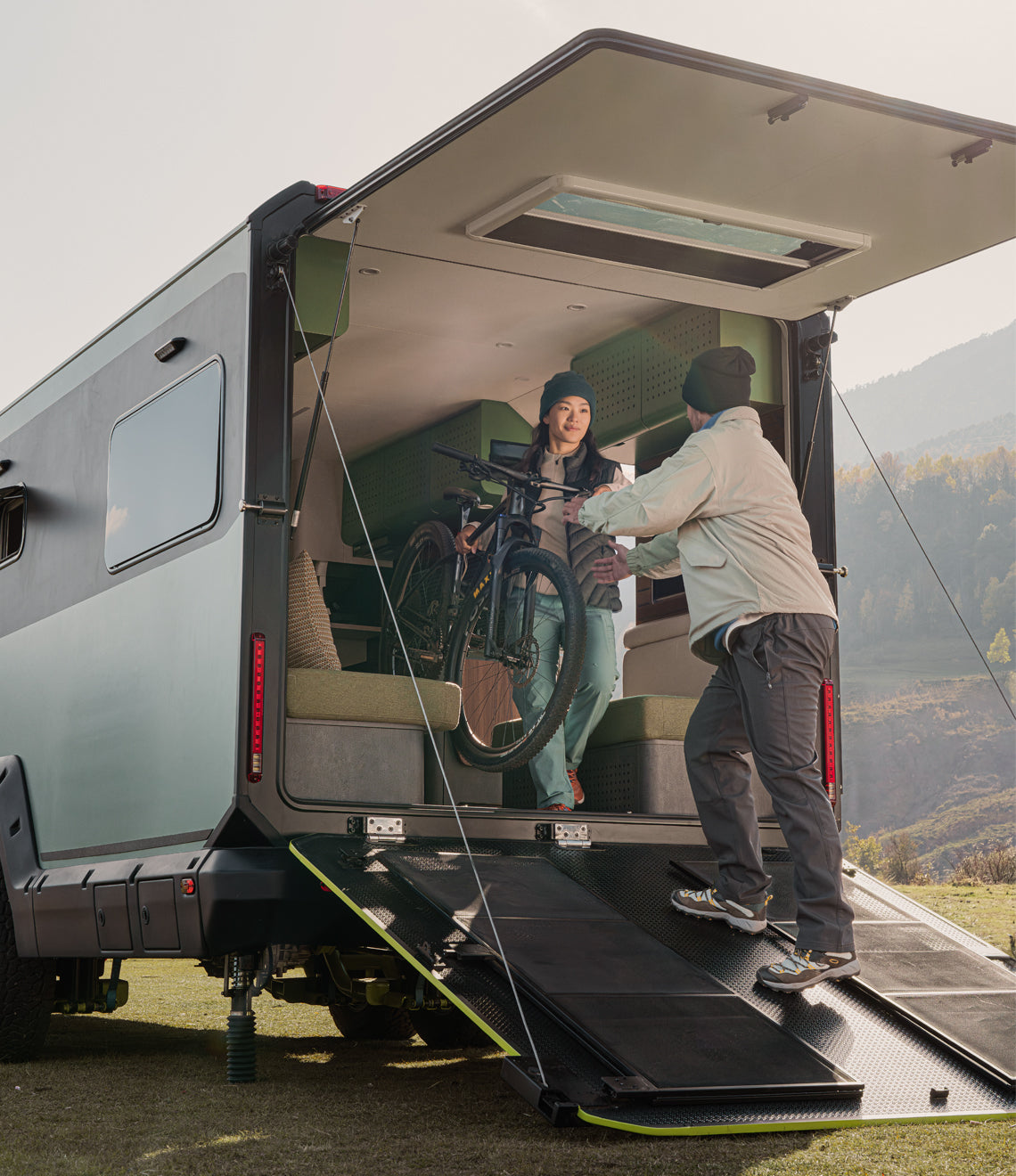

Off-grid camping guide for living well beyond the hookups
Off-grid camping is what comes after you learn the vocabulary. This guide is the next step. It is a practical look at how to actually live well away from services, with a plan for each of the five things that decide whether an off-grid camping trip feels like freedom or like rationing. Those five are power, water, connectivity, food, and safety.

What off-grid camping asks of you
Off-grid camping means your rig supplies everything. There is no pedestal for power, no spigot for water, and no guarantee of a cell tower. Every resource you use comes from what you carried in, and every bit of waste leaves with you.
The reward is access to quieter country. The best off-grid camping spots tend to sit on national forest and BLM land, since national parks mostly confine overnight stays to developed campgrounds. Sites listed on recreation.gov and maps from the land agencies will show you where dispersed camping is allowed.
The good news is that a well-equipped travel trailer carries most of its infrastructure with it. Tanks, batteries, solar, an onboard generator, and storage turn an empty clearing into a functioning campsite. The rest of this guide is about managing those systems so a week out feels routine.
Power, the resource that sets your limits
Electricity is usually the first thing to run short at an off-grid camping site. Your batteries carry the overnight load for lights, the water pump, the fridge, and charging. The question is how you put energy back in, and most campers combine several sources.
| Power source | What it does well | Where it falls short |
|---|---|---|
| Solar panels | Quiet, free recharging whenever the sun is out | Slows down in clouds, shade, and short winter days |
| Portable generator | Strong on-demand power for heavy loads | Noise, fuel handling, setup, and storage space |
| Charging while driving | Tops up the bank between destinations | Only helps on travel days |
| Battery bank alone | Silent power any hour of the day | A fixed reserve that must be refilled somehow |
Solar handles daily upkeep for most people, with a generator held in reserve for cloudy stretches and big appliances.
The Evotrex-PG5 folds all of those roles into a single system. It pairs a 43 kWh LFP battery with 1.5 kW of rooftop solar and a quiet automotive-grade gasoline generator, run together as one integrated system that delivers 270+ kWh of usable energy per cycle. The generator is powered by gasoline, widely available anywhere, and the system supports 7+ days off-grid with daily HVAC and full appliance use.
Water, from fill-up to grey tank
Water planning starts before you leave pavement. Fill the fresh tank completely, top off portable jugs, and note the last reliable fill station on your route. Many campers plan on a few gallons per person per day for drinking, cooking, and washing, then adjust after a trip or two of real data.
Conservation stretches whatever you carry. Wash dishes in a single basin, take short showers with the water off while you soap, and catch cold water in a jug while the shower warms up. Remember that every gallon you use also fills a grey tank, so saving fresh water buys you room on both ends.
Keep the system itself healthy too. A tank that sits between trips grows funk, so a simple bleach-and-flush routine before each season keeps your supply safe to drink.
Connectivity when there is no signal
The quiet is the point, but going dark entirely is a choice you should make on purpose. Download offline maps for the whole region before you lose service, since the roads to off-grid wilderness camping rarely come with coverage. Carrier coverage maps give you a rough idea of where a signal might return.
For a working connection, campers lean on three tools. A cell booster strengthens a weak signal that already exists. Satellite internet systems now make remote work possible from a surprising number of clearings. A satellite messenger provides two-way texting and an SOS function far beyond any tower, and it earns its place in the rig even if you never use the other two.
Whatever you carry, tell someone at home where you are going and when you expect to check in. That habit costs nothing and matters more than any gadget.
Food and cooking off-grid
Off-grid cooking rewards planning over gear. Build a simple meal plan before you leave, prep what you can at home, and favor one-pot meals that save water, power, and cleanup all at once. A well-packed cooler or an efficient 12-volt fridge keeps fresh food viable for the length of a normal trip.
Store food with wildlife in mind. In bear country that means hard-sided storage or a proper canister, and everywhere it means never leaving scraps out overnight. Pack out every bit of food waste along with your trash. The National Park Service publishes clear food storage guidance that applies just as well outside park boundaries.
Safety and self-rescue
Remote camping shifts responsibility onto you, and a few habits carry most of the weight. Check the weather window before you commit to a spot, since rain can turn a passable dirt road into a trap. Carry a real first aid kit, a shovel, traction boards if you travel soft country, and more fuel and water than the plan requires.
Walk questionable roads before you drive them, and turn around early rather than late. Know current fire restrictions from the local land office before you light anything. Finally, keep a paper map in the rig. Batteries fail at inconvenient times, and the road network out there does not label itself.
The short version
Off-grid camping works when you treat power, water, connectivity, food, and safety as five separate plans instead of one vague hope. Solar and a battery bank handle daily electricity with a generator in reserve, water is a budget you track, and a satellite messenger backs up your communication. A trailer built around a large battery, rooftop solar, and onboard generation, like the PG5, takes the hardest of those five plans off your desk entirely. Start with short trips close to services, learn your real consumption, and stretch further each time.
Frequently asked questions
What is the difference between off-grid camping and dry camping?
Dry camping describes any stay without hookups, wherever it happens. Off-grid camping usually means doing that away from developed areas and services entirely, and it emphasizes the lifestyle of self-sufficiency rather than just the missing pedestal.
How do you get power while camping off-grid?
Most campers combine a battery bank for overnight loads, solar panels for daily recharging, and a generator for cloudy stretches and heavy appliances. Some modern trailers integrate all three into one onboard system that manages itself.
How much water should I bring for off-grid camping?
A common starting point is a few gallons per person per day for drinking, cooking, and washing. Track what you actually use on your first trip or two, then plan from your own numbers with a safety margin on top.
Is off-grid camping legal?
Yes, in the right places. Much national forest and BLM land allows free dispersed camping, subject to local stay limits and closures. Always confirm the rules with the managing agency before you set up.
How do you get internet when camping off-grid?
A cell booster helps where weak signal exists, and satellite internet works in open terrain with a clear view of the sky. For emergencies, a satellite messenger with two-way texting is the most reliable tool in the kit.
By the Evotrex Travel Team. RV travelers and off-grid testers. Specs, prices, and rules change over time, so check official sources before you rely on them.