
How much is an RV? A realistic look at prices by class
Ask a dealer how much an RV costs and the honest answer is a range so wide it barely helps. A small used travel trailer and a new luxury motorhome are both RVs, and the price gap between them can be half a million dollars. The useful question is what a specific type of RV typically costs, and what pushes a given model toward the top or bottom of its range.
This guide lays out typical price ranges by class, explains what actually drives the number on the window sticker, and covers the ownership costs that keep billing you long after the purchase.

Typical RV prices by class
Industry pricing guides put most new RVs inside the ranges below. Treat every figure as a broad, typical range rather than a quote. Options, floor plans, and regional demand move real-world prices a long way in both directions.
| RV type | Typical new price range (approximate) |
|---|---|
| Class A motorhome | $100,000 to $500,000 and up |
| Class B camper van | $80,000 to $200,000 |
| Class C motorhome | $70,000 to $200,000 |
| Travel trailer | $15,000 to $150,000 and up |
| Fifth wheel | $35,000 to $180,000 |
| Pop-up and teardrop trailers | $10,000 to $30,000 |
Two patterns stand out. Towables cost far less than motorhomes with comparable living space, because you are supplying the engine and drivetrain yourself. And within every class, the spread from entry level to premium is enormous. A travel trailer can be the cheapest RV on the lot or a six-figure flagship, which is why the category matters more than any single price chart.
What actually drives the price
Size is the obvious driver, but it is rarely the biggest one. Two trailers of identical length can sit $60,000 apart. The gap usually comes from a handful of factors.
- Construction quality. Wood-framed, stapled walls cost less to build than laminated fiberglass or composite shells, and the difference shows up in both price and lifespan.
- Onboard systems. Battery capacity, solar, generators, suspension, and climate systems separate a fair-weather rig from one that camps anywhere.
- Four-season capability. Insulation, heated tanks, and enclosed underbellies add real cost.
- Brand and build volume. Low-volume premium builders charge more than high-volume manufacturers, and their rigs usually hold value differently too.
- Features and finish. Residential appliances, larger tanks, power awnings, and upgraded interiors all stack onto the base price.
The RV Industry Association publishes shipment data at rvia.org that shows how heavily the market tilts toward towables, which is part of why the travel trailer segment offers the widest range of price points.
New versus used
Used pricing follows the same class structure with one big difference. RVs lose value quickly in their first few years, so a lightly used rig often sells for a substantial discount off its original sticker. That makes the used market a genuinely good place for first-time buyers to learn what they like without absorbing the steepest part of the value curve.
The trade-off is condition risk. Water intrusion is the classic RV killer, and it hides behind panels where a quick walkthrough will never find it. Budget for a professional inspection on any used rig, and treat maintenance records as part of the price. A well-documented trailer at a higher price is often the better deal than a cheap one with an unknown history.
The costs beyond the sticker
The purchase price is the start of the spending. A realistic budget accounts for the recurring costs of ownership.
- Insurance. Premiums vary widely with the rig's value and how you use it.
- Registration and taxes. These vary by state and by the RV's value and weight.
- Storage. Owners without driveway space pay monthly for a lot or covered storage.
- Maintenance. Roof seals, bearings, brakes, tires, and appliance upkeep are ongoing, and deferred maintenance is the most expensive kind.
- Campground fees and fuel. Nightly rates and towing fuel add up across a season.
- Depreciation. The quiet cost. It does not send a bill, but it is usually the largest single expense of ownership.
None of these should scare you off. They should just be in the spreadsheet before the sticker price wins the argument.
How a hybrid power trailer compares
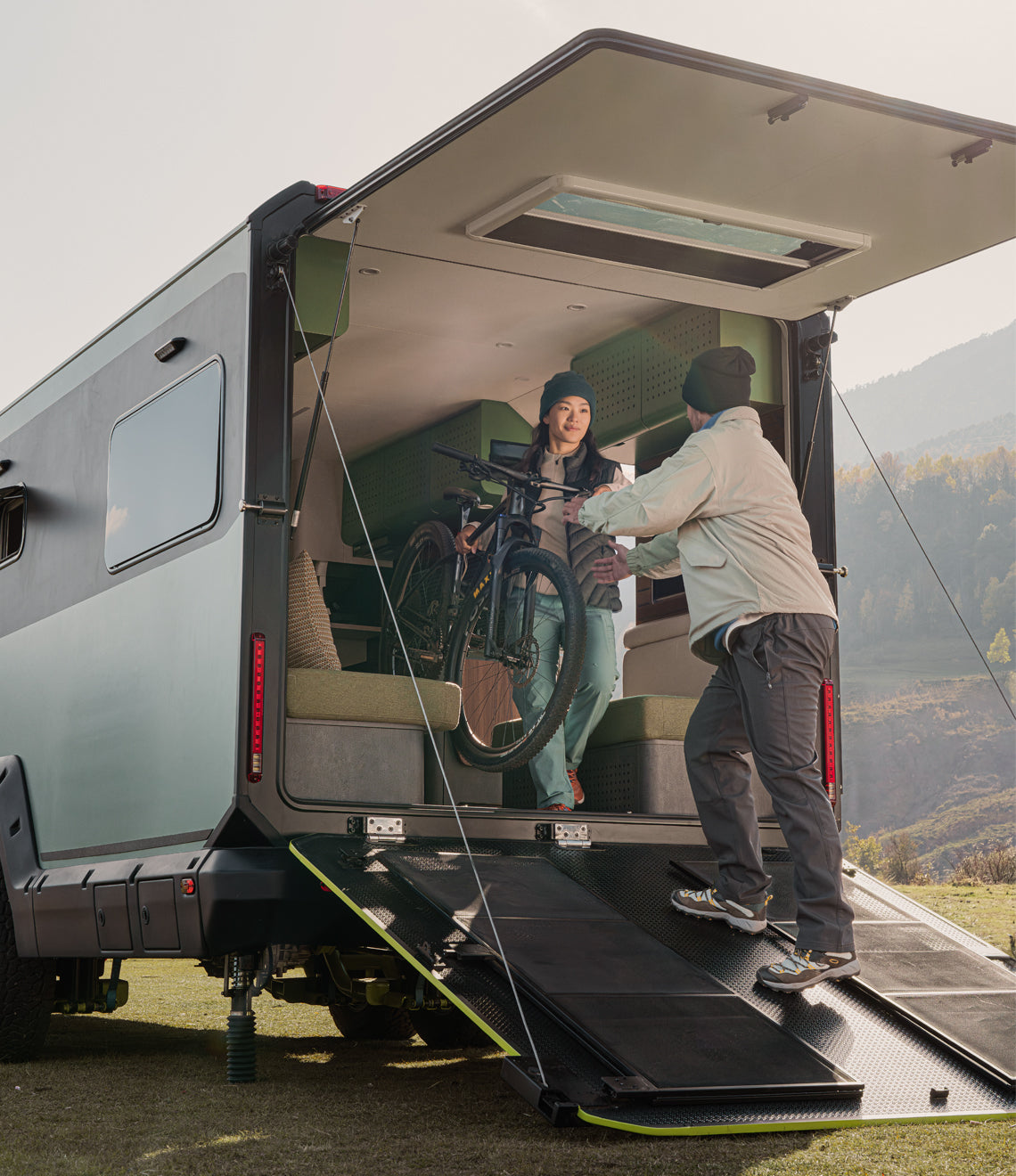
The Evotrex-PG5 is a hybrid power travel trailer priced from $119,990 with the entire power system built in, pairing a massive LFP battery pack with 1.5 kW of rooftop solar and a quiet automotive-grade gasoline generator that together deliver 270+ kWh of usable energy per cycle. That changes how you should compare it on price. A conventional trailer needs solar, a generator, and a serious battery bank added separately before it can do the same job, and that equipment narrows the gap quickly. The fair comparison is a fully equipped off-grid rig, and on that basis the PG5 sits closer to the middle of the market than its sticker suggests.
How to set a realistic budget
Start from how you will actually camp, since that decides the class before price does. Weekend campers at developed parks need less rig than full-timers or off-grid travelers. Then price three to five specific models, add the recurring costs above for your first year, and set a walk-away number before you visit a dealer. Optioned-up units on the lot and financing structured around monthly payments both have a way of stretching budgets that were firm at home. A written ceiling keeps the decision yours.
The short version
Most new travel trailers land somewhere between $15,000 and $150,000, motorhomes run from around $70,000 to well past $500,000, and used rigs sell at meaningful discounts once the early depreciation has been absorbed by someone else. Construction quality and onboard systems, more than length, decide where a specific model falls in its range. Budget for insurance, storage, maintenance, and depreciation alongside the sticker. And when a trailer includes its power system from the factory, as the Evotrex-PG5 does from $119,990, compare it against a conventional rig plus all the equipment it would need to match.
Frequently asked questions
What is the cheapest type of RV?
Pop-up campers and small teardrop trailers are typically the least expensive way in, with many new units in the $10,000 to $30,000 range. Small used travel trailers can land in similar territory.
How much does a typical travel trailer cost?
Industry pricing guides put most new travel trailers between $15,000 and $60,000, with premium and four-season models running well beyond that. Size, construction, and onboard systems drive the spread.
Is it cheaper to buy a used RV?
Usually, yes. RVs depreciate fastest in their first few years, so used buyers skip the steepest part of the curve. The savings only hold if the rig is sound, so pay for an inspection before you commit.
How much should I budget beyond the purchase price?
Plan for insurance, registration, storage if you cannot park at home, routine maintenance, and campground and fuel costs. The right total varies too much by rig and usage for one number, so price each line for your situation.
Why do some travel trailers cost more than motorhomes?
Construction and systems. A premium trailer with a composite shell, serious insulation, and a full off-grid power setup can cost more than an entry-level motorhome built to a price.
By the Evotrex Travel Team. RV travelers and off-grid testers. Specs, prices, and rules change over time, so check official sources before you rely on them.