
How long do RVs last? Honest lifespan ranges and what decides them
Ask around a campground and you will meet a 30-year-old trailer still making trips and a 6-year-old one already fighting soft floors. Both stories are common, which tells you the real answer. An RV's lifespan is less a property of its category than of its construction and the care it receives, and the ranges you see quoted are only the middle of a very wide curve.
This guide gives typical lifespan ranges by category, explains the handful of factors that actually decide where a specific rig lands, and lays out the habits that add years.

Typical RV lifespan by category
Industry guides commonly describe RV lifespans in the broad ranges below. Treat them as typical and approximate, because a well-built, well-kept rig routinely outlives its range and a neglected one rarely reaches it.
| Category | Typical service life (approximate) |
|---|---|
| Travel trailers | 10 to 25 years and up |
| Fifth wheels | 15 to 25 years and up |
| Class A and C motorhomes | 15 to 25 years, often 100,000 to 300,000 miles |
| Class B camper vans | 15 to 25 years, often 200,000 miles and up |
| Pop-up campers | 10 to 15 years |
Motorhomes carry two clocks, since the coach ages like a trailer while the chassis ages like a vehicle, and either one can end the story. Towables have the simpler picture. With no drivetrain to wear out, a trailer lasts as long as its structure and systems stay sound, which is why the factors below matter more than the category.
Water intrusion, the real RV killer
Most RVs that die early die of water. A roof seam, a window seal, or a marker light gasket opens a hairline gap, water finds the wood framing inside the walls, and rot spreads out of sight for years. By the time a floor feels soft or a wall shows a stain, the damage behind it is usually extensive, and repairs can approach the value of the rig.
This is the single most important thing to understand as an owner or a used buyer. Sealant inspection is not busywork. Checking the roof and every exterior seam a few times a year, and resealing at the first sign of cracking, does more for lifespan than any other habit. On used rigs, a moisture meter and a careful nose are worth more than a glossy interior.
Construction quality sets the ceiling
How a rig is built decides how forgiving it is of the years. Traditional wood-framed, stapled construction is affordable and repairable, and it is also the construction most vulnerable to the rot cycle above. Aluminum framing removes some of the risk. Laminated and full composite construction removes more of it, which is why premium builders lean that way and why their rigs hold up differently over decades.
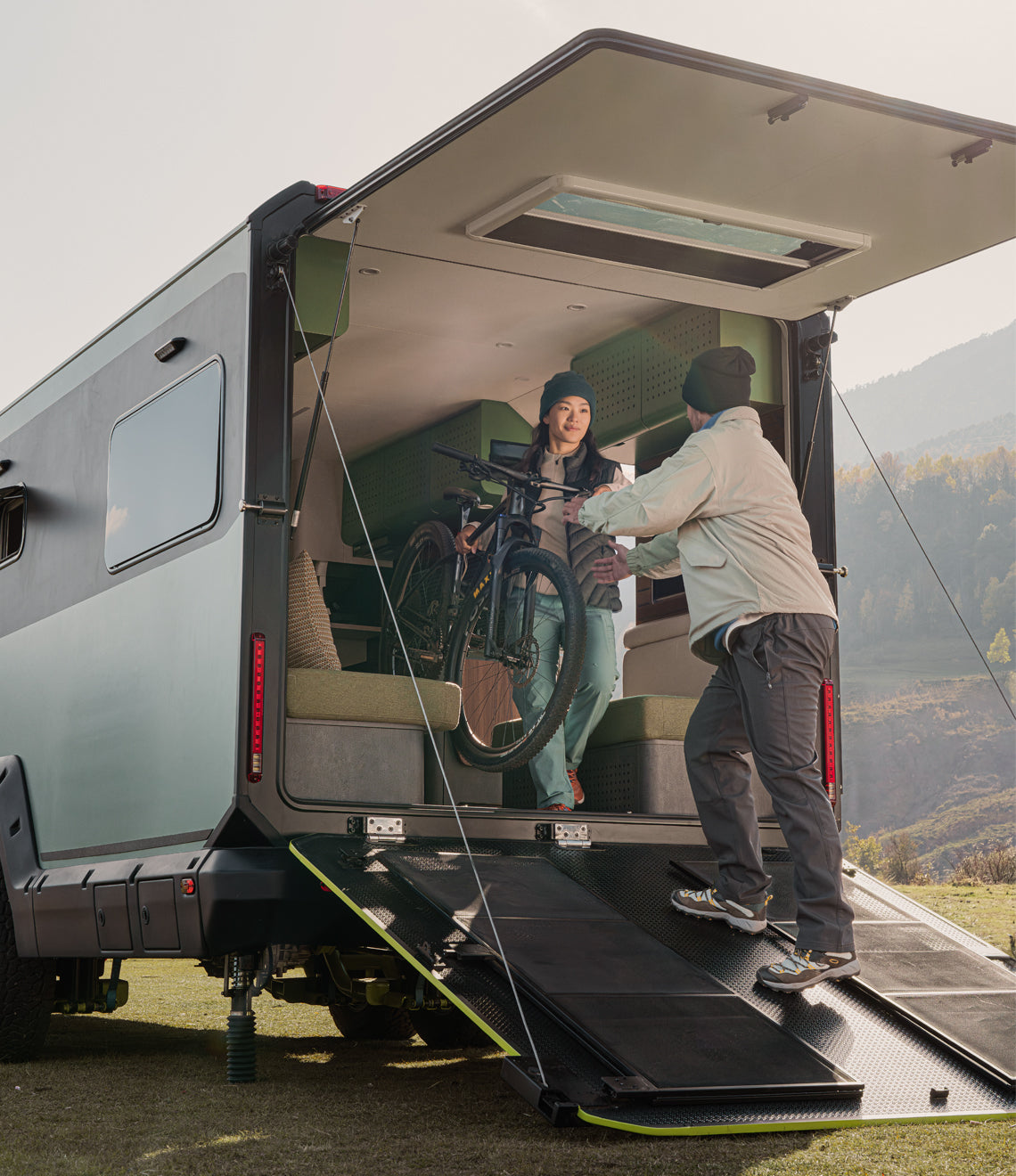
The Evotrex-PG5 takes the durable end of that spectrum deliberately. Its multi-layer fiberglass shell uses zero-wood construction, so the rot failure mode that ends most trailers has nothing to feed on, and the shell sits on a high-strength automotive-grade steel chassis built for long-term structural integrity. Its 43 kWh battery pack uses LFP chemistry, chosen for safety, longevity, and reliable performance from -22°F to 140°F.
Maintenance and storage do the rest
Between the build quality it starts with and the water it must keep out, an RV's lifespan comes down to routine. Tires age out before they wear out, wheel bearings need periodic service, roof seals need annual attention, and appliances last far longer when they are run and serviced rather than left to seize. None of it is difficult, and all of it compounds.
Storage is the quiet variable. A rig that sits outside, unwashed and uncovered through freeze-thaw cycles and summer UV, ages years for every one on the calendar. Covered or indoor storage, a proper winterizing routine, and a battery care plan for the off-season slow all of it down. A spring water system sanitize starts the season clean.
How to make any RV last longer
The owners with 25-year-old rigs tend to do the same short list of things.
- Inspect and reseal. Walk the roof and seams a few times a year and reseal cracking sealant before the next rain finds it.
- Fix small things immediately. A drip, a soft spot, or a delaminating corner is always cheaper this month than next year.
- Service the running gear. Bearings, brakes, and tires on a schedule, with tires replaced on age as well as tread.
- Store it protected. Covered when possible, winterized when cold, ventilated against humidity.
- Exercise the systems. Run the appliances, cycle the generator if you have one, and keep batteries properly charged rather than letting them sit flat.
- Keep records. A documented history extends the useful life you can sell as well as the life you use.
The short version
Most RVs are good for somewhere between 10 and 25 years, with motorhomes often described as 100,000 to 300,000 miles, and the spread inside those ranges is mostly explained by three things. Water intrusion ends rigs early, construction quality sets the ceiling, and maintenance and storage decide how close a rig gets to it. Buy the best construction you can, keep the seams sealed, and store it well, and the calendar becomes a much smaller enemy. A zero-wood composite build like the PG5 removes the most common ending from the story entirely.
Frequently asked questions
How long do travel trailers last?
Typically 10 to 25 years, and well-built, well-maintained trailers go beyond that. Because trailers have no drivetrain, structure and water management decide lifespan more than mileage does.
What usually fails first on an RV?
Sealants and the water damage that follows them. Roof and seam sealant degrades within a few years, and unnoticed leaks into wood framing cause the rot that ends most rigs early.
Is a 20-year-old RV too old to buy?
Age alone does not decide it. A 20-year-old rig with a dry structure, solid maintenance records, and newer tires can be a better buy than a neglected 8-year-old one. Inspect for moisture before anything else.
How many miles do motorhomes last?
Industry guides commonly cite 100,000 to 300,000 miles depending on the chassis and engine, with diesel platforms typically toward the top. The coach body still needs the same water and seal care as a trailer.
Does living in an RV full time shorten its life?
Full-time use adds wear to systems and interiors, but constant occupancy also means problems get noticed and fixed early. A full-timed rig with attentive upkeep often outlasts a stored rig that was ignored.
By the Evotrex Travel Team. RV travelers and off-grid testers. Specs, prices, and rules change over time, so check official sources before you rely on them.