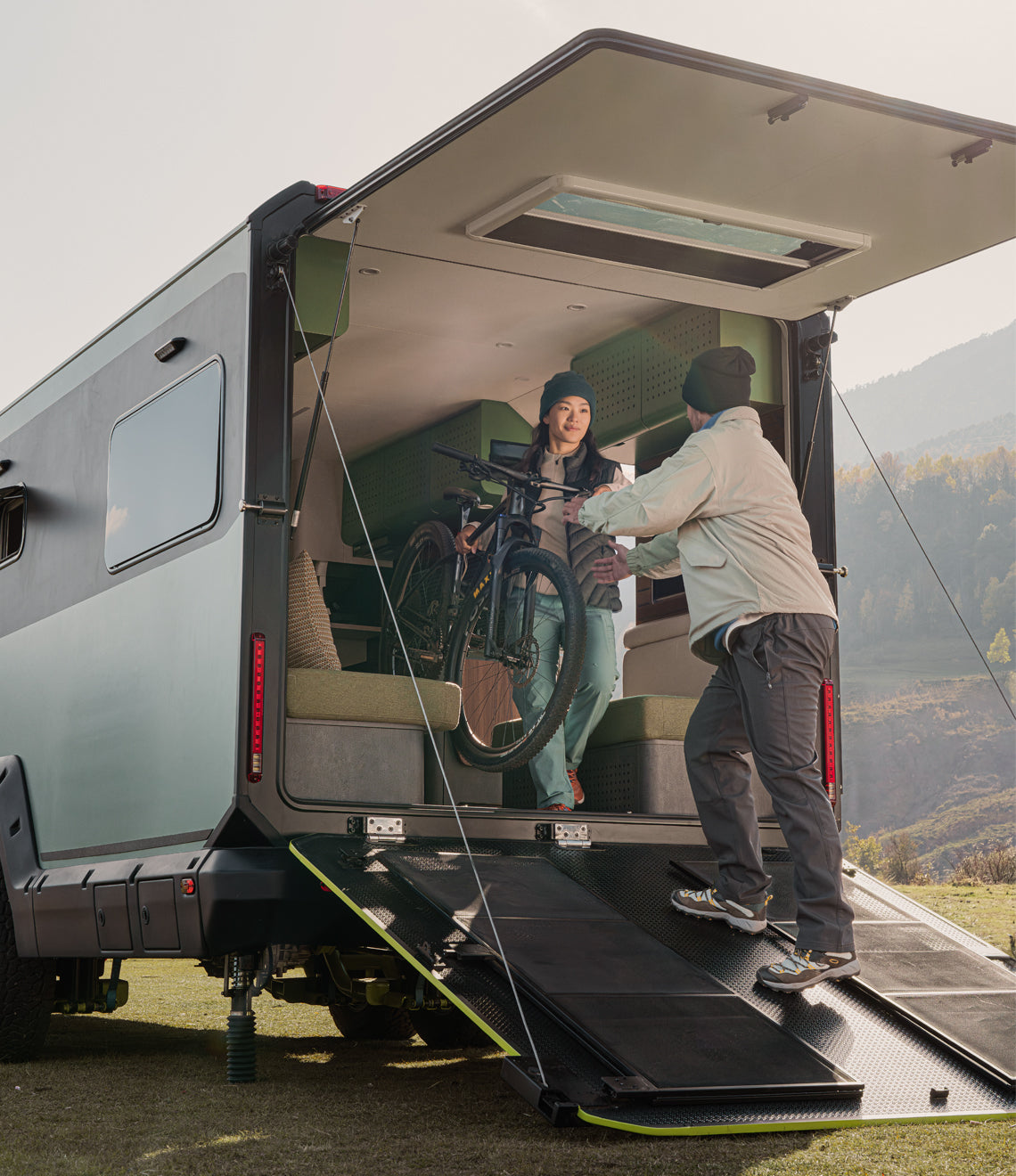

Destination trailers and how to shop the category
Destination trailers occupy an unusual corner of the RV market. On paper they tow like any other trailer. In practice, almost nobody buys one to travel. This page is written for shoppers who already know they want a semi-permanent setup and now need to compare models, weigh the alternatives, and budget the full picture.

Who destination trailers suit
A destination trailer is built for people who love one place. The classic buyer holds a seasonal site at a lake or river campground and wants a real kitchen, a real bathroom, and a bedroom with a door waiting there every weekend. Snowbirds who park in the same southern resort every winter are the other big group. A destination camper also works well as a guest house on rural land where local rules allow it.
The common thread is that the destination RV stays put for months at a time. It plugs into full hookups, spreads out with residential furniture, and gets moved once or twice a year at most. At Evotrex we hear from plenty of shoppers who started in this category and realized they wanted to roam more, and the reverse happens just as often. Knowing which camper you are is the first real buying decision.
Park models vs destination trailers vs travel trailers
Three categories overlap here, and dealers do not always use the labels carefully. The RV Industry Association treats park model RVs as their own category, capped at 400 sq ft and designed for permanent placement. Destination RVs sit between park models and ordinary travel trailers.
| Category | Built for | Typical length | How often it moves | Hookups |
|---|---|---|---|---|
| Park model RV | Permanent placement on a leased or owned lot | Up to 400 sq ft of living space | Delivered once by a transport company | Full utilities, often hardwired and plumbed |
| Destination trailer | Seasonal placement with occasional relocation | Roughly 35 to 43 ft | Once or twice a year | Full hookups, usually 50 amp |
| Travel trailer | Regular towing and travel | Roughly 16 to 35 ft | Every trip | Varies from full hookups to none |
If you will never move the unit again, a park model deserves a serious look. If you want the option to switch campgrounds every few seasons without hiring a crane or a specialized hauler, a destination trailer keeps that door open. If you expect to tow monthly, you are shopping the wrong aisle, and a travel trailer will serve you better.
Features worth comparing on a walkthrough
Because a destination camper is lived in for whole seasons, small comfort gaps grow large. Walk every candidate with a checklist.
- Look for residential appliances, including a full-size fridge and a standard range, since seasonal cooking is real cooking.
- Count the true beds. Families should shortlist 2 bedroom destination trailers, and destination trailers with 2 bedrooms plus a loft handle grandkids without air mattresses.
- Check ceiling height, window size, and patio door placement, because these decide how the unit feels in July.
- Ask about insulation values and ducted heating if the trailer will see shoulder seasons.
- Confirm the electrical service. Most destination RVs want a 50 amp pedestal.
- Open every cabinet and measure closet depth, since seasonal living means real wardrobes and real pantry stock.
What it costs to buy and park one
Prices move with length, finish level, and region, so treat any figure as a starting bracket. National listing marketplaces such as RV Trader generally show new destination trailers priced from the mid $30,000s to over $100,000, with the two bedroom and loft floor plans concentrated in the upper half of that range.
The purchase is only part of the math. Seasonal site fees vary widely by region and by how close the site sits to the water, and every park publishes its own rate card, so call two or three parks near your target spot before you commit to a budget. Add delivery or transport charges for the initial placement, skirting if the park requires it, and annual winterization if the trailer sits through freezes.
Moving day and what the weight really means
Destination trailers are heavy, and that is by design. The extra weight comes from residential framing, full-size appliances, larger tanks, and taller walls with bigger windows. In this category, weight is what buys the comfort you are shopping for, and a heavier, better built unit will feel more like a cottage and less like a camper for the whole season.
The practical question is how the trailer gets to its site. Many owners hire a transport service for the one move a year, which sidesteps the tow vehicle question entirely. If you plan to tow it yourself, match the trailer's gross weight rating to your truck honestly before you sign anything.
When a travel trailer makes more sense
Some shoppers get to the end of a destination trailer walkthrough and admit they still want to see new places. If that is you, the better move is a travel trailer built to deliver destination-level comfort anywhere. The Evotrex-PG5 is a hybrid power travel trailer that pairs a massive LFP battery pack with 1.5 kW rooftop solar and a quiet gasoline generator, run as one integrated system delivering 270+ kWh of usable energy per cycle. That means full HVAC, an induction kitchen, and 7+ days off-grid without a hookup pedestal in sight, so your favorite spot no longer has to be a spot with utilities.
The short version
Destination trailers are for people who love one place and want a residential base camp there. They out-comfort travel trailers, move more easily than park models, and reward buyers who compare appliances, bedrooms, insulation, and electrical service carefully. Budget for the site fees and the transport, and be honest about whether you will really stay put. Shoppers who want the comfort without the fixed address should look at a self-powered travel trailer like the Evotrex-PG5 instead.
Frequently asked questions
Are destination trailers worth it?
For someone with a seasonal site they return to all year, a destination trailer is usually cheaper per night than a cabin and far more comfortable than a standard trailer. The value depends on actually using the site often.
Do destination trailers come with two bedrooms?
Yes. Two bedroom destination trailers are one of the most popular configurations, and many floor plans add a loft above the second bedroom for extra sleeping space.
Can you tow a destination trailer with a regular truck?
Some heavy-duty trucks can handle the job, but many owners hire a professional transport service instead. Always compare the trailer's gross weight rating against your truck's documented tow rating before attempting it.
Can you live in a destination trailer year round?
Many people do where park rules and local ordinances allow it. Check the trailer's insulation and heating specs, and confirm the campground stays open and keeps water running through winter.
What is the difference between a destination trailer and a park model?
A park model is limited to 400 sq ft and is meant to be placed once and left, while a destination trailer is a full RV that can be relocated with a heavy tow vehicle when your plans change.
By the Evotrex Travel Team. RV travelers and off-grid testers. Specs, prices, and rules change over time, so check official sources before you rely on them.