
Best time to buy an RV, and when waiting stops paying off
RV prices breathe with the seasons. Demand peaks when the weather warms and buyers picture summer trips, then cools as campgrounds close and rigs go into storage. Dealers carry inventory all year either way, which means the calendar quietly shifts the balance of power between buyer and seller. Shop when demand is thin and you negotiate from a stronger seat.
This guide covers the seasonal pattern, the model year changeover that creates some of the best openings, what RV shows are actually good for, and the situations where waiting for a season costs more than it saves.

Why timing changes the price
Dealers pay to keep every unit on the lot, through interest on the inventory they finance and the space it occupies. A trailer that sits through a slow winter costs the dealer money every month, and that pressure is what a well-timed buyer taps into. In spring the same trailer has a line of interested buyers and the pressure runs the other way.
None of this guarantees a specific discount, and no honest guide can promise one. What the calendar reliably changes is leverage, selection dynamics, and how motivated the person across the desk is to close.
Fall and winter, the buyer's season
Late fall through winter is widely considered the best stretch to buy. Camping season is over in most of the country, foot traffic on lots drops, and dealers still have inventory and monthly targets. Buyers who show up in the cold months tend to find more room to negotiate on price, accessories, or both.
The trade-offs are practical ones. Selection thins as the season goes on, you may be buying a rig you cannot comfortably use for months, and a trailer purchased in December needs proper cold-weather care from day one.
Model year changeovers
RV manufacturers roll out new model years in the second half of the calendar year, and the changeover creates a predictable opening. When next year's units start arriving, the current-year units on the lot become last year's models overnight, and dealers want them gone. A leftover unit is still a new RV with a full warranty. It just carries a model year label that helps you negotiate.
The same logic applies twice over when a floor plan is discontinued or redesigned. The catch is selection. Leftover units come in the configurations the dealer happens to have, so the more particular you are about floor plan and options, the less the changeover helps you.
RV shows
Big regional and national RV shows cluster in late fall and winter, and they compress a lot of shopping into one building. Manufacturers and dealers promote show pricing, and the density of comparable rigs in one place makes it the fastest way to calibrate what things really cost.
Use shows for comparison first and commitment second. Walk the floor, collect real numbers, and treat any show-only deadline with healthy skepticism, since a dealer who wants your business at the show usually still wants it the following week. A show is one of the few places you can stand in five competing floor plans within an hour, and that education is worth the ticket even if you buy nothing.
Timing the used market
The used market follows the same seasonal curve with an extra wrinkle. Private sellers list heavily in spring to catch peak demand, and again in fall when owners decide against paying for another winter of storage. That fall wave is the interesting one, because storage deadlines create genuinely motivated sellers.
The season you buy in also changes what you can verify. A used rig bought in warm weather can be fully tested, with water systems running and the roof easy to inspect. A winterized rig cannot demonstrate its plumbing, so budget for a professional inspection and hold back more negotiating room for the unknowns.
| Buying window | What is happening | What it typically means for buyers |
|---|---|---|
| Spring and early summer | Peak demand, fullest selection | Strongest prices, least room to negotiate |
| Late summer | Season winding down, new model years arriving | Leverage improving, changeover deals beginning |
| Fall | Demand falling, storage deadlines, show season starting | Motivated sellers on both new and used |
| Winter | Slowest lot traffic of the year | Most negotiating room, thinnest selection |
The table describes typical patterns. Local markets vary, so treat it as a starting point.
When waiting costs you
Timing is a tool, and like most tools it can be overused. If the floor plan you want is scarce, waiting for winter may just mean the right unit sells to someone else. If you are ordering a built-to-spec unit, seasonal lot pressure barely applies, since the dealer is not sitting on the inventory. And a mediocre rig at a great discount is still a mediocre rig, which is why the walk-away discipline matters more than the calendar.
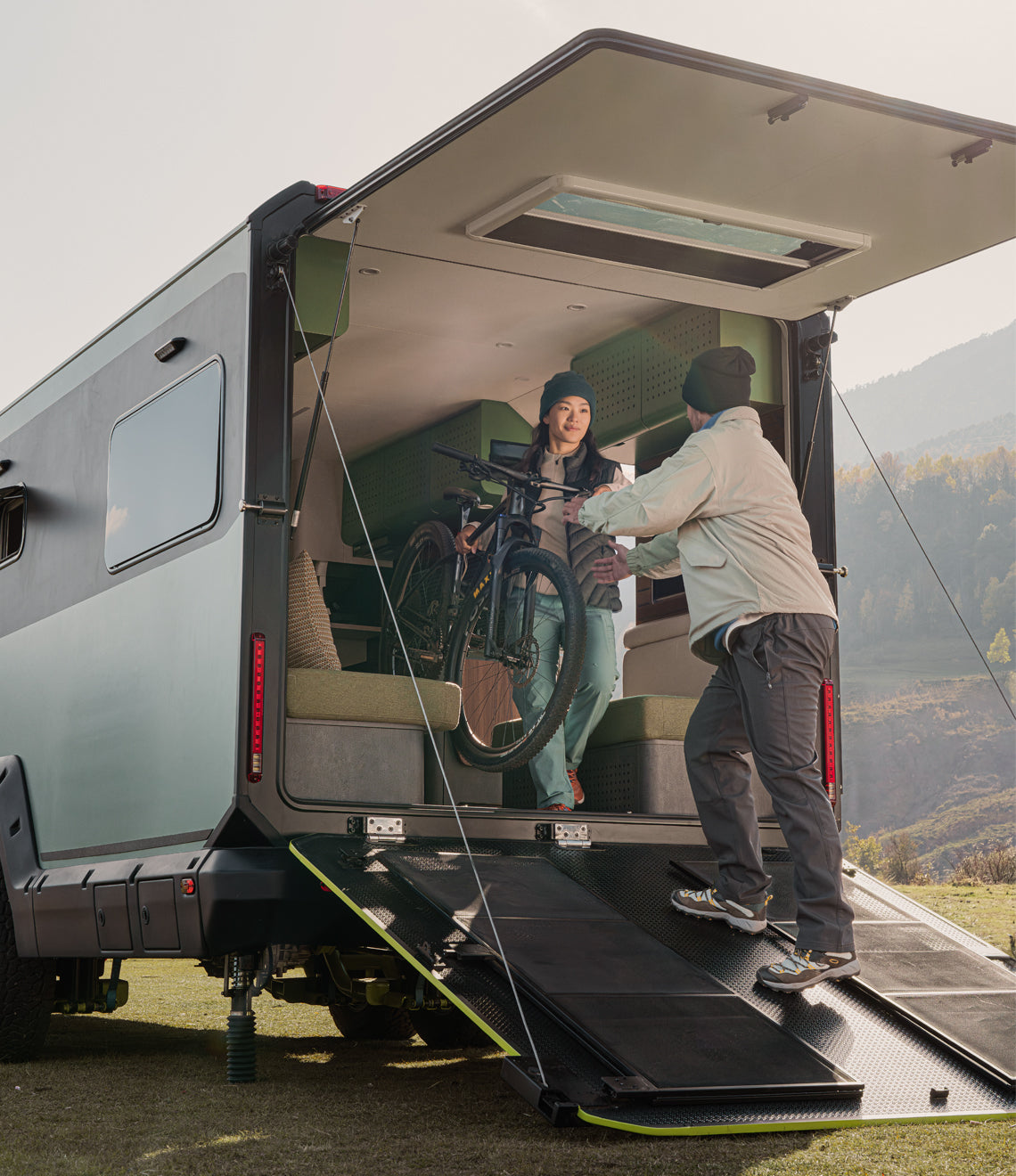
Direct-order models sit mostly outside the seasonal game too. The Evotrex-PG5 hybrid power travel trailer, for example, is sold by preorder at a published price, from $119,990, with a fully refundable deposit. With no lot inventory in the equation, the timing question becomes when you want a place in line rather than which month the discount arrives.
The short version
The best time to buy an RV is generally late fall through winter, when demand is thin, model year changeovers leave dealers with last year's units, and storage deadlines motivate used sellers. Shows are for calibration, leftover model years are for leverage, and spring is for paying full price. The pattern shifts negotiating power without promising a fixed discount, so set your budget first and let the calendar work in the background. For a preorder model like the PG5, the season matters far less than the decision.
Frequently asked questions
What month is the best time to buy an RV?
There is no single magic month, but the window from late fall through winter is typically strongest for buyers. Lot traffic is slow, and dealers still carry inventory they would rather not hold until spring.
Are RV shows a good place to buy?
They are an excellent place to compare and a reasonable place to buy. Show pricing can be genuinely competitive, but the bigger value is seeing many comparable rigs in one day. Verify any show deal against outside quotes before signing.
Is a leftover model year RV worth buying?
Often, yes. A leftover unit is new, warrantied, and typically negotiable once the next model year arrives. The main compromise is selection, since you are choosing from what remains on the lot.
Is it smart to buy an RV in winter if I cannot use it until spring?
It can be, provided you store it properly. A winter purchase should be winterized or kept in appropriate storage until the season turns, and the negotiating room often justifies the wait.
Does seasonal timing apply to used RVs?
Yes, with a twist. Spring brings the most listings, while fall brings the most motivated sellers, since many owners sell rather than pay for winter storage. Fall buyers should budget for an inspection because winterized systems are harder to test.
By the Evotrex Travel Team. RV travelers and off-grid testers. Specs, prices, and rules change over time, so check official sources before you rely on them.