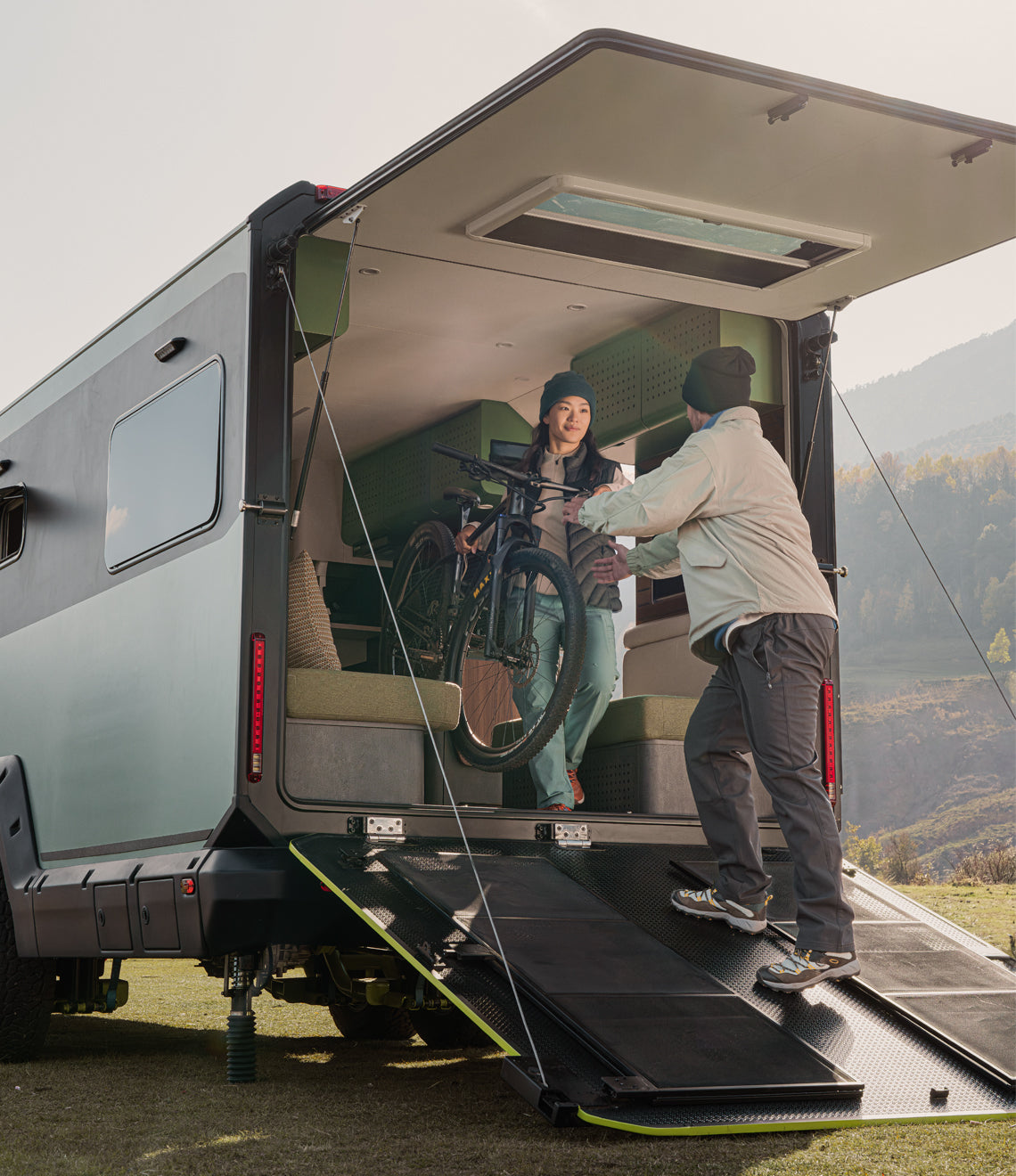

4 season campers, what all weather capability really takes
The phrase four season shows up on a lot of brochures, and it means wildly different things from one builder to the next. For some it means an extra layer of underbelly wrap. For others it means a camper genuinely engineered to keep water flowing and people warm through a week of hard freeze. This guide breaks down what real cold-weather capability requires, so you can test any four season claim against the hardware behind it.
What four season actually means
There is no industry-wide standard behind the four season label, so every manufacturer defines it for themselves. In practice, true four season campers need four things to work together. The shell must hold heat, the water system must survive freezing nights, the furnace or HVAC must keep up with the coldest hours, and the power system must run it all when winter days are short and dim.

Miss any one of the four and the camper fails in the cold, whatever the brochure says. The sections below show you what to look for in any 4 season travel trailer you are comparing.
| System | What winter demands | What to look for |
|---|---|---|
| Shell | Hold heat, block drafts | Insulated multi-layer walls, quality windows, sealed penetrations |
| Water | Survive freezing nights | Enclosed and heated tanks, protected plumbing runs |
| Heat | Keep up at the coldest hour | Properly sized heating with even distribution |
| Power | Run everything on weak sun | Large battery, cold-rated chemistry, onboard generation |
Insulation and construction
Insulation decides how hard every other system has to work. Look for multi-layer wall construction with real insulation value, an insulated roof and floor, and dual-pane or well-sealed windows, since glass is where a huge share of heat escapes. Entry doors, hatches, and storage compartments deserve a close look too, because every seam is a potential draft.
Construction material matters in a second way. Wood framing that gets repeatedly damp from winter condensation can rot from the inside over the years. Composite construction avoids that failure mode entirely, which is one reason newer four season campers have moved toward zero-wood shells.
Condensation itself is the quiet winter enemy. People, cooking, and showers all put moisture into the air, so good ventilation paths matter as much in January as in July.
Tank and plumbing protection
Frozen plumbing is the classic winter camping failure, and it is expensive. A single freeze can split lines, crack fittings, and ruin pumps. A four season travel trailer protects against it by enclosing the tanks within heated space, adding tank heater pads, and routing plumbing away from exterior walls wherever possible.
When you inspect a camper, trace the water system. Ask where the fresh, grey, and black tanks sit, whether heat actually reaches them, and whether low-point drains and exterior connections are protected. A heated underbelly that only receives warm air while the furnace runs is a weaker design than dedicated tank heating, and the difference shows up on the first below-zero night.
Heating that can keep up
Heating capacity has to match the coldest hour of the coldest night you plan to camp through. An undersized furnace runs constantly, drains power, and still loses ground at 3 a.m. Beyond raw capacity, look at distribution, because a camper that is warm at the thermostat and freezing at the floor makes for miserable sleep.
Fuel strategy is part of the decision. Propane furnaces are the traditional route and require refills, which can be a planning problem in remote winter country. All-electric heating avoids the second fuel entirely but leans hard on the power system, which is exactly why the next section matters so much.
Power when winter works against you
Winter is the worst season for RV power. Heating draws heavily, nights are long, and solar output drops just when you need energy most. A panel array that carries a camper through July can fall far short in January. Battery chemistry adds another wrinkle, because many batteries suffer or shut down in hard cold.
The Evotrex-PG5 takes a direct approach to the power side of cold nights. Its 43 kWh LFP battery is rated from -22°F to 140°F, and when solar cannot keep up, the onboard gasoline generator recharges the system automatically, with the battery, 1.5 kW rooftop solar, and generator working as one system delivering 270+ kWh of usable energy per cycle. Tank heater pads keep its water system operational in cold temperatures.
Winter use versus winter storage
Four season capability is about camping through winter. Storing through winter is a different job with its own checklist, and even the most capable camper needs proper preparation before it sits unused through months of freezing weather.
The practical rule is simple. If the camper is occupied and heated, its four season systems protect the plumbing. The moment it sits cold and empty, winterize it, because insulation only slows a freeze rather than preventing one.
The short version
Real 4 season campers get four systems right at the same time, an insulated shell, protected and heated tanks, heating sized for the coldest night, and a power system that keeps working when winter sun is weak. Test every four season claim against those four, and ask manufacturers specific questions rather than accepting the label.
Frequently asked questions
What makes a camper truly four season?
It needs insulated multi-layer construction, enclosed and heated tanks, heating capacity matched to hard cold, and a power system that runs it all through long winter nights. The label alone guarantees none of those, so verify each system.
Can you live in a 4 season camper in winter?
Many people do. Success depends on the camper's insulation and tank protection, a reliable heat source, and enough power to run everything continuously. Site selection and wind protection make a large difference too.
Do 4 season campers still need to be winterized?
Yes, whenever they sit unused in freezing weather. Four season systems protect an occupied, heated camper, but a parked and unheated one needs its water system drained and treated like any other rig.
Which 4 season travel trailer brands should I consider?
Start with builders that publish real specifics, meaning insulation details, tank heating methods, and battery cold ratings. Vague all-weather claims without numbers are a signal to keep asking questions or keep shopping.
Why does solar struggle in winter?
Days are shorter, the sun sits lower, and panels are often shaded or snow-covered, so output can fall to a fraction of summer production. That is why serious winter rigs pair solar with large batteries and another way to generate power.