
The best RV road trips in the U.S. (and how we'd plan them)
Some trips are worth slowing down for.
The best RV routes aren't about checking off destinations. They're about waking up somewhere incredible, staying one extra night because you can, and having the flexibility to adjust when weather, energy needs or spontaneity change the plan.
At Evotrex, we believe the best journeys happen when travelers spend less time managing limitations and more time embracing the unexpected.
These are the RV road trips we'd recommend first and how we'd approach each one.

Western National Parks Loop (Utah + Arizona)
Ideal trip length: 2–3 weeks
Ideal pace: Plan 2 to 3 nights minimum per stop. Most travelers underestimate drive fatigue and move too quickly.
Best time to go: April-May and September-October for milder temperatures and fewer crowds.
Stops:
- Zion National Park
- Bryce Canyon National Park
- Capitol Reef National Park
- Arches National Park
- Monument Valley
- Grand Canyon National Park
Why we love it
If someone asked us for one trip that feels like seeing another planet, this is it.
Every stop feels completely different. Red rock canyons become alpine overlooks, which become desert highways and some of the most recognizable landscapes in North America.
Don't miss: Sunrise at Bryce Canyon's Sunrise Point.
What first timers underestimate
Weather. Depending on the time of year you visit, Utah and Arizona can range from snowy days to triple-digit heat, and air conditioning often becomes your largest energy consumer. The region's dry climate can also make water management more important than many travelers expect. Carry extra drinking water, monitor your fresh water levels, and keep an eye on weather conditions, particularly during summer travel.
Reservations also disappear quickly, especially spring and fall.
PG5 traveler tip
This route rewards flexibility.
The freedom to stay longer and adapt your plans is part of what makes this route so rewarding, particularly when campground amenities vary from stop to stop. With the PG5's integrated battery system, rooftop solar, regenerative charging while towing, and onboard power generation, travelers can prioritize the experience instead of planning around hookups.
Campground vs off grid
Book Zion and Grand Canyon in advance. For Monument Valley and sections of Utah, consider dispersed camping and BLM land for additional flexibility.

Pacific Coast Highway
Ideal trip length: 1–2 weeks
Ideal pace: Limit yourself to 2 to 4 hours of driving per day.
Best time to go: September and October, when summer crowds thin and weather remains pleasant.
Stops (south to north):
- Los Angeles
- Santa Barbara
- Big Sur
- San Francisco
- Continue north into the Oregon Coast
Why we love it
This is less of a camping trip and more of a lifestyle route.
Ocean mornings. Slow drives. Coastal hikes. Great food.
It's one of the easiest introductions to RV travel because services are frequent and distances stay manageable.
Don't miss: Watching sunset from Pfeiffer Beach in Big Sur.
What first timers underestimate
Road restrictions.
Not every scenic turnout accommodates larger trailers, and coastal campgrounds often have tighter site dimensions. Check road conditions before departure, as portions of California Highway 1, particularly near Big Sur, occasionally close due to landslides, weather events, or maintenance work.
Book farther ahead than you think.
PG5 traveler tip
Long coastal routes reward comfortable camping.
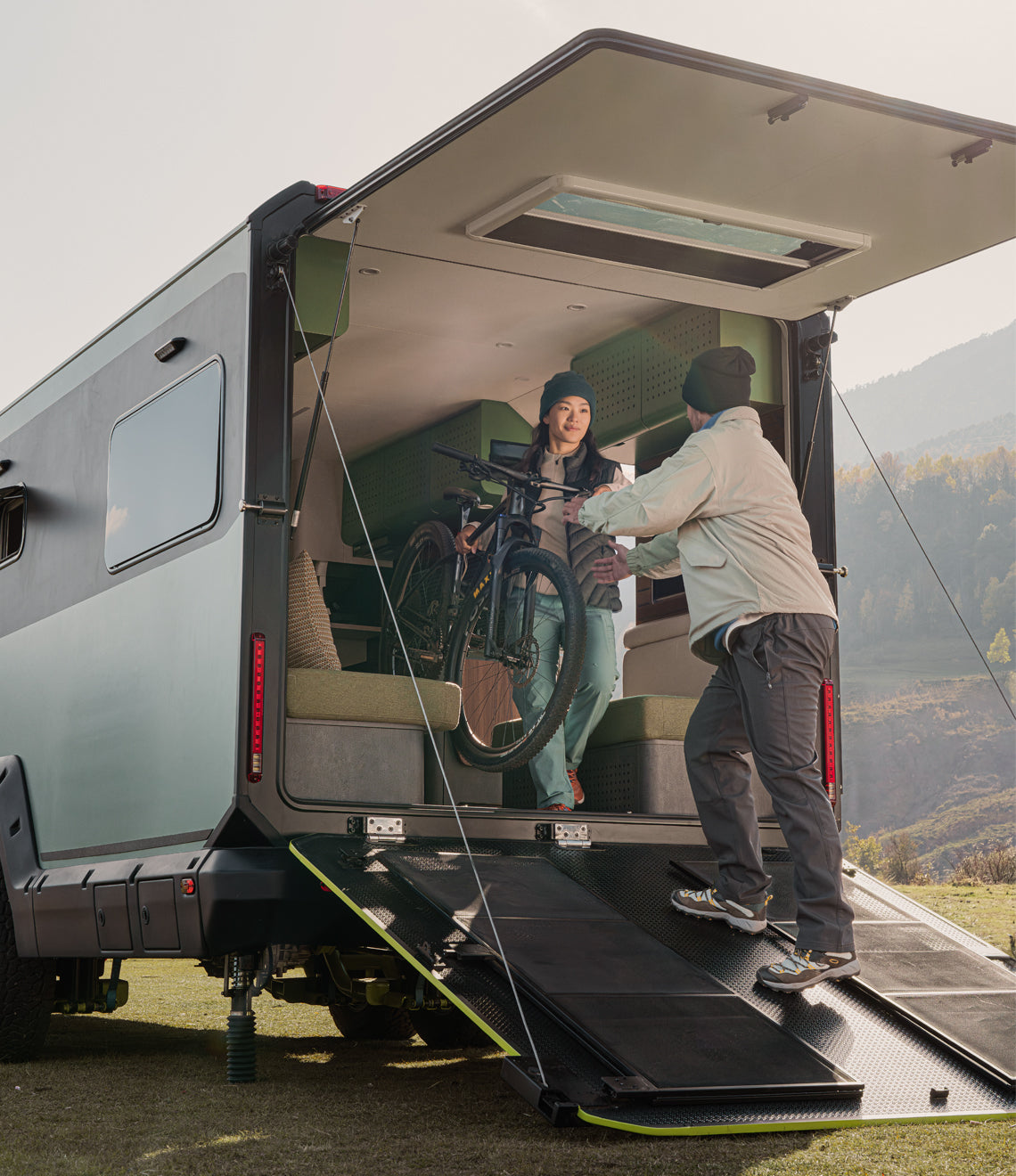
At 28'8" long and 8' wide, the PG5 remains compatible with many established RV sites while still giving travelers flexibility to settle in for longer stays.
Take advantage of the deployable patio and induction kitchen for slower travel days.
Campground vs Off Grid
Mix established campgrounds with occasional public land stays farther north through Oregon.

Northern Rockies National Parks Loop (Wyoming + Montana)
Ideal trip length: 10-14 days
Ideal pace: Three nights minimum per park.
Best time to go: June-September.
Stops:
- Glacier National Park
- Yellowstone National Park
- Grand Teton National Park
Why we love it
This is one of the few routes where wildlife viewing can become the highlight. You'll move between mountain passes, alpine lakes, geysers, and some of the most dramatic scenery in North America.
Keep binoculars close by and remember that the best wildlife experiences are also the most respectful ones. Observe animals from a safe distance and follow park guidance to help protect both wildlife and visitors.
Don't miss: Sunrise in Grand Teton with a cup of coffee by Jackson Lake.
What first timers underestimate
Distance. Roads are slower than expected and weather changes fast. Hookups also become less consistent the farther you go.
PG5 Traveler Tip
National park travel often means fewer amenities and less consistent access to hookups.
Features like 60 gallons of fresh water, integrated HVAC, and onboard energy storage become especially valuable when campgrounds prioritize scenery over infrastructure
Campground vs off grid
Reserve Glacier early.
Look outside Yellowstone for dispersed camping options and day trips into the park.

Blue Ridge Parkway + Great Smoky Mountains
Ideal trip length: 1–2 weeks
Ideal pace: Move every 2 to 3 nights.
Best time to go: September-October for fall foliage.
Stops:
- Shenandoah National Park
- Blue Ridge Parkway
- Great Smoky Mountains National Park
Why we love it
This route feels slower and quieter. Expect mountain overlooks, small towns, scenic drives, and easy access to hiking without long driving days. In the fall, it transforms into one of the most scenic drives in North America.
Don't miss: A stop in Asheville, North Carolina.
What first timers underestimate
Elevation changes.
Weather shifts dramatically, fog can affect visibility, and mountain roads can become steeper and more winding than expected. Understanding basic mountain driving techniques, including managing speed on long descents and navigating steep grades, becomes increasingly important on this route.
PG5 traveler tip
This route is ideal for travelers learning RV life.
Stay flexible and use shorter drive days to enjoy camp itself.
Campground vs off grid
Mostly campground focused with occasional dispersed options in national forest land.

Great Lakes Loop
Ideal trip length: 7-10 days
Ideal pace: Spend at least two nights in each region and leave time for weather and unplanned stops.
Best time to go: July-September.
Stops:
- Michigan Upper Peninsula
- Door County
- Lake Superior shoreline
- Northern Minnesota
Why we love it
This may be one of the most underrated RV trips in the country. It offers many of the things travelers love about coastal routes, including waterfront campsites, charming small towns, and dramatic scenery, but without the crowds. Freshwater coastlines, excellent camping, and a slower pace make it feel easier and more approachable than many western routes.
Don't miss: Pictured Rocks National Lakeshore in Michigan's Upper Peninsula.
What first timers underestimate
Lake weather. Wind and temperature swings can surprise people, particularly along Lake Superior. Seasonal insects can also be intense near wooded lakeshores, especially during summer, so pack accordingly with bug spray and appropriate clothing.
PG5 traveler tip
This route works especially well for travelers testing longer off-grid stays without committing to major elevation or desert driving. Features like the PG5's integrated bug screens make it easier to enjoy lakeside campsites and cool summer evenings outdoors while keeping insects at bay.
Campground vs off grid
Mix state parks with dispersed camping near Superior National Forest.
RV reminders before you go
Know your campsite dimensions. Not every site fits every trailer. Always verify:
Maximum trailer length
Site type (pull-through vs. back-in) and ease of access for your trailer size
Slide clearance
Hookup availability
At 28'8" long and 8' wide, the PG5 fits many established campground footprints while remaining manageable for longer routes.
Book earlier than you think
Plan ahead:
- Book popular parks earlier than you think. Reservations often open months in advance.
- Avoid planning to move every day. The best RV trips leave room for weather, recovery, and spontaneous stops.
- Consider BLM land and dispersed camping. Some of the best campsites never appear on reservation websites.
New to RV travel? Stay tuned for our upcoming RV 101 Guide, where we'll cover everything from towing and camp setup to campground etiquette and packing tips for first-time adventurers.
One of the best kept secrets in RV travel: BLM land & dispersed camping
One of the best things first time RV travelers learn is that campgrounds aren't your only option. BLM (Bureau of Land Management) land and dispersed camping areas often allow self-contained camping outside traditional campgrounds with more privacy, more space, and more flexibility. This becomes especially valuable when national park reservations are sold out.
When we'd choose BLM over a campground
- Reservations are unavailable
- We only plan to stay 1 to 3 nights
- We want more privacy
- We have a self sufficient setup
How to find BLM and dispersed camping
- Use iOverlander, Campendium, Sekr, and OnX Offroad
- Search BLM field offices and National Forest maps
- Cross check with satellite imagery when possible
- Review fire restrictions and stay limits
- Always confirm trailer accessibility before arrival
*Leave No Trace principles still apply. Pack out all trash, respect fire restrictions, and leave campsites better than you found them.
First timer rule
Spend your first few nights in established campgrounds before trying dispersed camping, and don't forget:
- National park reservation confirmations
- Downloaded offline maps
- Bug spray
- Extra drinking water
- Leveling blocks
- First-aid kit
- Headlamp
- Portable camp chairs
Cell service can be limited in national parks and remote areas. Download maps, campground confirmations, and important information before you leave.
Why the PG5 fits this style of travel
Off grid camping shifts responsibility back to the traveler. Power, water, temperature control, and meal prep all matter more.
Features like integrated energy storage, rooftop solar, onboard generation, climate control, and onboard water systems help make off-grid camping feel more approachable, giving travelers greater confidence when venturing beyond traditional campgrounds.
The best RV trips aren't measured by how many miles you cover, but by the freedom to stay a little longer, take the scenic route, and enjoy the places that weren't part of the original plan. That's the kind of travel experience we had in mind when designing the PG5.