
RV Camping Near Rocky Mountain National Park: Campgrounds, Hookups, and 2026 Rules
You want to take the rig to Rocky Mountain National Park. Smart move, because waking up to elk in a high country meadow is one of the best things you can do on wheels. But Rocky has a few quirks that catch first timers off guard, and a little planning up front saves you a lot of grief at the gate.
Two things shape every RV trip here. First, almost
everything sits high, much of it above 8,000 feet, and that altitude can flatten your sleep and your appetite for a night or two while also robbing a gasoline engine of power. Second, there are zero hookups anywhere inside the park, so you either roll in fully self contained or you stay in a private park in town. Add a peak season timed entry permit system, a seasonal alpine road, near daily afternoon thunderstorms in summer, and mandatory bear food storage, and you can see why a plan beats winging it.
This guide sorts your options into three tiers so you can pick fast: in park NPS campgrounds, full hookup private parks in the gateway towns, and free dispersed camping on the surrounding national forest.

Quick Answer
For RV camping near Rocky Mountain National Park you have three real choices: book an in park NPS campground (Moraine Park, Glacier Basin, and Aspenglen on the east side, Timber Creek on the west), stay at a full hookup private RV park in Estes Park or Grand Lake, or camp free on the Arapaho and Roosevelt National Forests nearby.
There are no hookups at any site inside the park, so in park camping is self contained only, with dump stations and water fills available.
The best window runs roughly late May through September when campgrounds and Trail Ridge Road are open, and the main catch is the 2026 timed entry permit, which begins May 22 and is included free when you hold an in park campground reservation.
Key Camping Terms, Defined
If you are newer to off grid RV travel, these four terms come up constantly in this guide.
Full hookups: A site wired and plumbed for water, electric, and sewer at the pad. This is what private RV parks in town offer and what the in park campgrounds do not.
Dry camping: Camping with no hookups at all, running off your onboard fresh water, holding tanks, and battery or generator power. Every in park campground at Rocky is dry camping.
Boondocking: Dry camping out on undeveloped public land away from any services. Same idea as dry camping, just usually free and remote.
Dispersed camping: The official land management term for camping outside a developed campground on public land such as a national forest, following that forest's rules. Near Rocky, dispersed camping happens on the Arapaho and Roosevelt National Forests, never inside the park.
What to Know First
Timed entry permit in peak season. For 2026, the timed entry reservation system begins May 22. There are two permit types: Timed Entry plus Bear Lake Road, valid 5 a.m. to 6 p.m. and running through October 19, and Timed Entry for the rest of the park, valid 9 a.m. to 2 p.m. and running through October 13. You book on Recreation.gov for a non refundable $2 processing fee. The big break for campers: if you hold an overnight reservation at Aspenglen, Glacier Basin, Moraine Park, or Timber Creek, a timed entry reservation is included with your camping reservation, so you do not need a separate permit. (NPS timed entry permit system)
No hookups in the park. The NPS confirms there are no hookups at any in park site. Come self contained. (NPS camping page)
RV length limits vary by campground. Moraine Park tops out at 40 feet, Glacier Basin at 35 feet, and Aspenglen and Timber Creek at 30 feet. Longs Peak is tents only. Measure your rig honestly before you book. (NPS camping page)
Everything is high. Campgrounds sit well above 8,000 feet. Take the first day slow, hydrate, and expect a gasoline generator to lose power in the thin air.
Bear food storage is required. Each in park site has a food storage box. Use it. Keep food, coolers, trash, and anything scented locked up, not in your truck bed or under the awning.
Trail Ridge Road is seasonal. This high alpine road across the park opens and closes with snow. It is RV drivable but high and exposed, so check the live status before you commit to crossing.
The Campgrounds
Here is the honest rundown across three tiers.
Tier 1: In Park NPS Campgrounds
These put you inside the gates. All are NPS run, reserved through Recreation.gov in summer (up to six months ahead), all dry camping with no hookups, all high elevation. What you get in return is waking up inside Rocky instead of on a highway, plus your timed entry permit included.
Moraine Park Campground. Near the Beaver Meadows entrance and Estes Park, east side. This is the big one and usually the first to fill, partly because it takes the longest rigs and sits in an open meadow loaded with elk. It is the only campground open year round. Rig fit: RV length limit 40 feet, no hookups, fresh water fill and a dump station available in the winter camping season per the NPS page, cell signal spotty. Season (2026): Summer season opens 1 p.m. May 21 and closes noon October 19. Insider tip: Watch the rolling monthly release window. Moraine Park is the most competitive in park site, and cancellations plus fresh inventory reopen regularly, so set an alarm. (Recreation.gov gateway)
Glacier Basin Campground. Off Bear Lake Road, east side near Estes Park. The best launch pad for the Bear Lake corridor and the park shuttle, which matters because parking up there is brutal. Rig fit: RV length limit 35 feet, no hookups, potable water available. The group loop bars vehicles over a posted limit, so confirm group site rules if you book that loop. Season (2026): Opens 1 p.m. May 21 and closes noon September 8. Insider tip: Use the hiker shuttle that stops here. Leave the rig parked and ride up to Bear Lake instead of fighting for a spot. (Glacier Basin on Recreation.gov)
Aspenglen Campground. Near the Fall River entrance, east side just outside Estes Park. Smaller and quieter, tucked in the trees along Fall River. Rig fit: RV length limit 30 feet, no hookups, potable water available. Season (2026): Opens 1 p.m. May 21 and closes noon September 28. Insider tip: Target this one if your rig is on the smaller side and you want quiet. It sits near the Fall River entrance, often a calmer way in than the main Beaver Meadows gate. (NPS camping page)
Timber Creek Campground. West side near Grand Lake, the only developed campground on the quieter Kawuneeche Valley side. Great moose and elk country with far fewer crowds. Rig fit: RV length limit 30 feet, no hookups, potable water available, the most remote of the four so plan fuel and supplies in Grand Lake. Season (2026): Opens 1 p.m. May 21, then closes noon August 10 for a sewer system rehabilitation project and stays closed the rest of the 2026 season. So it is a late spring and early summer option only this year. Insider tip: If you want Rocky without the Estes Park crowds, the west side is it, but get in before the August 10 closure and gas up in Grand Lake because services thin out fast over here. (Timber Creek on Recreation.gov)
A note on Longs Peak Campground: it is tents only with no water, so it is not an RV option, but it is worth knowing exists if you also pack a tent.
Tier 2: Nearby Private RV Parks and Gateway Towns
This is your tier if you want full hookups, laundry, and a hot shower. You give up sleeping inside the park, but you gain creature comforts and can still drive in each day.
Estes Park KOA, east side. In Estes Park, minutes from the Beaver Meadows and Fall River entrances. Private RV park with pull through sites and full hookup options, on site dump and water, and WiFi. Insider tip: Staying in town does not exempt you from the timed entry permit, since your campground reservation is not inside Rocky. Book the permit on Recreation.gov the morning it releases for the time slot you want.
Grand Lake area RV parks, west side. Near Grand Lake village and the west entrance, with full hookup sites, camp stores, and laundry. This is the natural full hookup base for the quieter Kawuneeche side. Insider tip: With Timber Creek closed after August 10, 2026, the west side private parks become the main overnight base for the back half of summer, so they will book up earlier than usual. Reserve well ahead.
Estes Park also has independent options worth a look, including Elk Meadow Lodge and RV Resort and Spruce Lake RV Resort, both close to town with hookups. Confirm current availability, hookup type, and exact site dimensions directly with each park before booking.
Tier 3: Free Dispersed Camping and Boondocking on the National Forest
The park itself does not allow dispersed RV camping, so free camping happens on the surrounding Arapaho and Roosevelt National Forests. This is true self contained territory: no water, no dump, no hookups, no trash service, pack it in and pack it out. Always confirm your exact spot is legal on the current Motor Vehicle Use Map before you park. (Arapaho and Roosevelt National Forests)
Pole Hill Road area, near Estes Park (east side). A popular free dispersed area in the hills off Highway 36 between Lyons and Estes Park. Rig fit: No hookups, no water, no dump. Road access is rough and often needs high clearance, so this is not a spot for a big or low slung rig. Cell signal varies and can be dead. The standard forest 14 day stay limit applies. Insider tip: Access Pole Hill from the west side off Highway 36. Scout it in your tow vehicle first if your trailer is large, and confirm legal access on the MVUM rather than trusting a pin from an app.
Sulphur Ranger District dispersed, near Grand Lake (west side). Forest dispersed camping west of the park. Rig fit: No hookups, no water, no dump. Access ranges from decent forest roads to rough two track, so check the MVUM for what your rig can handle. Cell signal is often weak to dead. The 14 day limit and the usual rule about camping a set distance from water apply. Insider tip: This is the mellower dispersed scene compared with the Estes side and pairs naturally with the west entrance. Call the ranger district to confirm current conditions and any fire restrictions before you count on it.
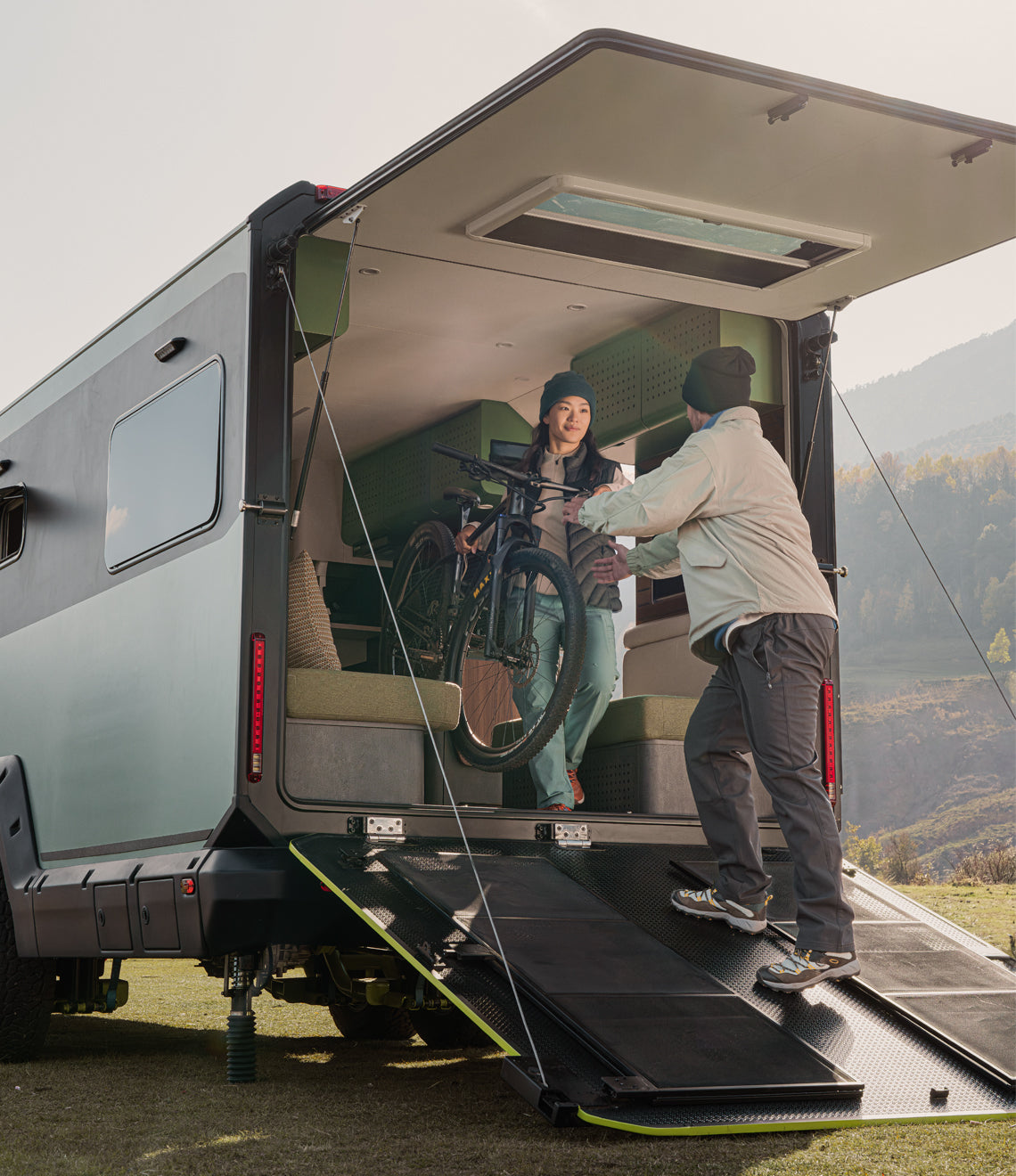
A quick word on going hookup free up here. High elevation does not bother a battery bank the way it bothers a gasoline generator, which loses power in thin air. A rig like the Evotrex-PG5, a travel trailer designed to make its own power from a large lithium battery bank, solar, and an onboard gasoline generator, is the kind of setup that lets you settle into a no hookup in park loop or a forest dispersed spot longer without chasing a dump and fill every couple of days. Worth a look if staying self contained at altitude is your style.
Campground Comparison Table
| Campground | Tier / type | Hookups | Max RV length | Reservation | Season (2026) |
|---|---|---|---|---|---|
| Moraine Park | Tier 1 / NPS | None | 40 ft | Recreation.gov | Summer opens May 21, closes Oct 19 |
| Glacier Basin | Tier 1 / NPS | None | 35 ft | Recreation.gov | May 21 to Sept 8 |
| Aspenglen | Tier 1 / NPS | None | 30 ft | Recreation.gov | May 21 to Sept 28 |
| Timber Creek | Tier 1 / NPS | None | 30 ft | Recreation.gov | May 21, closes Aug 10 for construction |
| Estes Park private parks | Tier 2 / private | Full hookups | Varies | Direct with park | Seasonal, confirm |
| Grand Lake private parks | Tier 2 / private | Full hookups | Varies | Direct with park | Seasonal, confirm |
| Pole Hill / Sulphur RD dispersed | Tier 3 / forest | None | Rig dependent | None, first come | Year round, weather dependent |
Check Before You Roll
Conditions and dates change, so confirm these for your dates and your rig before you leave:
The exact open and close dates for your campground, including the Timber Creek closure at noon August 10, 2026 for sewer work.
Whether you need a timed entry permit for your dates, the 2026 window starting May 22, the two permit types and their hours, and the $2 fee. If you hold an in park campground reservation your timed entry is included, but staying in town does not exempt you.
The RV length limit at your campground (Moraine Park 40 feet, Glacier Basin 35 feet, Aspenglen and Timber Creek 30 feet).
That there are no hookups at any in park site, so come self contained.
Dump station and potable water availability and hours at your in park campground, especially the summer dump status, since the NPS page confirms Moraine Park's fill and dump for the winter season but does not spell out summer hours. Call the park or check the campground page.
The reservation release timing on Recreation.gov, and set an alarm, because in park sites and timed entry permits go fast.
Trail Ridge Road's current season and live status before you commit to crossing.
For forest dispersed camping, that your exact spot is legal on the current Motor Vehicle Use Map, plus the 14 day stay limit and any current fire restrictions. Load the MVUM into an offline maps app and call the ranger district when in doubt.
Live links to check it all:
- Rocky Mountain National Park camping
- Rocky Mountain National Park timed entry permit system
- Recreation.gov Rocky Mountain gateway (campgrounds and timed entry)
- Arapaho and Roosevelt National Forests (camping, ranger districts, Motor Vehicle Use Maps)
FAQ
Can you RV camp in Rocky Mountain National Park? Yes. Moraine Park, Glacier Basin, and Aspenglen on the east side and Timber Creek on the west all take RVs within their length limits, reserved on Recreation.gov in summer. Just plan to camp self contained, because there are no hookups.
Does Rocky Mountain National Park have RV hookups? No. The NPS confirms there are no hookups at any campsite inside the park. There are dump stations and potable water fills on site, but for full hookups you stay at a private RV park in Estes Park or Grand Lake.
What is the RV length limit at Rocky Mountain campgrounds? It varies: Moraine Park 40 feet, Glacier Basin 35 feet, and Aspenglen and Timber Creek 30 feet. Longs Peak is tents only. Check the limit for your specific site before you book.
Is there free camping near Rocky Mountain National Park? Yes, on the surrounding Arapaho and Roosevelt National Forests, never inside the park. Areas like Pole Hill Road near Estes Park and dispersed sites in the Sulphur Ranger District near Grand Lake offer free camping with a 14 day limit. There are no services, access is often rough, and you must confirm legal spots on the Motor Vehicle Use Map.
Do you need a timed entry permit? In peak season, yes. The 2026 system begins May 22, with the Bear Lake Road permit running through October 19 and the rest of park permit through October 13. If you hold an overnight reservation at an in park campground, a timed entry reservation is included and you do not need a separate one. Staying in town does not exempt you.
When is the best time to go? Roughly late May through September, when the campgrounds and Trail Ridge Road are open. Remember that Timber Creek closes August 10, 2026 for construction this year, summer brings near daily afternoon thunderstorms, and reservations are most competitive in July and August.
Will my RV generator work at this elevation? A gasoline generator loses power in the thin air above 8,000 feet, so expect reduced output. A large lithium battery bank is unaffected by altitude, which is one reason power dense rigs are popular for dry camping up here.
A Few Last Things to Respect
Timed entry: in peak season you need the permit, so do not show up without one expecting to drive in.
Elevation: campgrounds sit above 8,000 feet, take the first day slow, and expect generator power to drop.
Afternoon storms and lightning: summer storms roll in most afternoons, so get off exposed alpine terrain like Trail Ridge Road early.
No hookups: in park means fully self contained, no exceptions.
Bears and food storage: use the food storage boxes and lock up everything scented.
Cell dead zones: signal is spotty in park and often nonexistent on the forest, so download maps and reservations offline before you lose service.
Fire restrictions: these change with conditions, so check the forest and park status and call the ranger district before you build a fire.