
RV Camping Near Phoenix: Resorts, Parks, and Free Desert Sites
Quick Answer
RV camping near Phoenix falls into three tiers: full hookup snowbird resorts in Mesa and Apache Junction, regional and state parks with water and electric sites within about an hour, and free dispersed camping on the surrounding Tonto National Forest and BLM desert. Winter (roughly November through March) is prime season, when the Valley becomes one of the largest snowbird RV markets in the country and resorts fill months ahead. Summer is brutally hot and can be genuinely dangerous for dry camping with no shade and no hookups, so plan power, water, and cooling carefully.

Key Terms, Defined
- Full hookups: A site with water, electric, and sewer at the pad. Most large Phoenix area resorts offer these with 30 amp and 50 amp electric service.
- Dry camping: Camping with no hookups at all, running on your own water tanks and battery or generator power. Often used at parks that have no electric sites.
- Boondocking: Self contained camping off grid on public land, usually free, with no services of any kind.
- Dispersed camping: Camping outside a developed campground on public land such as national forest or BLM, typically free, subject to stay limits and area rules.
- FCFS vs reservation: FCFS means first come first served, where sites cannot be booked ahead and you claim whatever is open. Reservation sites are booked in advance online, which is strongly recommended for Phoenix area parks in winter.
Why Phoenix Is a Major Winter RV Destination
The Phoenix metro is one of the biggest cold weather escapes in North America for RVers. Mild, dry winters draw tens of thousands of snowbirds into age qualified resorts across the East Valley, while the surrounding Sonoran Desert offers vast free public land for self contained rigs. The tradeoff is seasonality: book early for winter, and treat summer heat as a serious safety factor rather than an inconvenience.
Tier 1: Closest Full Hookup RV Parks and Resorts
These are developed RV resorts with full hookups, paved sites, and the amenities snowbirds expect. Many in the East Valley are age qualified, meaning at least one person in the party must be 55 or older. Always confirm age policy, hookup type, and seasonal availability directly with the resort.
Mesa Spirit RV Resort (Mesa)
Mesa Spirit is an age qualified desert RV resort in Mesa with full hookup sites offering 30 amp and 50 amp electric plus water and sewer, and back in and pull through options. It markets itself as a winter season community with an extensive activities and special events program, plus amenities such as a swimming pool, pickleball and tennis courts, a fitness center, a dog park, and a ballroom (per the resort's own site, mesaspirit.com). Confirm that one person in your party is 55 or older before booking, and reserve well ahead for winter.
In Town and West Valley Options
Closer to central Phoenix, several established full hookup parks cater to RVers who want freeway access and city convenience rather than a 55 plus resort vibe. Listings and verified amenities for parks across the metro, including in town and West Valley options, are aggregated by directories such as Good Sam (goodsam.com). Confirm hookup type, length limits, and whether a given park is age restricted before booking, since policies vary widely from resort to resort.
Lake Pleasant Resort Option (Peoria)
Northwest of the metro, the Lake Pleasant area also has a private full service RV resort at the harbor in addition to the county park described in Tier 2. Confirm current hookup, rate, and amenity details on the operator's own site before booking.
Tier 2: Regional and State Parks Within About an Hour
These public parks put you in the open desert with mountain views, hiking, and quiet sites, usually with water and electric but often without sewer at the pad. Most take reservations and fill fast in winter, so book early. Verify fees, length limits, and hookup type at the time of booking, since they change.
Lost Dutchman State Park (Apache Junction)
Sitting at the foot of the Superstition Mountains, Lost Dutchman has 135 sites including 68 with water and electric (50, 30, and 20 amp service), with the remaining sites being non hookup pads suitable for tents or RVs. The park reports no RV size restriction and a 15 day stay limit, and reservations are made through Arizona State Parks (azstateparks.com). This is one of the most scenic developed campgrounds close to the metro, so winter sites go quickly.
Usery Mountain Regional Park (East Mesa)
Usery Mountain offers a 73 site campground where each developed site has water and electric hookups, a dump station on site, a picnic table, grill, and fire ring, with pads large enough to accommodate up to a 45 foot RV. Reservations are made through Maricopa County Parks, which strongly recommends booking ahead because the campground fills in peak winter season (maricopacountyparks.net). Confirm current nightly rate and reservation fee at booking.
McDowell Mountain Regional Park (Fountain Hills area)
McDowell Mountain has roughly 76 individual sites with water and electric (both 30 and 50 amp), no sewer at the pad, and a dump station on site, accommodating RVs up to about 45 feet. Reservations are available through Maricopa County Parks and can typically be made months in advance (maricopacountyparks.net). Confirm current fees at booking.
Cave Creek Regional Park (North Valley)
Cave Creek Regional Park offers developed campsites with water and electric hookups for RVs up to about 45 feet in a quiet desert setting with mountain views, plus restrooms with hot showers (maricopacountyparks.net). Confirm current nightly rate, reservation fee, and site count at booking.
Lake Pleasant Regional Park (Peoria)
Lake Pleasant Regional Park has developed sites with water and electric and a dump station, alongside semi developed sites that have a ramada, table, grill, and fire ring but no water or electric hookups. Sites are split across the Desert Tortoise and Roadrunner campgrounds (maricopacountyparks.net). If you want hookups, confirm you are booking a developed site, not a semi developed one.
Tier 3: Free Dispersed Camping and Boondocking on Public Land
The Sonoran Desert around Phoenix has abundant free dispersed camping on the Tonto National Forest and on BLM land, which is a major reason self contained RVers winter here. Dispersed camping is generally free and undeveloped, with no water, power, or services, and a standard 14 day stay limit within a 30 day period before you must move on. Pack in and pack out everything, and confirm current access before you go, since gates, closures, and rules change seasonally.
A critical safety note: these areas have no shade and no hookups. In summer the Phoenix desert is brutally and dangerously hot, so Tier 3 is realistically a cool season activity unless you are fully prepared to manage heat with your own power and water.
Tonto National Forest Dispersed Areas
The Tonto National Forest borders the metro to the north and east, putting free desert camping within a short drive of Phoenix, Mesa, and Apache Junction. General dispersed camping in the forest is free and subject to the 14 day limit, with guidance to camp away from water sources and roads (fs.usda.gov). Many access roads are rough, and some require high clearance or four wheel drive once you leave pavement, so scout your route.
Bulldog Canyon OHV Area (by permit)
Bulldog Canyon is a roughly 34,000 acre gated OHV and dispersed camping area in the Mesa Ranger District, about an hour from Phoenix. Motorized access requires a Tonto OHV permit, which the Forest Service now issues through Recreation.gov rather than at the district office (fs.usda.gov). Camping is restricted near the access gates, with a buffer of one mile from most gates and two miles from the Blue Point gate, and the standard 14 day limit applies. Confirm the current permit process and check for any active camping closure before relying on this area, since the Forest Service has posted Bulldog camping alerts in the past.
Bartlett Lake and Cave Creek Corridor
The Bartlett Lake area northeast of Carefree, reached via Cave Creek Road and the Bartlett Dam Road, offers dispersed camping along the water and surrounding desert on the Tonto National Forest, with the same 14 day limit. Some lakeside recreation areas may charge a day use or parking fee even where camping itself is free, so confirm whether a recreation pass is required for where you intend to park (fs.usda.gov).
Lake Pleasant Area and Sycamore Creek
There is additional dispersed camping in the broader Lake Pleasant area and along corridors such as Sycamore Creek on the Tonto National Forest. Access and conditions vary, and washes can flood, so verify the specific route and current status before heading out rather than assuming a spot is open.
BLM Land Near the Metro
The Bureau of Land Management also administers desert parcels around the Valley that allow free dispersed camping under similar 14 day rules. BLM dispersed areas are undeveloped with no services, and boundaries can be confusing, so use official maps and confirm you are on open public land before setting up (blm.gov).
Where an Off Grid Trailer Earns Its Keep
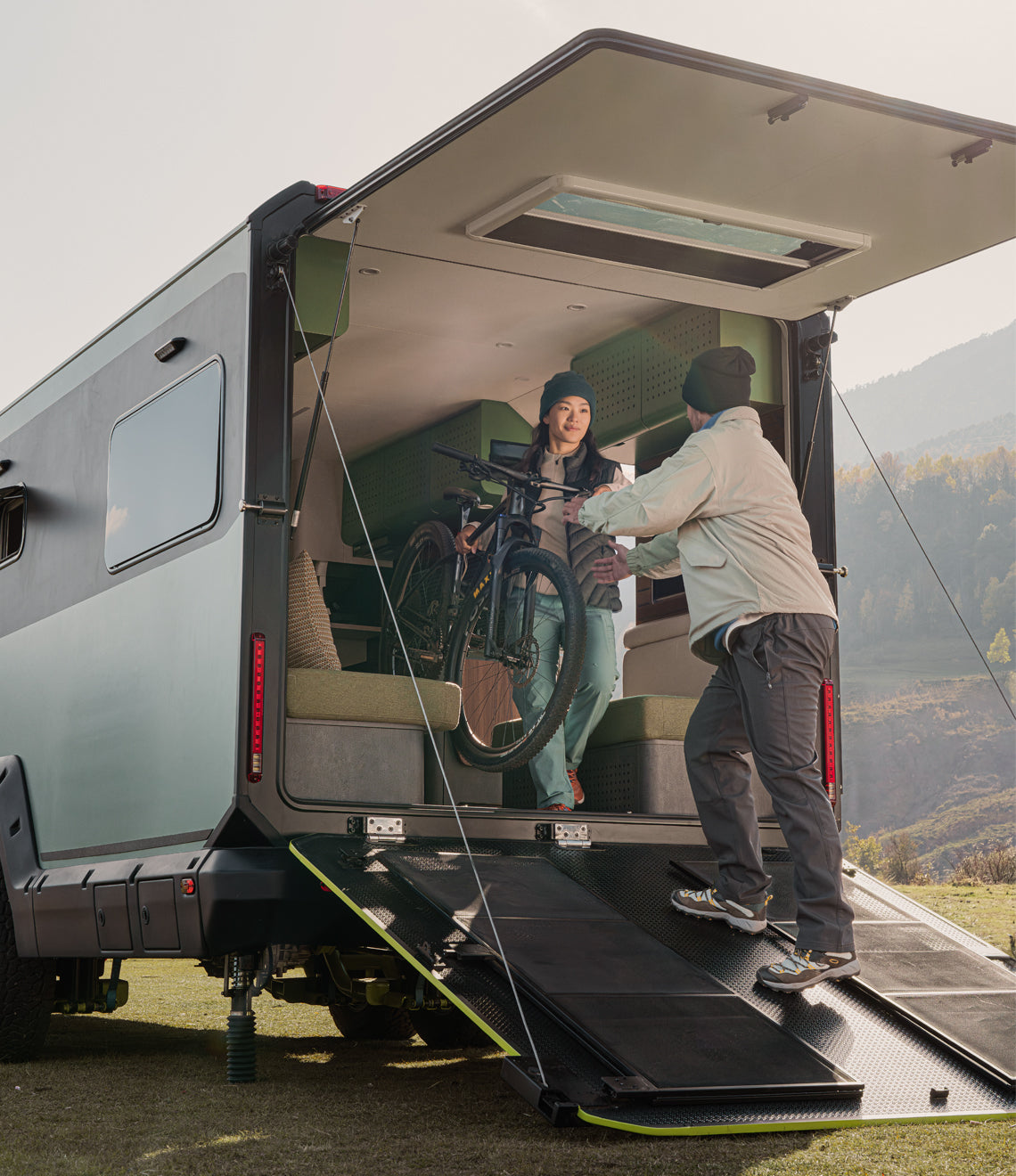
Desert boondocking near Phoenix is the exact scenario where power independence matters most: no hookups, no shade, and long stretches between services. The Evotrex-PG5 is a power generating travel trailer built around a large lithium battery bank, solar, and an onboard gasoline generator, which is the kind of setup that makes extended off grid stays in the Sonoran Desert more comfortable. The Evotrex-PG5 is now available to preorder if you are planning ahead for this style of camping; see evotrex.com for details.
Comparison Table of Main Options
| Campground | Tier | Hookups | RV length | Reservations | Notes |
|---|---|---|---|---|---|
| Mesa Spirit RV Resort | 1 Resort | Full (30 and 50 amp, water, sewer) | Confirm | Reservation | Age qualified 55 plus, snowbird amenities |
| Lost Dutchman State Park | 2 State park | 68 water and electric sites, rest dry | No stated size limit | Reservation | Superstition Mountain views, 15 day limit |
| Usery Mountain Regional Park | 2 Regional park | Water and electric, no sewer | Up to about 45 ft | Reservation | Dump station on site |
| McDowell Mountain Regional Park | 2 Regional park | Water and electric, no sewer | Up to about 45 ft | Reservation | Dump station on site |
| Cave Creek Regional Park | 2 Regional park | Water and electric, no sewer | Up to about 45 ft | Reservation | Quiet North Valley desert |
| Lake Pleasant Regional Park | 2 Regional park | Developed water and electric, plus dry sites | Confirm | Reservation | Lakeside, dump station |
| Tonto NF dispersed | 3 Boondocking | None | Confirm road access | FCFS | Free, 14 day limit, no services |
| Bulldog Canyon OHV | 3 Boondocking | None | High clearance often needed | Permit (FCFS sites) | OHV permit via Recreation.gov |
Fees, hookups, and limits change, so verify each option directly before booking or rolling out.
Check Before You Roll
- Reservations: Tier 1 resorts and Tier 2 parks fill months ahead for winter. Book as early as you can and have a backup.
- Length limits: County park sites generally top out around 45 feet. Confirm your rig fits, including slide clearance and turning room.
- Extreme summer heat: Phoenix summers are dangerously hot. Dry camping and boondocking with no shade or hookups can be life threatening in summer, so favor full hookup parks with running air conditioning, or simply plan desert trips for the cool season.
- Water and fuel planning: Boondocking sites have no water and no services. Arrive with full fresh water tanks and a fuel plan, and know where the nearest dump station and resupply are.
- 14 day limits and permit areas: Dispersed camping on Tonto National Forest and BLM land carries a 14 day stay limit within a 30 day period. Some zones such as Bulldog Canyon require a permit, and closures happen, so verify current status before you go.
Frequently Asked Questions
Can you boondock near Phoenix?
Yes. There is abundant free dispersed camping on the Tonto National Forest and BLM land around the metro, subject to a 14 day stay limit and with no services. Some areas such as Bulldog Canyon require a permit, and rough roads may demand high clearance, so confirm access first (fs.usda.gov).
What is the best winter RV camping near Phoenix?
For full hookups and amenities, the large snowbird resorts in Mesa and Apache Junction, such as Mesa Spirit, are popular winter choices. For a scenic park setting with water and electric, Lost Dutchman State Park and the Maricopa County regional parks are strong options. All fill early in winter, so book ahead.
Is there free camping near Phoenix?
Yes. Dispersed camping on the Tonto National Forest and on BLM land near the Valley is generally free, with a 14 day limit and no services. Some lakeside areas may still charge a day use or parking fee, so confirm before relying on a spot.
Do Phoenix area RV parks have full hookups?
Many private resorts in the metro and East Valley offer full hookups with water, sewer, and 30 or 50 amp electric. Most county regional parks, by contrast, offer water and electric but not sewer at the pad, with a dump station on site. Confirm hookup type when you book.
When is RV season near Phoenix?
Winter, roughly November through March, is prime season for comfortable temperatures and is when snowbird demand peaks. Summer is brutally hot, which makes resorts with full power the safer choice and makes shadeless boondocking inadvisable.
How long can you stay when boondocking?
Dispersed camping on the Tonto National Forest and BLM land generally allows up to 14 days in one spot within a 30 day period before you must move. Developed parks set their own limits, such as the 15 day limit at Lost Dutchman.