
Dispersed Camping in Wisconsin: Where It Is Actually Allowed
Wisconsin is not a public land free for all, and it is easy to arrive expecting the wide open dispersed camping you find out West only to discover the state works very differently. There is no Bureau of Land Management land here, so true dispersed camping is limited and mostly clustered in the north. Dispersed camping means camping outside a developed campground with no hookups, no water, and no services. This guide is honest about how scarce it is in Wisconsin, where a trailer can legally park, the permits and stay limits that keep you legal, and how to come prepared for a night with no power pedestal in sight.

Where dispersed camping is allowed in Wisconsin
The single best option for camping with a trailer is the Chequamegon-Nicolet National Forest, a roughly 1.5 million acre federal forest spread across northern Wisconsin. Dispersed camping is allowed on most of it, no permit needed, and you can pull a rig to a primitive spot along a forest road.
The state forests are a different story. Wisconsin DNR properties do offer remote camping, but on the northern forests it is backpack style. You buy a permit and then hike in at least one mile to your site, and no vehicles or trailers are allowed. That rules the DNR backcountry out for anyone towing.
The realistic middle ground is the county forests. Northern counties like Marinette and Burnett open much of their forest land to dispersed camping with a vehicle or trailer, usually by a cheap permit. Rules are not one size fits all, so every county sets its own.
The rules every Wisconsin dispersed camper needs to know
A few rules repeat across these lands, and knowing them keeps you out of trouble.
Stay limit. In the Chequamegon-Nicolet National Forest you may occupy the same site for up to 21 days within a 28 day period, then you must move at least one road mile. County forests are stricter. Marinette County allows up to 14 consecutive days per permit, and Burnett County limits you to a 1 to 10 day stay.
Permits. Federal dispersed camping needs no permit. County forests almost always do. A Marinette County forest camping permit costs 25 dollars and must be visible on your camping unit. Burnett County requires a permit for primitive camping on undesignated areas as well.
Keep your distance from water, roads, and facilities. In the national forest, set your tent at least 150 feet from any trail or forest road, keep 200 feet from lakes and streams, and stay a quarter mile from any developed recreation site. Burnett County asks you to camp at least 50 feet from water.
Check for fire restrictions. Northern Wisconsin swings into dry spells, and campfire bans can appear fast. Only dead and downed wood may be burned in the national forest, permanent fire rings are not allowed, and fires can be banned outright in dry conditions. Always confirm the current fire situation and carry a stove as a backup.
Leave no trace. These sites have no toilets, no trash service, and no potable water. Pack out everything, including refuse, and do not clear or destroy vegetation to make a spot.
Best areas for dispersed camping in Wisconsin
Chequamegon-Nicolet National Forest (northern Wisconsin). The premier choice for trailer owners. Primitive, first come first served, and free, with hundreds of miles of forest roads across the Great Divide, Medford, and Lakewood districts. Expect no facilities and no hookups.
Marinette County Forest (northeast Wisconsin). Waterfall country near the Michigan border. A 25 dollar permit opens dispersed camping across county forest land, and a camping unit here can be a tent, travel trailer, camping trailer, or motor home. Move at least one mile every 7 days before returning to the same area.
Burnett County Forest (northwest Wisconsin). Quiet lake and pine country near the Governor Knowles corridor. Much of the forest is open to camping with a tent, trailer, or vehicle by permit, with a 25 foot total length limit on rigs, so this suits smaller trailers.
| Area | Land manager | Permit | Stay limit | Good to know |
|---|---|---|---|---|
| Chequamegon-Nicolet NF | US Forest Service | None | 21 days per 28 day period | Best trailer option, no hookups |
| Marinette County Forest | Marinette County | 25 dollars | 14 consecutive days | Trailers and motor homes allowed |
| Burnett County Forest | Burnett County | Required | 1 to 10 days | 25 foot rig length limit |
| DNR northern state forests | Wisconsin DNR | Required | Varies | Hike in only, no trailers |
What it takes to stay out here
The most rewarding dispersed sites in Wisconsin are the remote, hike friendly ones in the national and county forests, and remoteness cuts both ways. It buys you quiet and it takes away every convenience. You pack in water, you pack out waste, and under the thick northern canopy you cannot count on solar to keep your batteries alive.
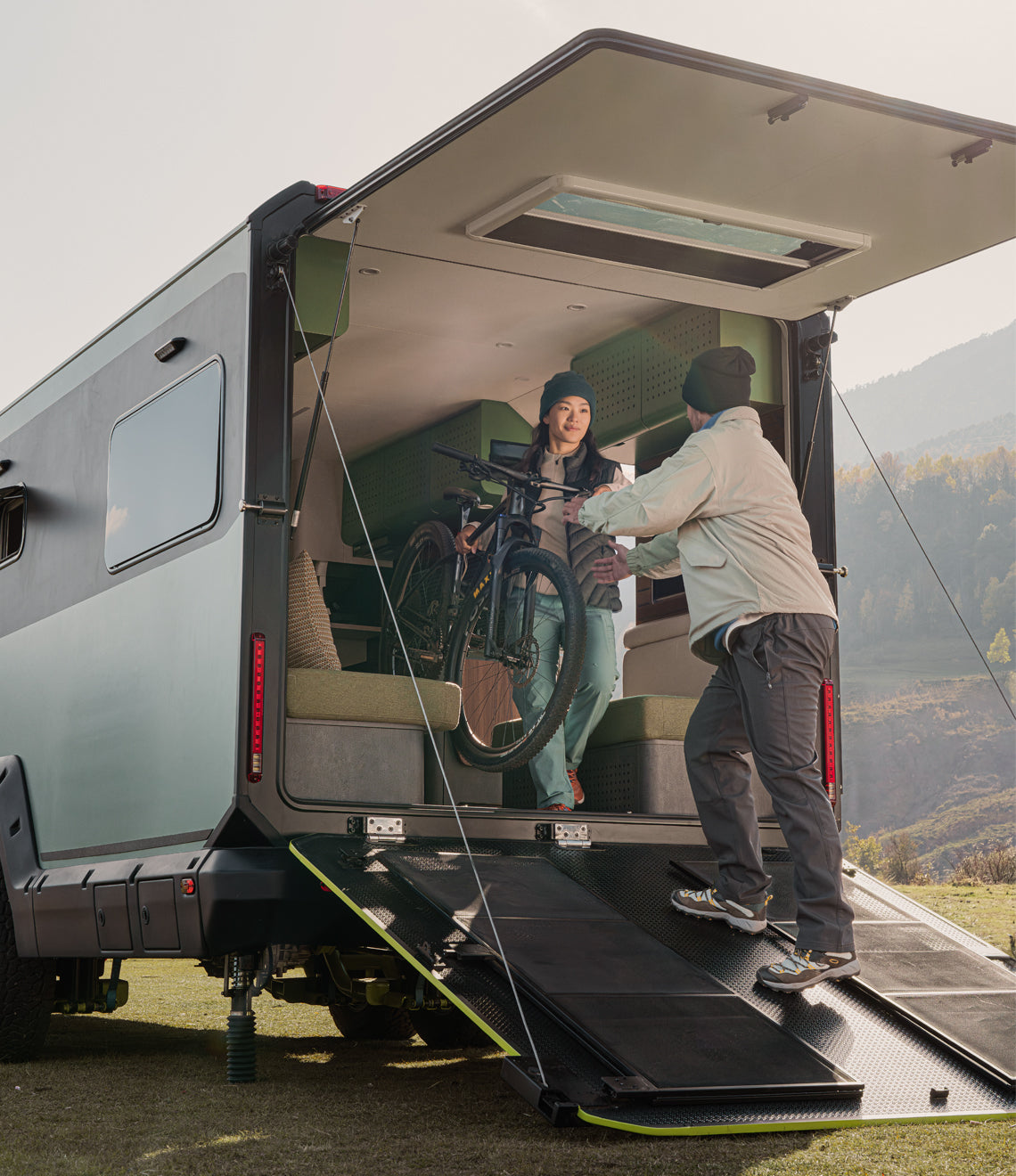
A self powered trailer solves the part that solar cannot. The Evotrex-PG5, a travel trailer with onboard power generation that is open for preorder now, keeps itself charged without a hookup or a clear patch of sky. With the Evotrex-PG5 the deep woods site stays livable for days, and the only sound is the forest, not a generator.
Frequently asked questions
Is dispersed camping free in Wisconsin? In the Chequamegon-Nicolet National Forest, yes, with no permit. County forests usually charge a small permit fee, such as 25 dollars in Marinette County.
Can you dispersed camp with a trailer in Wisconsin? Yes, but your options are narrow. The national forest and several county forests allow it. The DNR northern state forest remote sites are hike in only and do not allow vehicles or trailers.
How long can you stay? Up to 21 days within a 28 day period in the national forest before you move one road mile. County limits are shorter, from 10 to 14 days depending on the county.
Do you need a permit? Not for national forest dispersed camping. County forests generally require one, and DNR remote backpack sites always do.
Can you have a campfire? Only when conditions allow. Burn dead and downed wood, use no permanent rings, and check for active fire bans before you plan a fire.
Check before you roll
- Confirm the specific district or county rules for your exact site.
- Check the current fire situation and any active camping closures.
- Confirm the access road is open and passable for the size and weight of your rig.
- Verify any county permit and length limit before you tow in.
- Fill water, empty tanks, and plan your power before you leave pavement.
- Download offline maps; cell service is unreliable once you are off the highway.