
Dispersed Camping in Washington: Where to Go and How to Do It Right
Washington packs a lot of free camping into one state, from dry pine forest on the east slope of the Cascades to river valleys in the far northeast. Dispersed camping means camping for free on public land outside a developed campground, with no hookups, no water, and no services. This guide covers where it is allowed, the rules that keep you legal, the strongest regions to aim for, and how to come prepared.

Where dispersed camping is allowed in Washington
Most free camping in Washington happens on national forest land managed by the US Forest Service. The big forests are Okanogan Wenatchee and Colville in the east and Gifford Pinchot in the south. On most national forest land, dispersed camping is free and needs no permit.
The state also manages recreation land through the Washington Department of Natural Resources, or DNR. Vehicle access to DNR land requires a Discover Pass, and camping is generally limited to the agency's own campsites rather than open dispersed spots. Be honest with yourself about the west side: close to Seattle, true open dispersed camping is thin, and most of the good primitive camping sits east of the Cascade crest.
The rules every Washington dispersed camper needs to know
A few rules apply almost everywhere, and knowing them keeps you out of trouble.
Stay limit on national forest land. On Washington national forests, dispersed camping is limited to no more than 14 consecutive days in one spot. Gifford Pinchot and Colville also cap total camping at 28 days per calendar year across all locations. Once you hit the limit you have to move on, generally at least a mile down the road.
Stay limit on DNR land. Unless a site is posted otherwise, DNR limits you to 10 days within any 30 day period at its campsites. Quiet hours run from 10 p.m. to 7 a.m.
Bring the Discover Pass for state land. A Discover Pass costs 10 dollars for one day or 45 dollars for the year and covers vehicle access to DNR, State Parks, and Fish and Wildlife recreation land. National forest dispersed camping does not require it.
Camp on durable ground. Choose bare or mineral soil away from meadows, keep well back from lakes and streams, and use existing pullouts and fire rings. Driving off road to reach a view causes lasting damage and is prohibited.
Check the fire stage. Washington fire danger climbs fast in summer. As of July 2026 the Okanogan Wenatchee National Forest was under Stage 2 fire restrictions with Very High fire danger across the Methow, Chelan, and Upper Yakima areas. On DNR land, campfires are allowed only in approved fire pits in designated campgrounds. Always look up the current stage for your exact area and carry a stove as a backup.
Leave no trace. Dispersed sites have no toilets, no trash service, and no potable water. Store food securely in bear country and pack out everything you pack in.
Best regions for dispersed camping in Washington
Okanogan Wenatchee National Forest (central and north Cascades). The largest option and the heart of east side dispersed camping, with forest roads out of the Methow Valley, Chelan, and Cle Elum. Dry pine country that opens up early and stays warm, though it also draws the tightest fire restrictions in high summer.
Gifford Pinchot National Forest (south Cascades). Big primitive country around Mount St Helens and Mount Adams. Camp on mineral soil, out of view of the main roads, and follow the 14 day limit. A strong pick for volcano country and huckleberry season.
Colville National Forest (northeast corner). Quiet, less crowded forest near the Canadian border with roadside dispersed spots along creeks and small lakes such as Lyman Lake. Good privacy and classic no hookup camping far from the crowds.
Teanaway Community Forest and DNR land (Cle Elum area). State land that is popular but has no dispersed camping. You camp first come first served in one of three designated campgrounds with a Discover Pass, capped at seven days in any 30 day window.
| Region | Land manager | Best season | Hookups | Good to know |
|---|---|---|---|---|
| Okanogan Wenatchee NF | US Forest Service | Late spring to fall | None | Tight fire rules in high summer |
| Gifford Pinchot NF | US Forest Service | Summer to early fall | None | 14 day and 28 day annual limits |
| Colville NF | US Forest Service | Summer to fall | None | Quiet, remote, bear country |
| Teanaway and DNR land | Washington DNR | Summer | None | Designated sites only, Discover Pass |
Staying powered when the sun hides
West of the Cascades the challenge is not space, it is sunlight. You can find a quiet national forest road within an hour of a city, but under a wet Washington canopy a solar setup can go days without a real charge. Water and waste you can plan around. Power, in this climate, is the thing that ends trips early.
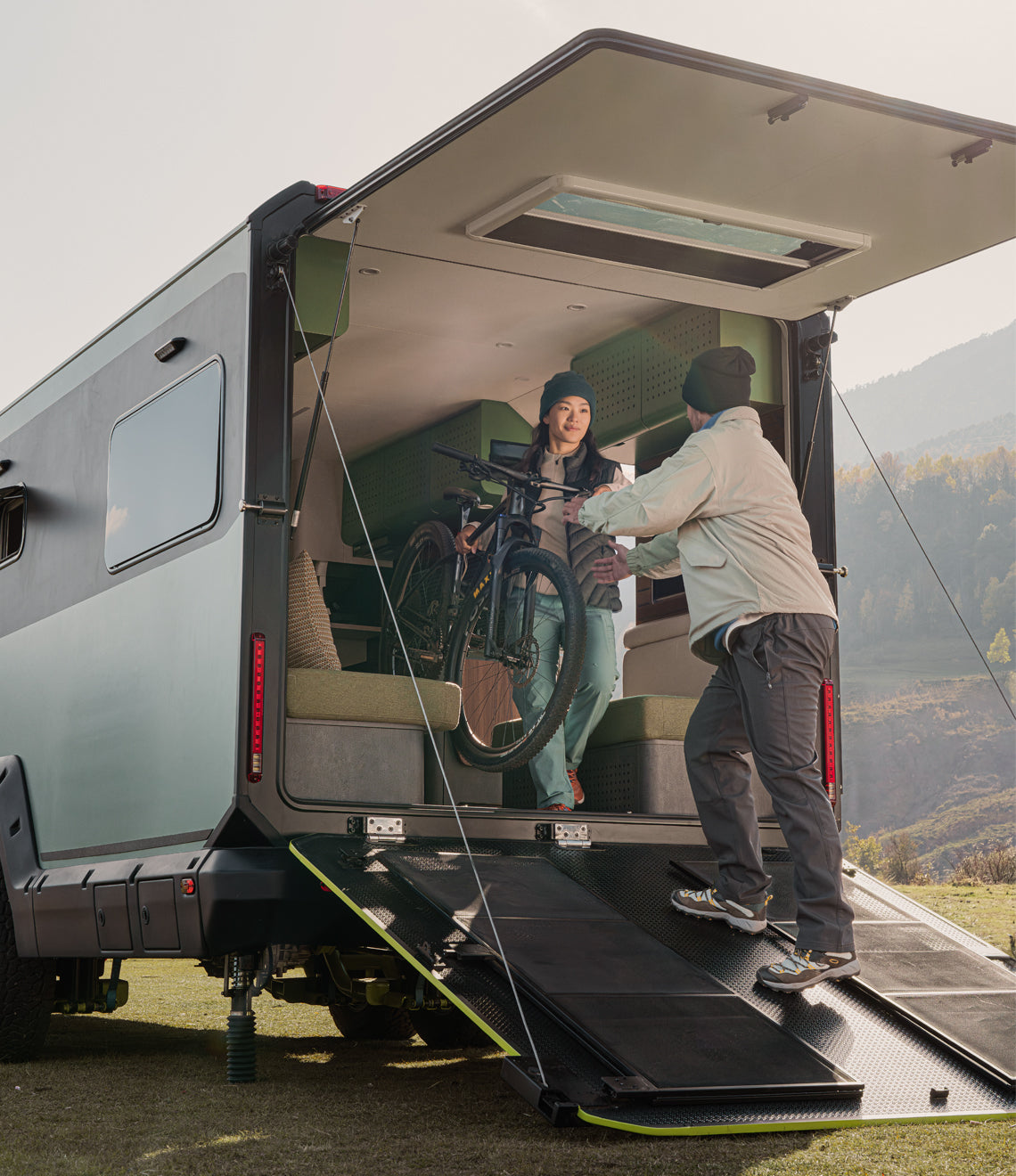
A self powered trailer changes that math. The Evotrex-PG5, a travel trailer with onboard power generation that you can reserve now by preorder, keeps its batteries charged whether or not the sun cooperates. With the Evotrex-PG5 you are not chasing a sunny gap in the forecast or listening to a generator through the evening, so the damp, green sites you came for stay peaceful.
Frequently asked questions
Is dispersed camping free in Washington? On national forest land, yes, with no fee or permit. DNR land is different: vehicle access needs a Discover Pass, and camping is limited to the agency's own campsites.
How long can you dispersed camp in Washington? Up to 14 consecutive days in one spot on national forest land, with a 28 day annual cap on Gifford Pinchot and Colville. On DNR land the limit is 10 days within any 30 day period unless posted otherwise.
Do you need a permit? Not for standard national forest dispersed camping. For DNR, State Parks, and Fish and Wildlife land you need a Discover Pass for vehicle access, not a camping permit.
Can you have a campfire? Only when the current fire stage allows it. East side forests move into Stage 2 restrictions in high summer, and DNR allows fires only in approved pits in designated campgrounds. Check the exact area and carry a stove as a backup.
Where can you dispersed camp near Seattle? Options on the wet west side are limited. Most reliable dispersed camping is over the crest in the Okanogan Wenatchee National Forest, roughly a two to three hour drive east.
Check before you roll
- Look up the specific forest or DNR unit rules for your exact site.
- Check the current fire stage and any active camping closures.
- Buy a Discover Pass ahead of time if you plan to use DNR land.
- Confirm the access road is open and passable for the size and weight of your rig.
- Fill water, empty tanks, and plan your power before you leave pavement.
- Download offline maps; cell service is unreliable once you are off the highway.