
Dispersed Camping in Virginia: Where to Go and How to Do It Right
Virginia does most of its free camping on one enormous piece of public land: the mountain forests that run the length of the western part of the state. Dispersed camping means camping for free on that public land outside a developed campground, with no hookups, no water, and no services. Unlike western states, Virginia has almost no Bureau of Land Management ground, so the national forest is the main event. This guide covers where it is allowed, the rules that keep you legal, the strongest areas to aim for, and how to come prepared so a night far from any power pedestal is comfortable rather than stressful.

Where dispersed camping is allowed in Virginia
The center of free camping in Virginia is the George Washington and Jefferson National Forests, a combined system that spans more than a million acres across the Blue Ridge and Allegheny mountains. On this national forest land, dispersed camping is free and needs no permit for a standard single party site. You can camp almost anywhere in the forest outside a developed campground, as long as you follow the setback and stay rules below.
What Virginia does not really offer is open BLM camping like you find out west. The state forests, managed by the Virginia Department of Forestry, are a different story: temporary and permanent camping is not allowed on Virginia state forests except by special permit for organized groups such as scout troops. So when someone says dispersed camping in Virginia, they almost always mean the national forest.
The rules every Virginia dispersed camper needs to know
A few rules apply across the national forest, and knowing them keeps you out of trouble.
Stay limit. Dispersed camping in one location is allowed up to 14 days in any 30 day period. Once you hit that limit you have to move on, so plan a longer trip around more than one site.
Stay close to established roads. Keep your campsite within 150 feet of a roadway and drive only on existing roads. Pick a spot that has clearly been used before rather than clearing new ground, since fresh sites do lasting damage to soil and plants.
Keep your distance from water and facilities. Camp at least 100 feet from any stream or other water source. Dispersed camping is not allowed in the vicinity of developed recreation areas such as campgrounds, picnic areas, or trailheads, so give those a wide berth.
Check the fire rules before you strike a match. Campfires are generally allowed in existing fire rings using dead wood found on the ground, but restrictions come and go. There is a standing rule that prohibits fires within a quarter mile of the Appalachian Trail on this forest until rescinded. On top of that, Virginia's statewide 4 PM Burning Law bans open air burning before 4 pm from February 15 through April 30 when a fire is within 300 feet of the woods. Always confirm the current status for your exact area and carry a stove as a backup.
Leave no trace. Dispersed sites have no toilets, no trash service, and no potable water. Store food and trash securely, pack out everything you pack in, and leave the site cleaner than you found it.
Best areas for dispersed camping in Virginia
Mount Rogers National Recreation Area (southwest Virginia). The highlands around the state's tallest peak give you high open balds, spruce forest, and a network of forest roads. It is a classic destination and can get busy, so arrive early on summer weekends and expect a first come first served scramble in the popular corridors.
North River Ranger District (near Harrisonburg and Staunton). Central to the George Washington side of the forest, this district has miles of gravel forest roads with primitive pullouts and no facilities. It is a strong pick for quiet weeknight camping within reach of the Shenandoah Valley.
James River Ranger District (near Covington). Ridge and valley country with river access and forest roads that stay open much of the year. Good shoulder season camping when the higher elevations turn cold.
Clinch Ranger District (far southwest Virginia). The most remote corner of the forest, with rugged terrain and low traffic. Expect long gravel approaches and little cell service, so download maps before you leave pavement.
| Area | Land manager | Best season | Hookups | Good to know |
|---|---|---|---|---|
| Mount Rogers NRA | US Forest Service | Late spring to fall | None | Popular, arrive early on weekends |
| North River Ranger District | US Forest Service | Spring through fall | None | Quiet gravel roads near the valley |
| James River Ranger District | US Forest Service | Spring and fall | None | Lower elevation shoulder season option |
| Clinch Ranger District | US Forest Service | Late spring to fall | None | Remote, little cell service |
Powering a mountain camp
Virginia dispersed camping lives up in the George Washington and Jefferson forests, along ridge roads and hollows where the hardwoods close in overhead. Water and waste follow the usual routine. Power is the wildcard, because that same leafy canopy that makes the ridges beautiful keeps a solar setup from ever getting a full day of sun.
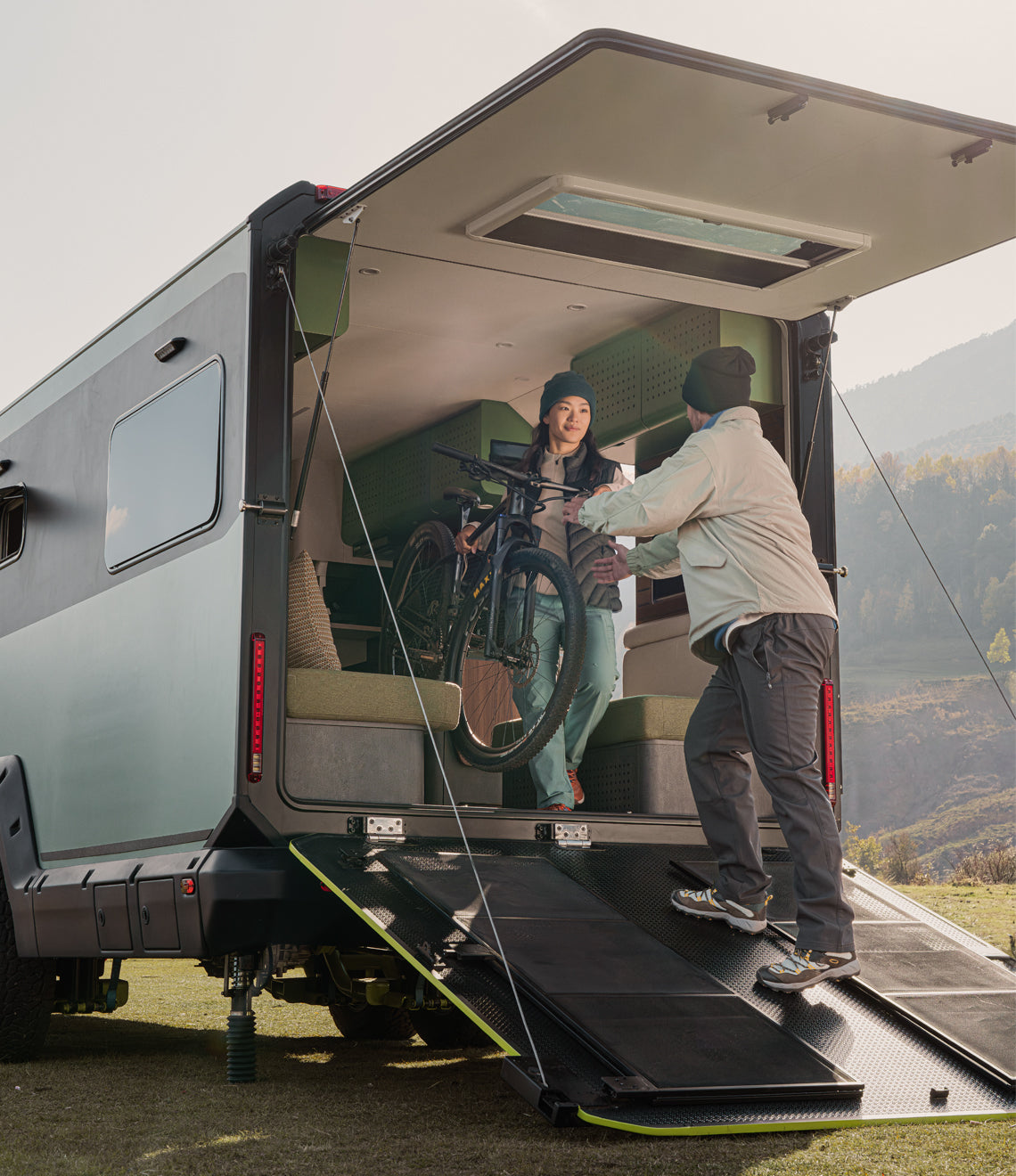
The Evotrex-PG5 is made to fill that gap. This travel trailer generates its own power onboard and is available to preorder now. Because the Evotrex-PG5 charges itself without a hookup or open sky, a shaded mountain site stays fully powered, and the ridgeline quiet is not interrupted by a generator.
Frequently asked questions
Is dispersed camping free in Virginia? Yes. On the George Washington and Jefferson National Forests there is no fee and no permit for standard single party dispersed camping. You are trading services for that freedom, so there are no hookups, water, or trash service.
How long can you dispersed camp in Virginia? Up to 14 days in any 30 day period in one location on the national forest. After that you must move to a new site.
Do you need a permit? Usually not for standard dispersed camping on the national forest. Permits do apply to large groups and to organized camping on state forests, which otherwise do not allow camping.
Can you have a campfire? Only when the current rules allow it. Fires are prohibited within a quarter mile of the Appalachian Trail, and the statewide 4 PM Burning Law limits open burning in spring, so check your exact area and always carry a stove.
Where can you dispersed camp near the Shenandoah Valley? The North River Ranger District of the national forest is the closest large option, with forest roads and primitive sites within easy reach of Harrisonburg and Staunton.
Check before you roll
- Look up the specific ranger district rules for your exact site.
- Check current fire restrictions and any active camping closures.
- Confirm the access road is open and passable for the size and weight of your rig.
- Fill water, empty tanks, and plan your power before you leave pavement.
- Download offline maps; cell service is unreliable once you are off the highway.