
Dispersed Camping in Utah: Where to Go and How to Do It Right
Utah is one of the best states in the country for dispersed camping, from red rock desert near Moab to high forest roads in the central mountains. Dispersed camping means camping for free on public land outside a developed campground, with no hookups, no water, and no services. This guide covers where it is allowed, the rules that keep you legal, the strongest regions to aim for, and how to come prepared so a night far from any power pedestal is comfortable rather than stressful.

Where dispersed camping is allowed in Utah
Most free camping in Utah happens on two kinds of public land: land managed by the Bureau of Land Management, and national forests managed by the US Forest Service. Utah leans heavily on BLM desert, which is why so much of the state's boondocking is open, dry, and wide open under big skies.
On most BLM and national forest land, dispersed camping is free and needs no permit. The catch is that every field office and forest district sets its own rules, so a spot that is wide open in one area may be limited to designated sites in the next. The big change to know about is around Moab and the national parks. Because those corridors see millions of visitors a year, the BLM has shifted many of them to designated dispersed sites only, meaning you must camp in a marked, numbered site rather than anywhere you please.
The rules every Utah dispersed camper needs to know
A few rules apply almost everywhere, and knowing them keeps you out of trouble.
Stay limit. On BLM land, dispersed camping is limited to 14 days within any 28 day period. On national forests the limit is generally 14 days within a 30 day period. Once you hit the limit you have to move on. National forests require you to relocate a set distance; the Manti La Sal, for example, asks you to move camp at least 10 miles, so always confirm the number locally.
Camp on previously used sites. Camp only in previously disturbed sites, and keep motor vehicles within 150 feet of a designated road or trail. Use existing pullouts and fire rings rather than making new ones. Driving off road to reach a view causes lasting damage and is prohibited.
Designated sites only near Moab. In the busy corridors northwest and south of Moab, such as the Labyrinth Rims and Gemini Bridges area, camping is limited to designated sites, wood gathering is banned, and a fire pan with packed out ash is required. Do not assume open desert camping in these zones.
Pack out human waste. In the high traffic Moab area, digging a cathole is no longer acceptable. All solid human waste must be packed out in approved bags, and you dispose of them at equipped stations in town.
Check fire restrictions. Utah fire danger changes fast through the dry season. Always look up the current fire restrictions for your exact field office or forest before you plan a fire, carry a fire pan where required, and keep a stove as a backup.
Best regions for dispersed camping in Utah
Bureau of Land Management land around Moab. Classic red rock desert near Arches and Canyonlands. Prime shoulder season and spring camping. Important: the Labyrinth Rims and Gemini Bridges corridors and other popular roads are now designated sites only, so read the local rules before you commit to a spot.
San Rafael Swell (central Utah). A massive uplift of desert rock, slot canyons, and badlands managed by the BLM Richfield Field Office. Standard dispersed camping with a 14 day limit, camp on previously disturbed ground, no facilities. A quieter alternative to the Moab crowds.
Grand Staircase Escalante National Monument (southern Utah). BLM monument with good primitive sites along dirt roads like Hole in the Rock Road. A free permit is required for overnight stays, available at visitor centers and trailheads.
Manti La Sal National Forest (central and southeast Utah). Cool, high forest camping when the desert bakes. Standard national forest rules apply: 14 day limit, no trash service, no water, and a required move distance once your stay is up.
| Region | Land manager | Best season | Hookups | Good to know |
|---|---|---|---|---|
| Moab area | BLM | Spring and fall | None | Many corridors are designated sites only |
| San Rafael Swell | BLM | Fall through spring | None | Open desert, quieter than Moab |
| Grand Staircase Escalante | BLM | Spring and fall | None | Free permit required for overnight stays |
| Manti La Sal NF | US Forest Service | Summer to fall | None | High elevation, cooler summer option |
Desert power and staying cool
Utah dispersed camping is mostly desert, and desert means heat and very little shade. The sun that bakes your rig at midday is also the thing a solar setup depends on, which makes for a hard tradeoff when what you really want at 3 in the afternoon is the fan or the air running. Water and waste are simple here. Cooling and power are not.
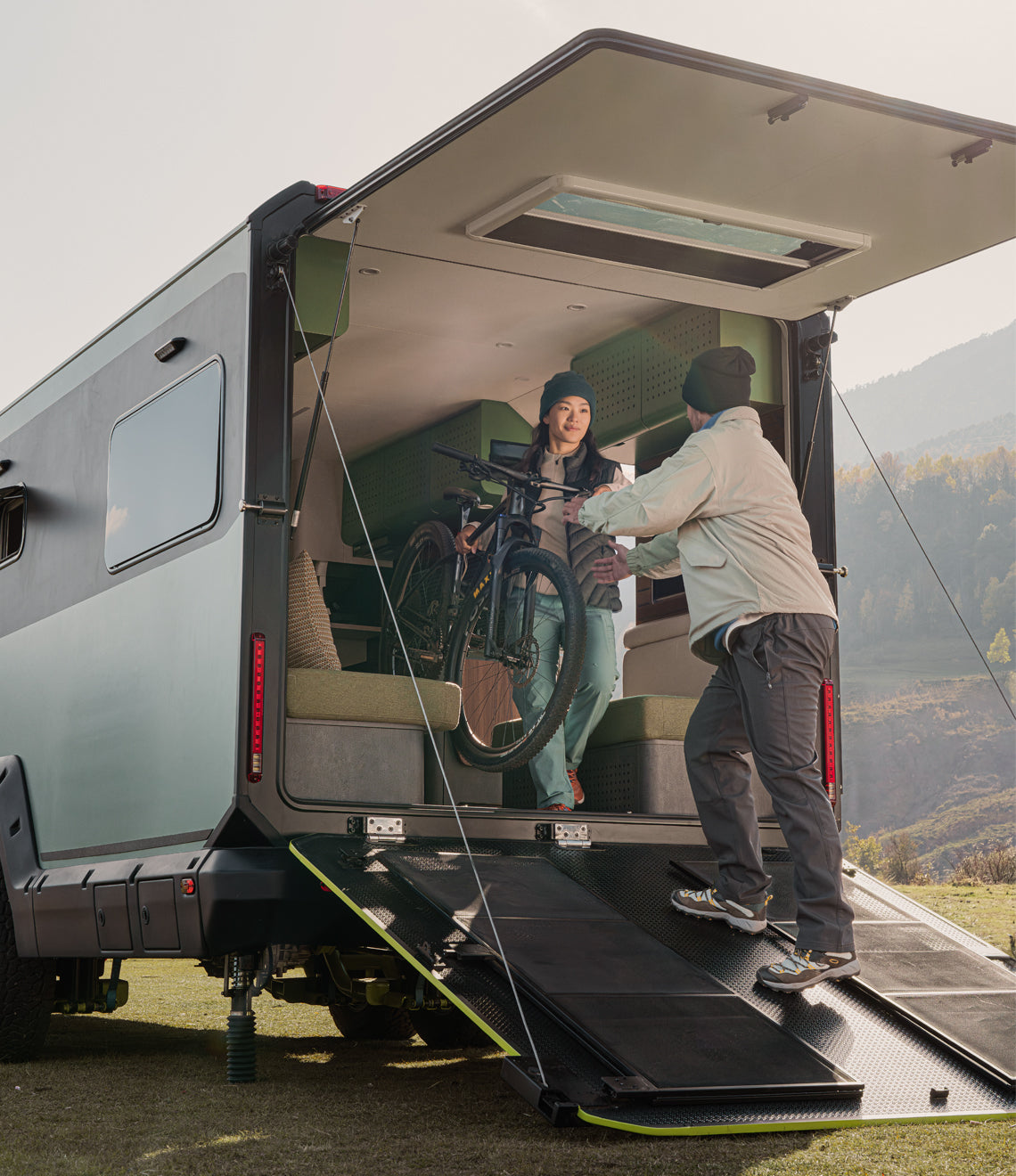
The Evotrex-PG5 is designed to carry that load. This travel trailer makes and stores its own power onboard and is available to preorder now. Because the Evotrex-PG5 generates its own electricity, you can run what you need to stay comfortable on slickrock without a generator going all afternoon or a battery bank that fades before sunset.
Frequently asked questions
Is dispersed camping free in Utah? Yes. On most BLM and national forest land there is no fee for standard dispersed camping. You are trading services for that freedom, so there are no hookups, water, or trash service.
How long can you dispersed camp in Utah? Up to 14 days within any 28 day period on BLM land, and generally 14 days within a 30 day period on national forests. After that you must move on, and forests set a required move distance.
Do you need a permit? Usually not for standard dispersed camping. A free permit is required for overnight stays in Grand Staircase Escalante, and the busy Moab corridors limit you to designated sites.
Can you camp anywhere near Moab? No. Many popular corridors near Moab and the national parks are now designated sites only, so you must use a marked site, follow fire pan rules, and pack out human waste.
Can you have a campfire? Only when current fire restrictions allow it. Utah moves in and out of restrictions through the dry season, so check your exact area, carry a fire pan where required, and keep a stove as a backup.
Check before you roll
- Look up the specific field office or forest rules for your exact site.
- Confirm whether your area is designated sites only, especially near Moab.
- Check the current fire restrictions and any active camping closures.
- Confirm the access road is open and passable for the size and weight of your rig.
- Fill water, empty tanks, pack waste bags, and plan your power before you leave pavement.
- Download offline maps; cell service is unreliable once you are off the highway.