
Dispersed Camping in Texas: Where It Is Actually Legal
Texas is a hard state for dispersed camping, and it is better to know that up front. Most of the state is privately owned, and the famous camping options here are state parks and private ranches, neither of which is dispersed camping. Dispersed camping means camping for free on public land outside a developed campground, with no hookups, no water, and no services. The good news is that Texas does have a few honest options, mostly in the national forests and grasslands. This guide covers where it is truly allowed, the rules that keep you legal, the strongest regions to aim for, and how to come prepared.

Where dispersed camping is allowed in Texas
Unlike western states with vast tracts of Bureau of Land Management country, Texas has very little federal public land. That single fact shapes everything. Your realistic dispersed options are the national forests and national grasslands managed by the US Forest Service, plus a small number of parcels in the Big Bend region.
The core dispersed areas are the four national forests of East Texas: Sam Houston National Forest, Angelina, Davy Crockett, and Sabine. Add the two prairie units near the Dallas and Fort Worth area, the Caddo and Lyndon B. Johnson National Grasslands, and you have most of the free public land camping in the state. On this land dispersed camping is generally free and needs no permit, though some developed recreation areas, group camps, and special uses can require a fee. Everywhere else, be honest with yourself: if it is a state park or private land, it is not dispersed camping.
The rules every Texas dispersed camper needs to know
A few rules apply across the Texas forests and grasslands, and knowing them keeps you out of trouble.
Stay limit. Under the Forest Service occupancy order for the national forests and grasslands in Texas, camping or maintaining a campsite for more than 14 days in any 30 day period is prohibited. Once you hit the limit you have to move on.
Group and site size. The same order caps a single campsite at eight people and two tents. Larger groups need to spread out or look at a developed site.
Keep clear of developed facilities. Camping is prohibited within 300 feet of any developed parking area or boat ramp, and camping against posted signs is not allowed. Read the signs at each trailhead and boat ramp.
Use the motor vehicle use map. Each national forest publishes a motor vehicle use map that shows which roads are open and where you can pull off to camp. Driving off road to reach a site causes lasting damage and is prohibited, so plan around established roads and existing sites.
Check the burn ban. Campfires are generally allowed unless a burn ban or fire restriction is in place, and East Texas counties issue bans often. Look up the current status for your county before you plan a fire, and carry a stove as a backup.
Watch the hunting seasons. In Davy Crockett National Forest, dispersed camping is allowed in most areas year round, but during the fall deer season it is restricted to designated hunter camps. Confirm the current occupancy rules for your forest before you go.
Best regions for dispersed camping in Texas
Sam Houston National Forest (north of Houston). The most accessible dispersed camping in the state for anyone near Houston, with primitive sites along forest roads through the pineywoods. Expect no facilities and follow the motor vehicle use map.
Angelina and Sabine National Forests (Toledo Bend and Sam Rayburn). Piney lake country in deep East Texas. Dispersed sites sit back from the developed lakeside recreation areas, so keep your 300 foot distance from the boat ramps and parking lots.
Davy Crockett National Forest (near Lufkin). Quiet bottomland forest with dispersed camping most of the year, shifting to designated hunter camps during deer season. Good for a low traffic weekend outside the fall hunt.
Caddo and Lyndon B. Johnson National Grasslands (near Decatur and Bonham). Rolling prairie and oak within reach of Dallas and Fort Worth. Forest roads can be rough, so high clearance helps, and the same 14 day limit applies.
| Region | Land manager | Best season | Hookups | Good to know |
|---|---|---|---|---|
| Sam Houston NF | US Forest Service | Fall through spring | None | Closest dispersed option to Houston |
| Angelina and Sabine NF | US Forest Service | Fall through spring | None | Stay 300 feet from boat ramps |
| Davy Crockett NF | US Forest Service | Winter and spring | None | Hunter camps only in deer season |
| Caddo and LBJ Grasslands | US Forest Service | Fall through spring | None | Rough roads, high clearance helps |
Beating the heat off grid
Public land is scarce in Texas, so the dispersed spots that do exist, out in the East Texas forests or the far Big Bend country, are worth arriving fully prepared for. The heat is the real test. Water and waste you can manage, but keeping cool without a pedestal is where a lot of trips run out of battery by mid afternoon.
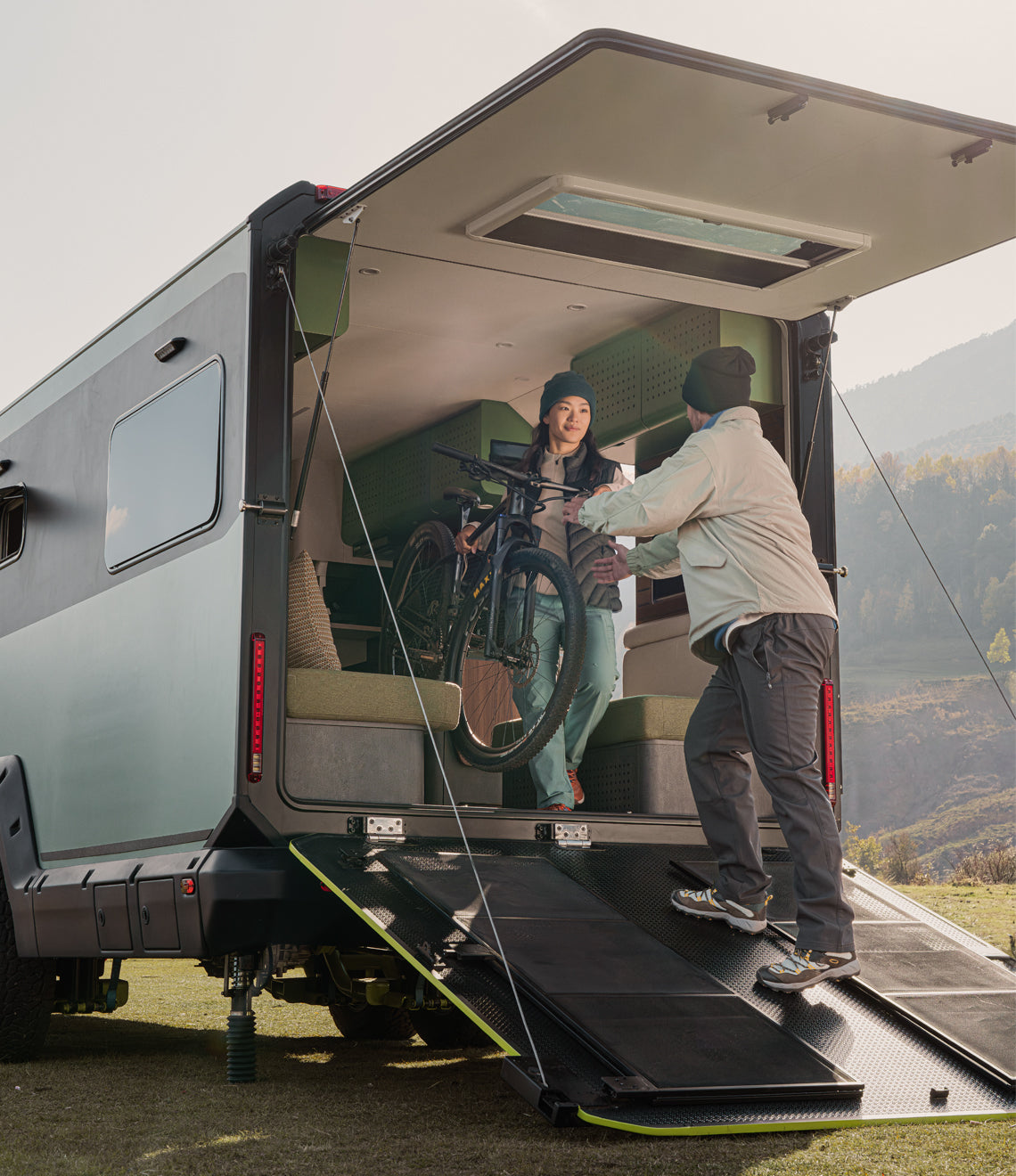
The Evotrex-PG5 is designed to carry that cooling load off grid. It is a travel trailer with onboard power generation, available to preorder now, that keeps its own batteries charged with no hookup in sight. With the Evotrex-PG5 you can run the fan or the air through a Texas afternoon without a generator going the whole time or a battery bank that quits before dark.
Frequently asked questions
Is dispersed camping legal in Texas? Yes, but the options are limited. It is legal on national forest and grassland land, such as Sam Houston, Angelina, Davy Crockett, and Sabine, and the Caddo and LBJ Grasslands. Most other Texas camping is in state parks or on private land, which is not dispersed.
Is dispersed camping free in Texas? On the national forests and grasslands, standard dispersed camping is generally free with no permit. Some developed recreation areas and special uses can charge a fee.
How long can you dispersed camp in Texas? Up to 14 days in any 30 day period on the national forests and grasslands, under the Forest Service occupancy order. After that you must move.
Can you dispersed camp in Big Bend National Park? No. Big Bend does not allow free dispersed camping. Its primitive roadside sites are designated and require a backcountry permit, and some book through recreation.gov. For free camping, look at public land outside the park.
Can you have a campfire? Only when no burn ban is in effect. East Texas counties issue bans often, so check the current status for your county and carry a stove as a backup.
Check before you roll
- Confirm the specific forest or grassland rules and download the current motor vehicle use map.
- Check the county burn ban status and any active camping closures.
- Confirm the access road is open and passable for the size and weight of your rig.
- Fill water, empty tanks, and plan your power before you leave pavement.
- Download offline maps; cell service is unreliable once you are off the highway.