
Dispersed Camping in Tennessee: Where to Go and How to Do It Right
Tennessee packs its best free camping into the mountains along the eastern edge of the state, where the Cherokee National Forest runs for miles down the spine of the Appalachians. Dispersed camping means camping for free on public land outside a developed campground, with no hookups, no water, and no services. This guide covers where it is allowed, the rules that keep you legal, the strongest areas to aim for, and how to come prepared so a night far from any power pedestal is comfortable rather than stressful.

Where dispersed camping is allowed in Tennessee
Almost all of Tennessee's dispersed camping happens on one piece of land: the Cherokee National Forest, managed by the US Forest Service across the eastern counties. Unlike many western states, Tennessee has no Bureau of Land Management land, so the national forest is the main game. On most of it, dispersed camping is free and needs no permit, as long as the spot is not posted closed.
One big point of confusion is worth clearing up. Great Smoky Mountains National Park, which draws more visitors than any park in the country, does not allow dispersed camping at all. Overnight backcountry stays there are limited to designated sites and shelters, and every one of them requires a reservation and a permit. So while the Smokies sit right next to the free forest land, the two operate under completely different rules.
Beyond the national forest, some Tennessee state forests and wildlife management areas allow limited camping, but each sets its own terms through the state, and many restrict you to designated seasons or hunt related use. Always confirm those locally before you count on them.
The rules every Tennessee dispersed camper needs to know
A few rules apply across the Cherokee National Forest, and knowing them keeps you out of trouble.
Stay limit. Camping in any one location is limited to 14 consecutive days. On the 14th day you must move to another location at least 10 miles away in any direction, and you cannot return to the first spot for a minimum of 7 days. That move distance is longer than what many forests require, so plan your route with it in mind.
Do not leave a site unattended. In dispersed areas you may not leave your campsite unattended for more than 24 hours. An empty camp holding a spot is treated as abandoned property.
Keep your distance from water and facilities. Set up at least 100 feet from streams, lakes, trails, trailhead parking, and developed recreation areas. Use existing pullouts and fire rings rather than carving out new ground.
Check the fire situation. In dispersed areas you may build small campfires without a permit when conditions allow, and you can gather dead and down wood for them. You may not cut live or standing dead trees. Fire danger shifts through the year, so look up the current status for the district before you strike a match, and always carry a stove as a backup.
Leave no trace. Dispersed sites have no toilets, no trash service, and no potable water. Store food and trash securely, pack out everything you pack in, and leave the site cleaner than you found it.
Best areas for dispersed camping in Tennessee
Ocoee and Hiwassee area (southern Cherokee). The southern end of the forest, near the whitewater of the Ocoee River, mixes forest roads and primitive sites within reach of Chattanooga and Cleveland. Read any posted signs, since some corridors here see heavy weekend use.
Tellico Ranger District (southern Cherokee). Home to some of the state's best known primitive camping, including the Citico Creek dispersed sites strung along Forest Road 35. Expect gravel roads, tight turns, and no facilities, so size up access before you commit a larger rig.
Watauga and Unaka districts (northern Cherokee). The northern half of the forest, near Johnson City and the Roan Highlands, offers high ridges and cooler summer nights. Standard dispersed sites here need no permit, but the forest roads climb, so check the grade for your trailer.
Great Smoky Mountains National Park (permit only). Included here so you do not plan around it by mistake. There is no dispersed camping in the park. Every overnight stay uses a designated backcountry site or shelter with a paid permit, so treat it as the exception, not an option.
| Area | Land manager | Best season | Hookups | Good to know |
|---|---|---|---|---|
| Ocoee and Hiwassee | US Forest Service | Spring to fall | None | Busy corridors near the river on weekends |
| Tellico Ranger District | US Forest Service | Late spring to fall | None | Citico Creek sites on gravel Forest Road 35 |
| Watauga and Unaka | US Forest Service | Late spring to fall | None | Higher elevation, cooler nights, climbing roads |
| Great Smoky Mountains NP | National Park Service | Year round | None | No dispersed camping, permit and reservation only |
The self contained way to camp Cherokee
The dispersed sites on the Cherokee National Forest sit along creek bottoms and ridge roads where the forest is dense and humid. You can bring your water and pack your waste out easily enough. The humidity and the heavy canopy are what make power tricky, keeping a solar rig from ever quite catching up on a muggy afternoon.
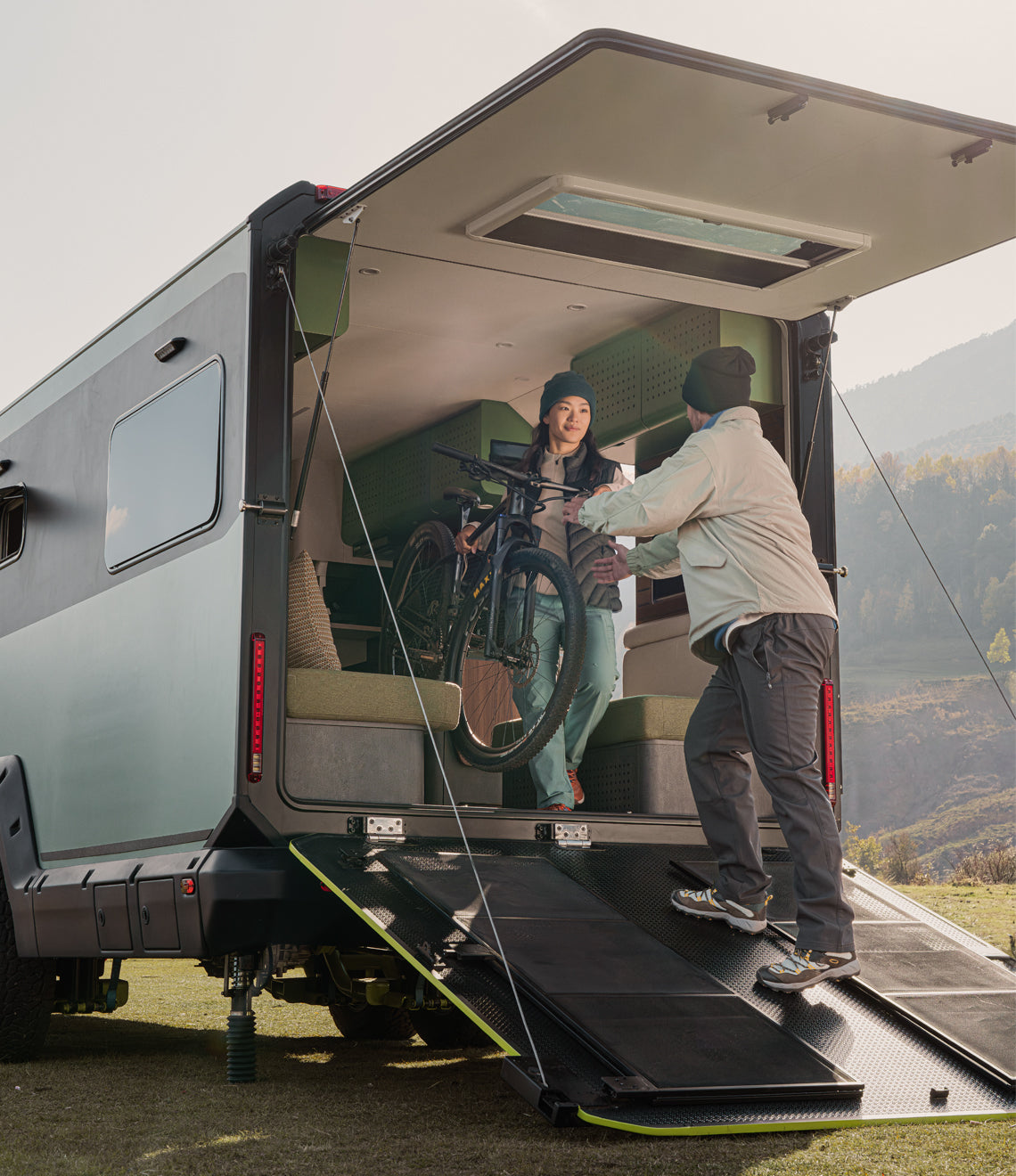
That is where the Evotrex-PG5 comes in. This travel trailer makes and stores power onboard and is open for preorder now, so it does not wait on a sunny break to keep its batteries up. With the Evotrex-PG5 you can run the fan through a sticky evening on the Ocoee without a generator going, and the creek is the loudest thing around.
Frequently asked questions
Is dispersed camping free in Tennessee? Yes, on most of the Cherokee National Forest there is no fee and no permit for standard dispersed camping. You are trading services for that freedom, so there are no hookups, water, or trash service.
How long can you dispersed camp in Tennessee? Up to 14 consecutive days in one location on the Cherokee National Forest. On the 14th day you must move at least 10 miles away and cannot return to that spot for a minimum of 7 days.
Can you dispersed camp in the Great Smoky Mountains? No. The park does not allow dispersed camping. All backcountry stays use designated sites or shelters, and every one requires a reservation and a paid permit.
Can you have a campfire? In dispersed forest areas you can usually build a small campfire without a permit and gather dead and down wood, but fire danger changes through the year, so check the current status for your district first and carry a stove as a backup.
Is there any BLM land in Tennessee? No. Tennessee has no Bureau of Land Management land, so national forest is your main option, along with some state forests and wildlife management areas that set their own rules.
Check before you roll
- Look up the specific ranger district rules for your exact site.
- Check the current fire status and any active camping closures.
- Confirm the access road is open and passable for the size and weight of your rig.
- Fill water, empty tanks, and plan your power before you leave pavement.
- Download offline maps; cell service is unreliable once you are off the highway.