
Dispersed Camping in Oregon: Where to Go and How to Do It Right
Oregon gives you an enormous canvas for free camping, from Cascade forest roads near Bend to the wide open high desert out past Steens Mountain. Dispersed camping means camping for free on public land outside a developed campground, with no hookups, no water, and no services. This guide covers where it is allowed, the rules that keep you legal, the strongest regions to aim for, and how to come prepared so a night far from any power pedestal is comfortable rather than stressful.

Where dispersed camping is allowed in Oregon
Most free camping in Oregon happens on two kinds of public land: national forests managed by the US Forest Service, and land managed by the Bureau of Land Management. Between the Cascade forests and the high desert BLM country in the east, the state has more no hookup public land than most people could explore in a lifetime.
On most national forest and BLM land, dispersed camping is free and needs no permit. The catch is that every forest and field office can set its own rules, so a spot that is wide open in one district may be limited to designated sites in the next. The big exceptions are designated wilderness areas and a handful of high traffic corridors where overuse has forced the agencies to close ground or require permits. In 2025 the BLM even closed 40 acres near Bend because of unsanctioned camping, a reminder that local rules change.
The rules every Oregon dispersed camper needs to know
A few rules apply almost everywhere, and knowing them keeps you out of trouble.
Stay limit. On BLM land the standard is 14 days within any 28 day period, after which you must relocate, often 25 miles or more. National forests set their own version. The Deschutes National Forest, for example, prohibits occupying a single location for more than 14 consecutive days and caps total forest camping at 28 days per calendar year.
Stay on established roads and sites. Motor vehicles must stay on designated roads and use existing pullouts and fire rings rather than making new ones. On the Deschutes, motorized access to dispersed sites is allowed within 300 feet of an open designated road, but never closer than 30 feet to a stream or water body.
Keep your distance from water. Camp at least 200 feet from lakes, rivers, and streams to protect water quality and keep your site legal.
Check the fire stage. Oregon summers run hot and dry, and restrictions tighten fast. As of July 2026 the central Oregon public lands, including the Deschutes and Ochoco National Forests and nearby BLM ground, moved to Stage 2 public use fire restrictions, which ban campfires outright. Propane stoves with an on and off valve are generally still allowed, though BLM river corridors along the Deschutes, Crooked, and John Day close even those. Always look up the current stage for your exact area and carry a stove as a backup.
Leave no trace. Dispersed sites have no toilets, no trash service, and no potable water. Store food and trash securely, pack out everything you pack in, and leave the site cleaner than you found it.
Best regions for dispersed camping in Oregon
Deschutes National Forest (central Oregon). The classic Bend area launch point, with forest roads climbing from ponderosa flats toward the Cascade Lakes. Expect primitive first come first served sites with no facilities, and expect summer fire restrictions most years.
Willamette and Mt Hood National Forests (Cascades). Green, wet, and forested, these forests give you shaded creekside pullouts on the west side of the range. Snow lingers late at elevation, so the reliable window is summer into early fall.
Steens Mountain and the Alvord Desert (southeast high desert). Managed by the BLM Burns District, this is remote fault block and playa country with a standard 14 day stay limit and no permit for basic dispersed camping. Roads turn from pavement to gravel to rough dirt, so it rewards a capable rig.
Ochoco National Forest and Prineville BLM (central Oregon). Quieter juniper and pine country east of the Cascades, good when the Bend corridors are crowded. Local occupancy and fire rules apply, so confirm them before you settle in.
| Region | Land manager | Best season | Hookups | Good to know |
|---|---|---|---|---|
| Deschutes NF | US Forest Service | Summer to early fall | None | 14 day single site limit, 28 day forest cap |
| Willamette and Mt Hood NF | US Forest Service | Summer to early fall | None | Snow lingers at elevation |
| Steens and Alvord Desert | BLM | Late spring to fall | None | Remote, rough roads, carry all water |
| Ochoco NF and Prineville BLM | Mixed | Summer to fall | None | Quieter overflow from the Bend corridors |
The power problem, and a cleaner fix
Oregon hands you two very different power situations. On the high desert east of the mountains the sun is generous. Under the wet forests west of the Cascades it is not. And through the height of fire season, when generators are often restricted along with open flame, leaning on a loud gas unit is not even an option in many spots.
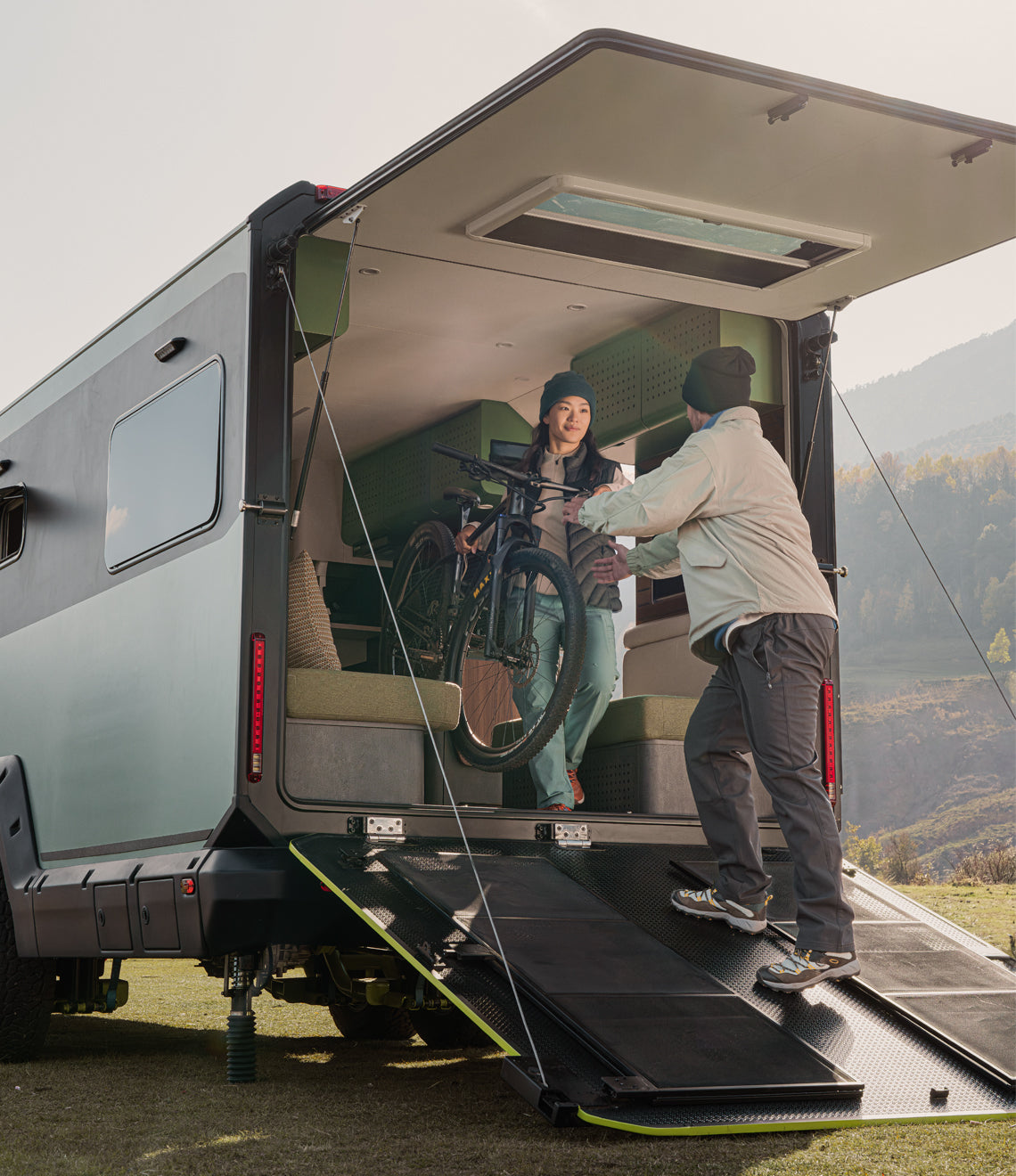
This is where the Evotrex-PG5 earns its place. It is a travel trailer that makes and stores power onboard, now open for preorder, so it does not depend on strong sun or a running generator to keep up. With the Evotrex-PG5 you can settle into a shaded Willamette site or a bright desert flat and keep your power steady either way.
Frequently asked questions
Is dispersed camping free in Oregon? Yes. On most national forest and BLM land there is no fee and no permit for standard dispersed camping. You are trading services for that freedom, so there are no hookups, water, or trash service.
How long can you dispersed camp in Oregon? On BLM land the standard is 14 days within any 28 day period. National forests set their own limits, and the Deschutes caps a single location at 14 consecutive days and total forest camping at 28 days per calendar year.
Do you need a permit? Usually not for standard dispersed camping. Permits and closures do apply in some wilderness areas and high traffic corridors, so check the specific forest or field office first.
Can you have a campfire? Only when the current fire stage allows it. As of July 2026 much of central Oregon sat under Stage 2 restrictions that ban campfires, so check the exact area before you plan a fire and always have a stove as a backup.
Where can you dispersed camp near Bend? The Deschutes and Ochoco National Forests are the closest large options, with forest roads and primitive sites across the central Oregon high country.
Check before you roll
- Look up the specific forest or field office rules for your exact site.
- Check the current fire stage and any active camping closures.
- Confirm the access road is open and passable for the size and weight of your rig.
- Fill water, empty tanks, and plan your power before you leave pavement.
- Download offline maps; cell service is unreliable once you are off the highway.