
Dispersed Camping in Oklahoma: Where to Go and How to Do It Right
Oklahoma is a tougher state for dispersed camping than most, and it is worth being honest about that up front. There is almost no Bureau of Land Management land here, and the vast majority of camping happens in state parks or in developed campgrounds run by the US Army Corps of Engineers. Dispersed camping means camping for free on public land outside a developed campground, with no hookups, no water, and no services. The real opportunities are limited, but they do exist. This guide covers where dispersed camping is actually allowed, the rules that keep you legal, and how to come prepared so a night far from any power pedestal is comfortable rather than stressful.

Where dispersed camping is allowed in Oklahoma
The single best option is the Ouachita National Forest, which stretches across southeast Oklahoma into Arkansas. Primitive camping is allowed almost anywhere in the forest unless a sign says otherwise, which makes it the one place in the state that offers true dispersed camping at scale. Think forested ridges and creek bottoms near Broken Bow, Big Cedar, and the Winding Stair area.
The other federal option is the Black Kettle National Grassland in far western Oklahoma near Cheyenne. This roughly 30,000 acre prairie allows backcountry camping and also has a few small developed areas. It is a very different landscape, open grassland and small no wake lakes rather than forest.
Beyond those two, most public shoreline in the state belongs to the Army Corps of Engineers, and Corps land is overwhelmingly developed campgrounds rather than open dispersed country. Do not assume you can pull off and camp anywhere along a Corps lake.
The rules every Oklahoma dispersed camper needs to know
A few rules matter most, and the details differ from the western states many campers are used to.
Stay limit. In the Ouachita National Forest you may camp in a dispersed area for up to 30 days. After that you must move at least 5 road miles to a new dispersed area, and you cannot return to the same site within the same calendar year. That is more generous than the 14 day rule common on Bureau of Land Management land out west, but the move requirement is stricter.
Be self contained. The Ouachita is explicit that dispersed campers must be self contained. No water, restrooms, or trash cans are provided, so you carry in everything and pack out everything.
Stay close to the road, back off the water. Keep your campsite within 150 feet of a roadway, and camp at least 100 feet from any water source. Use existing sites rather than clearing new ground, and collect only dead wood that is already on the ground.
Check the fire situation. Fire rules in the Ouachita change through the year, and Oklahoma sees county burn bans in dry stretches. Look up the current status for your exact area before you plan a fire, and carry a stove as a backup.
Leave no trace. Dispersed sites have no services of any kind. Store food and trash securely, pack it all out, and leave the site cleaner than you found it.
Best areas for dispersed camping in Oklahoma
Ouachita National Forest (southeast). The one place in Oklahoma with widespread primitive camping. Expect forested, no hookup sites with no facilities, reached on gravel forest roads. This is your first choice for a genuine dispersed trip.
Black Kettle National Grassland (west). Open prairie with backcountry camping plus small first come first served areas at Skipout, Spring Creek, and Black Kettle. None of these have electrical hookups. A good option when you want quiet and big skies.
Army Corps of Engineers lakes. Places like Fort Supply Lake and Oologah Lake offer lakeside camping, but almost all of it is in developed, fee based Tulsa District campgrounds rather than open dispersed land. Treat these as a fallback, not true boondocking.
| Area | Land manager | Camping type | Hookups | Good to know |
|---|---|---|---|---|
| Ouachita National Forest | US Forest Service | Dispersed and primitive | None | 30 day limit, then move 5 road miles |
| Black Kettle National Grassland | US Forest Service | Backcountry and small sites | None | Prairie, no wake lakes, first come first served |
| Corps of Engineers lakes | Army Corps of Engineers | Mostly developed | Some sites | Not open dispersed land, expect fees |
Coming ready for a no hookup night
With so little dispersed camping in Oklahoma, the Ouachita forest roads and the national grassland are the spots to know, and both leave you fully on your own. You carry water in, you carry waste out, and between the heat and the open sky, power is the piece that decides whether a night out is comfortable or cut short.
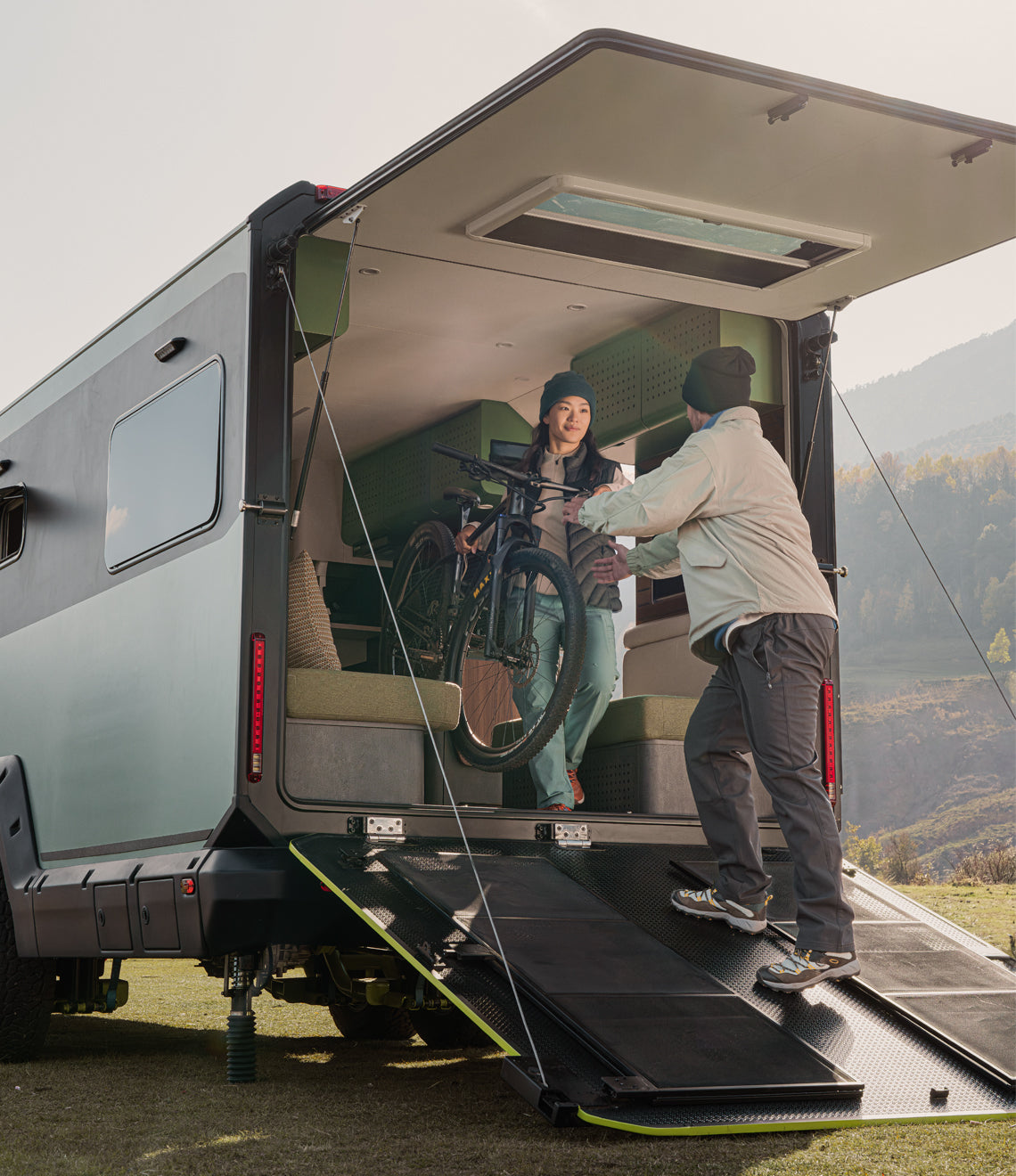
A self powered trailer settles that question. The Evotrex-PG5, a travel trailer that generates and stores power onboard, is open for preorder now and keeps its batteries charged without a pedestal. With the Evotrex-PG5 you can pull into a quiet spot along the ridge and run what you need, no generator required.
Frequently asked questions
Is dispersed camping free in Oklahoma? In the Ouachita National Forest, yes. Primitive dispersed camping there is free and needs no permit for small groups. Corps of Engineers lakeside camping is mostly developed and charges a fee.
How long can you dispersed camp in Oklahoma? In the Ouachita National Forest you can stay up to 30 days, then you must move at least 5 road miles and cannot return to the same site within the same calendar year.
Does Oklahoma have much public land for boondocking? Not really. There is almost no Bureau of Land Management land, so realistic dispersed options are the Ouachita National Forest and, to a lesser degree, the Black Kettle National Grassland.
Can you camp anywhere along Corps of Engineers lakes? No. Most Corps shoreline camping is in developed campgrounds with fees, not open dispersed land, so check the specific lake before you go.
Can you have a campfire? Only when conditions and local rules allow it. Oklahoma sees county burn bans in dry periods, so confirm the current status for your exact area and carry a stove as a backup.
Check before you roll
- Look up the specific ranger district or lake office rules for your exact site.
- Check the current fire status and any active county burn bans.
- Confirm the access road is open and passable for the size and weight of your rig.
- Fill water, empty tanks, and plan your power before you leave pavement.
- Download offline maps; cell service is unreliable once you are off the highway.