
Dispersed Camping in Ohio: Where It Is Legal and How to Do It Right
Ohio is a hard state for dispersed camping, and it is worth being honest about that up front. Dispersed camping means camping for free on public land outside a developed campground, with no hookups, no water, and no services. Ohio has no Bureau of Land Management land and only one national forest, so the open forest road camping you find out West barely exists here. This guide covers the few places where dispersed and primitive camping are genuinely allowed, the rules that keep you legal, and how to come prepared so a night far from any power pedestal is comfortable rather than stressful.

Where dispersed camping is allowed in Ohio
The one real option for open dispersed camping in Ohio is the Wayne National Forest, the only national forest in the state, spread across the hills of southeast Ohio. On much of that forest you can pull off and camp on public land without a reservation, which is as close to classic dispersed camping as Ohio gets.
Everywhere else is more restrictive. Ohio state forests do not offer open dispersed camping. What they offer instead is primitive backpack camping at designated sites along specific backpack trails, which is a different thing. You cannot simply park and camp anywhere on state forest land. And Ohio state parks require you to use developed or designated primitive campgrounds. So the map of truly free, choose your own spot camping in Ohio is small, and it centers on the Wayne.
One naming note worth flagging: the Forest Service has proposed renaming the Wayne National Forest to the Buckeye National Forest. Confirm the current official name on the Forest Service site before you publish or print anything, because the change may have taken effect.
The rules every Ohio dispersed camper needs to know
A few rules apply on the Wayne, and knowing them keeps you out of trouble.
Stay limit. Dispersed camping on the Wayne National Forest is limited to 14 days within any 30 day period at any one site. Once you hit the limit you have to move on.
Keep your distance from water, roads, and trails. Camp at least 200 feet from water sources, roads, and trails. Use existing clearings and fire rings rather than making new ones so the land recovers.
Fires and firewood. Small open fires are permitted except during periods of high fire danger. Do not bring in firewood unless it is commercially packaged with the USDA inspection label. You can collect small amounts of down and dead wood at your site. Always carry a stove as a backup in case fires are restricted.
No fee, no permit. Standard dispersed camping on the Wayne is free and needs no permit. Some developed recreation areas charge a day use or camping fee, so those are a separate case.
Leave no trace. Dispersed sites have no toilets, no trash service, and no potable water. Store food and trash securely, pack out everything you pack in, and leave the site cleaner than you found it.
Best areas for dispersed and primitive camping in Ohio
Wayne National Forest (southeast Ohio). The only place in the state for genuine dispersed camping. Expect primitive sites with no facilities across the ridges and hollows of Appalachian Ohio. Rules can vary by unit, so confirm the local district rules before you settle in.
Zaleski State Forest backpack trail (Vinton County). A backpack loop of roughly 29 miles with designated primitive campsites. Camping is only at those sites, not anywhere along the trail. A self issued permit is available at the trailhead and there is no fee to camp. Sites have a latrine and water, with a 10 person limit per site.
Shawnee State Forest backpack trail (Scioto County). A long backpack loop through the Appalachian foothills of far southern Ohio with a handful of free designated primitive campsites along the way. As with Zaleski, you camp at the marked sites, not wherever you like.
| Area | Land manager | Camping type | Hookups | Good to know |
|---|---|---|---|---|
| Wayne National Forest | US Forest Service | Open dispersed | None | Only true dispersed option in Ohio |
| Zaleski State Forest | Ohio DNR Forestry | Designated primitive only | None | Free self issued permit at trailhead |
| Shawnee State Forest | Ohio DNR Forestry | Designated primitive only | None | Free sites along a backpack loop |
Making a no hookup site work
Ohio does not give you much room for true dispersed camping, so when you find a legal, primitive spot on the Wayne National Forest, you make it count. That means arriving fully self contained: water in the tank, a plan to pack waste out, and your own power, since these wooded hollows see more shade than sky.
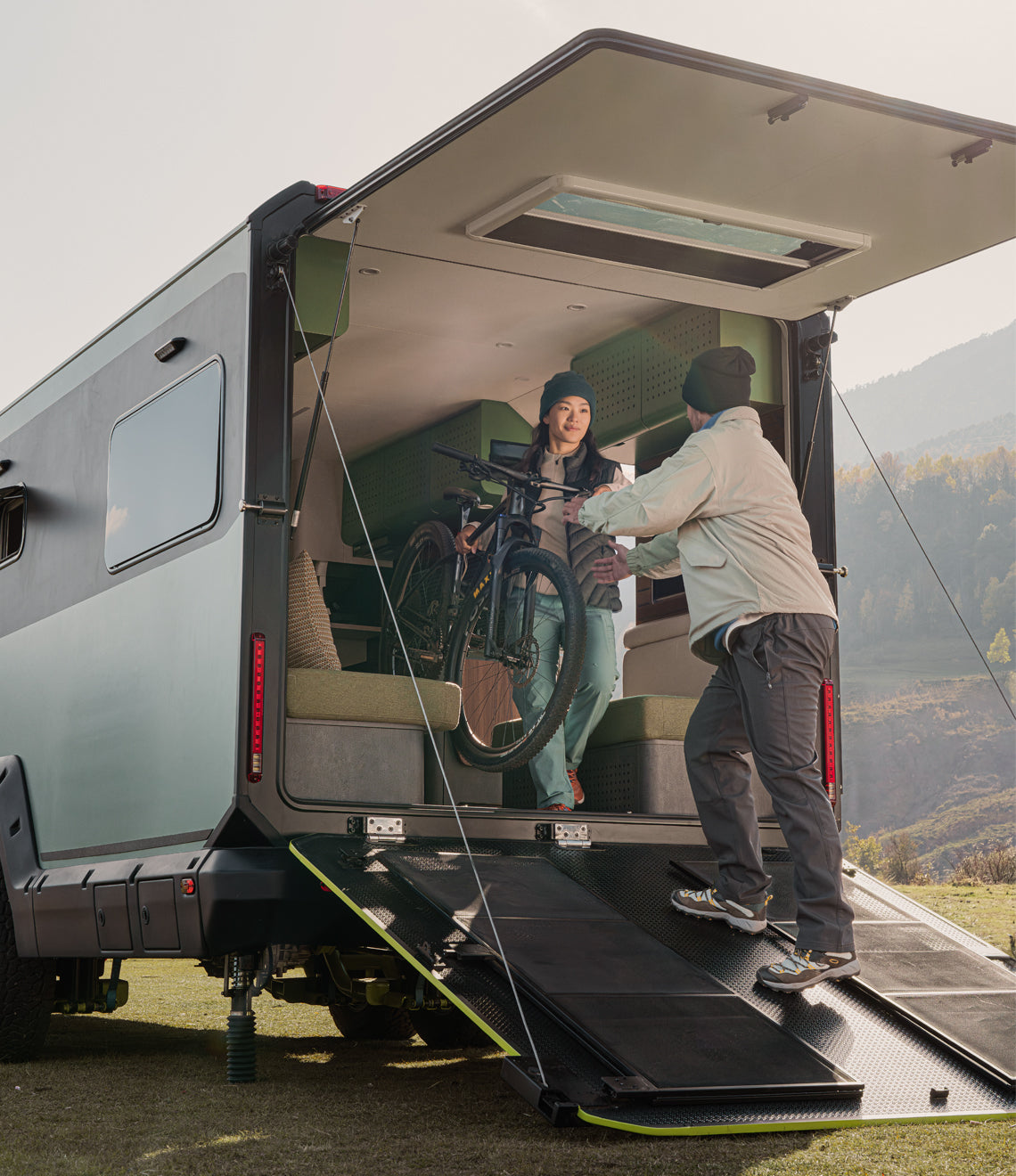
The Evotrex-PG5 is built for exactly this kind of unplugged night. This travel trailer generates its own power onboard and is open for preorder now. Because the Evotrex-PG5 charges itself without a hookup, a quiet forest site is not a place where you count amp hours, and there is no generator noise to spoil what you came for.
Frequently asked questions
Is dispersed camping legal in Ohio? Yes, but only in limited places. The Wayne National Forest allows open dispersed camping on much of its land. Ohio state forests and parks do not; they use designated sites only.
How long can you dispersed camp in Ohio? On the Wayne National Forest, up to 14 days within any 30 day period at one site. After that you must move on.
Do you need a permit? Not for standard dispersed camping on the Wayne. Some state forest backpack trails, such as Zaleski, ask for a free self issued permit at the trailhead.
Is there any BLM land in Ohio? No. Ohio has no Bureau of Land Management land, which is one reason free camping options here are so limited compared with Western states.
Can you have a campfire? On the Wayne, small open fires are allowed except during high fire danger. Check the current fire status for your area and carry a stove as a backup.
Check before you roll
- Confirm the current official forest name and the specific district rules for your exact site.
- Check the current fire status and any active camping closures.
- Confirm the access road is open and passable for the size and weight of your rig.
- Fill water, empty tanks, and plan your power before you leave pavement.
- Download offline maps; cell service is unreliable once you are off the highway.