
Dispersed Camping in New Mexico: Where to Go and How to Do It Right
New Mexico rewards campers who want space, from the ponderosa high country of the Gila to the sagebrush river canyons north of Taos. Dispersed camping means camping for free on public land outside a developed campground, with no hookups, no water, and no services. This guide covers where it is allowed, the rules that keep you legal, the strongest regions to aim for, and how to come prepared so a night far from any power pedestal is comfortable rather than stressful.

Where dispersed camping is allowed in New Mexico
Most free camping in New Mexico happens on two kinds of public land: national forests managed by the US Forest Service, and land managed by the Bureau of Land Management. The state has five national forests, Santa Fe, Carson, Gila, Cibola, and Lincoln, plus large blocks of BLM land across the north and the southern deserts.
One important caveat sets New Mexico apart. State trust land is not open dispersed camping. The New Mexico State Land Office requires a paid recreational access permit for public use, and that permit covers day use activities like hiking and sightseeing, not recreational camping. Treat state trust land as off limits for a free overnight unless you are a licensed hunter camping under the specific agreement that allows it.
The rules every New Mexico dispersed camper needs to know
A few rules apply almost everywhere, and knowing them keeps you out of trouble.
Stay limit. On BLM land in New Mexico, dispersed camping is limited to 14 days within any 28 consecutive day period, and once you hit the limit you must relocate at least 25 miles away. National forests use their own version; the Gila, for example, limits camping to 14 days within any 30 day period. Confirm the exact figure for the forest or field office you are visiting.
Stay on established roads and sites. Use existing pullouts, spurs, and fire rings rather than making new ones. Driving off road to reach a view causes lasting resource damage and is prohibited under fire restrictions and most local orders.
Keep your distance from water and facilities. Camp well back from streams and trailheads, generally at least 200 feet. On BLM land, camping is prohibited within 900 feet of a developed water source such as a guzzler or watering trough that wildlife and livestock depend on.
Check the fire stage. New Mexico fire danger runs high through the spring and summer. The Santa Fe National Forest moved into Stage II fire restrictions in late June 2026, which ban campfires and stove fires outright, and the Gila National Forest entered Stage 1 restrictions in March 2026. Always look up the current stage for your exact area before you plan a fire, and carry a stove as a backup.
Leave no trace. Dispersed sites have no toilets, no trash service, and no potable water. Store food and trash securely, pack out everything you pack in, and leave the site cleaner than you found it.
Best regions for dispersed camping in New Mexico
Gila National Forest (southwest New Mexico). A vast, quiet forest around Silver City with primitive sites along forest roads and the wild country of the Gila high country. Expect no facilities and a 14 day within 30 day limit. Fire restrictions are common here well into fall.
Rio Grande del Norte and the Taos area (north central New Mexico). BLM land north of Taos offers free dispersed camping on a first come first served basis, with turnoffs along the gorge and open sagebrush mesas. Sites run on standard BLM rules with no reservations or fees. Camp back from the rim and away from trailheads.
Santa Fe National Forest (north central New Mexico). Forest roads in the Sangre de Cristo and Jemez country give you pine and aspen camping within reach of Santa Fe. Watch the fire stage closely here, since this forest tightens restrictions early in dry years.
Carson National Forest (northern New Mexico). High elevation forest around Taos and Chama with cool summer nights and classic mountain dispersed sites. Snow lingers on the higher roads well into late spring, so time your trip for summer and early fall.
| Region | Land manager | Best season | Hookups | Good to know |
|---|---|---|---|---|
| Gila NF | US Forest Service | Fall through spring | None | 14 day within 30 day limit; frequent fire restrictions |
| Rio Grande del Norte and Taos | BLM | Late spring to fall | None | Free and first come first served; camp back from the rim |
| Santa Fe NF | US Forest Service | Summer to fall | None | Fire restrictions tighten early in dry years |
| Carson NF | US Forest Service | Summer to early fall | None | High elevation; snow lingers on upper roads |
Carrying your own everything
Dispersed camping in New Mexico means self reliance by definition. The Gila and the high desert BLM country are dry, open, and far from the nearest tap or outlet. Water goes in your tank, waste comes out with you, and power is entirely your responsibility from the moment you leave pavement.
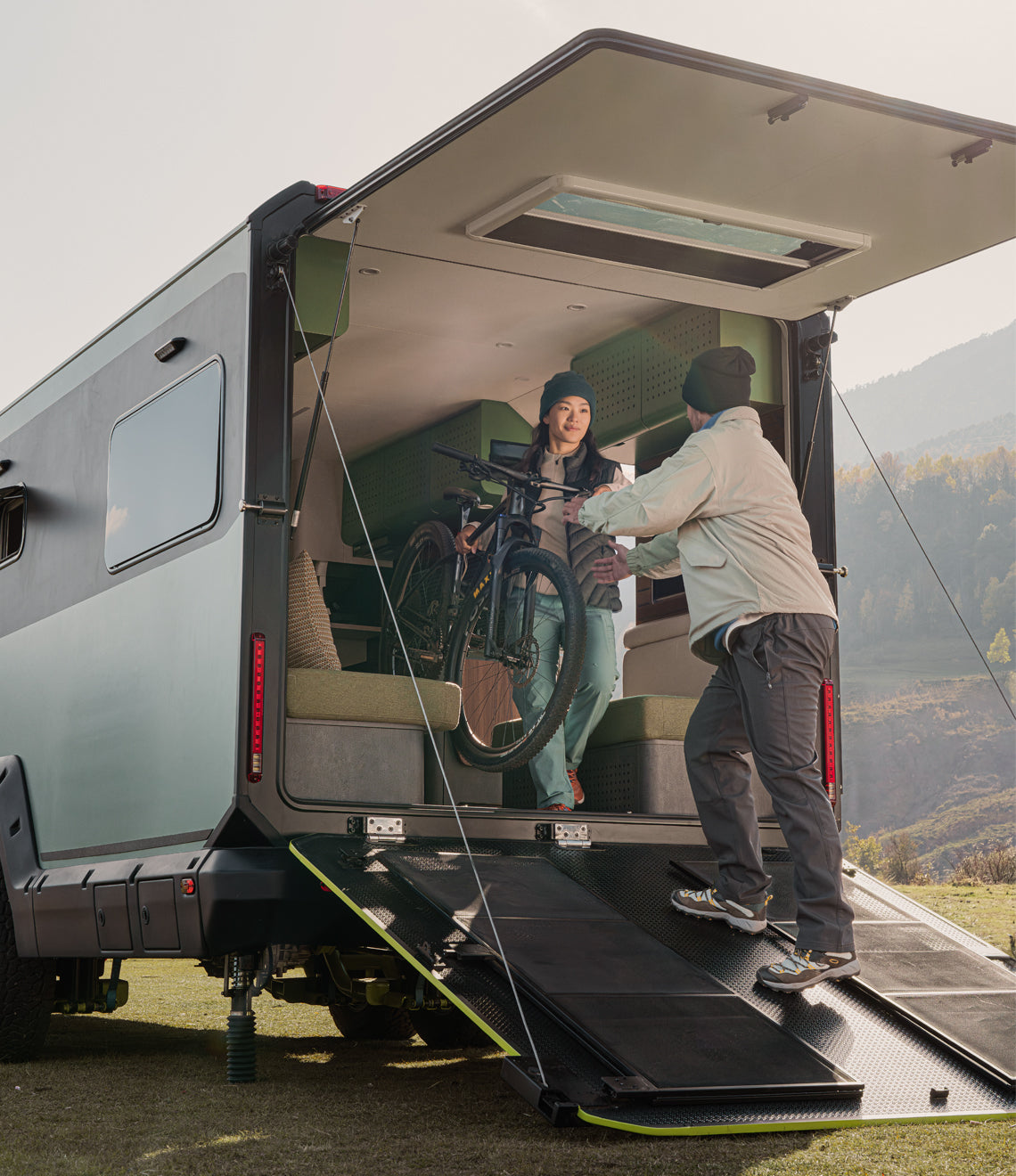
That last part is where the Evotrex-PG5 comes in. It is a travel trailer with onboard power generation, open for preorder now, that keeps its own batteries charged with no pedestal in sight. With the Evotrex-PG5, a remote mesa or a canyon rim stops being a place where you nurse a battery and becomes a place where you simply stay as long as your water lasts.
Frequently asked questions
Is dispersed camping free in New Mexico? On most national forest and BLM land, yes, with no fee and no permit for standard dispersed camping. State trust land is the exception; it requires a paid access permit and does not allow recreational camping.
How long can you dispersed camp in New Mexico? Up to 14 days within a set period. BLM land uses 14 days within 28 days and then asks you to move at least 25 miles. National forests set their own version, such as the Gila at 14 days within 30 days.
Do you need a permit? Not for standard dispersed camping on national forest and BLM land. You do need a recreational access permit for state trust land, and that permit is for day use rather than camping.
Can you have a campfire? Only when the current fire stage allows it. New Mexico spends much of the warm season under Stage 1 or Stage II restrictions, so check the exact area before you plan a fire and always have a stove as a backup.
Where can you dispersed camp near Taos? The BLM land around Rio Grande del Norte north of town is the closest large option, with free first come first served sites along the gorge and nearby mesas.
Check before you roll
- Look up the specific forest or field office rules for your exact site.
- Check the current fire stage and any active camping closures.
- Confirm the access road is open and passable for the size and weight of your rig.
- Fill water, empty tanks, and plan your power before you leave pavement.
- Download offline maps; cell service is unreliable once you are off the highway.