
Dispersed Camping in New Hampshire: Where to Go and How to Do It Right
Dispersed camping means camping for free outside a developed campground, with no hookups, no water, and no services. In New Hampshire that mostly means backcountry camping in the White Mountains, and the state is more regulated than the wide open western public land many campers picture. This guide covers where it is allowed, the rules that keep you legal, the best areas to aim for, and how to come prepared so a night far from any power pedestal is comfortable rather than stressful.

Where dispersed camping is allowed in New Hampshire
Nearly all free dispersed camping in the state happens in the White Mountain National Forest, roughly 800,000 acres managed by the US Forest Service across northern New Hampshire and a sliver of Maine. Unlike much of the West, New Hampshire has little to no Bureau of Land Management land, so the national forest is the main game in town.
Inside the forest, backcountry camping is generally free and needs no permit. The catch is that the White Mountains are heavily used and tightly managed. Instead of pulling off anywhere, you follow setback rules, avoid designated protection zones, and in many popular spots you can only camp at marked sites. Read the current rules for your exact area before you go.
The rules every New Hampshire dispersed camper needs to know
A few rules apply across the forest, and knowing them keeps you out of trouble.
Camp away from trails and water. The standard backcountry camping rules ask you to camp at least 200 feet from any trail or water source. Camping and fires are also prohibited within a quarter mile of roads, trailheads, huts, shelters, and other developed sites in managed areas.
Respect the alpine zone. No camping in the alpine zone, defined as high elevation areas where trees are 8 feet or less, except on 2 or more feet of snow. Camping on frozen bodies of water is also prohibited.
Know the Forest Protection Areas. Forest Protection Areas, or FPAs, are overused or fragile areas where you can camp only at designated sites. Inside an FPA the rules include a 14 day stay limit on all campsites, no wood or charcoal fires except at provided rings, and no drones. Named FPA spots include Greeley Ponds, Diana's Baths, Sabbaday Falls, and the Mount Chocorua Scenic Area.
Follow Wilderness limits. The forest has six designated Wilderness areas, including the Pemigewasset, Sandwich Range, and Great Gulf Wilderness. Group size is capped at 10 people, and camping is not allowed within 200 feet of any trail except at designated sites.
Store food from bears. Black bears are active here. Store food in a hard sided vehicle, a provided locker, or a bear canister, which you can rent free at any ranger station.
Best areas for dispersed camping in New Hampshire
Pemigewasset Ranger District (Campton and Lincoln area). The central and western White Mountains, with the popular Kancamagus Highway corridor and the Pemigewasset Wilderness. Great backcountry access, but many corridors here are FPAs where camping is limited to designated sites.
Saco Ranger District (Conway area). The southeastern forest, covering the eastern Kancamagus, the Sandwich Range Wilderness, and the Mount Chocorua Scenic Area. Expect setback rules and designated sites near the well known waterfalls.
Androscoggin Ranger District (Gorham area). The northern forest, including the Great Gulf and Presidential Range country. This is the most rugged, high elevation terrain, with strict alpine zone and Cutler River Drainage rules around Tuckerman Ravine.
| Area | Land manager | Best season | Hookups | Good to know |
|---|---|---|---|---|
| Pemigewasset Ranger District | US Forest Service | Late spring to fall | None | Many corridors are designated sites only |
| Saco Ranger District | US Forest Service | Late spring to fall | None | FPAs near popular waterfalls |
| Androscoggin Ranger District | US Forest Service | Summer to early fall | None | Strict alpine zone rules up high |
Packing in, powering up
Camping in the White Mountains is a regulated, pack it in kind of trip. Between the Forest Protection Areas, the setback rules, and the tight designated sites, you are already planning carefully, and power belongs on that list. The canopy is heavy, the valleys are shaded, and a battery and solar rig can struggle to keep pace.
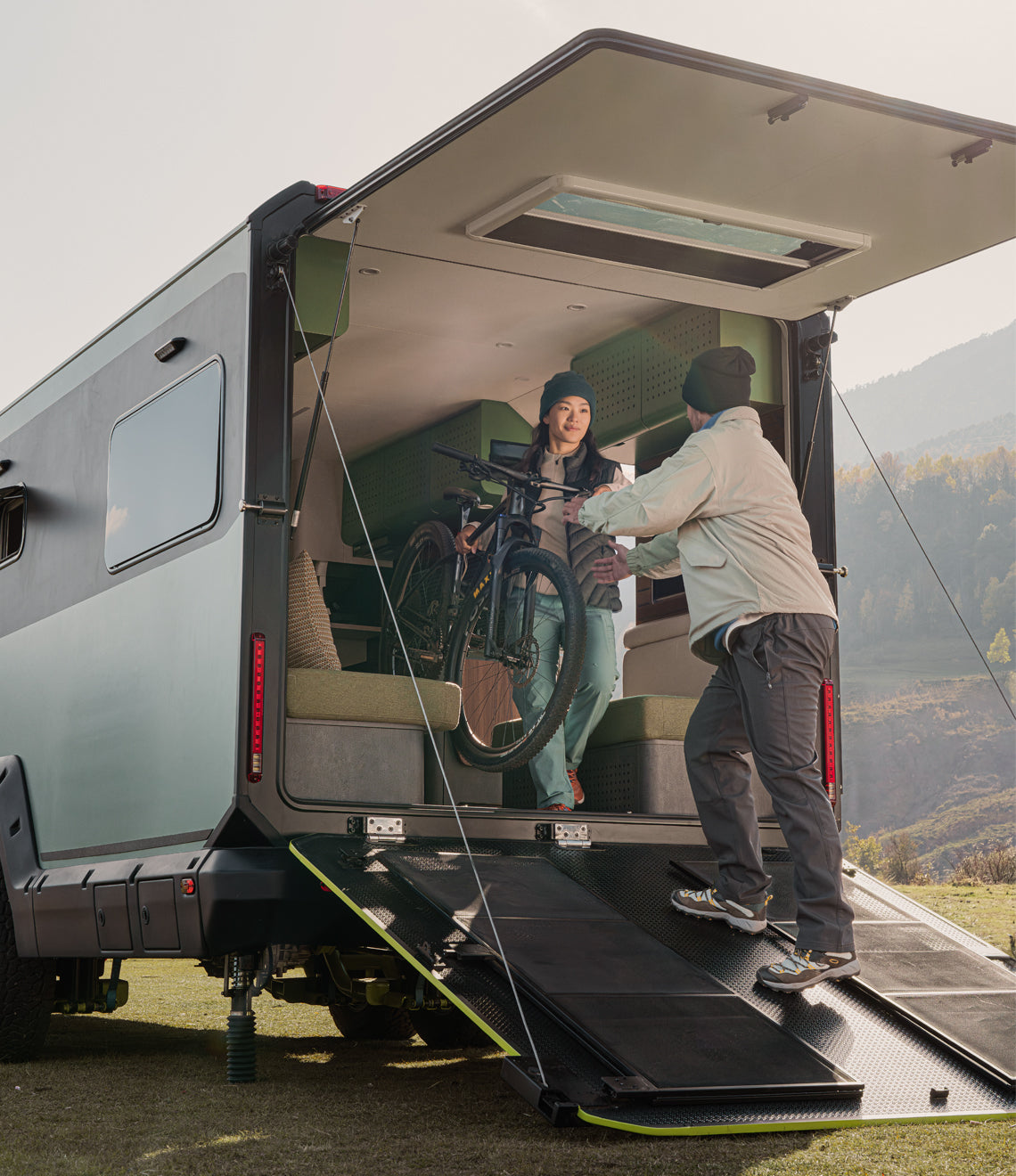
The Evotrex-PG5 takes power off your worry list. It is a travel trailer that generates and stores its own electricity onboard, and you can reserve it now by preorder. Because the Evotrex-PG5 does not rely on a hookup or full sun, you can settle into a legal, out of the way site in the notch and keep everything running without breaking the quiet the mountains are known for.
Frequently asked questions
Is dispersed camping free in New Hampshire? Yes. Backcountry camping in the White Mountain National Forest is free and needs no permit. You may still need a recreation parking pass to leave a vehicle at a trailhead.
How long can you dispersed camp in New Hampshire? Campsites within Forest Protection Areas carry a 14 day stay limit. Confirm the limit for your exact area, since rules vary by location.
Do you need a permit? Not for standard backcountry camping. Some partner sites, run by groups like the Appalachian Mountain Club, do charge fees.
Can you have a campfire? Not everywhere. Fires are banned in the alpine zone, in Forest Protection Areas except at provided rings, and in several Wilderness and scenic areas. Carry a stove as a backup.
Where can you camp near the Kancamagus Highway? Much of that corridor is a Forest Protection Area, so plan to use designated sites rather than pulling off the road.
Check before you roll
- Look up the specific ranger district and FPA rules for your exact site.
- Confirm whether your spot allows dispersed camping or only designated sites.
- Check current fire restrictions and any active camping closures.
- Confirm the access road is open and passable for the size and weight of your rig.
- Fill water, empty tanks, plan your power, and rent a bear canister before you leave pavement.