
Dispersed Camping in Maine: Where to Go and How to Do It Right
Maine is one of the more unusual states for a quiet night far from a campground. There is almost no federal land here, so the free BLM style dispersed camping you find out West barely exists. Instead the remote camping happens on millions of acres of privately owned commercial timberland and on state public reserved lands, much of it reached through a paid, permit based access system. This guide covers where remote camping is allowed, the rules and fees that keep you legal, the strongest areas to aim for, and how to come prepared so a night deep in the woods is comfortable rather than stressful.

Where dispersed camping is allowed in Maine
The picture in Maine looks nothing like Colorado or Utah. There is no Bureau of Land Management land to speak of, and national forest is limited to a small slice of the White Mountain National Forest along the western border near Evans Notch. That leaves three practical options.
The first is the vast working forest of the north, most of it inside the North Maine Woods management area. This is privately owned commercial timberland, not public land, and you enter through staffed checkpoints and pay to use it. The second is the network of state owned Maine Public Reserved Lands, managed by the Bureau of Parks and Lands, which offer authorized primitive and remote campsites. The third is the Allagash Wilderness Waterway, a protected corridor with its own fees and registration. Only the small White Mountain National Forest piece offers the classic free, no permit dispersed camping most people picture.
The rules every Maine remote camper needs to know
Because so much of this land is private or state managed, the rules are stricter and more site based than open western dispersed camping.
Permits and fees on the North Maine Woods. Roads are gated, and checkpoints are the only legal entry. You pay a day use fee plus a nightly camping fee at the gate, with separate rates for Maine residents and non residents. As of the 2026 season day use runs about 13 dollars per person for residents and 18 for non residents, with overnight camping fees added on top per person per night. Bring cash or a check, as some automated checkpoints take nothing else.
Camp only at designated sites. On both the North Maine Woods and the state public reserved lands, you cannot pull off anywhere you like. Camping is allowed only at marked, authorized sites, most with a steel fire ring, a picnic table, and a pit toilet. These are first come first served and cannot be reserved.
Stay limits. North Maine Woods campsites carry a two week maximum per site. On state public reserved lands the limit is 14 days within any 45 day period, and no single site may be occupied for more than 7 consecutive nights without a night by night extension from the Bureau.
Fires. At authorized sites with steel rings you can usually build a fire without a separate permit, but more primitive sites require a Maine Forest Service fire permit. Use dead and downed wood only; cutting live trees is prohibited, and an unattended fire carries a fine.
Leave no trace. These sites have no trash service and no potable water. Pack out everything, store food securely, and leave the site cleaner than you found it.
Best areas for remote camping in Maine
North Maine Woods (far northern Maine). More than three million acres of commercial forest laced with logging roads, ponds, and remote authorized campsites. Access is permit based through gates such as Telos, Six Mile, and St. Francis. Remote, buggy in early summer, and unbeatable for solitude.
Katahdin Iron Works and Jo Mary Multiple Use Forest (near Millinocket and Moosehead). A roughly 175,000 acre block between Moosehead Lake and Baxter State Park, home to Gulf Hagas and the White Cap Range. Every visitor stops at the gatehouse to pay a day use fee, plus camping fees for overnight stays.
Maine Public Reserved Lands (statewide). State units such as Nahmakanta and Deboullie offer authorized backcountry and drive to campsites under Bureau of Parks and Lands rules. Rustic, first come first served, and genuinely primitive.
White Mountain National Forest, Evans Notch (western Maine). The one spot for free, no permit dispersed camping in the state, with primitive sites in a heavily wooded corridor. Keep camps and fires at least 200 feet from roads, trails, and water.
| Area | Land manager | Access | Reservations | Good to know |
|---|---|---|---|---|
| North Maine Woods | Private timberland via North Maine Woods | Paid gate permit | No, first come first served | Cash or check at some gates |
| Katahdin Iron Works and Jo Mary | Private timberland via North Maine Woods | Paid gate permit | Some sites reservable | Day use fee for everyone |
| Public Reserved Lands | Maine Bureau of Parks and Lands | Authorized sites | Mostly first come first served | 14 day within 45 day limit |
| White Mountain NF, Evans Notch | US Forest Service | Free, no permit | No | Only free dispersed option |
Self contained behind the gate
Remote camping in Maine often means paying in at a North Maine Woods checkpoint and driving deep onto private timberland where the gates close at night. Once you are in, you are truly on your own. You bring all your water, you pack out everything, and under that heavy northern canopy you cannot count on the sun to keep your batteries alive.
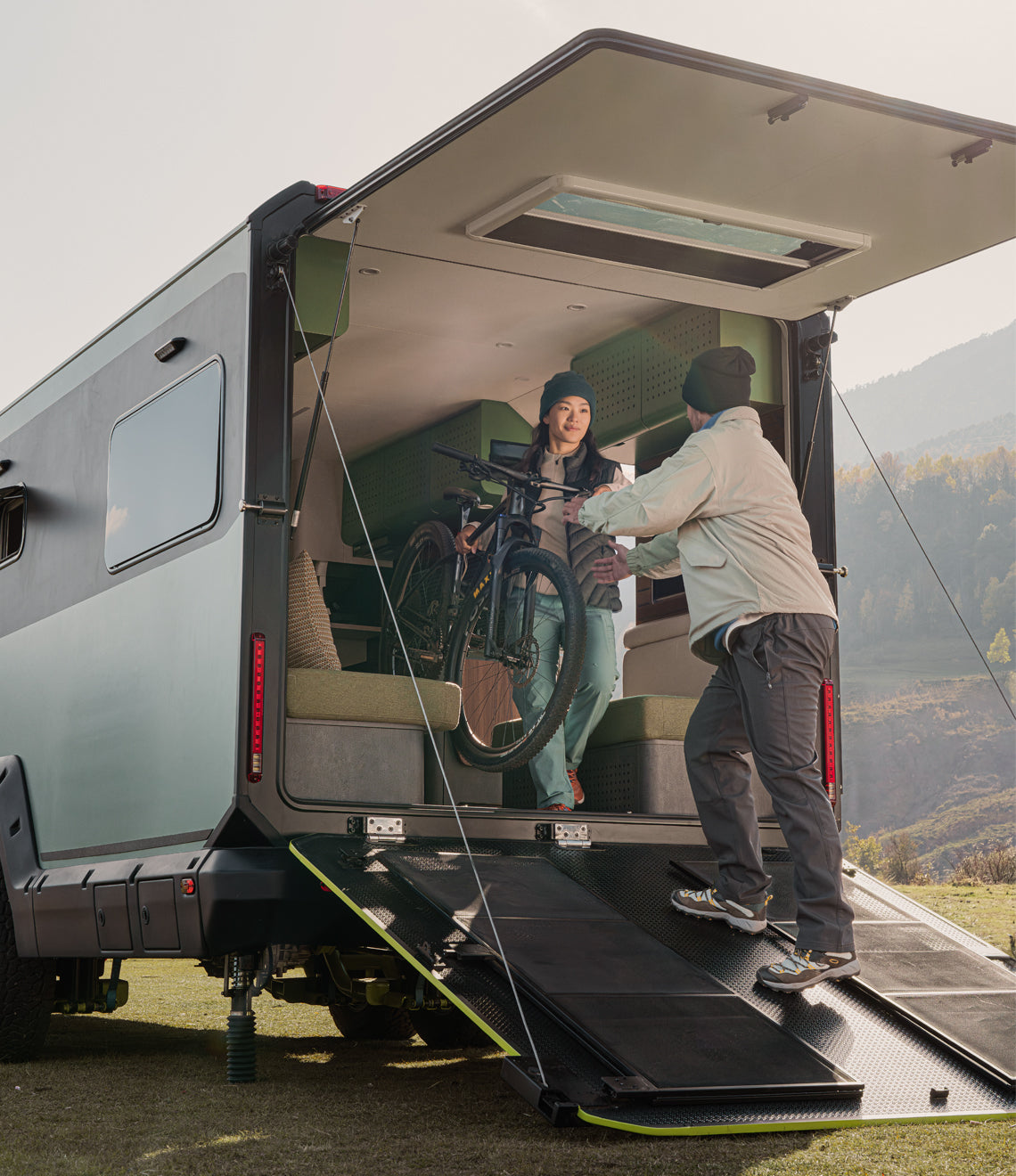
This is the kind of trip the Evotrex-PG5 was made for. It is a travel trailer that generates and stores its own power onboard, open for preorder now, so being far behind a locked gate does not mean rationing power. Because the Evotrex-PG5 charges itself without a hookup, a quiet pond side site stays livable for days, generator free.
Frequently asked questions
Is dispersed camping free in Maine? Mostly not. The large remote areas sit on the North Maine Woods, which charges day use and camping fees at the gate. The only real free option is the small White Mountain National Forest area near Evans Notch.
Do you need a permit to camp in the North Maine Woods? Yes. You register and pay at a staffed or automated checkpoint on entry, and camping is limited to marked authorized sites.
How long can you stay? Two weeks per site in the North Maine Woods, and 14 days within any 45 day period on state public reserved lands, with no more than 7 nights at one site.
Can you camp anywhere off the logging roads? No. Both the timberland and the state lands limit camping to designated sites, not open pullouts. Fires are often allowed at authorized sites with steel rings, but primitive sites need a Maine Forest Service fire permit.
Check before you roll
- Confirm which gate serves your route and its hours; checkpoints close at night.
- Bring cash or a check for gate and camping fees, since cards are not accepted everywhere.
- Reserve or scout an authorized site; open pullout camping is not allowed.
- Get a Maine Forest Service fire permit if your site requires one.
- Fill water, empty tanks, and plan your power before you leave pavement, and download offline maps.