
Dispersed Camping in Kansas: Where It Is Actually Allowed
Kansas is a tough state for dispersed camping, and it helps to know that going in. Dispersed camping means camping for free on public land outside a developed campground, with no hookups, no water, and no services. Unlike the mountain West, Kansas has almost no Bureau of Land Management land and very little open federal ground, so true dispersed sites are rare. Most camping here happens in state parks, at reservoir campgrounds, or on private land. This guide is honest about that scarcity, points you to the one strong federal option and a few reservoir possibilities, and covers how to come prepared.

Why dispersed camping is limited in Kansas
The reason is simple: land ownership. Kansas is roughly 97 percent privately owned, and there is essentially no BLM acreage to camp on the way you would in Colorado or Utah. What public land exists is mostly state parks and wildlife areas managed by Kansas state parks, plus reservoirs built and managed by the federal government. Those places are wonderful, but they are developed, and most require a designated site and a fee. If you are picturing pulling off a forest road onto a free open pullout, Kansas has almost none of that.
The one real exception is a national grassland in the far southwest corner of the state, and it is worth the drive.
Cimarron National Grassland: the main real option
The Cimarron National Grassland near Elkhart is the largest tract of public land in Kansas and the one place where genuine dispersed camping is clearly allowed. Managed by the US Forest Service, this high plains grassland carries 23 miles of the Santa Fe National Historic Trail and landmarks like Point of Rocks and Middle Spring, where freight wagons once camped.
Dispersed primitive camping is allowed anywhere along the grassland trails, including the roughly 19 mile Santa Fe Companion Trail and the 10.5 mile Turkey Trail. There is no fee and no permit for this, but there is also no water and no services, so you carry everything in and pack everything out. If you would rather have a table and a toilet, the developed Cimarron Campground offers tent pads, gravel parking, pit toilets, and water hydrants for a small nightly fee, with no electricity and no dump station.
The rules to know before you go
A few rules keep you legal on the grassland, and they are set out in the Cimarron and Comanche National Grasslands prohibitions.
Stay limit. You may not camp at any location within the same 20 mile radius for more than 14 days within any continuous 30 day period. Once you reach that limit you move on.
Keep away from water. Camping within 100 feet of a lake, stream, pond, or river is prohibited unless you are in a developed recreation site or a designated dispersed site.
Stay on established routes. Do not drive off road, past designated parking, or around barriers to reach a spot. The prairie sod scars easily and the damage lasts for years.
Check fire conditions. The high plains get hot, dry, and windy, and burn bans come and go through the season. Confirm the current fire status before you plan any fire and carry a stove as a backup.
Leave no trace. There are no toilets or trash service on the dispersed trails. Store food and trash securely, pack out everything, and leave the site cleaner than you found it.
Reservoirs and other possibilities
Beyond the grassland, your best hope for something close to primitive camping is at the big federal reservoirs managed by the US Army Corps of Engineers, such as Tuttle Creek and Milford. These lakes do offer primitive and backcountry sites alongside their developed campgrounds, but the rules vary park by park and shoreline camping is not simply open the way grassland trails are. Call the specific lake office before you count on a spot, because many areas are designated site only and some carry a fee.
State fishing lakes and wildlife areas can also allow primitive camping in spots, but policies differ and closures happen, so confirm each one directly rather than assuming.
| Area | Land manager | Camping type | Fee | Good to know |
|---|---|---|---|---|
| Cimarron National Grassland trails | US Forest Service | Dispersed primitive | None | The clearest legal dispersed option in Kansas |
| Cimarron Campground | US Forest Service | Developed, no hookup | Small nightly fee | Pit toilets and water, no electricity |
| Tuttle Creek and Milford | Corps of Engineers | Developed plus some primitive | Varies | Call the lake office, many sites designated only |
| State parks and fishing lakes | Kansas state parks | Developed or designated | Varies | Rules differ by site, confirm first |
Wind, sun, and your power plan
Out on the Kansas grassland you are rarely short on sun or wind, but you are often short on shade, water, and anything resembling a hookup. The Cimarron National Grassland is wide open country, which is beautiful and exposed in equal measure, and it leaves your power entirely up to you.
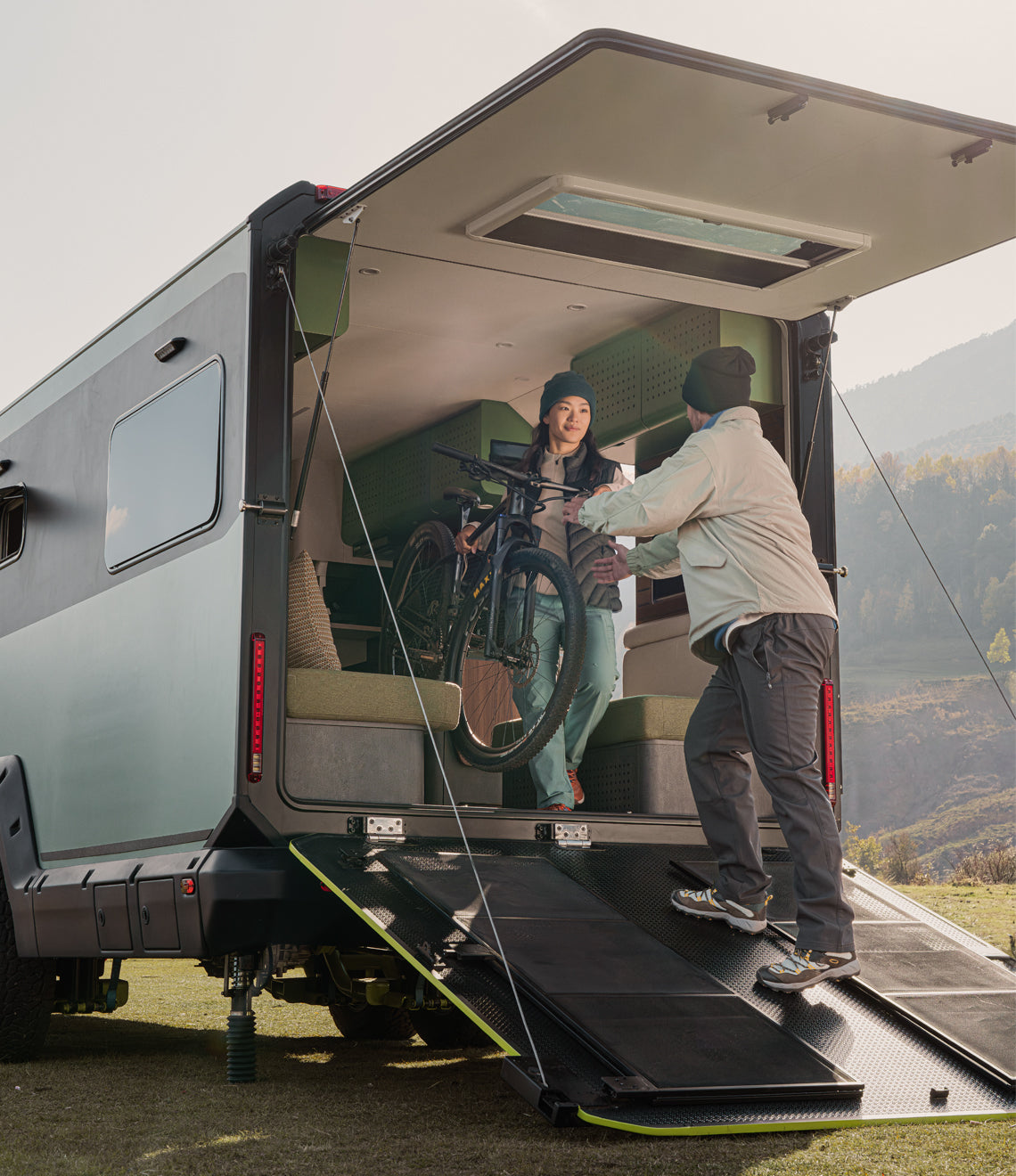
The Evotrex-PG5 is made to be that self contained. It is a travel trailer with onboard power generation, available to preorder now, that keeps its own batteries charged with no pedestal for miles. With the Evotrex-PG5 you can post up on the open prairie and run what you need against the heat without a generator droning across the quiet.
Frequently asked questions
Is there dispersed camping in Kansas? Yes, but very little. The clearest option is dispersed primitive camping along the trails of the Cimarron National Grassland in the far southwest corner. Most other Kansas camping is in state parks, at reservoirs, or on private land.
Is dispersed camping on the Cimarron National Grassland free? Yes. Camping along the grassland trails has no fee and no permit, but there is no water and no service, so you must be fully self contained.
How long can you stay? Up to 14 days within any continuous 30 day period within the same 20 mile radius, then you must move on.
Can you camp along Kansas reservoirs? Sometimes. Corps of Engineers lakes like Tuttle Creek and Milford offer some primitive sites, but many areas are designated site only and rules vary, so call the lake office first.
Why is there no BLM camping in Kansas? Kansas has almost no Bureau of Land Management land, so the open BLM dispersed camping common in the West simply does not exist here.
Check before you roll
- Confirm the specific grassland, reservoir, or park rules for your exact site.
- Check the current fire status and any active burn bans or closures.
- Confirm the access road is open and passable for the size and weight of your rig.
- Fill water, empty tanks, and plan your power before you leave pavement.
- Download offline maps; cell service is unreliable across the high plains.