
Dispersed Camping in Illinois: Where It Is Allowed and How to Do It Right
Illinois is not a big dispersed camping state, and it helps to know that before you plan a trip. Dispersed camping means camping for free on public land outside a developed campground, with no hookups, no water, and no services. Across most of Illinois the public land is state parks, and those allow camping only in designated campgrounds. The one real exception is the Shawnee National Forest in the far south of the state, where primitive camping is genuinely open. This guide covers where it is allowed, the rules that keep you legal, a few real areas to aim for, and how to come prepared.

Where dispersed camping is allowed in Illinois
There is no Bureau of Land Management land in Illinois, so the federal dispersed camping model that opens up so much of the West does not apply here. Almost all state managed land runs on a reservation and designated site system. If you camp in an Illinois state park, you camp in a marked campground, which you can confirm through the Illinois Department of Natural Resources.
That leaves the Shawnee National Forest as the practical home for true dispersed camping in Illinois. It covers roughly 280,000 acres across the southern tip of the state, split between the Mississippi Bluffs and Hidden Springs Ranger Districts. On most of that forest, primitive camping is free, needs no permit, and is allowed any time of year. It is a real option, just a concentrated one, so plan to point your trip south.
The rules every Shawnee dispersed camper needs to know
A handful of rules apply across the forest, and knowing them keeps you out of trouble.
Stay limit. Under the current Forest Service occupancy order, primitive camping is allowed for up to 14 consecutive days at one site, no more than 14 days in any 28 day period, and no more than 28 cumulative days in a calendar year. Once you hit a limit you have to move on.
Camp only where it is allowed. Dispersed camping is prohibited in natural areas, along lake shores, near streams, on trails, and inside developed recreation areas. Set up at least 150 feet from trails, trailheads, and water. The order also blocks camping within 150 feet of the shoreline on Cedar Lake, Little Cedar Lake, and Kinkaid Lake, and within a quarter mile of a developed campground or picnic ground.
Stay near the road. When you drive to a site, keep vehicles within 150 feet of a forest road. Use existing pullouts and fire rings rather than making new ones.
Fires and firewood. Use an existing fire ring when one is there, keep fires small, and make sure every campfire is dead out before you leave. Gather only dead and down wood from the local area, and do not haul in firewood from far away. Check for any active fire restriction before you plan a fire, and carry a stove as a backup.
Mind the wilderness and equestrian rules. Camping with horses or pack animals is prohibited in the Bay Creek, Garden of the Gods, and Lusk Creek Wilderness Areas, and stock use inside the main watersheds is limited to designated equestrian trails and trailheads. If you ride, read the equestrian rules closely.
Leave no trace. Primitive sites have no toilets, no trash service, and no potable water. Pack out everything you pack in, bury human waste well away from water, and leave the site cleaner than you found it.
Real areas to aim for in the Shawnee
Garden of the Gods area (Hidden Springs Ranger District). The most famous corner of the forest, with its sandstone bluffs and long views. Dispersed camping is allowed on nearby forest land outside the natural and developed areas, and Pharaoh Campground offers first come first served sites right at the recreation area if you want a designated spot.
Pounds Hollow and the eastern bluffs. This eastern stretch pairs a small lake with rugged ridge country and forest roads that reach quiet primitive sites away from the day use zones.
Lusk Creek and Burden Falls country. Rolling forest and creek drainages on the Hidden Springs side. Remember that the Lusk Creek Wilderness has its own restrictions, so camp on general forest land and keep clear of the trails and streams.
| Area | Land manager | Camping type | Permit | Good to know |
|---|---|---|---|---|
| Garden of the Gods area | US Forest Service | Dispersed plus designated | None for dispersed | Keep clear of the natural area and bluffs |
| Pounds Hollow and eastern bluffs | US Forest Service | Dispersed plus designated | None for dispersed | Camp away from the lake shore |
| Lusk Creek and Burden Falls | US Forest Service | Dispersed | None | Wilderness zones have extra limits |
| Illinois state parks statewide | Illinois DNR | Designated only | Reservation | No dispersed camping |
Setting up without a hookup
Real dispersed camping in Illinois means the Shawnee National Forest down south, where the sites are wooded, primitive, and free of services. You carry water in and haul waste out, and under the oak and hickory canopy you handle power on your own, usually with less sun than a solar setup would like.
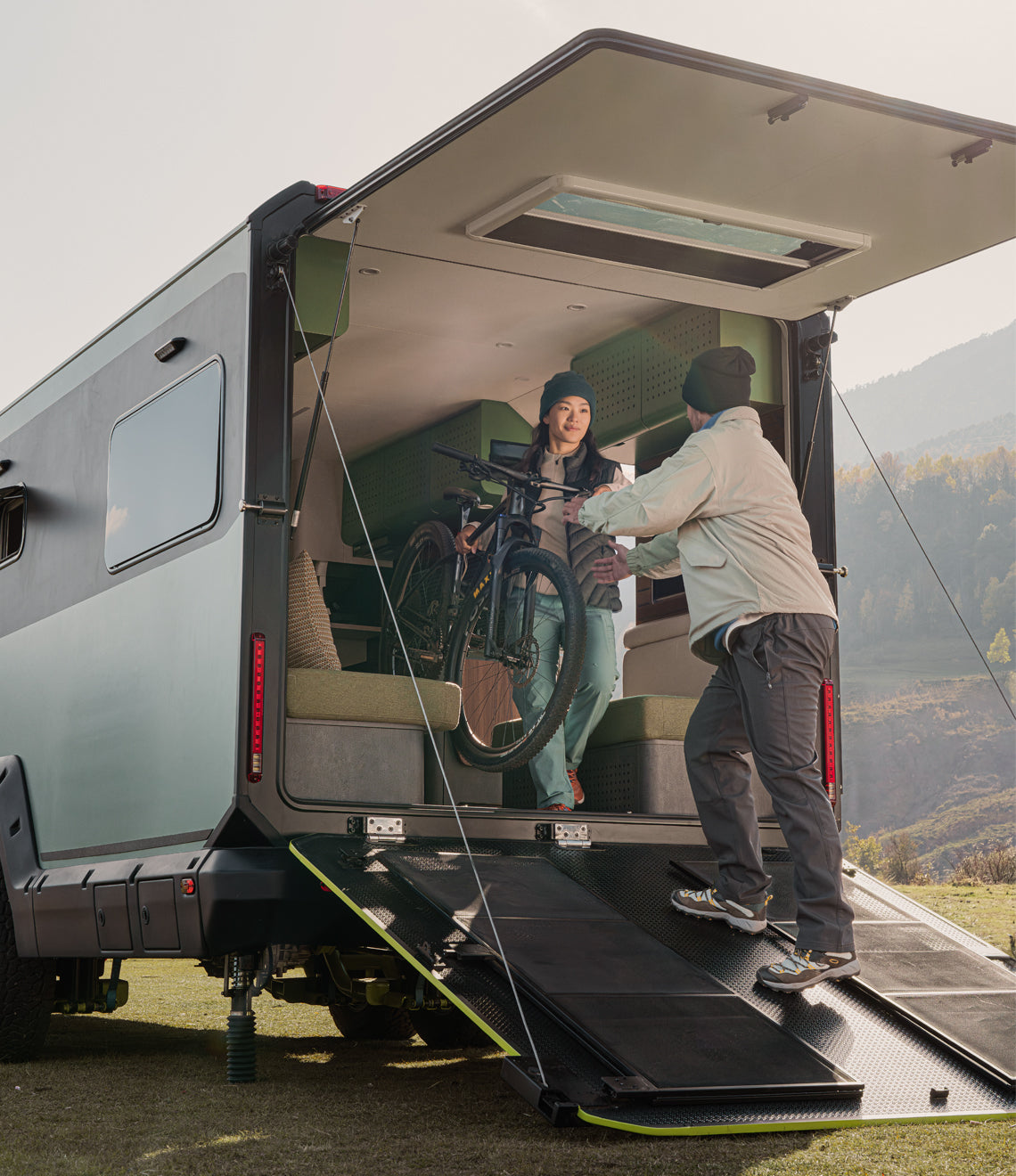
The Evotrex-PG5 is built for that unplugged night. It is a travel trailer with onboard power generation, available to preorder now, that keeps its own batteries charged without a pedestal or a clear sky. With the Evotrex-PG5 a shaded Shawnee site stays fully powered, and the woods stay generator quiet.
Frequently asked questions
Is dispersed camping allowed in Illinois? Only in a limited way. The Shawnee National Forest in southern Illinois allows free primitive camping across most of the forest. State parks allow camping only in designated campgrounds, and there is no BLM land in the state.
Is dispersed camping free in the Shawnee? Yes. Primitive camping on the forest is free and needs no permit, though you trade away all services, so there are no hookups, water, or trash pickup.
How long can you dispersed camp in the Shawnee? Up to 14 consecutive days at one site, no more than 14 days in any 28 day period, and no more than 28 cumulative days in a calendar year.
Where can you not camp? Not in natural areas, along lake shores, near streams, on trails, or inside developed recreation areas. Stay at least 150 feet from trails, trailheads, and water.
Can you have a campfire? Usually yes, using an existing ring and only dead and down local wood, but check for any active fire restriction first and make sure the fire is dead out before you leave.
Check before you roll
- Look up the current occupancy rules for your exact site on the Shawnee National Forest pages.
- Check for any active fire restriction and camping closures.
- Confirm the forest road is open and passable for the size and weight of your rig.
- Fill water, empty tanks, and plan your power before you leave pavement.
- Download offline maps; cell service is unreliable once you are off the highway.