
Dispersed Camping in Florida: Where It Is Allowed and How to Do It Right
Florida is not the open western style dispersed camping people picture when they imagine free nights on public land. There is no Bureau of Land Management here, and the state does not hand you endless forest roads to pull off on. What Florida does offer is real, but it is limited and mostly permit based. Free and primitive camping lives on three kinds of public land: the national forests, the water management district lands, and the state wildlife management areas. This guide covers where dispersed and primitive camping is allowed, the rules that keep you legal, the strongest areas to aim for, and how to come prepared so a night with no hookup is comfortable rather than stressful.

Where dispersed camping is allowed in Florida
The closest thing to true dispersed camping in Florida is on the three national forests managed by the US Forest Service: Ocala National Forest in central Florida, Osceola near Lake City, and Apalachicola outside Tallahassee. On these forests you can generally camp for free outside a developed campground, with no permit required for standard dispersed sites, as long as you follow the forest rules.
Beyond the forests, camping is permit based. Florida's five water management districts open large tracts of conservation land to primitive camping, and the state's wildlife management areas allow primitive camping too. Both usually require a permit, and many of those sites are tent only or reachable only by boat, so they suit a self contained trailer far less than the forest roads do. That is the honest picture: Florida rewards planning, not rolling up and picking a pullout.
The rules every Florida camper needs to know
A few rules apply across most of these lands, and knowing them keeps you out of trouble.
Stay limit. On the national forests in Florida there is generally a 14 day per month stay limit. Water district and wildlife area limits are shorter and vary by property, often in the range of 7 to 10 nights.
Hunting season closes dispersed camping. During general gun season, camping on the national forests is restricted to designated campsites only, under Florida Fish and Wildlife rules for the surrounding wildlife area. Check the season dates before you plan an open dispersed night in fall or winter.
Keep your distance from water. Dispersed camping on the forests is not allowed within 100 feet of streams or other water sources, or near developed recreation areas. Use a previously used site rather than clearing a new one.
Permits where required. Standard forest dispersed camping needs no permit, but water district and wildlife area camping almost always does. Many of these permits are free, but you still have to obtain one in advance or self issue it at a kiosk.
Leave no trace. These sites have no toilets, no trash service, and no potable water. Pack out all trash, bury human and pet waste at least 6 inches deep and 100 feet from water, keep pets leashed, and drown any campfire completely before you leave.
Best areas for primitive camping in Florida
Ocala National Forest (central Florida). The most trailer friendly option in the state. Dispersed camping is free with no permit for standard sites, and you can gather a reasonable amount of firewood without a permit. Expect primitive no hookup camping on forest roads, on a first come first served basis.
Apalachicola National Forest (Tallahassee area). The largest national forest in Florida, with dispersed sites along forest roads. Same 14 day per month limit and the same shift to designated campsites during general gun season.
Suwannee River Water Management District (north Florida). Primitive camping is first come first served by a self issued special use authorization at the kiosk, at no charge, with river access sites for canoeists and boaters. Stays are limited to 10 days.
St. Johns River Water Management District (northeast Florida). Free camping by permit, but note that only primitive tent camping is allowed and RVs and trailers are prohibited on these sites, with a 7 day per visit limit. Good to know before you tow.
| Area | Land manager | Permit | Trailer friendly | Good to know |
|---|---|---|---|---|
| Ocala National Forest | US Forest Service | None for dispersed | Yes | 14 day per month; free firewood |
| Apalachicola National Forest | US Forest Service | None for dispersed | Yes | Designated sites only in gun season |
| Suwannee River WMD | Water district | Free, self issued | Limited | 10 day limit; river access sites |
| St. Johns River WMD | Water district | Free, required | No | Tent only; trailers prohibited |
Heat, humidity, and a quiet power source
Florida camping means heat, humidity, and bugs, often all at once, under a canopy that keeps solar from ever getting a clean day. On the national forests and the district lands you carry your own water and pack out your waste, and you almost always want a fan or the air running, which is where power gets tight fast.
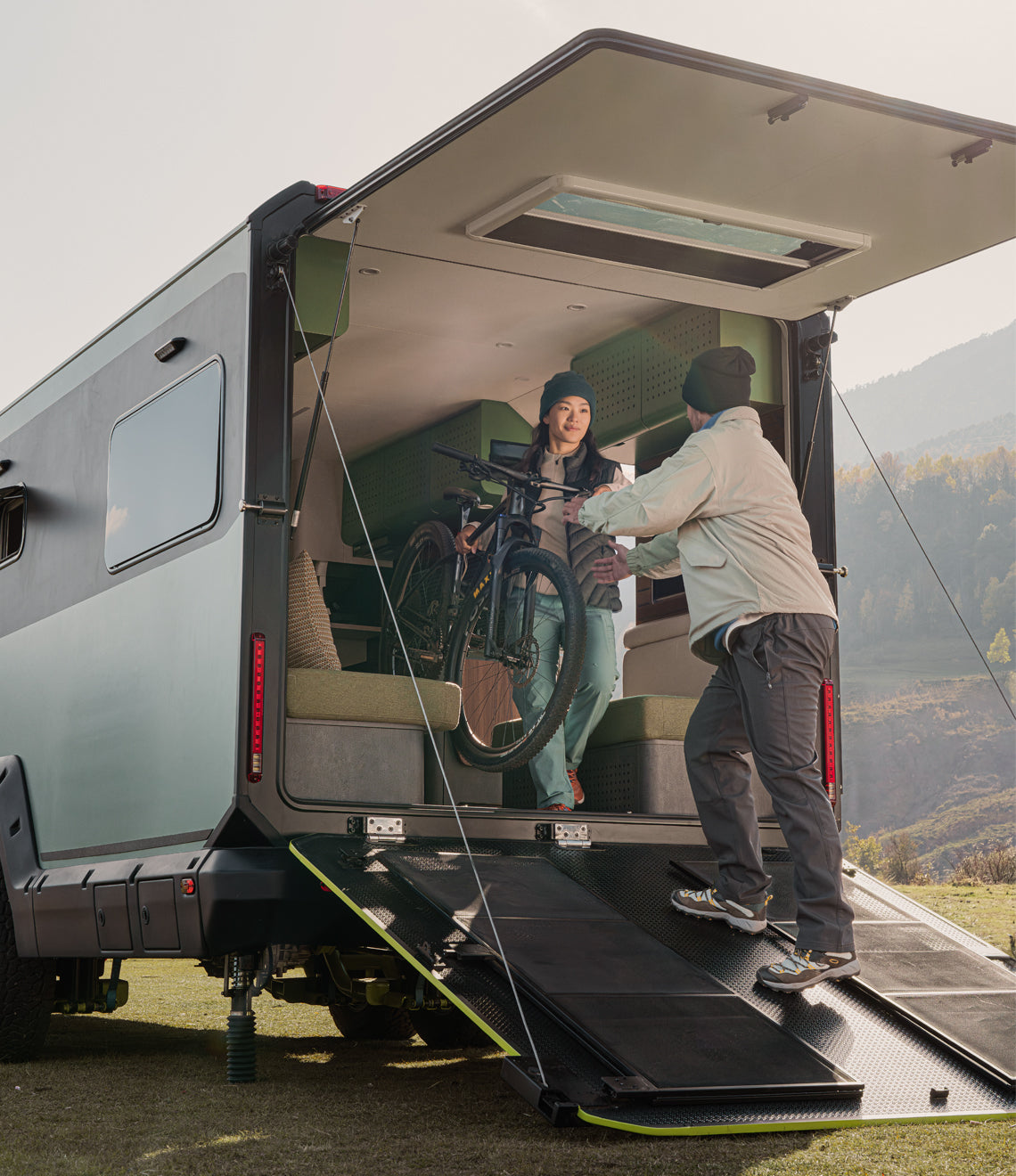
The Evotrex-PG5 is designed to handle that. It is a travel trailer with onboard power generation, available to preorder now, that keeps its own batteries charged without a hookup or full sun. With the Evotrex-PG5 you can run what you need against the heat and humidity without a generator going all evening, and the wild quiet stays intact.
Frequently asked questions
Is dispersed camping free in Florida? On the national forests, yes, standard dispersed camping is free with no permit. Water district and wildlife area camping is often free too, but it almost always requires a permit you obtain in advance or self issue on site.
Does Florida have BLM land for camping? No. There is no Bureau of Land Management land in Florida, so the western style of open BLM camping does not exist here. The national forests are the closest equivalent.
How long can you dispersed camp in Florida? On the national forests the limit is generally 14 days per month. Water district and wildlife area stays are shorter, often 7 to 10 nights, and vary by property.
Do you need a permit? Not for standard forest dispersed camping. You do need one for most water district and wildlife area camping, and camping shifts to designated sites only on the forests during general gun season.
Can you camp in a trailer on district lands? Not always. St. Johns River district sites, for example, are primitive tent camping only and prohibit trailers, so the national forests are the better bet for a rig.
Check before you roll
- Look up the specific forest, district, or wildlife area rules for your exact site.
- Check the general gun season dates and any active camping closures.
- Confirm your site allows trailers, not just tents, before you tow.
- Confirm the access road is open and passable for the size and weight of your rig.
- Fill water, empty tanks, and plan your power before you leave pavement.
- Download offline maps; cell service is unreliable once you are off the highway.