
Dispersed Camping in California: Where to Go and How to Do It Right
California has an enormous amount of public land open to free camping, from the pine forests of the eastern Sierra to the wide open desert of the Mojave. Dispersed camping means camping for free on public land outside a developed campground, with no hookups, no water, and no services. This guide covers where it is allowed, the rules that keep you legal, the strongest regions to aim for, and how to come prepared so a night far from any power pedestal is comfortable rather than stressful.

Where dispersed camping is allowed in California
Most free camping in California happens on two kinds of public land: national forests managed by the US Forest Service, and land managed by the Bureau of Land Management. Between the two you get millions of acres, including big national forests like Inyo, Los Padres, Sierra, Sequoia, Shasta Trinity, and Klamath, plus vast BLM desert in the Mojave and the eastern Sierra.
On most national forest and BLM land, dispersed camping is free and needs no camping permit. The catch is that every forest and field office can set its own rules, so a spot that is wide open in one district may be limited to designated sites in the next. Designated wilderness areas and some high traffic areas carry extra rules, and one requirement is close to universal in California: a fire permit.
The rules every California dispersed camper needs to know
A few rules apply almost everywhere, and knowing them keeps you out of trouble.
Get a California Campfire Permit. This is the rule that surprises out of state visitors. A free California Campfire Permit is required to use any campfire, charcoal fire, or portable gas stove or lantern on dispersed public land in the state. You watch a short video, pass a quick quiz, and the permit is valid through the end of the calendar year. Carry it whenever you plan to cook or have a fire outside a developed campground.
Stay limit. On national forest and BLM land, dispersed camping is generally limited to 14 days within any 28 day period. Once you hit the limit you have to move on. On BLM land in California the required move can be substantial: in places like the Mojave you must relocate at least 25 miles from your previous site. Some areas set shorter limits, so confirm the number locally.
Camp on established sites and away from water. Use existing pullouts and fire rings rather than making new ones, keep your rig out of meadows and off road, and camp well back from water. On the Inyo, for example, the guidance is to place your site at least 150 feet from any stream or water source and away from developed recreation areas.
Check the fire situation. California fire danger changes fast, and forests move in and out of restrictions through the season. During restrictions, fires and even gas stoves can be banned outside designated sites regardless of your permit. Always look up the current fire order for your exact area before you plan a fire, and carry a stove as a backup.
Leave no trace. Dispersed sites have no toilets, no trash service, and no potable water. Store food securely, be bear aware in the mountains, pack out everything you pack in, and leave the site cleaner than you found it.
Best regions for dispersed camping in California
Inyo National Forest (eastern Sierra near Bishop). Big pine forest and high country along Highway 395, with primitive sites on forest roads and a 14 day stay limit. A California Campfire Permit is required for any stove or fire.
Alabama Hills National Scenic Area (near Lone Pine). Iconic BLM granite country under Mount Whitney. Camping here is now limited to marked designated sites on a first come first served basis, and a free BLM camping permit is required in addition to your campfire permit. Stay limits are stricter than general BLM land, so read the local rules.
Los Padres National Forest (central coast). Backcountry camping is allowed outside developed sites, but fires and stoves are tightly controlled, often limited to designated campfire use sites, and a California Campfire Permit is required for any stove in the backcountry. Fire restrictions are common through the dry season.
Mojave desert BLM (southern California). Open desert camping across much of the Mojave, including most of Mojave Trails National Monument, with a 14 day limit and a 25 mile move after that. This is prime cool season camping, open and dry when the Sierra is buried in snow.
| Region | Land manager | Best season | Hookups | Good to know |
|---|---|---|---|---|
| Inyo NF near Bishop | US Forest Service | Late spring to fall | None | Campfire permit required for any stove |
| Alabama Hills | BLM | Fall through spring | None | Designated sites only, free permit needed |
| Los Padres NF | US Forest Service | Fall to spring | None | Fires often limited to designated sites |
| Mojave desert | BLM | Fall through spring | None | Move 25 miles after 14 days |
Preparing for a self contained stay
California dispersed trips cover a lot of ground, from the pinyon flats below the Sierra to the fog belt of the Los Padres. What ties them together is distance from services. You carry your water, you carry out your waste, and you sort out power on your own, often for a longer stretch than you planned once you find a spot you like.
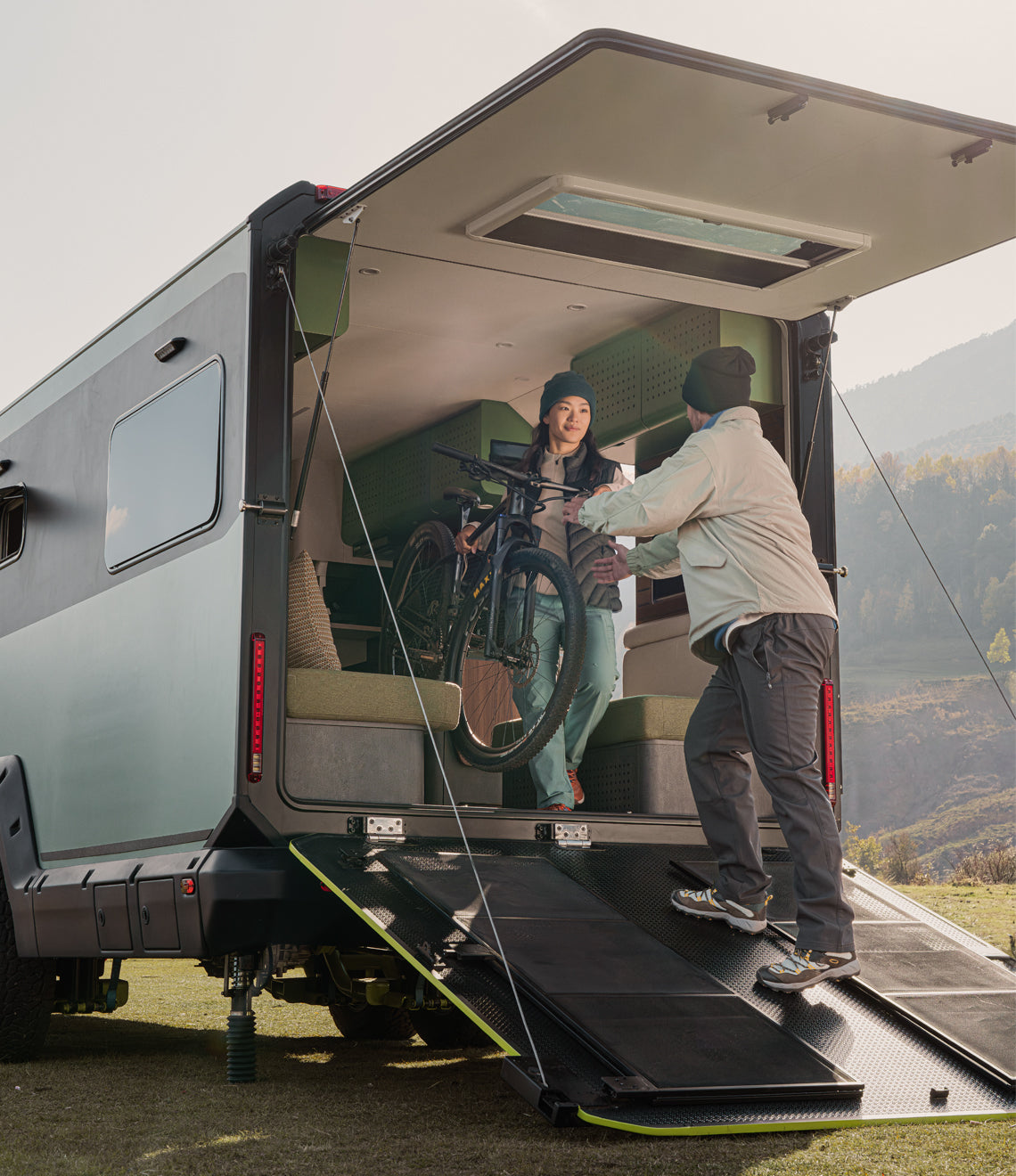
The Evotrex-PG5 is made for those longer, unplugged stays. This travel trailer generates its own power onboard and is available to preorder now. Because the Evotrex-PG5 keeps its batteries charged without a hookup, you are free to stay put at a good site instead of driving out to recharge, and there is no generator running while you take in the quiet.
Frequently asked questions
Is dispersed camping free in California? Yes. On most national forest and BLM land there is no fee and no camping permit for standard dispersed camping. You are trading services for that freedom, so there are no hookups, water, or trash service.
Do you need a permit? For camping, usually not, though a few areas like the Alabama Hills require a free site permit. For any fire or stove, though, you do need a free California Campfire Permit on dispersed land almost everywhere in the state.
How long can you dispersed camp in California? Generally up to 14 days within any 28 day period on national forest and BLM land. After that you must move, and on BLM desert land the required move can be 25 miles or more.
Can you have a campfire? Only when the current fire order allows it and you hold a California Campfire Permit. Fire restrictions come and go through the season and can ban stoves too, so check the exact area before you plan a fire and always carry a backup plan.
Where can you dispersed camp in the eastern Sierra? The Inyo National Forest along Highway 395 near Bishop is the classic option, with the BLM Alabama Hills near Lone Pine for high desert scenery.
Check before you roll
- Look up the specific forest or field office rules for your exact site.
- Get a California Campfire Permit and check the current fire order and any closures.
- Confirm the access road is open and passable for the size and weight of your rig.
- Fill water, empty tanks, and plan your power before you leave pavement.
- Download offline maps; cell service is unreliable once you are off the highway.