
Dispersed Camping in Arizona: Where to Go and How to Do It Right
Arizona is one of the best states in the country for free camping on public land, from the Sonoran Desert around Quartzsite to the high pine country of the Colorado Plateau. Dispersed camping means camping for free on public land outside a developed campground, with no hookups, no water, and no services. This guide covers where it is allowed, the rules that keep you legal, the strongest regions, and how to come prepared so a night far from any power pedestal is comfortable rather than stressful.

Where dispersed camping is allowed in Arizona
Most free camping in Arizona happens on two kinds of public land: national forests managed by the US Forest Service, and land managed by the Bureau of Land Management. Between them they cover a huge share of the state, from low desert to forests above 7,000 feet.
On most national forest and BLM land, dispersed camping is free and needs no permit. The catch is that every forest and field office sets its own rules, so a spot that is wide open in one district may be limited to designated sites in the next. The big exceptions in Arizona are the popular corridors near Sedona and Flagstaff, where overuse and fire risk have forced the Forest Service to designate specific dispersed areas, and the BLM Long Term Visitor Areas near Quartzsite, which require a paid permit in the winter season.
The rules every Arizona dispersed camper needs to know
A few rules apply almost everywhere, and knowing them keeps you out of trouble.
Stay limit. On BLM land the standard limit is 14 days within any 28 day period. On Arizona national forests the limit is often written differently: the Coconino National Forest, for example, limits camping to 14 days in any 30 day period. Once you hit the limit you have to move on, often at least a mile away, so confirm the number for your district.
Stay on established roads and sites. Motor vehicles are required to stay on roads, trails, and areas shown on the free Motor Vehicle Use Map. Use existing pullouts and fire rings rather than making new ones. Driving off road to reach a view causes lasting damage and is prohibited.
Keep your distance from water and facilities. Camp well back from water sources and developed recreation areas. On the Tonto National Forest the guidance is to camp at least 100 feet from water and away from roadways.
Check the fire stage. Arizona fire danger runs high through the dry months, and restrictions change fast. In the designated areas west of Sedona, wood and charcoal campfires are banned year round, and only stoves and grills fueled by pressurized liquid petroleum gas are allowed. Always look up the current fire stage for your exact area before you plan a fire, and carry a stove as a backup.
Leave no trace. Dispersed sites have no toilets, no trash service, and no potable water. Store food and trash securely, pack out everything you pack in, and leave the site cleaner than you found it.
Best regions for dispersed camping in Arizona
Quartzsite and the La Posa Long Term Visitor Area (western Arizona). The winter capital of desert boondocking. Standard BLM desert nearby is open for the usual 14 day stay, but the four La Posa units are a fee area from September 15 through April 15. A long season permit runs $180 for the full seven months, or $40 for any 14 consecutive days, and it buys vault toilets, water, and dump stations.
Coconino National Forest (Flagstaff and Sedona). Cool pine forest at elevation, ideal in summer. Much of the forest is open dispersed camping, but the high traffic corridor west of Sedona is now limited to eight designated areas such as Rockview, Cockscomb, and Nolan, with camping outside them prohibited.
Tonto National Forest (central Arizona). A vast forest reaching from saguaro desert up into the pines near Payson, within easy reach of Phoenix. Standard dispersed camping needs no permit, though popular lake corridors can carry their own rules.
Kaibab and Prescott National Forests (northern and central Arizona). The Kaibab surrounds parts of the Grand Canyon region with high ponderosa country, while the Prescott offers granite hills and mild shoulder seasons. Both allow dispersed camping across most of their land outside posted closures.
| Region | Land manager | Best season | Hookups | Good to know |
|---|---|---|---|---|
| Quartzsite and La Posa LTVA | BLM | Fall through spring | None | LTVA is a fee area in winter; permit required |
| Coconino NF (Flagstaff and Sedona) | US Forest Service | Summer | None | West Sedona is designated sites only |
| Tonto NF | US Forest Service | Fall to spring | None | Low desert is hot in summer |
| Kaibab and Prescott NF | US Forest Service | Late spring to fall | None | High elevation, cool nights |
Desert sun, big heat, your own power
Arizona dispersed camping runs from the Sonoran desert to the pines above the Mogollon Rim, and much of it involves serious heat and long, sunny stays, the kind that draw snowbirds to the BLM flats for weeks at a time. The sun is relentless, which helps solar but also means you often want cooling running when you need power most. Water and waste are simple. Managing heat and power together is the real task.
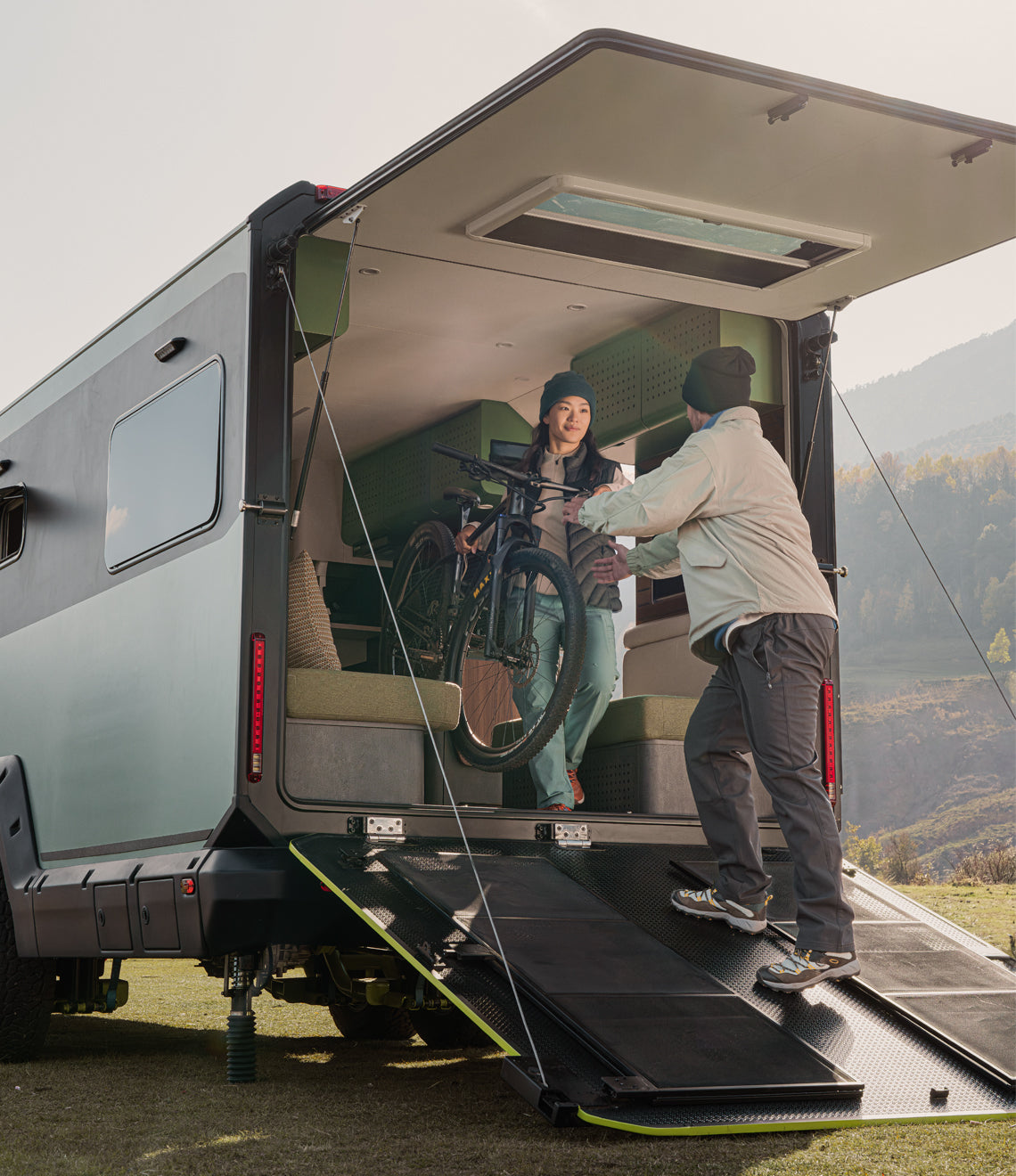
The Evotrex-PG5 is built for those long, hot, unplugged stays. This travel trailer makes and stores its own power onboard and is open for preorder now. Because the Evotrex-PG5 generates its own electricity, you can run what it takes to stay comfortable through a desert afternoon without a generator droning across camp or a battery bank that fades by dusk.
Frequently asked questions
Is dispersed camping free in Arizona? Mostly yes. On most national forest and BLM land there is no fee or permit for standard dispersed camping. The main exception is the La Posa Long Term Visitor Area near Quartzsite, which charges a permit fee in the winter season.
How long can you dispersed camp in Arizona? On BLM land the standard limit is 14 days within any 28 day period. Arizona national forests often use 14 days in any 30 day period, so check your district before you settle in.
Do you need a permit? Usually not for standard dispersed camping. Permits do apply in the Long Term Visitor Areas near Quartzsite from September 15 through April 15.
Can you have a campfire? Only when the current fire stage allows it. Some areas, like the designated sites west of Sedona, ban wood and charcoal fires year round and allow only propane stoves and grills.
Where can you dispersed camp near Phoenix? The Tonto National Forest is the closest large option, with primitive sites from the desert near the reservoirs up into the pines around Payson.
Check before you roll
- Look up the specific forest or field office rules for your exact site.
- Check the current fire stage and any active camping closures.
- Confirm the access road is open and passable for the size and weight of your rig.
- Fill water, empty tanks, and plan your power before you leave pavement.
- Download offline maps; cell service is unreliable once you are off the highway.